

1. The Hospitality Inflection Point: Navigating the 2026 Landscape
The global hospitality industry currently stands at a definitive, irrevocable inflection point. As we traverse the fiscal landscape of 2025 and move toward 2026, the fundamental mechanisms of guest acquisition, retention, and brand equity are being rewritten. This transformation is not merely a linear evolution of digital marketing tactics; it is a structural upheaval driven by the convergence of autonomous technology, shifting generational consumption patterns, and a new economic reality. The era of static “brochure-ware” websites and sporadic social media updates has concluded. In its place, a new paradigm has emerged—one where hotels must function as sophisticated media companies, producing immersive, machine-readable, and hyper-local content that feeds both human inspiration and the voracious data appetites of Artificial Intelligence.
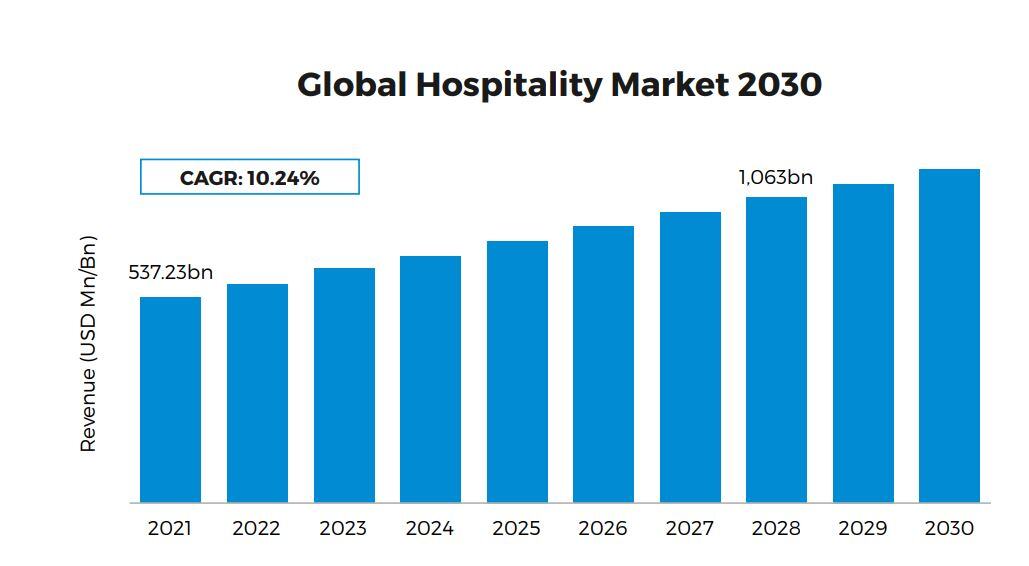
The context for this shift is multifaceted. Economically, the industry faces a dual pressure: rising operational costs, particularly in labor and energy, and an increasingly price-sensitive consumer base that demands experiential value over standardized luxury. The “revenge travel” boom of the post-pandemic years has stabilized into a more discerning pattern of consumption, where travelers scrutinize every touchpoint for authenticity and value. Simultaneously, the digital ecosystem has fractured. The dominance of traditional search engines is eroding, challenged by the rise of “Answer Engines” and social discovery platforms. For the modern hotelier, the challenge is no longer just about being found; it is about being chosen by both human guests and the AI agents that increasingly act as their proxies.
This report provides an exhaustive analysis of the hotel content marketing landscape for the 2025-2026 horizon. It moves beyond the superficial metrics of “likes” and “views” to explore the technical, psychological, and algorithmic architectures required to secure direct bookings in an increasingly autonomous digital economy. We will dissect the impact of “Agentic AI”—systems that do not just generate text but execute tasks—and how this necessitates a complete reimagining of hotel distribution strategies. We will examine the “Commercial Trinity,” a strategic framework that dissolves the silos between marketing, sales, and revenue management to drive total profitability. Furthermore, we will chart the rise of Gen Z as a dominant economic force, a generation that has weaponized “authenticity” and reshaped the very definition of luxury.
1.1 The Shift from Generative to Agentic AI
The most profound technological shift impacting hotel marketing in 2026 is the rapid evolution from Generative AI to Agentic AI. While Generative AI tools (like the early iterations of ChatGPT) allowed marketers to create text or images with speed, Agentic AI represents a leap into autonomy. These are systems capable of reasoning, planning, and executing complex workflows without constant human intervention.

In the context of hospitality, this means the guest journey is increasingly mediated by non-human actors. By 2026, it is projected that a significant portion of travel planning will be delegated to personal AI assistants. These agents will not simply “search” for a hotel; they will negotiate rates, verify amenities against specific user preferences (e.g., “find a hotel with a south-facing room and gluten-free breakfast options”), and execute the booking directly. This phenomenon, termed “Agent-to-Agent” (A2A) distribution, suggests a future where a hotel’s internal AI systems must communicate fluently with external guest agents.
For content marketing, this shift is seismic. It bifurcates the audience into two distinct entities, each requiring a tailored content strategy:
-
The Human Guest: This audience is driven by emotion, narrative, visual stimulation, and social proof. They seek the “vibe” of a property, the sensory promise of a stay, and the validation of peer reviews.
-
The AI Agent: This audience is driven by structured data, logic, real-time availability, and semantic clarity. They require precise Schema markup, fast API responses, and content that is logically structured to facilitate machine learning retrieval.
Hotels that fail to optimize for the latter risk invisibility. As AI platforms become primary search interfaces, the traditional “ten blue links” of Google Search are being replaced by direct answers and curated recommendations. This requires a pivot to Generative Engine Optimization (GEO), ensuring that a hotel’s unique selling propositions (USPs) are indexed and understood by the Large Language Models (LLMs) that power these agents. The risk of neglecting this is existential; if an AI agent cannot “read” your hotel’s sustainability policy or room configurations, it simply will not present your property as an option to the user.
1.2 The Commercial Trinity: Breaking Silos
Operational silos have long plagued the hospitality industry, with Marketing, Sales, and Revenue Management often working at cross-purposes. Marketing might chase volume metrics like website traffic, while Revenue Management focuses on Average Daily Rate (ADR), and Sales targets group bookings. In 2026, best-in-class hotels are dismantling these barriers to operate under a “Commercial Trinity” model.
This integrated framework aligns all three disciplines under a unified commercial strategy, ensuring that content marketing is not just a creative exercise but a revenue-generating engine.
-
Marketing becomes the demand generation engine, using storytelling to build the brand funnel.
-
Sales focuses on demand capture and relationship management, converting high-value leads.
-
Revenue Management acts as the demand optimization lever, using pricing and inventory controls to maximize yield.
Content marketing in this model must be agile and data-driven. It must respond to revenue needs in real-time. For instance, if revenue data indicates a softening in mid-week business travel for the upcoming quarter, the content team must immediately pivot to deploy “bleisure” (business + leisure) focused guides, LinkedIn campaigns, and packages targeting remote workers. Conversely, if a specific weekend is compressing due to a local event, marketing spend should be pulled back, and content should focus on high-margin ancillary upsells (spa, dining) rather than room occupancy. The goal shifts from simply filling rooms to maximizing Total Revenue Per Available Room (TRevPAR), utilizing content to drive spend across the entire property ecosystem.
1.3 The Generational Divide: Gen Z and the Demand for “Real”
Understanding the changing demographics of travelers is critical for effective content strategy. By 2025, Gen Z has established itself as a deeply influential consumer segment, fundamentally altering how travel is discovered and consumed. In markets like India, Gen Z is reshaping shopping, careers, and brand loyalty, creating ripple effects across the global tourism economy.
Unlike previous generations that responded to aspirational, polished luxury—the “perfect” Instagram shot—Gen Z prioritizes authenticity and “vibes.” This cohort has a highly tuned “BS radar” and is quick to reject brands that feel manufactured or performative. The “Real” is the new currency of trust.
Key Gen Z Behavioral Shifts:
-
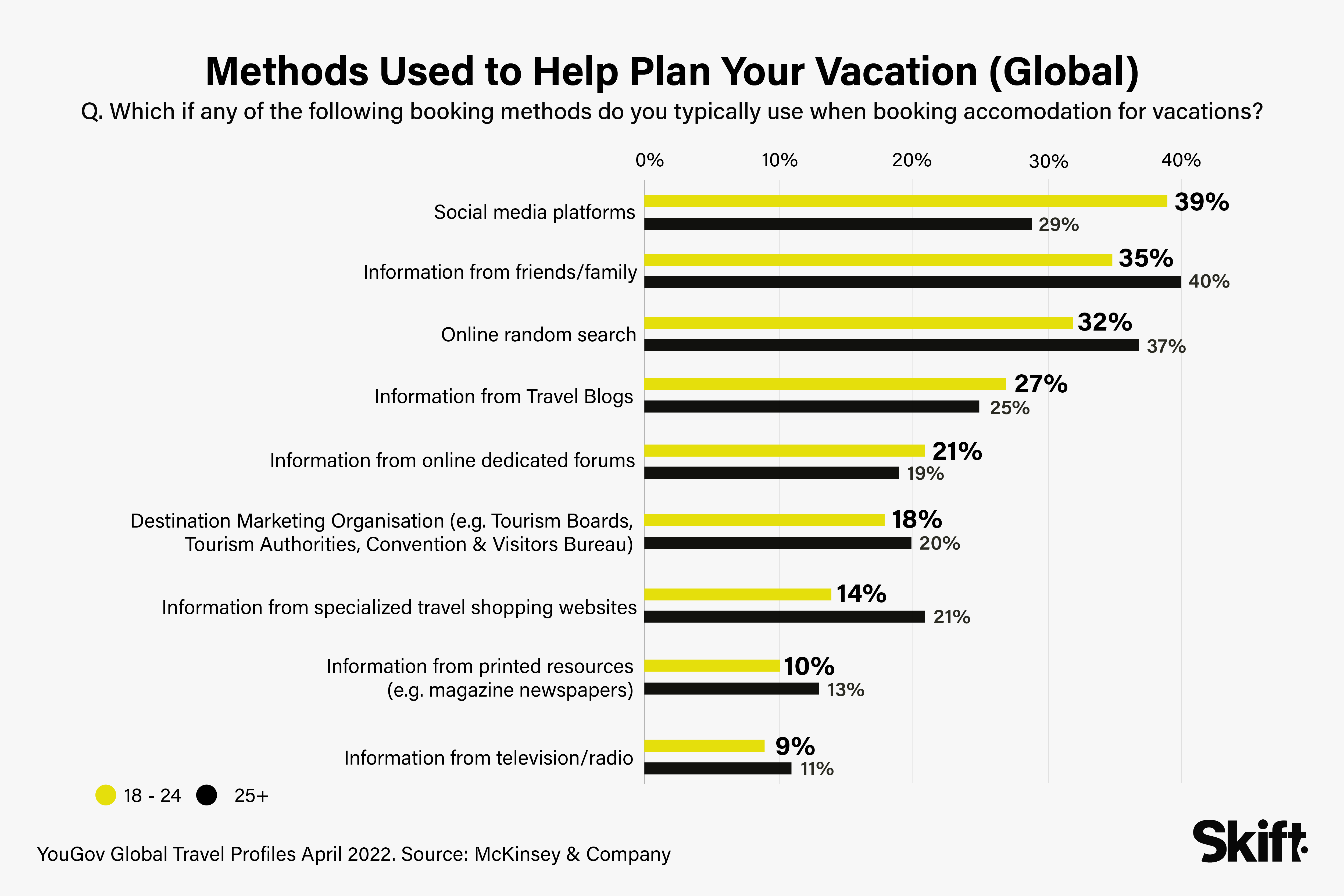
Rejection of Perfection: Highly staged professional photography is often viewed with skepticism. Gen Z prefers “raw” content—shaky handheld videos, honest reviews, and behind-the-scenes looks that feel unmanufactured. They want to see what the room actually looks like, not the wide-angle, color-corrected version.
-
Search via Social: For many younger travelers, TikTok and Instagram are the primary search engines. They are more likely to search for “best hotel in Miami” on TikTok to see video evidence of the experience than to read a text-based description on an OTA.
-
Identity & Values: This cohort aligns with brands that reflect their values, particularly regarding sustainability and inclusivity. They seek “meaningful travel” and are willing to visit second-tier cities or “dupe” destinations to avoid overtourism and find unique cultural connections.
The implications for content creation are profound. Hotels must move away from corporate speak and embrace a more human, conversational tone. User-Generated Content (UGC) becomes more valuable than brand-produced assets, serving as the ultimate social proof. The narrative must shift from “look how perfect we are” to “look how real this experience is.”
| Feature | Millennials / Boomers | Gen Z |
| Primary Discovery | Google Search, OTAs, TripAdvisor | TikTok, Instagram Reels, YouTube Shorts |
| Content Preference | Polished, professional, aspirational | Authentic, raw, user-generated (UGC) |
| Trust Signals | Star ratings, legacy brand names | Peer reviews, influencer endorsements, “Vibe” |
| Booking Motivation | Comfort, loyalty points, consistency | Experience, uniqueness, social values |
2. The Modern Traveler’s Journey: A Circular Ecosystem
To create effective content, hoteliers must map their strategy to the Hotel Customer Journey. In 2026, this journey is no longer a linear funnel where a guest enters at the top and exits at the bottom. Instead, it has evolved into a circular “Loyalty Loop,” where the post-stay experience feeds directly back into the inspiration phase for the next trip. Understanding the nuances of each stage allows marketers to inject the right message at the exact “Micro-Moment” of decision-making.
2.1 The Dreaming Stage (Inspiration)
At this phase, the traveler has no specific destination or dates in mind. They are in a state of open receptivity, consuming content passively through social feeds, streaming services, and conversations. The goal here is not immediate conversion but emotional inception—planting the seed of a trip.
Psychological State: Escapism, aspiration, curiosity.
Content Strategy:
-
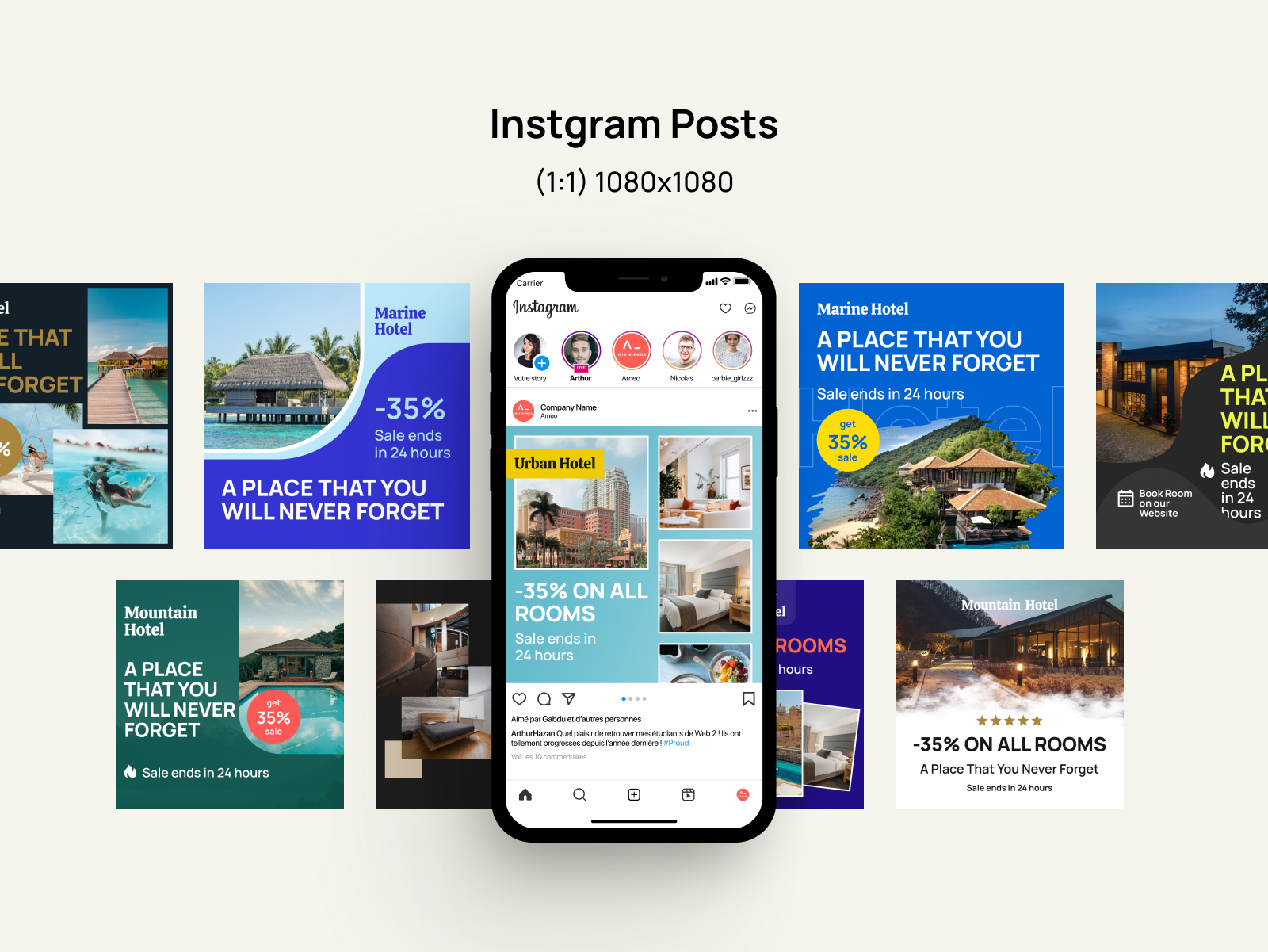
Visual Storytelling: High-impact, short-form video is king here. Instagram Reels and TikToks that showcase the sensory details of a stay—the sound of waves, the pour of a signature cocktail, the texture of the linens—create a visceral connection.
-
Destination Guides: Content should focus on the location first, the hotel second. Articles like “Top 10 Hidden Gems in [City]” or “Why Should Be Your Next Escape” position the hotel as a local authority and a gateway to the destination.
-
Viral Hooks: Utilizing trending audio or formats on social media to gain organic reach. The content must be shareable, often tapping into humor or relatable travel struggles (e.g., “POV: You finally booked the trip out of the group chat”).
2.2 The Planning Stage (Consideration)
The traveler has selected a destination and is now actively researching options. This is the “Zero Moment of Truth,” where specific features, prices, and locations are scrutinized. The user moves from passive consumption to active comparison.
Psychological State: Analytical, comparative, value-seeking.
Content Strategy:
-
Comparison Content: Don’t shy away from comparisons. Articles like “Hotel vs. Airbnb in [City]: What You Need to Know” or “Why Stay in the Historic District vs. Downtown” help the user frame their decision.
-
Detailed Amenities: Deep dives into specific features are crucial. A general “Spa” page is insufficient; specific content about “The Benefits of Our Local Sea Salt Scrub” or “Coworking Spaces with 1GB Fiber Internet” addresses specific needs.
-
Social Proof Integration: Embed curated UGC galleries directly on the website. Seeing real people enjoying the pool or the breakfast buffet validates the professional photos and builds trust.
-
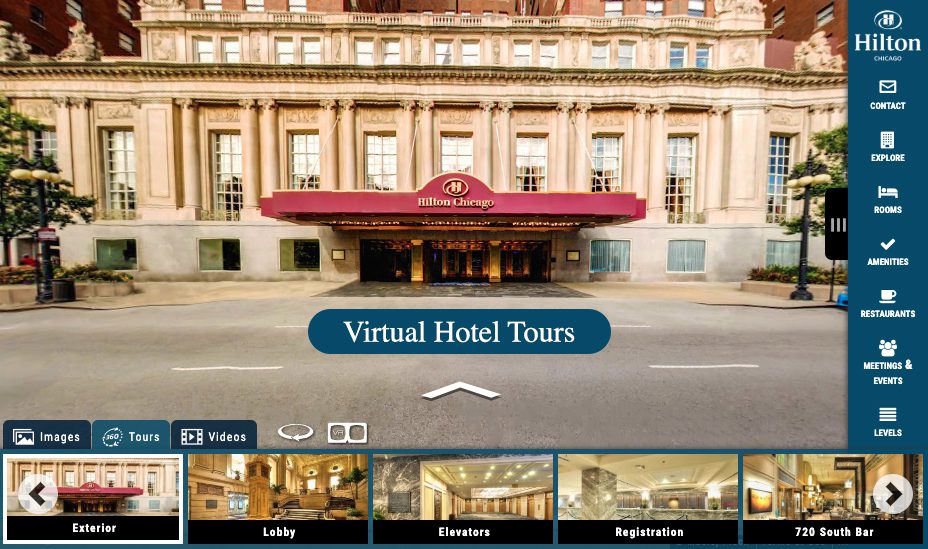
Virtual Tours: 3D walkthroughs (Matterport) allow the planning guest to “walk” the property, alleviating anxiety about room size or layout.
2.3 The Booking Stage (Decision)
The guest is ready to transact. At this stage, friction is the enemy. The content must reassure the guest that they are making the right choice and that booking direct is the smartest option.
Psychological State: Decisive, risk-averse, urgent.
Content Strategy:
-
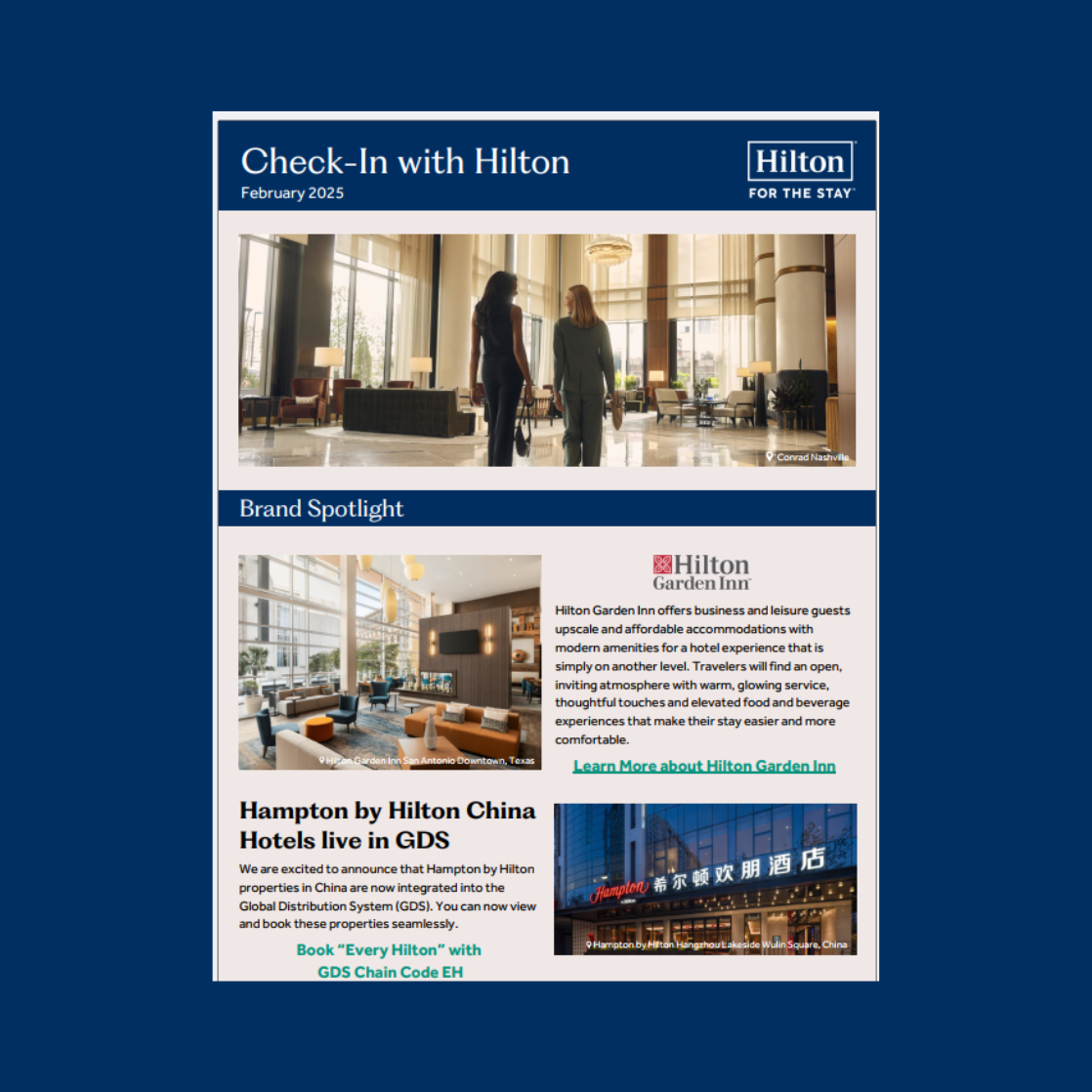
Rate Transparency & Direct Booking Perks: “Why Book Direct” pages should be prominent, clearly explaining benefits like free upgrades, flexible cancellation, late checkout, or welcome amenities. This combats the OTA promise of “lowest price” by offering “highest value”.
-
Urgency Signals: Ethical use of urgency, such as “Limited availability for these dates” or countdowns for special seasonal packages, can trigger the final click.
-
Trust Signals: Prominently display secure payment badges, cancellation policies, and aggregate review scores near the “Book Now” button to reduce abandonment anxiety.
-
Exit-Intent Offers: If a user moves their mouse to close the tab, an exit-intent popup offering a small incentive (e.g., “Unlock 5% off by joining our newsletter”) can salvage the booking.
2.4 The Experiencing Stage (On-Property)
Marketing does not stop at check-in. The on-property experience is a prime opportunity for content to drive ancillary revenue and deepen the guest relationship.
Psychological State: Immersion, relaxation, openness to suggestion.
Content Strategy:
-
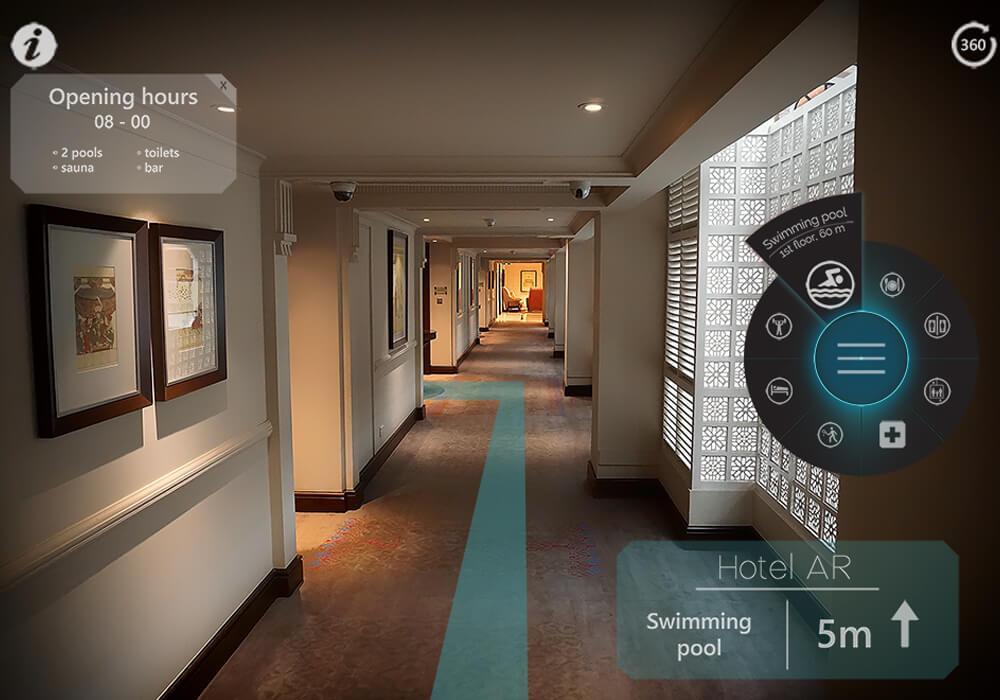
Digital Compendiums: QR codes in rooms linking to mobile-optimized guides for dining, pool hours, and local maps replace dusty binders.
-
Real-Time Upselling: Push notifications (via hotel app or WhatsApp) offering “Happy Hour at the Rooftop – Starts in 10 Minutes” or “Last Minute Spa Opening – 20% Off” capitalize on the guest’s immediate location and mood.
-
Interactive Content: Augmented Reality (AR) experiences, such as scanning a wine label in the restaurant to see a video of the winemaker or a tasting note, enhance the physical experience with digital layers.
2.5 The Sharing Stage (Advocacy)
Guests become the most effective marketing team. In the “sharing economy,” every guest is a potential micro-influencer.
Psychological State: Validation, social connection, pride.
Content Strategy:
-
“Instagrammable” Moments: Design physical spaces specifically for social sharing—a neon sign, a swing in the lobby, or a perfectly lit mirror.
-
Branded Hashtags: clearly display the hotel’s handle and hashtag on mirrors, key cards, and menus to encourage tagging.
-
Incentivized Sharing: Run ongoing contests (e.g., “Post your best sunset photo with #StayAt[Hotel] to win a free night”) to stimulate a steady stream of UGC.
2.6 The Returning Stage (Loyalty)
The goal is to turn a one-time guest into a repeat customer and brand advocate. This closes the loop.
Psychological State: Nostalgia, familiarity, loyalty.
Content Strategy:
-
Personalized Email Marketing: automated flows that send a “We missed you” email on the one-year anniversary of their stay, perhaps with a special offer to return.
-
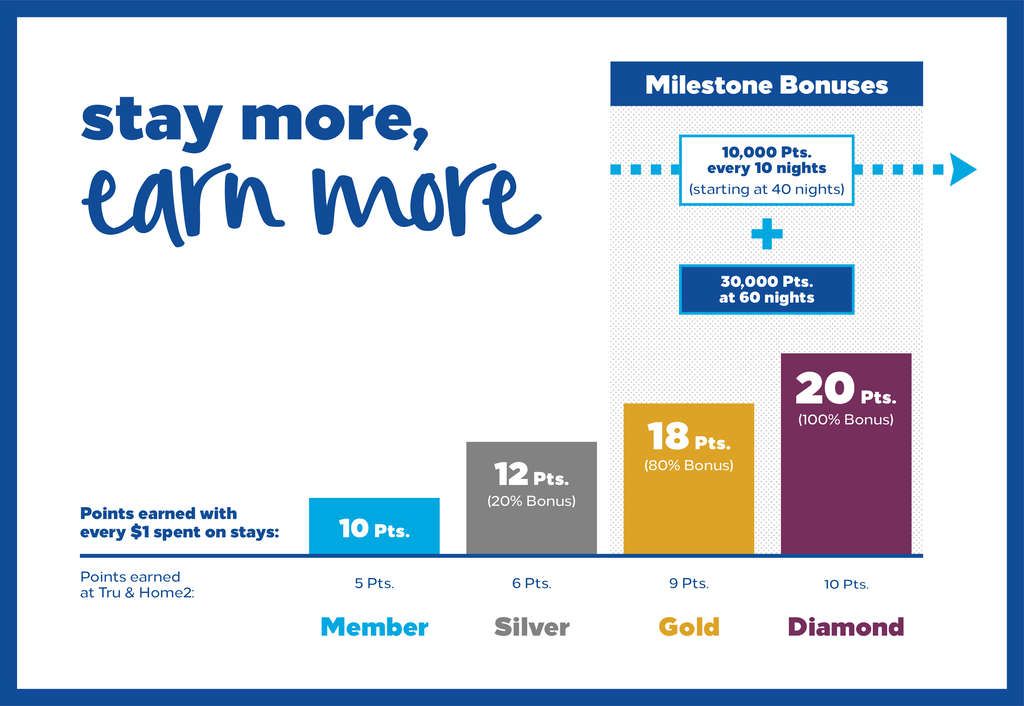
Exclusive Content: Early access to holiday packages or special events for past guests.
-
Community Building: inviting loyal guests to join a private Facebook group or WhatsApp channel where they get insider tips and first access to new rate plans.
3. Content Engineering: The Pillar-Cluster-Bridge Model
In the algorithmic landscape of 2026, simply “writing blog posts” is insufficient. Content must be architected for topical authority. The Pillar-Cluster-Bridge Model is the gold standard framework for organizing content to maximize SEO performance and user engagement. This strategy moves away from scattered keywords and focuses on “owning” entire topics.
3.1 The Architecture of Authority
This model organizes content into a cohesive web rather than isolated nodes. It signals to search engines that the website is a comprehensive authority on a specific subject, boosting the ranking of all related pages.
3.1.1 Pillar Content (The Hub)
The Pillar is a comprehensive, high-level page that covers a broad topic in depth. It serves as the “Hub” for that subject matter.
-
Characteristics: Broad, evergreen, high word count (2,000+ words), targets high-volume “head” keywords.
-
Example: A “Weddings at [Hotel Name]” page. This page covers every aspect of the wedding offering broadly: venues, catering, capacity, accommodation blocks, and planning services.
3.1.2 Cluster Content (The Spokes)
Clusters are specific, granular articles that address niche user intents related to the Pillar topic. They answer specific questions that the broad Pillar page cannot cover in detail.
-
Characteristics: Niche, specific, targets long-tail keywords, addresses specific pain points or personas.
-
Examples for the Wedding Pillar:
-
“Best Winter Wedding Themes in [City]”
-
“Guide to Micro-Weddings and Elopements”
-
“Top 5 Florists in [Neighborhood] for Your Big Day”
-
“LGBTQ+ Friendly Wedding Venues in [City]”
-
“A Bride’s Guide to Pre-Wedding Spa Treatments”
-
3.1.3 The Bridge (Internal Linking)
The “Bridge” is the strategic internal linking structure that connects the Pillar and Clusters.
-
Mechanism: Every Cluster page must link back to the Pillar page (usually in the first paragraph) using optimized anchor text (e.g., “hosting your wedding at [Hotel]”). The Pillar page, in turn, links out to the Cluster pages as “Deep Dive” sections.
-
SEO Benefit: This structure passes “link juice” (authority) from the specific, easier-to-rank Cluster pages up to the competitive Pillar page. It helps the main transactional page rank for high-value terms like “Wedding Venue [City]”.
3.2 Content Gap Analysis: Finding the “Blue Ocean”
To outperform competitors, hotels must conduct rigorous Content Gap Analysis. This involves identifying keywords, topics, and formats that competitors rank for, but your property does not, as well as identifying unmet audience needs.
Methodology for Hoteliers:
-
Keyword Gap Analysis: Use SEO tools (like SEMrush, Ahrefs, or Moz) to run a “Keyword Gap” report. Enter your domain and 3-5 local competitor domains. The tool will visualize keywords where:
-
Missing: Competitors rank, but you do not.
-
Weak: You rank, but significantly lower than competitors.
-
Strong: You rank higher (opportunities to defend).
-
Strategy: Prioritize “Missing” keywords that have high commercial intent (e.g., “pet friendly hotel [city]” or “hotel with ev charging [city]”).
-
-
Topic Gap Analysis: Look for entire subject areas missing from your site. If a competitor has a robust “Family Travel Guide” section and you only have a generic “Kids Club” page, you are losing that specific segment.
-
Action: Build a “Family Travel” Pillar and support it with Clusters like “Kid-Friendly Restaurants Nearby” and “Rainy Day Activities for Kids in [City]”.
-
-
Format Gap Analysis: Are competitors ranking with text-only pages? This is a “Format Gap.” Google’s 2026 algorithms prioritize “helpful content” that offers diverse media experiences.
-
Action: Fill the gap by creating video content, interactive maps, or downloadable PDF itineraries for the same topic. If the competitor has a blog post about “Best Beaches,” you can win by creating a “Video Guide to the Best Beaches” with drone footage.
-
3.3 The Local Authority Strategy
Hotels are inherently local businesses. A successful content strategy must position the hotel as the “Key to the City.”
-
Hyper-Local Guides: Move beyond generic “Things to do in London.” Write “The Best Artisan Coffee Shops in Shoreditch within Walking Distance.” This specificity signals local expertise and captures high-intent searches.
-
Event-Based Content: Create landing pages for major local conferences, festivals, or concerts well in advance. Target keywords like “Hotels near [Festival Name] 2026.” These pages capture traffic from attendees looking for accommodation.
-
Partnership Content: Interview local chefs, artists, or tour guides for the blog. This provides unique, authentic content and encourages those partners to share the article with their own audiences, building backlinks and local relevance.
4. The Visual Web & Immersive Media: Beyond Static Imagery
In 2026, the web is visual-first. The consumption habits of modern travelers have shifted away from long-form text towards immersive media. Visual content is no longer just “eye candy”; it is a primary conversion driver and a critical component of search visibility.
4.1 The Short-Form Video Revolution
Video is arguably the highest-converting content format available to hoteliers. Research consistently suggests that travelers are significantly more likely to engage with and book a property after watching a video than after reading a text description. Platforms like TikTok, Instagram Reels, and YouTube Shorts have conditioned users to expect information to be delivered in bite-sized, visual formats.
Strategic Applications:
-
TikTok & Reels as Search Engines: These platforms are not just for entertainment; they are search engines. A query for “Best hotel in Paris with Eiffel Tower view” on TikTok yields video results that serve as direct proof of the experience. Hotels must produce content that answers these questions visually.
-
Content Ideas:
-
Room Tours (POV style): “Walk into the Junior Suite with me.”
-
“Day in the Life”: Showcasing the guest experience from coffee to cocktails.
-
“Secret Menu”: “Ask for this off-menu drink at our bar.”
-
Wayfinding: “How to get to the beach from our lobby in 2 minutes.”.
-
-
Consistency: The algorithm favors frequency. A “quality over quantity” approach often fails on TikTok; “consistent adequacy” combined with occasional high-effort hero content works better.
-
-
YouTube Shorts: Often overlooked, YouTube Shorts offers high reach and connects directly to the world’s second-largest search engine (YouTube). Repurpose vertical video assets here to capture a different demographic.

4.2 Virtual Reality (VR) & 3D Tours: The “Try Before You Buy” Standard
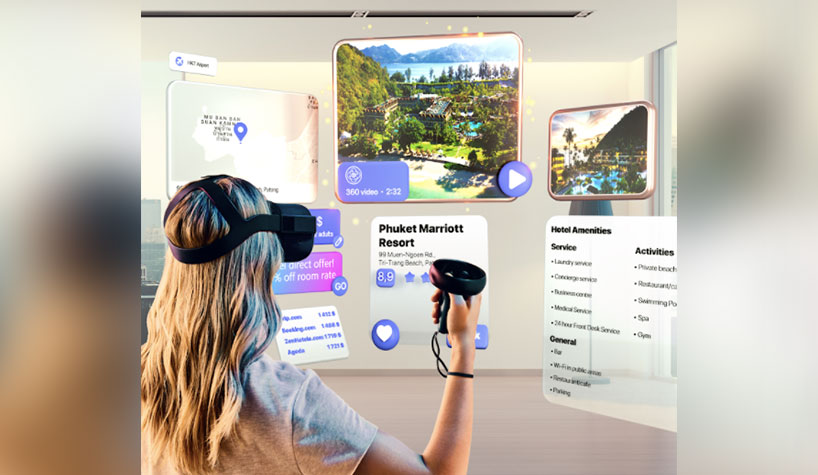
The “Try Before You Buy” concept, once limited to retail, has reached hospitality. 3D walkthroughs (using technology like Matterport or competitors like VResorts, Panomatics, or VIP Worldwide) build massive trust.
-
ROI of VR: Virtual tours significantly increase “dwell time” (the amount of time a user spends on the site), which is a positive SEO signal. More importantly, they reduce booking anxiety. Guests know exactly what the room looks like—where the outlets are, the size of the bathroom, the view from the window—reducing complaints upon arrival.
-
Implementation Strategy:
-
Leisure: Embed 3D tours on room type pages. Allow guests to “walk” from the room to the pool to see the proximity.
-
MICE (Meetings, Incentives, Conferences, Exhibitions): For event planners, the ability to virtually walk through a ballroom, measure dimensions, and see line-of-sight for projectors is a massive conversion driver. It saves them a site visit and speeds up the sales cycle.
-
-
Platform Selection: While Matterport is the industry standard, competitors like VResorts are gaining traction for specific niches like resorts, offering potentially faster ROI and better support for complex outdoor spaces.
4.3 Visual SEO: Optimizing for Machine Vision
Images and videos must be optimized for search engines, not just human eyes. Google’s AI (Vision API) analyzes the actual pixels of an image to understand its content.
Optimization Checklist:
-
Alt Text: Write descriptive text for every image. Instead of “IMG_001.jpg,” use “Luxury King Suite with Ocean View and Balcony in Maui.” This helps screen readers and search engines understand the image.
-
Geotagging: Ensure image metadata includes GPS coordinates. This reinforces local relevance to Google Maps algorithms, linking the image explicitly to the hotel’s location.
-
Schema for Video: Use
VideoObjectSchema markup for all embedded videos. This allows Google to display the video thumbnail, duration, and description directly in search results, increasing click-through rates. -
Hosting: Host videos on specialized platforms (YouTube, Vimeo, Wistia) and embed them. Hosting large video files directly on the server can kill page load speed, hurting SEO.
5. Technical Foundation: The AI Layer & Schema Markup
The “invisible” layer of content marketing—the technical infrastructure—is what allows content to be found, understood, and surfaced by AI agents and search crawlers. In the age of Agentic AI, a beautiful website that is unintelligible to machines is effectively invisible.
5.1 Schema Markup: The Language of Agents
Schema markup (structured data) is code added to a website to help search engines understand the content. It turns unstructured text (e.g., “We have a pool”) into structured data (e.g., "amenityFeature": "SwimmingPool"). In the age of Agentic AI, this is non-negotiable. If an AI agent cannot “read” your room rates, availability, and amenities through structured data, it cannot recommend you to a user.
Essential Schema Types for Hotels:
-
HotelSchema: The core identifier. It wraps the entire business entity. Key properties includename,address,starRating,checkinTime,checkoutTime,telephone, andpriceRange. -
HotelRoomSchema: This is critical for selling specific inventory. It details specific room types (e.g., “Deluxe Suite”),bedconfiguration,occupancy, and specific room amenities. -
OfferSchema: This connects the room to a price and availability. It allows Google to display pricing directly in search results (Rich Snippets). -
ReviewSchema: Aggregate ratings from guests. This is crucial for showing star ratings (the yellow stars) in search results, which increases CTR. -
AmenityFeature: Explicitly tagging amenities like “Free Wi-Fi,” “Pool,” “Pet Friendly,” “EV Charging.” AI agents filter heavily on these features.
Strategic Implication: When a user asks a voice assistant, “Find me a pet-friendly hotel in Austin with a pool under $300,” the AI queries the Schema markup across the web. Without the specific AmenityFeature tags for “Pet Friendly” and “Pool” and the Offer schema for price, the hotel is invisible to this query, regardless of how beautiful the photos are.
Implementation Example (JSON-LD):
JSON
{
  "@context": "https://schema.org",
  "@type": "Hotel",
  "name": "The Grand Hotel",
  "description": "A luxury boutique hotel in downtown Metropolis...",
  "starRating": {
    "@type": "Rating",
    "ratingValue": "5"
  },
  "address": {
    "@type": "PostalAddress",
    "streetAddress": "123 Main St",
    "addressLocality": "Metropolis",
    "postalCode": "10001",
    "addressCountry": "US"
  },
  "amenityFeature":
}
5.2 Voice Search & Conversational SEO
By 2026, it is projected that half of all web searches could be voice-based. Voice queries are fundamentally different from typed searches: they are longer, more conversational, and often rooted in immediate local intent.
-
Long-Tail Keywords: Content must be optimized for natural language questions.
-
Typed Query: “Hotel Boston parking.”
-
Voice Query: “Does the Liberty Hotel in Boston have valet parking and how much does it cost?”.
-
-
The Power of FAQ Pages: The most effective way to capture voice search traffic is through robust, conversational FAQ pages.
-
Structure: List common questions exactly as users ask them.
-
Markup: Wrap the entire FAQ section in
FAQPageSchema. -
Benefit: This increases the chance of being featured as a “Direct Answer” or “Featured Snippet” in Google search results (Position Zero). When a voice assistant answers a question, it often reads from this Featured Snippet.
-
5.3 Local SEO & Google Business Profile (GBP) Mastery
For a physical business like a hotel, Local SEO is paramount. The Google Business Profile (formerly Google My Business) is effectively the hotel’s “second homepage.” For many mobile users, it is the only homepage they see before booking via an OTA link or Metasearch.
The Algorithmic Trinity of Local SEO:
-
Relevance: How well the hotel matches the search intent.
-
Optimization: Complete business information, accurate category selection (e.g., “Hotel,” “Wedding Venue,” “Conference Center”), and keyword-rich descriptions.
-
-
Distance: Proximity to the user or the searched location.
-
Optimization: Accurate address, consistent NAP (Name, Address, Phone) citation across the web.
-
-
Prominence: How popular and authoritative the hotel is.
-
Optimization: Review volume, review velocity (frequency of new reviews), backlinks, and citations.
-
Tactical Optimization Checklist:
-
NAP Consistency: Name, Address, and Phone number must be identical across all directories (TripAdvisor, Yelp, Bing, Website). Inconsistencies confuse Google’s algorithm.
-
Visual Freshness: Upload new photos weekly. Google’s vision AI analyzes these photos to understand context (e.g., identifying “pool,” “cocktails,” “bed”) and prioritizes active profiles.
-
Q&A Management: Proactively populate the Q&A section of the GBP with common questions and accurate answers. This prevents misinformation from users answering incorrectly.
-
Posts: Use Google Posts (like social media updates) to share offers, events, and news directly on the search result page.

6. Distribution & Social Velocity: Amplifying the Message
Content is useless if it is not distributed effectively. In 2026, distribution channels are diversifying, with a strong emphasis on social velocity and the emerging “Agent-to-Agent” economy.
6.1 Agent-to-Agent (A2A) Distribution
We are approaching a future where human interaction in the booking process is minimized. A traveler’s personal AI agent will communicate directly with the hotel’s AI agent to negotiate a stay.
-
The Mechanism: An “Agentic” distribution layer is emerging. Personal assistants (like an advanced Siri or Google Gemini) will act as gatekeepers. They will ping hotel APIs to check real-time rates and availability.
-
Preparation: Hotels must ensure their inventory, pricing, and policies are accessible via API (Application Programming Interface) and marked up with impeccable Schema. The “website” of the future may be a database read by machines.
-
Strategy: Hotels need to evaluate if their CRS (Central Reservation System) and PMS (Property Management System) vendors are “AI-ready” and support open APIs that allow for this type of autonomous negotiation.
6.2 User-Generated Content (UGC) as a Trust Engine
UGC is the most potent form of marketing because it is perceived as unbiased. A guest’s photo of their breakfast is infinitely more trusted than the hotel’s professional shot of the same meal.
Strategies to Stimulate UGC:
-
The “Loop”: Remind guests to tag the hotel during check-in, in the elevator (digital signage), and on table tents in the restaurant.
-
Contests: Run ongoing monthly competitions (e.g., #StayAt[HotelName]) where the best photo wins a dining voucher or a free night. This ensures a steady stream of fresh content.
-
Repurposing: With permission, use UGC in email newsletters, on the website, and in paid ads. Ads featuring UGC often see higher click-through rates (CTR) and lower costs per acquisition (CPA) because they look like native content rather than ads.
6.3 Influencer Marketing: Micro & Nano
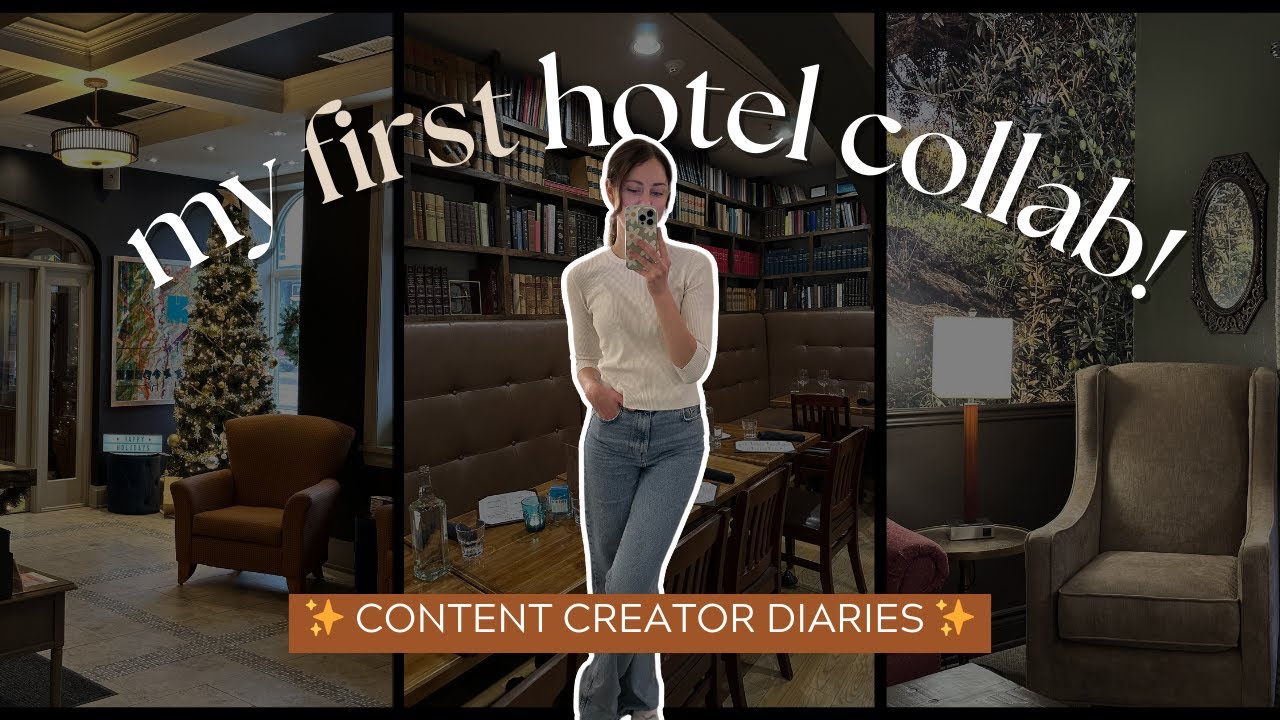
The era of the mega-influencer (celebrities with millions of followers) is waning in favor of Micro-Influencers (10k-100k followers) and Nano-Influencers (<10k followers).
-
Why Micro/Nano? They have higher engagement rates and their audiences trust their recommendations as “peer-to-peer” advice. They are also often willing to work for barter (free stay) rather than high fees, making them cost-effective for hotels.
-
Strategy: Identify influencers who align with the hotel’s niche (e.g., a “Dog Mom” influencer for a pet-friendly hotel, or a “Digital Nomad” blogger for a property with coworking spaces).
-
Deliverables: Move beyond just a “post.” Contract for a set of deliverables including Stories (with links), a Reel/TikTok, and usage rights for the content so the hotel can run it as a paid ad.
6.4 Social Listening & Engagement
Social media is a two-way channel. “Ghosting” comments is a major error.
-
Response Strategy: Respond to every comment and review. This signals to the algorithm that the account is active, boosting organic reach.
-
Listening: Use tools to monitor brand mentions (even un-tagged ones) and location tags. Engaging with a guest who posted a photo at the hotel location but didn’t tag the brand is a “surprise and delight” moment that builds loyalty.
7. Specialized Content Verticals: Differentiation Strategies
To stand out in a crowded market, hotels must carve out specific content niches based on their unique attributes.
7.1 Sustainability & Farm-to-Table Storytelling
Sustainability is no longer a “nice to have”; it is a demand driver, especially for younger generations and corporate clients with CSR (Corporate Social Responsibility) mandates. However, vague claims like “Eco-friendly” breed skepticism (Greenwashing).
Storytelling Tactics:
-
Farm-to-Table: Don’t just list “local ingredients.” Tell the story of the farmer. “Meet John, who grows the heirloom tomatoes for our Caprese salad.” Use video interviews and blog profiles. This connects the guest to the local community and validates the claim.
-
Green Initiatives: Move beyond “hang up your towel.” Create content around tangible impacts—”Our solar panels saved X tons of CO2 this year” or “We eliminated single-use plastics: Here’s what we use instead.”
-
Community Impact: Highlight partnerships with local artisans, charities, or schools. This “World-building” approach positions the hotel as a pillar of the community, which appeals to the “meaningful travel” segment.
7.2 Boutique & Luxury Differentiators
For boutique and luxury properties, the content must reflect exclusivity, craftsmanship, and hyper-personalization.
-
Behind the Scenes: Show the effort that goes into luxury. A video of the florist arranging the lobby centerpiece, the housekeeper folding the towels, or the chef plating a tasting menu item. This justifies the price point by showcasing the human craftsmanship involved.
-
Concierge Tips: “The Concierge’s Guide to [City]”—content that offers access to things the average tourist wouldn’t find (e.g., “The speakeasy that doesn’t have a sign”). This establishes the hotel as an insider.
7.3 Bleisure & Digital Nomads
With remote work normalized, the “Bleisure” (Business + Leisure) segment is massive.
-
Content Needs: They need to know they can work effectively (tech specs) and enjoy their evenings (leisure guide).
-
Tactics: Create “Itineraries for the Working Traveler”—8 AM to 5 PM work focus (highlighting ergonomic chairs, fiber Wi-Fi, coffee), 5 PM to 10 PM local exploration. This specific content cluster signals to the guest that you understand their lifestyle.
8. Performance & Analytics: Measuring What Matters
Content marketing without measurement is merely vanity. In 2026, metrics must align with business outcomes using advanced analytics.
8.1 Defining Success: Revenue-Based KPIs
While “likes” and “shares” indicate engagement, they do not pay the bills. The focus must shift to revenue-based metrics.
Key Performance Indicators (KPIs):
-
Direct Booking Rate: The percentage of bookings coming through the website vs. OTAs. Content’s primary goal is to shift this ratio.
-
Assisted Conversions: Using Google Analytics (GA4), track how many bookings touched a blog post or social channel before converting. Often, a user reads a blog, leaves, and returns a week later to book. “Assisted conversions” credit the blog for that initial interest.
-
TRevPAR (Total Revenue Per Available Room): Does the content drive dining reservations and spa bookings? If a blog post about the “Best Massages in [City]” leads to spa bookings from non-guests, that is a content win.
-
Time on Page / Dwell Time: High dwell time signals to Google that the content is valuable, improving SEO rankings.
8.2 Attribution Models
Hotels must move beyond “Last Click” attribution (which gives all credit to the final step, often the booking engine). Multi-touch attribution models recognize the value of the “Dreaming” and “Planning” content that brought the user into the funnel initially.
Table 2: Content Metrics & Business Impact
| Metric | Tool | Business Impact |
| Organic Traffic | Google Search Console | Top-of-funnel awareness; reduces reliance on paid ads. |
| Direct Booking % | PMS / Booking Engine | Higher profit margin (commission-free revenue). |
| Engagement Rate | Social Media Analytics | Brand affinity; algorithmic reach. |
| Local Pack Ranking | Local SEO Tools | Visibility for high-intent “near me” searches. |
| Conversion Rate | GA4 | Efficiency of the booking funnel and landing pages. |
9. Strategic Outlook: 2026-2030
As we look toward the latter half of the decade, the integration of AI will deepen, and the concept of “travel” itself will continue to evolve.
9.1 The Autonomous Future
We are moving towards a “zero-click” future for many transactions. The hotel website of 2030 might primarily be an API endpoint for AI agents. However, the human desire for connection and storytelling will remain. The most successful hotels will be those that can automate the transactional friction (A2A distribution) while amplifying the human connection (storytelling, service, authenticity).
9.2 “Endurance” and “Transformative” Travel
A growing trend identified for 2026 is “Endurance Travel”—vacations centered on physical challenges and breakthroughs rather than relaxation. Travelers are seeking “Transformative Journeys” that change them.
-
Content Opportunity: Create content packages around local marathons, hiking trails, or wellness bootcamps. Position the hotel as the “Basecamp” for transformation.
9.3 Hyper-Personalization
AI will allow for websites that dynamically change based on who is viewing them. A business traveler sees a homepage highlighting the reliable Wi-Fi and express coffee; a family sees the pool and kids’ club.
-
Strategy: Invest in Customer Data Platforms (CDPs) that can unify guest data to power these real-time personalized experiences.
9.4 Conclusion
The 2026 hotel content marketing landscape is dynamic, technical, and deeply human. Success requires a dual-track strategy: building for the machine (Schema, technical SEO, A2A readiness) and building for the heart (Authenticity, storytelling, visual immersion).
Hoteliers who master the “Commercial Trinity,” embrace the raw authenticity demanded by Gen Z, and build a robust technical infrastructure for the AI age will not only survive the shift but thrive—securing their independence from OTAs and building lasting, direct relationships with the modern traveler. The future belongs to those who can turn their hotel into a story, and ensure that story is readable by both humans and algorithms. The “Architecture of Attention” is built on the foundation of data but decorated with the art of hospitality.