

1. The Strategic Imperative of the Review Ecosystem in 2026
The digital landscape for hospitality has undergone a seismic shift between 2020 and 2026, fundamentally altering the mechanisms by which hotels acquire guests, build reputation, and secure revenue. The era where Online Travel Agencies (OTAs) like Booking.com and Expedia held an uncontested monopoly on guest discovery has largely concluded, replaced by a more complex, algorithmically driven ecosystem centered squarely on Google. For the modern hotelier and SEO specialist, Google Hotel Reviews are no longer merely a repository of guest sentiment or a passive feedback loop; they have evolved into the primary lever for Local SEO visibility, a critical component of the semantic search entity graph, and the single most significant driver of direct booking revenue in the current digital economy.

By 2026, the integration of Artificial Intelligence (AI) into search—specifically through Google’s Gemini models and the Search Generative Experience (SGE)—has transformed reviews from static text into dynamic, structured data points. Google’s algorithms now parse reviews not just for keywords, but for attributes, entities, and sentiment depth, constructing a multi-dimensional understanding of a property that transcends simple star ratings. A review stating “the pool was great” is substantially less valuable than one stating “the heated infinity pool offers a perfect view of the downtown skyline,” because the latter validates specific entity attributes within the Google Knowledge Graph, triggering relevance signals for highly specific, high-intent search queries.
The strategic imperative for hotels is clear: to dominate the local search results, one must master the review ecosystem. This requires a holistic approach that integrates technical SEO implementation, psychological engineering of the guest experience, and a sophisticated content strategy that leverages user-generated content (UGC) to build topical authority. This report provides an exhaustive analysis of the Google Hotel Review ecosystem, moving beyond basic reputation management to explore the technical, psychological, and algorithmic mechanics that dictate ranking in the Local Pack and Maps in 2026. We will dissect the impact of the 2025/2026 core updates, the nuance of attribute-based ratings, the implementation of JSON-LD schema for review snippets, and the psychological triggers that drive guest feedback, offering a roadmap for hotels to reclaim their digital destiny from third-party intermediaries.
1.1 The Shift from OTAs to the Google Ecosystem
The trajectory of the online travel market has been defined by a gradual but decisive shift in power dynamics. While OTAs remain significant players in terms of transaction volume, their role as the primary discovery engine has been usurped by Google. In 2025, Booking.com logged 1.6 billion monthly visits, a testament to its continued relevance as a booking engine. However, the user journey increasingly begins on Google. The “Zero-Click” search behavior, where users find all necessary information—rates, availability, photos, and reviews—without ever leaving the Search Engine Results Page (SERP), has become the norm. For 46% of all searches, the user intent is local, and for travel specifically, the Google Travel vertical integrates flights, hotels, and experiences into a seamless interface that keeps the user within the Google ecosystem.
This shift presents a profound opportunity for direct bookings. When a user discovers a hotel via an OTA, the hotel pays a commission fee ranging from 15% to 25%. When a user discovers the hotel via Google Maps or the Local Pack and clicks through to the hotel’s website, the cost of acquisition drops dramatically, often to zero for organic clicks or a manageable Cost-Per-Click (CPC) for Hotel Ads. Thus, optimizing for Google Hotel Reviews is not just a marketing exercise; it is a revenue optimization strategy. A robust review profile on Google acts as a trust signal that encourages users to bypass the OTA and book direct, improving the hotel’s bottom line and fostering a direct relationship with the guest.
Table 1.1: Comparative Market Dynamics of Travel Discovery Platforms (2025)
| Platform | Monthly Visits (Est.) | Primary User Intent | Hotelier Cost Model | Strategic Value |
| Booking.com | 1.6 Billion | Transactional / Comparison | 15-20% Commission | High volume, lower margin. Essential for occupancy. |
| Google Travel | 350 Million* | Discovery / Informational / Local | Free (Organic) / CPC (Ads) | High margin, direct relationship. Critical for brand equity. |
| TripAdvisor | 300 Million | Research / Validation | Subscription / CPC | Trust verification. Feeds into “Reviews from the web.” |
| Airbnb | 700 Million | Niche / Experience / Long-stay | 3% Host Fee (mostly) | Dominates alternative accommodation sector. |
Note: Google’s influence is significantly larger than “Visits” suggests, as many users transact or find information directly on the SERP without visiting “Google Travel” explicitly as a destination site.
1.2 The 2026 Google Core Updates: Discover and Local Relevance
The February 2026 Google Core Update marked a pivotal moment in the evolution of search, with specific implications for the hospitality industry. Unlike previous updates that focused primarily on traditional organic ranking factors, this update placed a heavy emphasis on Google Discover, local relevance, and content authority. The update signaled a move away from generic, keyword-stuffed content toward expert-driven, experience-based content that demonstrates genuine local expertise.
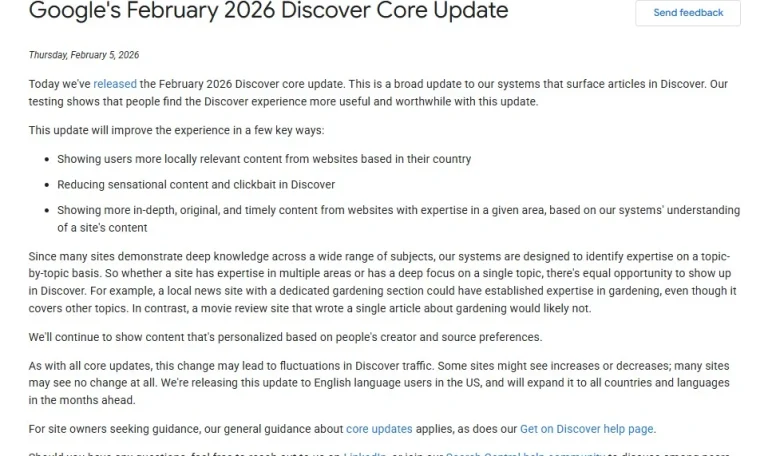
For hotels, this update means that the algorithm now prioritizes content that is hyper-locally relevant. A hotel website that simply lists amenities is less likely to rank than one that contextualizes those amenities within the local neighborhood. Reviews play a crucial role here. Reviews that mention local landmarks (“walking distance to the convention center,” “great view of the cathedral”) provide the algorithmic validation needed to establish local relevance. Furthermore, the update increased the visibility of “experience-based” content in Google Discover, the personalized feed that appears on mobile devices. Hotels with active, engaging Google Business Profiles (GBP) featuring high-quality photos and detailed reviews are now more likely to appear in Discover feeds for users who have shown an interest in travel to that destination.
This shift underscores the importance of Experience, Expertise, Authoritativeness, and Trustworthiness (E-E-A-T). Reviews are the ultimate signal of Experience. When a guest writes a detailed review about their stay, they are providing third-party validation of the hotel’s claims. Google’s algorithms heavily weight this user-generated content as proof of the hotel’s ability to deliver on its promises. Consequently, a hotel’s SEO strategy must now encompass a proactive approach to generating reviews that speak to specific experiences and local connections, aligning perfectly with the algorithmic preferences of the 2026 Core Update.
2. The Algorithmic Trinity: Relevance, Distance, and Prominence
To master Hotel SEO, one must first deconstruct the fundamental architecture of Google’s Local Search algorithm. Unlike traditional organic search, which relies heavily on backlinks and domain authority, local hotel search is governed by three specific, interrelated pillars: Relevance, Distance, and Prominence. These three factors determine which hotels appear in the coveted “Local Pack” (the map-based trio of listings) and the order in which they appear in Google Maps results.
2.1 Relevance: The Semantic Match
Relevance determines how well a local business profile matches a user’s specific search intent. In the context of 2026, relevance goes far beyond simply matching the category “Hotel.” Google’s AI analyzes the content of reviews, the business description, and the website text to establish relevance for long-tail, specific queries. The algorithm seeks to understand the “entity” of the hotel—its character, its amenities, and its suitability for different types of travelers.
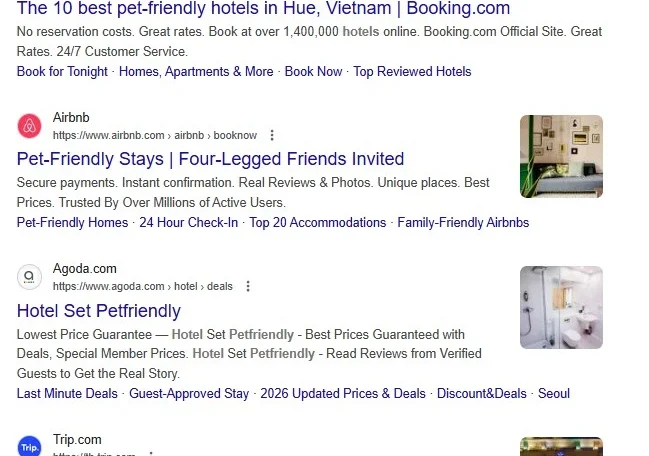
For example, if a user searches for “pet-friendly hotel near convention center with fast wifi,” Google scans the text of user reviews for these specific semantic markers. A hotel might list “free wifi” in its amenities section, but if fifty reviews mention “wifi is spotty,” the relevance score for that specific query drops. Conversely, if reviews consistently praise the “high-speed connection” and mention “remote work,” the hotel gains relevance authority for business-traveler intent. This semantic matching means that the language used by guests in their reviews directly impacts the queries for which the hotel will rank. A review that says “great for kids” boosts relevance for “family hotel,” while a review that mentions “romantic atmosphere” boosts relevance for “couples getaway”.
This dynamic makes the “content” of reviews a critical SEO asset. Hoteliers must encourage guests to be specific in their feedback. A generic “great stay” review contributes to the star rating but does little for semantic relevance. A detailed review describing the “spacious conference room” and “excellent catering” provides the keywords and context the algorithm needs to match the hotel with event-planners and business travelers. Thus, relevance is not static; it is built and refined through the continuous accumulation of descriptive user-generated content.
2.2 Distance: The Geocentric Constraint
Distance is the most rigid of the three factors. It calculates the proximity of the hotel to the user’s location or the location term used in the query. While a hotel cannot move its physical location, it can optimize how its location is perceived and prioritized by the algorithm through reviews and content. The algorithm considers the user’s viewport on the map, their physical GPS location, and any explicit geographic modifiers in their search query (e.g., “hotels in downtown”).
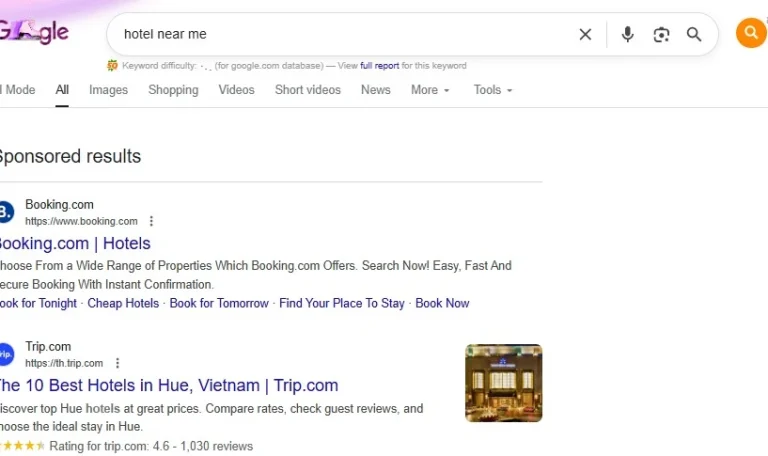
Reviews play a vital role in “proximity reinforcement.” When guests mention nearby landmarks, neighborhoods, or transit hubs in their reviews (e.g., “walking distance to the Eiffel Tower” or “two blocks from the subway”), they help Google corroborate the hotel’s location data. This user-generated confirmation bridges the gap between the hotel’s pinned coordinates and the colloquial way users describe neighborhoods. It helps the hotel rank for “near me” searches and for searches related to specific points of interest. If a hotel is physically close to a stadium but no reviews mention it, the algorithm may not prioritize it for searches like “hotels near the stadium” as highly as a slightly further hotel where every review raves about the “easy walk to the game”.
Furthermore, the concept of “Service Area” in GBP is less relevant for hotels (which are fixed locations) than for service businesses, but the principle of “located-in” relationships remains key. The Knowledge Graph understands that the hotel is “in” a specific neighborhood, and reviews that reinforce this neighborhood identity (e.g., “best hotel in SoHo”) strengthen the hotel’s visibility for searches targeting that specific area. This is why location-specific keywords in review responses are also a recommended tactic—reinforcing the hotel’s connection to its immediate geography.
2.3 Prominence: The Review Powerhouse
Prominence refers to how well-known and authoritative a business is. This is where reviews exercise their most potent influence. In the offline world, prominence is brand fame; in the online world, it is measured by a combination of factors including review volume, review quality, backlinks, and articles. For local SEO, the review signals are paramount. Google explicitly states that review count and review score are factors in local search ranking: more reviews and positive ratings can improve a business’s local ranking.
2.3.1 Review Count and Velocity
The total volume of reviews serves as a direct signal of legitimacy and activity. A hotel with 1,000 reviews is statistically more likely to be a “prominent” entity than one with 10. However, volume alone is not enough. Review Velocity—the rate at which new reviews are acquired—is a critical freshness signal. A hotel with 500 reviews but zero in the last six months will rank lower than a hotel with 200 reviews that receives five new ones weekly. The algorithm interprets a lack of recent reviews as a sign of potential closure, declining popularity, or operational stagnation. Recent reviews (within the last month) are weighted more heavily for both ranking and user trust.

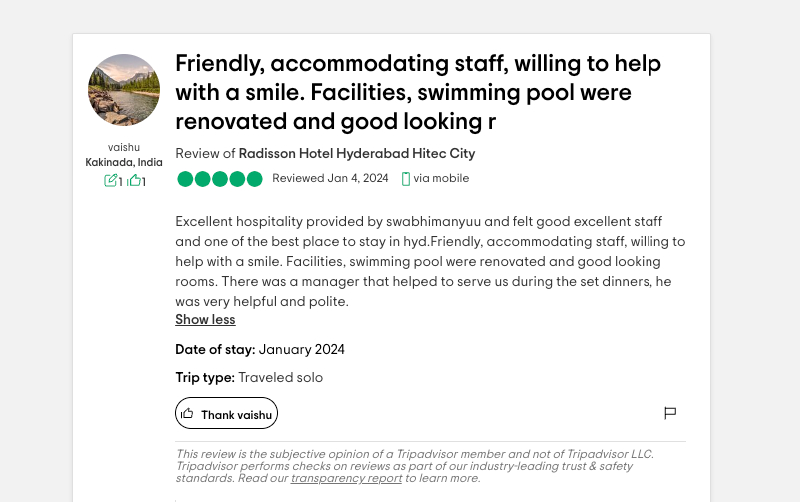
2.3.2 Review Diversity and “Reviews from the Web”
Prominence is also calculated by looking beyond Google’s own platform. The “Reviews from the web” section of the Knowledge Panel displays ratings from trusted third-party directories like Booking.com, TripAdvisor, Expedia, and Facebook. Google aggregates this data to form a holistic view of the hotel’s reputation. A discrepancy between platforms (e.g., 4.8 on Google but 3.2 on TripAdvisor) is a red flag for the algorithm, potentially signaling manipulation of the Google profile. Therefore, a successful review strategy must be omnichannel, ensuring a consistent stream of positive feedback across all major travel platforms to build a unified signal of prominence.
2.3.3 Sentiment Analysis
Prominence is also influenced by the sentiment of the reviews. Google’s NLP algorithms analyze the text to determine the overall sentiment regarding key attributes. A hotel with a high volume of reviews that contain negative sentiment regarding “cleanliness” will see its prominence score for that specific attribute decline, even if the overall star rating remains high. This granular sentiment analysis feeds into the “Attribute-Based Ratings” system, which we will explore in the next section.
3. The Era of Attribute-Based Ratings and NLP
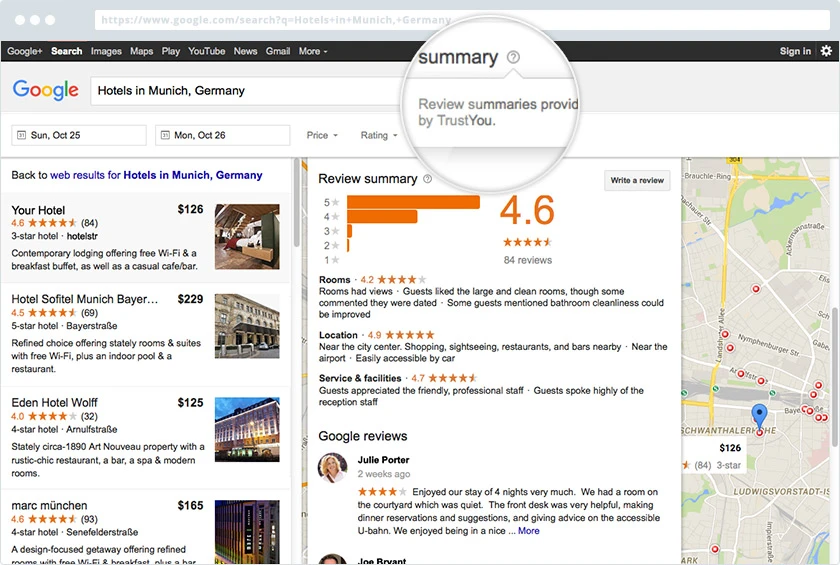
A critical evolution in the 2025/2026 era is the move toward Attribute-Based Ratings. Historically, a 4.5-star rating was a monolithic indicator of quality. Today, Google breaks this down into granular sub-scores for specific attributes such as Cleanliness, Location, Service, and Value. These scores are displayed prominently in the Knowledge Panel and are often the deciding factor for users comparing similar options.
3.1 Derivation of Attributes from Unstructured Text
Crucially, these attribute scores are not just self-reported by the hotel. They are derived from review text using Natural Language Processing (NLP). Google gathers data for these ratings from a variety of sources, including third-party partners and direct research, but machine learning inference that examines and evaluates hotel reviews is the primary driver. If a review states, “The room was spotless,” Google’s sentiment analysis engine tags this as a positive signal for the “Cleanliness” attribute. If another review says, “The carpet was stained,” it tags it as negative. The algorithm aggregates these thousands of data points to calculate the displayed score for each attribute.
This derivation process means that a hotel cannot simply tick a box to improve its cleanliness score; it must generate text-based evidence from guests. This fundamentally changes the goal of reputation management. It is no longer enough to just get a “5-star” rating; hotels must aim to get 5-star ratings with text that specifically praises the attributes they want to be known for. If a hotel wants to be known for “Luxury,” it needs reviews that use words like “elegant,” “upscale,” “premium,” and “sophisticated.” If it targets the “Budget” market, it needs reviews mentioning “value,” “affordable,” and “great price”.
3.2 The Weight of Specific Attributes
Research from 2025 indicates that different attributes carry different weights in terms of their influence on guest satisfaction and, by extension, ranking and conversion. Understanding these weights allows hoteliers to prioritize their operational improvements and review solicitation strategies.
Table 3.1: The Impact of Attribute Scores on Guest Decisions (2025 Data)
| Attribute Category | Influence on Overall Satisfaction | User Intent Correlation | Strategic Implication |
| Cleanliness | Critical (85%) | “Safe hotels,” “Clean rooms,” “Hygiene” | Non-negotiable. A low score here kills conversion regardless of price. |
| Service | High (78%) | “Friendly staff,” “Helpful concierge,” “Reception” | Key differentiator. Drives loyalty and repeat bookings. |
| Value | Moderate-High (72%) | “Budget hotels,” “Cheap stays,” “Best value” | Essential for specific market segments. tied to price-quality ratio. |
| Location | Moderate (65%) | “Hotels near [Landmark],” “Central hotels” | Fixed factor, but perception can be managed via “proximity reinforcement.” |
Data synthesized from 2025 hospitality studies.
The data reveals that Cleanliness is the single most critical attribute. 85% of guests consider it a primary factor. A drop in the cleanliness score has a disproportionately negative impact on conversion compared to a drop in the location score. This reflects the lingering sensitivity to hygiene and safety in the post-pandemic travel landscape. Service follows closely, highlighting that hospitality remains a people-centric business. While Location is important, it is often a binary filter (is it near where I want to be?), whereas Cleanliness and Service are qualitative judgments that users scrutinize deeply.
3.3 The “Reviews from the Web” Module
Google’s “Reviews from the web” module is a testament to the aggregator nature of the platform. By displaying ratings from sites like Booking.com, Expedia, and TripAdvisor, Google provides a “second opinion” that reinforces trust. The algorithm selects which third-party sites to display based on their relevance and authority. Sites with “direct relationships” or proper schema markup are more likely to be pulled into this section.
For SEO, this means that a hotel cannot ignore its reputation on other platforms. A severe rating drop on TripAdvisor can reflect on the Google Knowledge Panel, potentially creating a “trust gap” if the Google rating is significantly higher. This discrepancy can trigger user skepticism and may even signal to Google’s algorithm that the Google reviews might be biased or manipulated. Therefore, a balanced approach to review acquisition—occasionally directing guests to TripAdvisor or Booking.com—is necessary to maintain a healthy, credible cross-platform profile.
4. Google Business Profile (GBP) Mastery in 2026
The Google Business Profile (formerly Google My Business) is the operational hub for local SEO. By 2026, the features available to hoteliers have expanded significantly, moving beyond simple address management to sophisticated engagement tools that rival standalone social media platforms. For 46% of searches, the user never leaves Google, making the GBP the de facto homepage for the hotel.
4.1 Completeness and Verification
In 2026, the completeness of a profile is a direct ranking factor. Profiles with “100% information completeness” receive up to a 50% visibility boost over partially completed competitors. This goes beyond the basics of Name, Address, and Phone (NAP). It involves filling out every available attribute field, from “EV charging points” and “Late check-out availability” to “LGBTQ+ friendly” and “Women-led” badges. These attributes act as filters in search. When a user filters for “hotels with a gym,” only those profiles with the “Fitness Center” attribute explicitly selected will appear. Leaving these fields blank is equivalent to opting out of those search results.
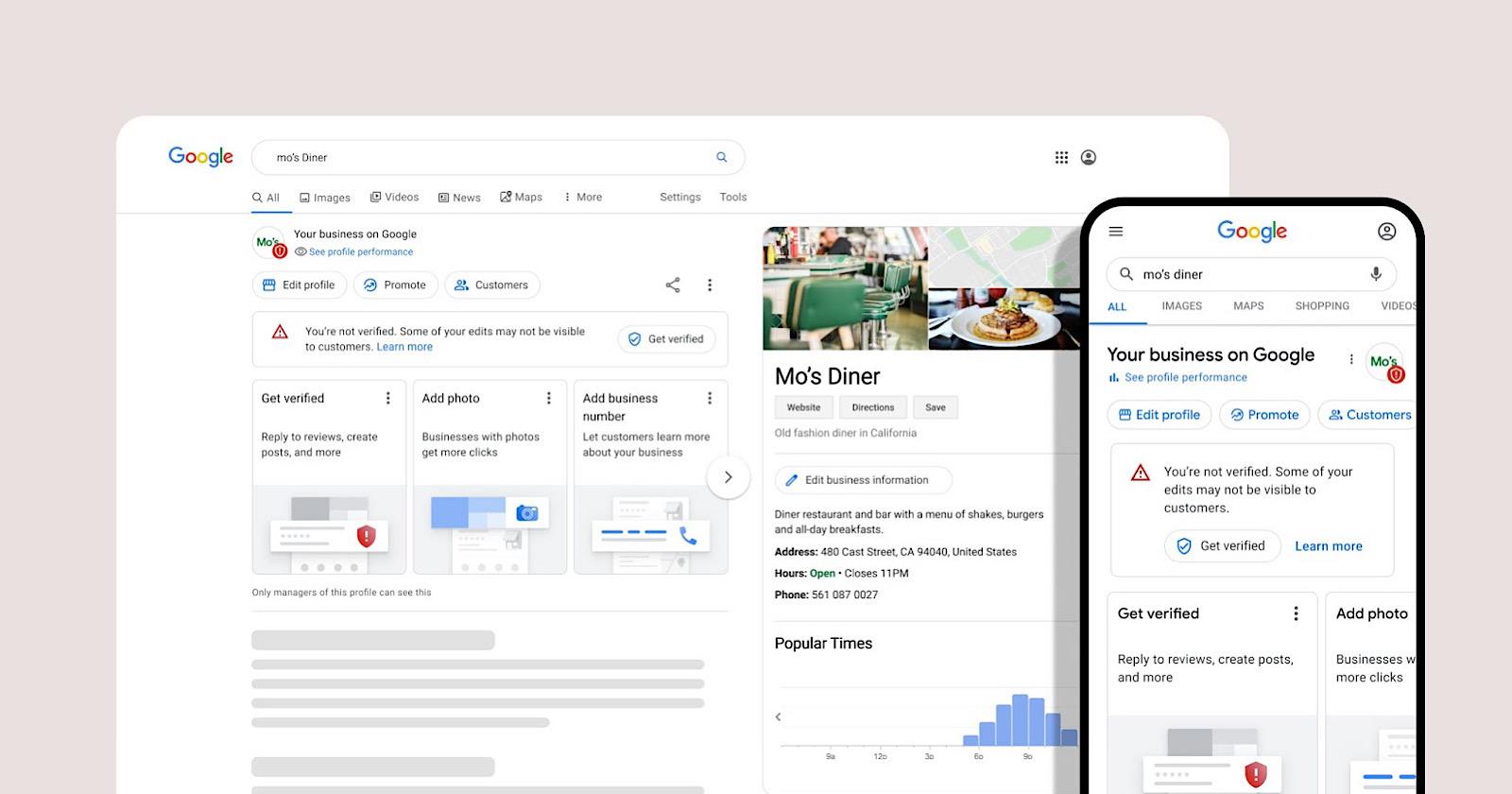
Verification protocols have also tightened in 2026 to combat spam. Google now often requires video verification or live calls to confirm the existence of a business. Maintaining verification status is crucial; any lapse can lead to the profile being suspended or hidden, resulting in an immediate and catastrophic loss of local visibility.
4.2 Visual SEO: The Role of Photos and Video
Visual content is not merely aesthetic; it is a potent SEO signal. Listings with high-quality photos receive 42% more requests for directions and 35% more click-throughs to websites. In 2026, Google’s Vision AI analyzes uploaded photos to identify objects (beds, pools, food, lobby) and matches them against the hotel’s listed amenities. If a hotel claims to have a “luxury spa” but lacks photos of it, the algorithm assigns a lower confidence score to that attribute, potentially reducing visibility for spa-related searches.
Best Practices for Visual SEO in 2026:
-
Frequency: Upload new photos monthly to signal an active business. Freshness matters.
-
Geotagging: Ensure photos contain EXIF data with GPS coordinates. This technically reinforces the location relevance of the profile.
-
Categorization: Upload photos into specific categories (Rooms, Exterior, Food & Drink, Team) to help the AI classify the content.
-
User-Generated Photos: Encourage guests to upload their own photos. These are viewed as highly trustworthy by both users and the algorithm.
-
Video: Short, engaging video clips (30 seconds) showcasing the property, rooms, or staff are now powerful ranking signals and engagement drivers.

4.3 Advanced Engagement: Q&A, Messaging, and Updates
4.3.1 AI-Powered Q&A
By 2026, Google has integrated Gemini-powered AI into the Q&A section. The system can now auto-generate answers to user questions based on the hotel’s existing reviews and profile data. For example, if a user asks, “Is there a shuttle to the airport?”, the AI can scan past reviews for mentions of “shuttle” and formulate an answer. This makes the accuracy of review content even more critical, as it feeds the AI’s knowledge base. Hoteliers should proactively seed the Q&A section with common questions and detailed, keyword-rich answers to guide the AI and provide immediate value to users.
4.3.2 Messaging and Chatbots
Direct messaging through GBP has become a standard expectation. In 2026, response time to these messages is a visible metric and a ranking factor. Hotels are expected to respond quickly. Many are utilizing AI chatbots integrated with the GBP API to handle common queries instantly, ensuring a low response time and high engagement rate.
4.3.3 The “Updates” Feed
The “Updates” section (formerly Posts) allows hotels to post news, offers, events, and seasonal updates directly to the Knowledge Panel. While these posts do not directly boost organic ranking in the traditional sense, they significantly impact conversion rates by occupying more real estate in the SERP and providing “freshness” signals. Regular posting (2-3 times per week) keeps the profile active and engaging.
5. The Psychology of Guest Feedback
Understanding why guests leave reviews is as important as understanding how Google ranks them. The intersection of behavioral psychology and SEO strategy allows hoteliers to engineer better feedback, creating the specific semantic signals needed for ranking.
5.1 The Peak-End Rule
The Peak-End Rule is a cognitive bias that dictates how people remember an experience. Humans do not recall the average of their feelings during a stay; they recall the “Peak” (the most intense moment, positive or negative) and the “End” (the final interaction). This psychological reality has profound implications for review generation.
Implications for Hotel SEO:
-
The Peak: If the hotel creates one “Instagrammable” moment or an extraordinary service recovery, this specific detail will dominate the review text. This creates unique, descriptive keywords (e.g., “champagne on arrival,” “surprise upgrade,” “breathtaking sunset view”) that help rank for long-tail searches. A hotel should engineer a positive peak—a surprise amenity, a personalized note, or a standout meal—to ensure this specific highlight makes it into the review.
-
The End: The check-out experience is critical. A seamless, friendly departure increases the likelihood of a positive review. Conversely, a hidden fee at check-out or a long wait will result in a negative review that overshadows a perfect three-day stay. The “End” is the last emotion the guest feels before they are likely to write a review, so it must be positive.

5.2 The Reciprocity Principle
The principle of Reciprocity suggests that when someone does something nice for us, we feel a deep psychological urge to do something nice in return. In hospitality, “surprise and delight” tactics—such as a handwritten note, a complimentary beverage, or a small room upgrade—trigger this distinct obligation. Guests often discharge this obligation by leaving a glowing review. This is a powerful tool for generating reviews without explicitly asking, often resulting in more genuine and enthusiastic feedback.
5.3 Social Proof and Confirmation Bias
Social Proof is the psychological phenomenon where people assume the actions of others in an attempt to reflect correct behavior for a given situation. 79% of travelers trust online reviews as much as personal recommendations. In the 2026 landscape, users are sophisticated enough to detect “too perfect” scores. A profile with a 4.8 rating and a mix of detailed positive and constructive negative reviews is often trusted more than a profile with a 5.0 rating consisting of generic “Great stay” comments. This authenticity builds trust.

Confirmation Bias also plays a role. If a guest reads reviews praising the “amazing breakfast,” they are subconsciously primed to look for evidence that the breakfast is amazing. When they experience it, they are more likely to confirm this belief and repeat it in their own review, creating a virtuous cycle of keyword reinforcement. Hoteliers can leverage this by highlighting specific strengths in their marketing, priming guests to notice and review those exact attributes.
Table 5.1: Psychological Triggers in Review Generation
| Psychological Principle | Application in Hotel Operations | Resulting Review Content | SEO Benefit |
| Peak-End Rule | Smooth, unexpected gift at checkout. | Mentions of “friendly staff,” “easy departure.” | Reinforces “Service” attribute score. |
| Reciprocity | Complimentary room upgrade. | “Best value,” “Generous hospitality.” | Boosts “Value” attribute; drives conversion. |
| Confirmation Bias | Delivering exactly on promised amenities. | “Exactly as described,” “Photos are real.” | Increases Trustworthiness signal in E-E-A-T. |
| Negativity Bias | Unresolved noise complaint. | “Loud,” “Sleepless,” “Rude.” | Harms “Sleep Quality” attribute; lower ranking. |
6. Semantic SEO and Content Strategy
SEO in 2026 has moved beyond “keywords” to “entities” and “concepts.” Google’s understanding of language is semantic; it understands the relationships between words and concepts. A hotel is not just a collection of keywords; it is an entity with relationships to its location, its amenities, and its guests.
6.1 From Keywords to Topic Clusters
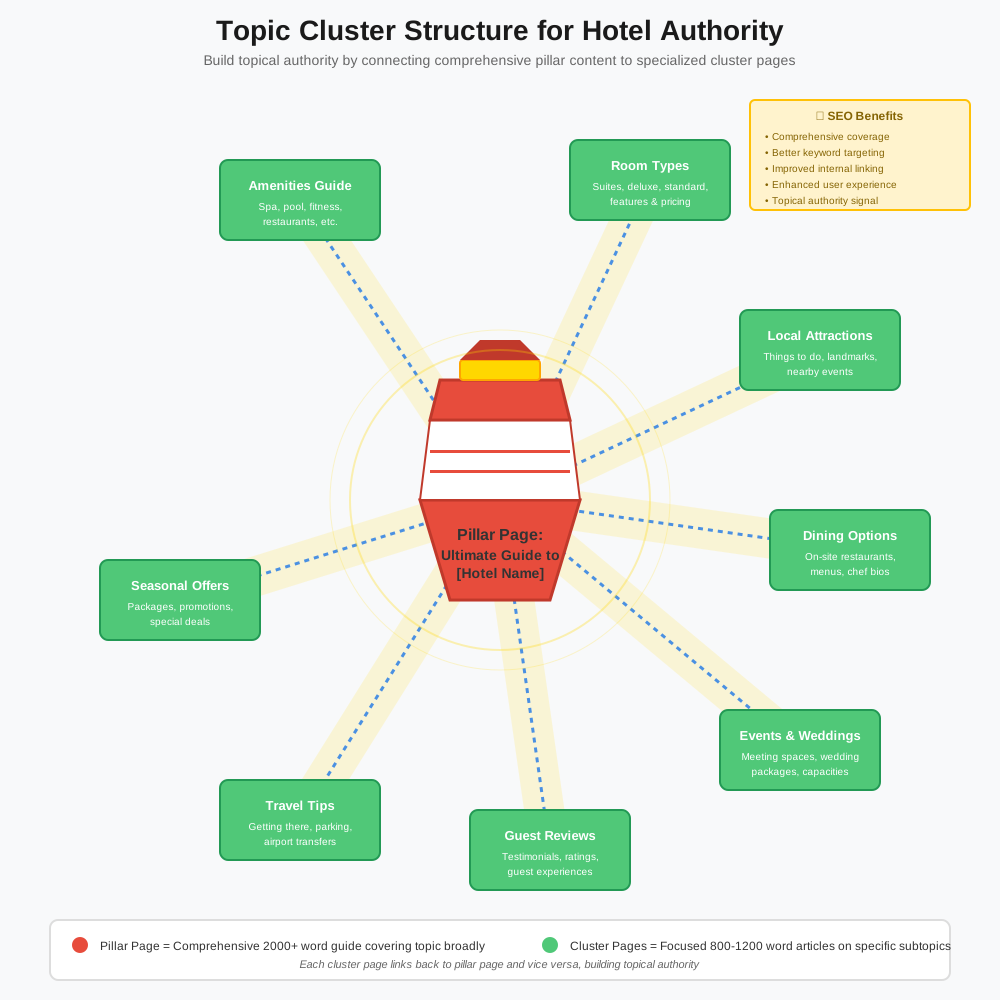
Traditional keyword research (e.g., targeting “hotel in London”) is insufficient in the modern search landscape. The modern strategy involves Topic Clusters. A hotel must identify as an entity that is the center of a web of related topics. This establishes Topical Authority, signaling to Google that the hotel is a subject matter expert on its specific niche and location.
The Pillar-Cluster-Bridge Model:
-
Pillar Content: The main hotel homepage or key service pages (e.g., “Accommodation,” “Weddings”). These cover the core entity at a high level.
-
Cluster Content: Supporting pages or blog posts that address specific, granular user intents. For example, instead of just a page about “Rooms,” a hotel might have a cluster of content around “Family Travel,” including blog posts on “Kid-friendly activities nearby,” “Family suites vs. connecting rooms,” and “Dining with children.”
-
Bridge (Internal Linking): A tight web of internal links connects the cluster content back to the pillar pages. This passes authority from the specific, long-tail posts back to the main transactional pages.
Implementation Strategy: Instead of creating 50 random blog posts, the hotel creates specific “Hubs.” A “Business Travel Hub” might include pages on “Proximity to the Convention Center,” “Coworking spaces in the lobby,” “Fast Wifi speeds,” and “Corporate rates.” This structure signals to Google that the hotel has authority on “Business Travel” in that specific city, improving its ranking for all related queries.
6.2 Entity-Based Optimization
Google’s Knowledge Graph views the hotel as an Entity. This entity has attributes (Price, Location, Amenities) and relationships (is_near: Eiffel Tower, offers: Free Wifi). Semantic SEO involves ensuring that the text on the website and within the reviews explicitly confirms these relationships. If the website says “Near the airport,” and reviews say “Quick shuttle to terminal,” the entity relationship [Hotel] --(proximity)--> [Airport] is solidified. This corroboration is vital for ranking in “Near me” searches and for Voice Search queries.
6.3 Voice Search and Natural Language
With 20% of searches being voice-based in 2025/2026, queries are becoming conversational. Users ask, “Where is a good hotel with a pool that allows dogs?” rather than typing “hotel pool dog friendly.” Review content naturally matches this conversational syntax. A review saying, “We loved that we could bring our Golden Retriever to the pool area” is a perfect semantic match for the voice query, often propelling that review into the “People Also Ask” answers or Featured Snippets. Hoteliers should optimize their content to answer these “Who, What, Where, When, Why” questions directly, mimicking the natural language of their guests.
7. Technical SEO and Schema Implementation
While content is king, technical infrastructure is the castle. For hotel reviews to impact SEO effectively, they must be intelligible to search engine crawlers through Structured Data (Schema Markup) and properly implemented widgets.
7.1 JSON-LD Schema Markup
Schema.org markup is non-negotiable. For hotels, the LodgingBusiness or specific Hotel schema is required. Crucially, the Review Schema and AggregateRating properties allow Google to understand the review data associated with the entity. This can enable Rich Snippets (star ratings displayed in organic search results), which can increase Click-Through Rate (CTR) by up to 35%.
7.1.1 The Self-Serving Review Restriction
A critical update in Google’s guidelines (enforced strictly by 2025) is the prohibition of “self-serving” reviews for LocalBusiness schema in rich results. This means a hotel cannot simply mark up reviews collected on its own site and expect stars to appear in the SERP for its homepage. Google wants to display ratings from independent sources. However, schema remains vital for helping Google understand the sentiment and structure of the data, even if the visual stars are suppressed for the main entity. The markup helps the Knowledge Graph connect the reviews to the hotel entity.
Code Example: Valid Hotel Schema with Aggregate Rating
{
  "@context": "https://schema.org",
  "@type": "Hotel",
  "name": "Grand View Hotel",
  "image": "https://example.com/photos/exterior.jpg",
  "telephone": "+1-555-0199",
  "address": {
    "@type": "PostalAddress",
    "streetAddress": "123 Ocean Drive",
    "addressLocality": "Miami",
    "addressRegion": "FL",
    "postalCode": "33139",
    "addressCountry": "US"
  },
  "starRating": {
    "@type": "Rating",
    "ratingValue": "4"
  },
  "priceRange": "$$$",
  "aggregateRating": {
    "@type": "AggregateRating",
    "ratingValue": "4.6",
    "reviewCount": "320"
  }
}
7.2 Widget Integration and Crawlability
Hotels often use third-party widgets to display Google Reviews on their websites. The choice of widget impacts SEO significantly.
-
JavaScript-Heavy Widgets: If a widget loads reviews via complex JavaScript that Googlebot struggles to render (Client-Side Rendering), the content is essentially invisible to SEO. The keywords in those reviews will not count towards the page’s relevance.
-
Server-Side Rendering: The best widgets (e.g., TrustIndex, EmbedSocial, Elfsight) render reviews as HTML on the server side or provide a clean, crawlable output. This ensures the review text (rich with keywords like “clean,” “quiet,” “luxury”) is indexed as part of the page content, directly boosting semantic relevance.
Widget Feature Comparison for SEO:
-
Elfsight: Offers “Grid with AI Summary” and “Badge” layouts. High customizability but requires checking rendering settings for SEO.
-
Trustindex: Strong focus on SEO impact. Offers “Rich Snippet” markup inclusion and server-side syncing. “Slider” and “Grid” layouts are popular.
-
EmbedSocial: Focuses on UGC and visual widgets (“Google Reviews Photo Widget”). Good for visual engagement and “Social Proof”.
-
OpenWidget: Lightweight and free, but limited customization and potentially fewer SEO features compared to paid options.
8. Review Management, Spam, and Dispute Resolution
The integrity of the review ecosystem is constantly under threat from spam and fake engagement. By 2026, Google has deployed sophisticated “Gemini” based algorithms to police this, creating a dynamic environment where legitimate reviews can be filtered and fake reviews can sometimes slip through.
8.1 The 2026 Spam Filter (Gemini)
Google’s spam detection now uses Generative AI to analyze patterns. It looks for behavioral anomalies rather than just content.
-
Burstiness: A sudden influx of positive reviews in a short time is a major red flag, often signaling bought reviews.
-
Semantic Similarity: Multiple reviews using identical or near-identical phrasing (e.g., “Best hotel ever service was great”) from different accounts suggest bot activity.
-
Geo-Discrepancy: Reviews posted from IP addresses thousands of miles away from the hotel, with no travel history linking the user to the location, are flagged.
-
Review Gating: The practice of filtering guests (asking “did you have a good stay?” and only sending review links to those who say “yes”) is strictly prohibited and can lead to bulk removal of reviews.
8.2 Disputing Fake Reviews
When a hotel is hit by a spam attack (e.g., 1-star reviews from non-guests or competitors), the dispute process in 2026 is streamlined but strict.
-
Flagging: The first step is to use the “Reviews Management Tool” in GBP to report the review. Categories include “Spam,” “Conflict of Interest,” “Off-topic,” “Profanity,” and “Fake Engagement”.
-
The “Off-Topic” Nuance: Google is historically reluctant to remove reviews based on “bad service” claims, even if the hotel disputes the facts. However, if a review rants about political views, social commentary, or a completely unrelated subject, it falls under the “Off-topic” policy, which is easier to enforce and get removed.
-
Appeals: If the initial flag is rejected, a one-time appeal is available. This requires submitting specific evidence (e.g., CRM logs, photos, timelines) to prove the violation.
-
Legal Removal: For cases of defamation or illegal content, Google has a separate legal removal request channel. This usually requires a court order or clear proof of legal violation and is a last resort.
8.3 Response Strategy for SEO
Responding to reviews is a ranking signal. It shows engagement and activity. However, the content of the response matters for SEO.
-
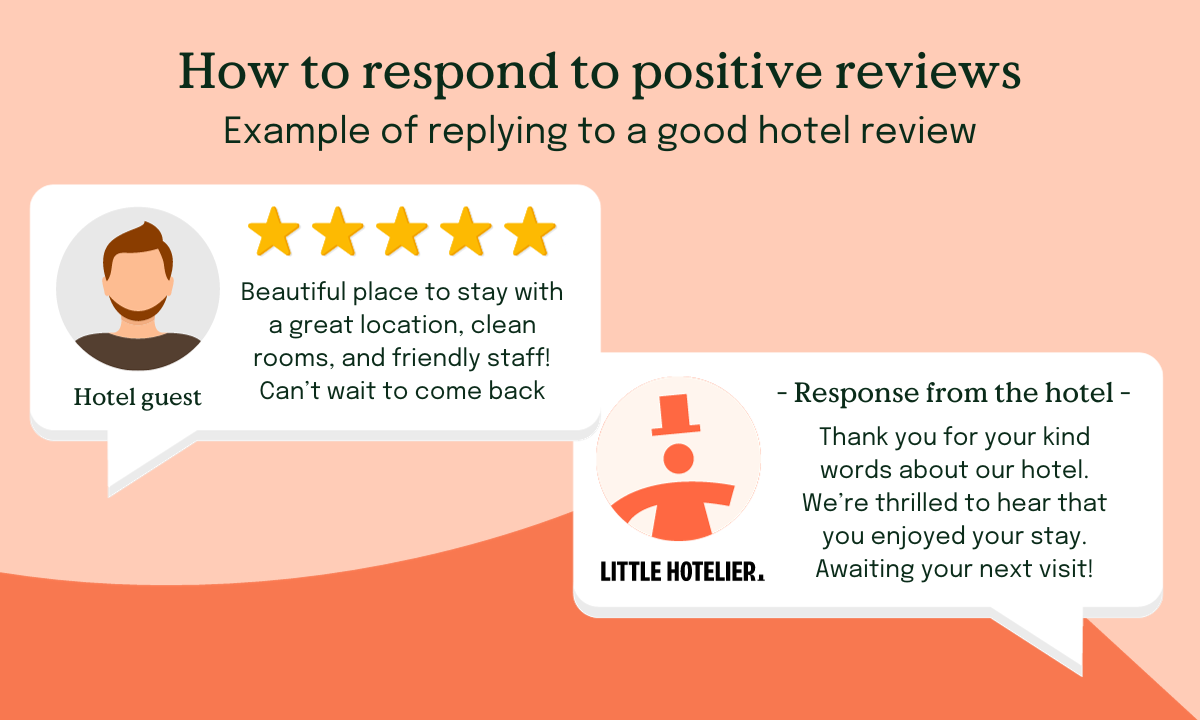
Avoid Generic Responses: Copy-pasting “Thank you for your review” is a missed opportunity.
-
Keyword Integration: Responses should naturally reiterate positive attributes mentioned in the review.
-
Guest: “Loved the breakfast.”
-
Response: “Thank you! We are glad you enjoyed our organic farm-to-table breakfast buffet. We pride ourselves on offering the best locally sourced breakfast in [City].”
-
Impact: This reinforces the entity relationship and keywords without looking spammy. It tells the algorithm (and future guests) exactly what the hotel offers.
-
9. Integration and Automation Strategies
To compete with OTAs and maintain a high review velocity, hotels must automate the review acquisition process using their Property Management Systems (PMS). Manual requests are inconsistent and unscalable.
9.1 PMS Integration (Mews, Opera, Cloudbeds)
Modern PMS platforms like Mews, Opera, and Cloudbeds integrate directly with review management tools (Revinate, TrustYou, etc.) or can trigger emails directly.
-
Trigger Points: The system triggers a review request email or SMS exactly 24-48 hours after checkout. This timing is crucial; requests sent too early (before the guest gets home) or too late (when the memory has faded) have lower conversion rates.
-
Data Flow: The PMS sends guest data (Name, Room Type, Language) to the review tool. This allows for personalized requests (“How was your stay in the Deluxe Suite?”).
-
Operational Efficiency: This automation ensures a steady “Velocity” of reviews—a key ranking factor—without manual staff intervention. It also allows for “drip feeding” reviews so there isn’t a sudden spike that triggers spam filters.
9.2 The “Ask” Strategy
The “Ask” is the moment the review is requested. In 2026, savvy hoteliers use a multi-touch approach.
-
During Stay: A mid-stay check (via SMS or app) to ensure everything is going well. This catches negative issues before they become bad reviews.
-
At Checkout: A verbal reminder from the front desk (leveraging the Reciprocity principle).
-
Post-Stay: The automated email/SMS. This should include a direct link to the Google Review form (using the Place ID link) to minimize friction. The easier it is to review, the more reviews you will get.
10. Conclusion and Future Outlook (2027+)
As we look toward the latter half of the decade, the trajectory of Google Hotel Reviews is clear: Quality over Quantity, and Meaning over Metrics. The days of obsessing over a pure 5.0 score are over. The algorithms of the future prize authenticity, specificity, and relevance. A hotel with a 4.7 rating that includes detailed stories about its sustainability practices, accessibility features, and local community integration will outrank a 5.0 hotel with empty, generic praise.
For the SEO Specialist and Hotelier, the mandate is to view the hotel not just as a business, but as a Content Ecosystem. Every guest interaction is a potential data point. Every review is a potential keyword. Every response is an opportunity to signal relevance.
Key Strategic Takeaways for 2026:
-
Feed the Knowledge Graph: Use reviews to validate every attribute (pool, wifi, breakfast) listed in your GBP.
-
Embrace the Visual: Treat photos and videos as critically as text for SEO.
-
Automate for Velocity: Use PMS integrations to ensure a constant, steady stream of fresh data.
-
Write for the Entity: Structure website content and review responses to reinforce the hotel’s semantic identity in the local area.
-
Monitor the Attributes: Pay close attention to the derived attribute scores (Cleanliness, Service) as they are the new “Star Rating.”
In the war for visibility, the hotelier who best bridges the gap between the human experience (Guest Satisfaction) and the machine understanding (Algorithmic Relevance) will emerge as the market leader. The future of hotel SEO is human-centric, data-driven, and algorithmically amplified.