


Every luxury hotel claims to offer the finest experience. Between plush linens, signature scents, and bespoke concierge service, the baseline expectations in the high-end market are incredibly elevated. With premium properties occupying every major global destination, how do you ensure your hotel is the one guests talk about, return to, and passionately recommend?
The difference between a fully booked penthouse suite and scrambling for seasonal reservations lies entirely in your marketing execution. If you are aiming for more than pretty photographs and basic five-star reviews, you need to understand the psychological drivers of the affluent traveler. This blog will provide a comprehensive guide to luxury hotel marketing, detailing the operational strategies and digital frameworks required to establish an unforgettable, high-margin brand identity.
Defining The Essence Of Luxury Hotel Marketing
Luxury hotel marketing is the sophisticated art of transforming a high-end property from a simple accommodation into a must-visit cultural destination. With endless choices available to upscale travelers, the most successful hotels stand out by creating an immediate sense of exclusivity and profound emotional connection from the moment a prospective guest discovers the brand online.
Selling An Emotional Experience
Rather than simply promoting room features and square footage, luxury brands focus entirely on selling a feeling. They utilize compelling storytelling, stunning high-fidelity visuals, and promises of unforgettable experiences to spark intense consumer desire. The marketing focus must remain on the specific atmosphere, heritage, and highly personalized moments that simply cannot be replicated by local competitors.
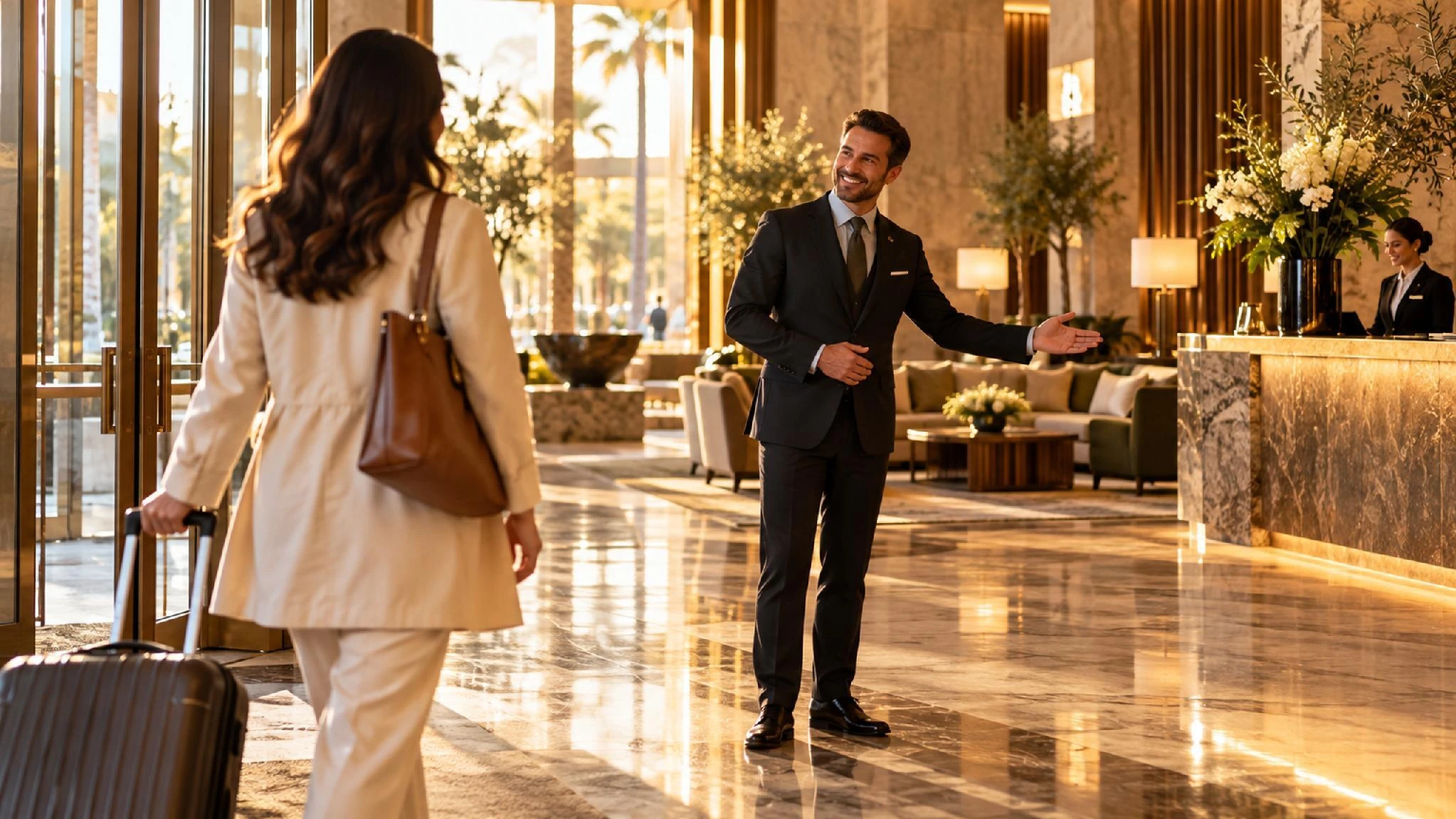
Every single touchpoint—from a guest’s first visit to the property website to the tailored welcome letter waiting in their suite—must be meticulously crafted to build loyalty. The ultimate result is a hotel that does not just meet basic luxury expectations but actively becomes part of the guest’s personal travel story. It becomes an aspirational experience they are eager to share with their affluent social circles.
Defining Your Unique Brand DNA
The foundation of any successful luxury marketing plan begins with defining the property’s core identity. What makes your hotel genuinely irreplaceable? Whether it is cutting-edge architectural design, an unbeatable geographic location, rigorous sustainability practices, or a deep sense of historical heritage, this “brand DNA” must inform absolutely all corporate messaging.

Hoteliers must clarify their core values, perfect their tone of voice, and define their ultimate guest promise. Every employee, from the digital marketing director to the front desk concierge, must be able to articulate this identity flawlessly. Establishing a rigid and powerful brand identity ensures that marketing efforts naturally support long-term reputation management and premium pricing structures.
Understanding And Segmenting The Luxury Audience
The “luxury traveler” is not a monolithic demographic. Attempting to appeal to everyone inevitably results in a diluted brand that appeals to no one. Successful marketing requires deep segmentation and an intimate understanding of shifting wealth demographics.
Identifying Niche Luxury Personas
Marketing directors must meticulously segment their ideal guests based on distinct psychological and financial profiles. The messaging required to attract Ultra-High-Net-Worth Individuals (UHNWIs) flying privately is vastly different from the marketing used to attract eco-conscious luxury explorers or corporate executives seeking boutique privacy.
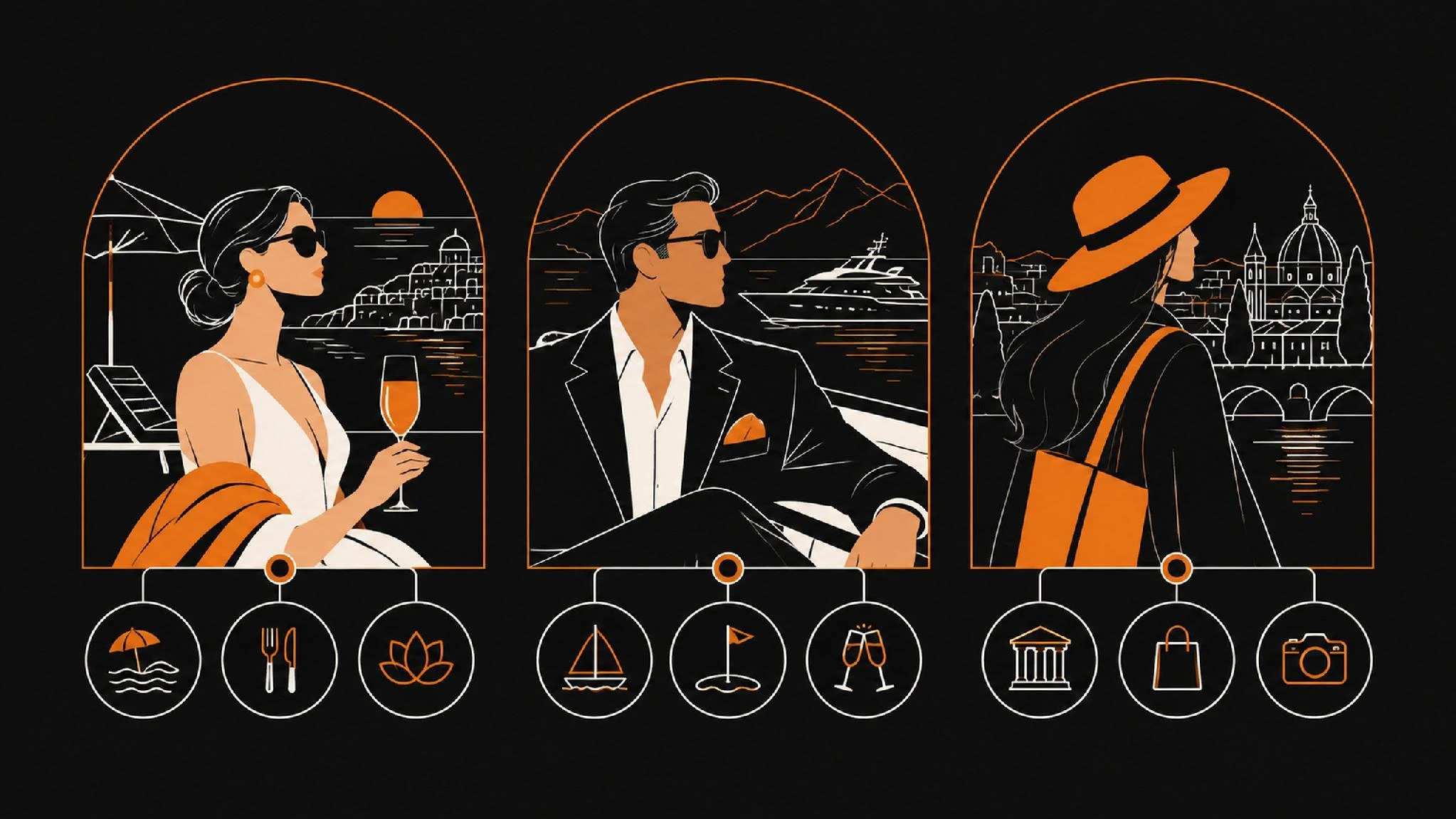
Developing detailed persona profiles is an absolute requirement. Properties must track guest feedback, amenity preferences, and behavioral data across all digital touchpoints. Luxury travelers are incredibly diverse, and promotional messaging must speak directly to the right micro-segment through emotional, hyper-personalized campaigns.
The Shift In Generational Wealth And Expectations
Generational wealth transfers are forcing heritage brands to aggressively adapt their positioning strategies. Recent market research indicates a fascinating divergence in generational spending optimism, with Baby Boomers pulling back while Millennials aggressively allocate disposable income toward experiential luxury travel.
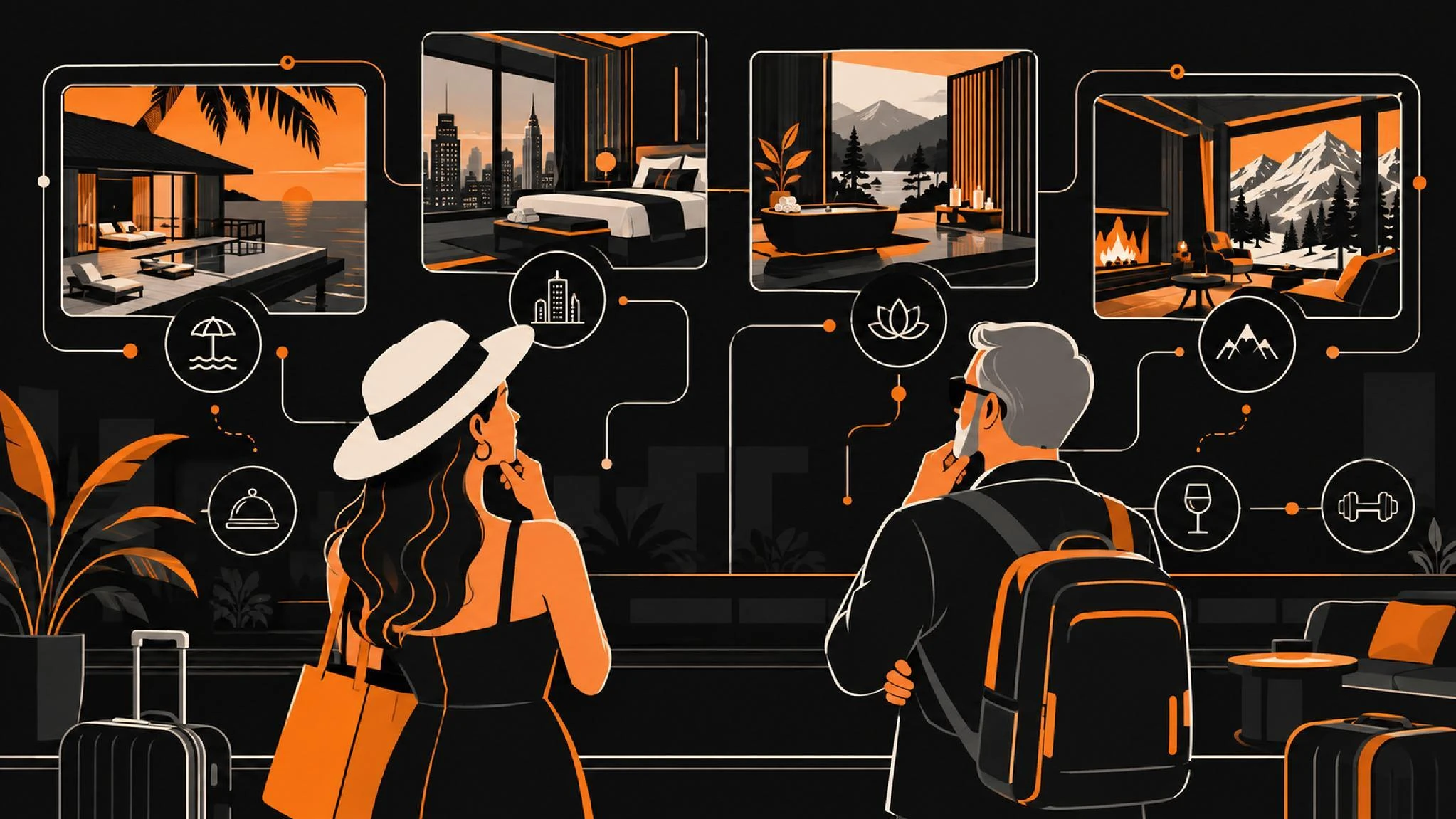
Millennials currently represent the most lucrative target segment for premium hospitality brands, heavily outspending older cohorts on travel. Consequently, advertising algorithms and visual storytelling must be increasingly calibrated to prioritize users within this high-spending demographic. These travelers demand seamless digital experiences, cultural authenticity, and brands that align with their personal values regarding sustainability and social responsibility.
Table 1.1. Luxury Audience Segmentation Profiles
| Audience Segment | Core Motivations | Marketing Focus |
|---|---|---|
| Ultra-High-Net-Worth Individuals | Absolute privacy, bespoke service, seamless logistics | Private jet partnerships, exclusive unlisted suites, highly discreet messaging |
| Millennial Luxury Travelers | Cultural immersion, experiential dining, social proof | High-fidelity Instagram/TikTok campaigns, authentic storytelling, chef-led experiences |
| Corporate Executives | Frictionless technology, rapid service, wellness amenities | LinkedIn targeted ads, premium airport transfers, executive lounge promotions |
| Eco-Conscious Explorers | Sustainable practices, local community integration, wellness | Highlighting regenerative tourism, farm-to-table culinary programs, eco-certifications |
Crafting The Luxury Guest Journey
A luxury marketing strategy must seamlessly connect the digital discovery phase with the physical on-property experience. Mapping this journey ensures no moment of brand interaction feels disjointed or cheapened.
Auditing Digital And Physical Touchpoints
Hoteliers must meticulously map out exactly how prospective guests find the property. This includes tracking performance across organic search (SEO), targeted social media, digital public relations, and word-of-mouth referrals. Once the discovery phase is mapped, teams must analyze how guests execute the booking—whether directly through the proprietary booking engine or via luxury travel advisors.

Every single interaction must feel thoughtful, high-end, and perfectly consistent with the brand DNA. A clunky, slow-loading mobile booking engine instantly destroys the illusion of luxury established by expensive advertising campaigns. Properties must leverage their Customer Relationship Management (CRM) systems to personalize digital touchpoints, ensuring the pre-arrival email is just as elegant as the physical welcome amenity.
Personalization Through First-Party Data
Modern luxury is fundamentally defined by anticipation and personalization. Using CRM tools and first-party data allows hotels to personalize marketing communications with surgical precision. Generalized email blasts are highly detrimental to luxury brand equity; affluent guests expect communications tailored to their specific historical preferences.
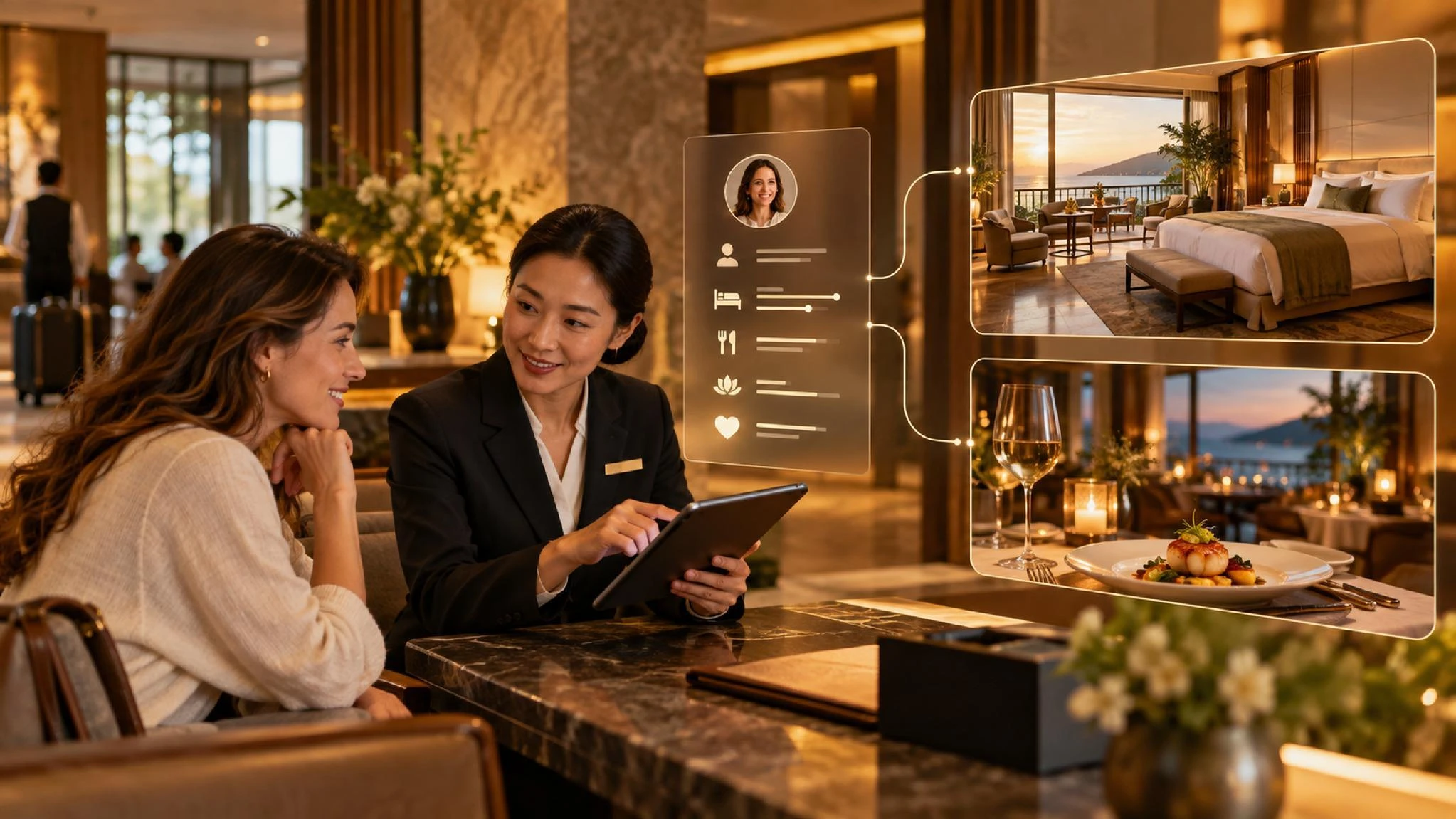
For example, if a guest previously booked a heavy itinerary of wellness retreats and spa treatments, they should automatically receive exclusive invites to upcoming yoga weekends. If a guest routinely requests a specific vintage of wine, the pre-arrival concierge email should subtly acknowledge its availability. This data-driven personalization elevates the hotel from a transactional business to a trusted lifestyle partner.
Advanced Digital Marketing Strategies For Luxury Hotels
Luxury hotels compete in a fiercely crowded digital field. To stand out and command premium Average Daily Rates (ADR), properties must deploy a sophisticated blend of visual media, technical SEO, and targeted digital advertising.
Visuals That Spark Immediate Desire
In luxury hospitality, authentic and breathtaking visuals are the ultimate currency. Hotels must hire specialized architectural and lifestyle photographers who understand exactly how to capture high-end design. Standard, flat room photography is entirely insufficient for the modern luxury market.
Visual campaigns should incorporate sweeping drone footage of the surrounding landscape, tight macro close-ups of artisan cocktails, and soft, natural lighting capturing the serenity of the spa. Crucially, editors must avoid over-saturating or heavily filtering images; modern luxury consumers crave authenticity. Your visual assets must perfectly justify your premium pricing tier.
The Power Of 3D Virtual Tours
Prospective guests evaluating a $2,000-per-night villa require absolute certainty regarding the accommodation layout before committing their capital. They need to understand how bedrooms connect to shared spaces, where the private pool sits relative to the terrace, and the exact sightlines from the master bathroom.

Placing a high-resolution 3D virtual tour directly on the relevant accommodation page provides unparalleled transparency. Advanced platforms allow hotels to embed interactive tours that let visitors explore the suite at their own pace. By offering this immersive preview, luxury hotels dramatically reduce booking hesitation and empower guests to make confident, high-value direct reservations.
Luxury SEO And Content Strategy
Affluent guests frequently engage in deep, extensive research before booking a luxury vacation. To capture this high-intent traffic, hotels must execute a rigorous search engine optimization strategy. This involves creating long-form blog posts, curated area guides, behind-the-scenes architectural features, and video diaries that match affluent search intent.
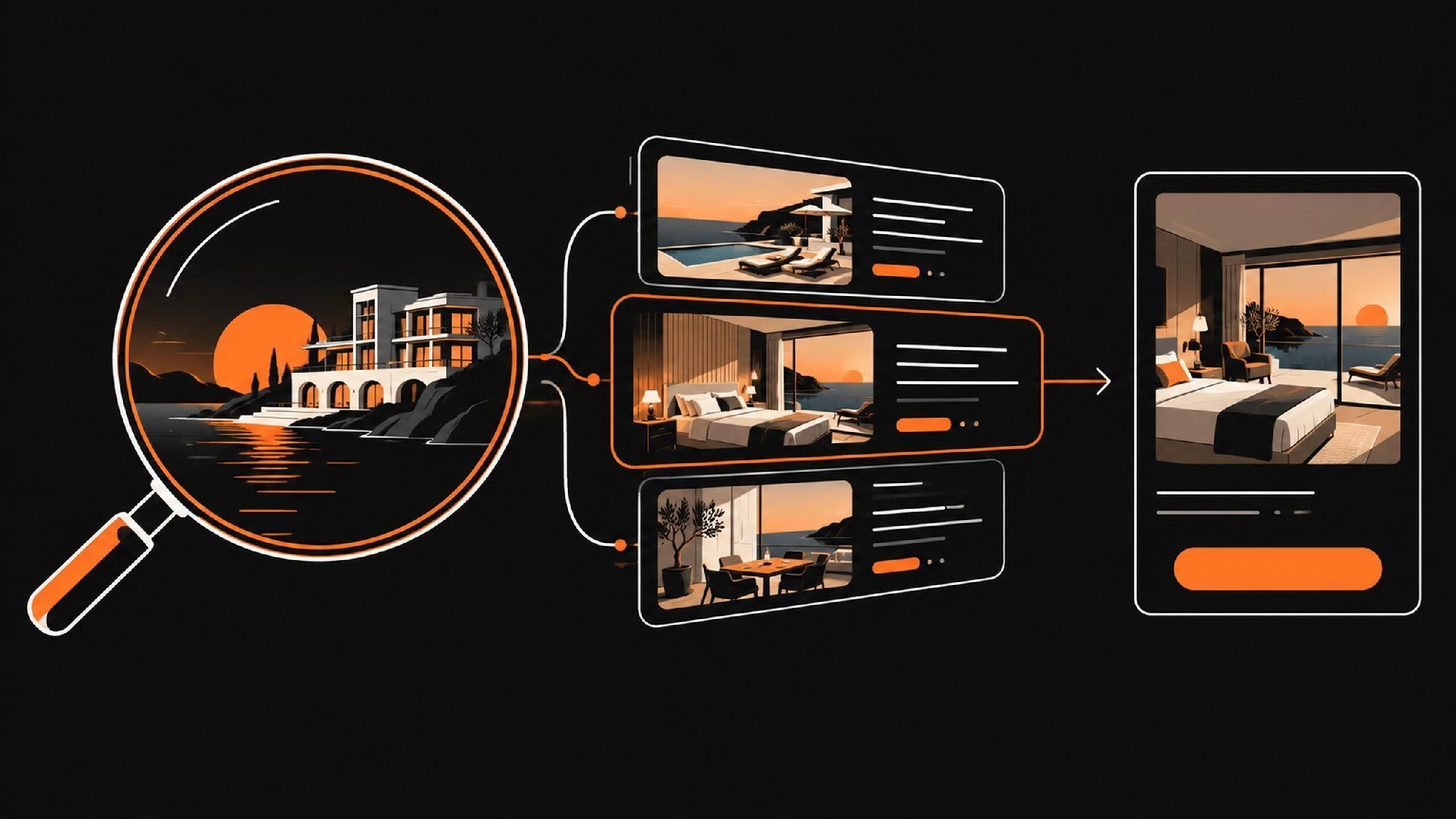
Content marketing must incorporate search terms and long-tail keywords that reflect the specific interests of luxury travelers. Instead of targeting generic terms like “luxury hotel,” content should target highly descriptive queries such as “private pool villa resort in Santorini” or “Michelin star dining hotel in Kyoto.” This hyper-targeted SEO approach ensures the property captures highly qualified traffic ready to convert.
Table 1.2. Luxury Content Strategy Matrix
| Content Format | SEO Objective | Target Audience Impact |
|---|---|---|
| Curated Destination Guides | Capture top-of-funnel discovery searches | Positions the hotel as the ultimate local cultural authority |
| 3D Virtual Tours | Increase time-on-page and conversion rates | Builds absolute trust and clarifies premium suite upgrades |
| Behind-the-Scenes Culinary Blogs | Target long-tail gastronomic keywords | Attracts foodie demographics and drives F&B revenue |
| Sustainability Reports | Rank for eco-luxury and regenerative travel terms | Appeals to values-driven Millennial and Gen Z wealth |
Digital Advertising And Dynamic Retargeting
Luxury marketing requires meeting affluent guests exactly where they spend their time online. Properties must utilize platforms such as Meta, Pinterest, and highly targeted Google Ads to run visually-led campaigns that showcase the essence of the brand. Advertising must never feel intrusive; it should feel like an exclusive invitation.
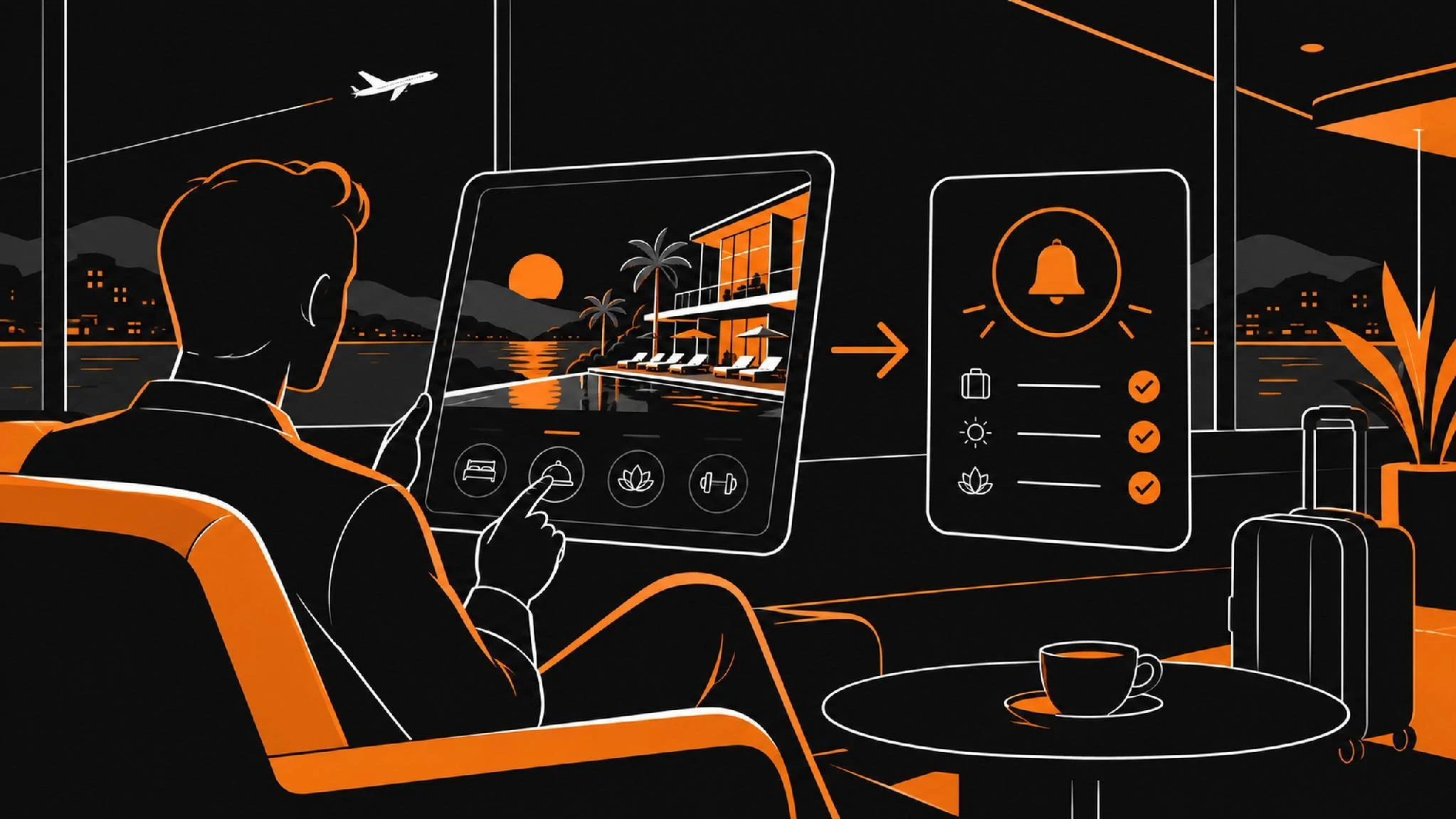
Marketers must create distinct segmentation for “warm” audiences (users who have already visited the hotel’s website) and “cold” audiences (lookalike profiles based on high-income, geo-targeted traveler data). Utilizing dynamic retargeting allows the hotel to gently nudge users who abandoned their booking cart. Retargeting ads for luxury properties should focus on evoking desire—displaying the exact suite the user viewed—rather than relying on cheap discount codes that degrade brand equity.
Storytelling And Public Relations In The High-End Market
Earning the attention of the world’s most discerning travelers requires hospitality brands to transcend traditional advertising and become publishers of culturally relevant narratives.
Storytelling And Brand Heritage
A magnificent story is often the deciding factor in luxury sales. High-net-worth guests want to feel an emotional, almost historic connection to the hotel they choose. Properties must highlight their unique local roots, visionary founder philosophy, or architectural heritage through editorial-style content.
Using sophisticated blog posts, cinematic video storytelling, and coffee-table quality photography elevates the hotel far beyond its physical walls. Whether it is a restored 18th-century European palace or a cutting-edge, minimalist eco-lodge, the narrative must clearly articulate why the property exists and why it matters to the global travel landscape.
Influencer And Celebrity Partnerships
In the luxury tier, brand association is incredibly powerful. Working with carefully vetted influencers or celebrities whose followers align perfectly with your target demographic provides massive organic reach. However, traditional “pay-for-post” influencer marketing often lacks the organic authenticity required to influence highly skeptical, design-conscious consumer segments.

To authentically penetrate specific lifestyle niches, brands must leverage established cultural tastemakers. Invite renowned fashion designers, contemporary architects, or celebrated culinary figures for immersive stays. Encourage them to capture the sensory details of the experience rather than staged promotional shots. When influencers share genuine, unscripted moments of luxury, their affluent audiences listen.
Premium PR And Media Placements
Securing editorial features in prestigious titles such as Condé Nast Traveler, Travel + Leisure, or the Forbes Travel Guide can elevate brand perception more effectively than a million dollars in paid advertising clicks. These publications serve as the ultimate validators for luxury consumers.

Investing in a specialized public relations agency that intimately understands luxury travel is a critical requirement. Hotels must build long-term relationships with global travel editors and freelance writers by hosting flawless press stays. Earning placement on prestigious “It Lists” or “Gold Lists” provides enduring SEO backlinks and undeniable social proof that the property operates at the absolute highest level of global hospitality.
Overcoming Challenges In The Luxury Hospitality Market
To remain competitive, the world’s top hotels must navigate significant operational obstacles in an evolving landscape where guest expectations change rapidly.
The Saturation Of High-End Offerings
The global luxury hotel industry is intensely competitive, with new, heavily funded brands continually entering the market offering spectacular amenities. To stand out in this saturated environment, marketing must go far beyond beautiful visuals. The brand must reflect absolute authenticity, deep cultural purpose, and unique guest value. A property cannot simply rely on offering a nice spa; it must offer a transformative wellness journey that cannot be replicated by the resort next door.
Managing OTA Distribution Pressures
Even in the luxury segment, Online Travel Agencies (OTAs) and metasearch engines exert massive distribution pressure. While luxury hotels rely less on OTAs than budget properties, maintaining high volumes of direct bookings is a constant, daily battle. When a guest books a $1,500-per-night suite through an OTA, the resulting 15% to 25% commission fee represents a massive financial loss for the property.
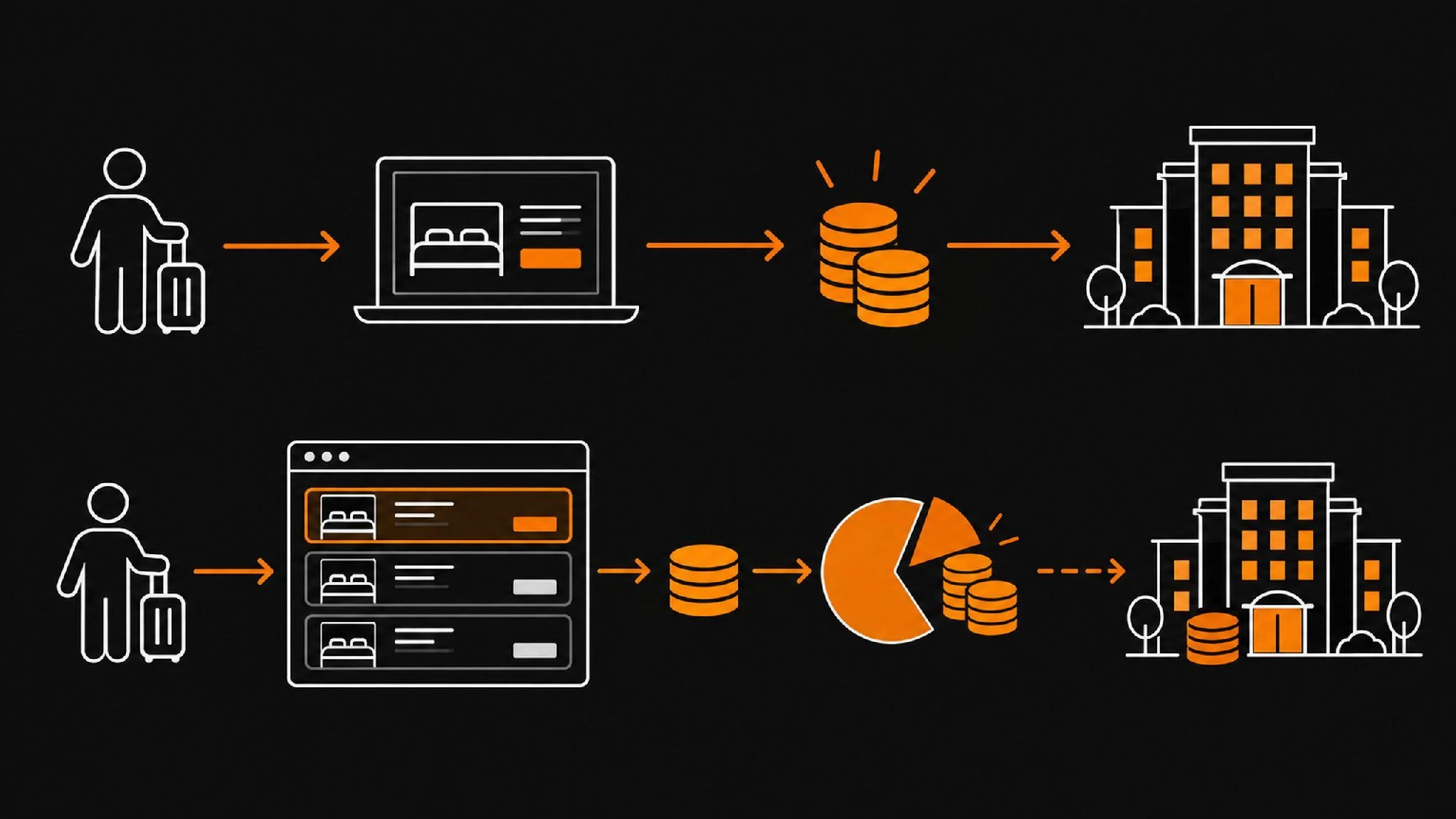
Luxury hotels must strengthen their proprietary SEO keywords, invest in robust website architecture, and deploy seamless booking engines to capture direct traffic. Protecting brand name search terms on Google and aggressively marketing to past guests through direct email campaigns are essential strategies for defending profit margins against OTA encroachment.
Maintaining Brand Consistency Across Portfolios
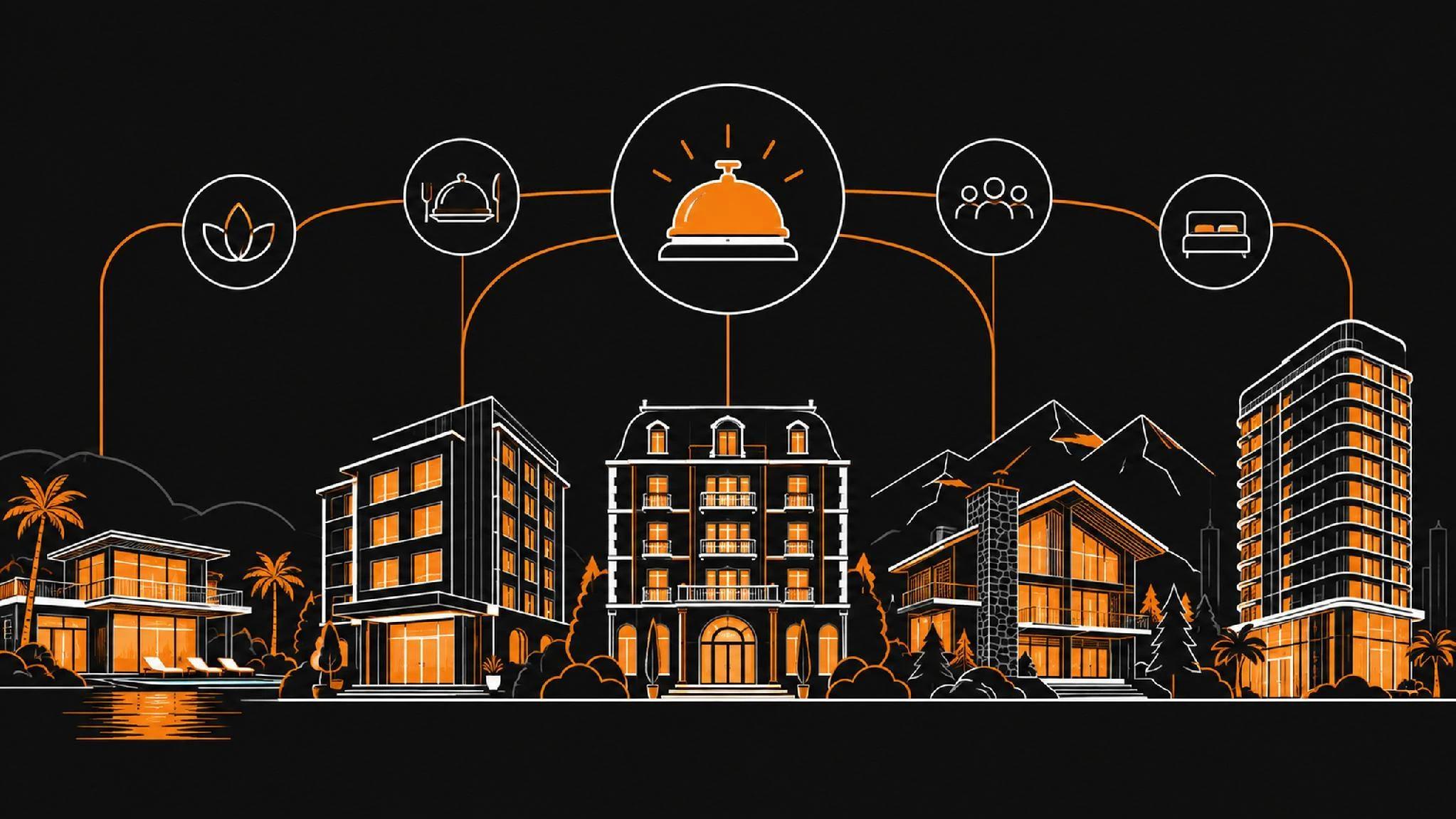
For luxury hotel groups operating multiple properties globally, delivering a unified brand message while allowing each location to celebrate its local character is a delicate balancing act. A luxury brand must ensure its high standards of service are universally recognized, whether the guest is in a Tokyo skyscraper or a Caribbean villa. Marketing teams must establish strict global brand guidelines that dictate tone of voice and visual aesthetics, while providing local teams the flexibility to highlight regional flavors and cultural partnerships.
Optimizing The Luxury Experience With Specialized Technology
Today’s luxury hotels rely on powerful digital platforms to connect every part of the guest journey and make high-end marketing work harder.
Customer Data Platforms And Revenue Management

Utilizing advanced Customer Data Platforms (CDP) allows for complex guest segmentation and AI-driven personalization across emails, proprietary apps, and website content. Integrating this rich data empowers revenue management platforms to enable flexible pricing based on real-time market demand and competitor benchmarking. This technological synergy boosts total revenue and directly informs the targeting of performance marketing campaigns.
Aligning Operations With Digital Promises
Marketing a luxury product that cannot be physically delivered due to staffing shortages or operational flaws risks catastrophic damage to the brand’s reputation. Collaboration between the marketing department and daily operations is absolutely critical. If a digital campaign promises a serene, hyper-personalized wellness escape, the physical hotel staff must execute that promise flawlessly upon arrival.

Hotels that seamlessly synchronize their property management systems with their marketing platforms enable real-time service recovery and automated upselling based on the actual guest journey. The most effective luxury marketing occurs when the digital promise and the physical reality are perfectly aligned.
Conclusion
Luxury Hotel Marketing requires a profound understanding of affluent traveler psychology, combining breathtaking visual storytelling with rigorous technical distribution strategies. By defining a unique brand DNA, leveraging 3D virtual tours, executing targeted SEO, and cultivating prestigious public relations, properties can elevate themselves above the competition. Escaping OTA dependency in the luxury market demands an unyielding commitment to hyper-personalized, data-driven direct marketing that builds deep emotional loyalty.
Ready to elevate your luxury brand and dominate the digital landscape? Executing a flawless, high-end digital strategy requires specialized hospitality expertise and a deep understanding of technical SEO. Partner with the performance marketing professionals at ROI300 to build a visually stunning, technically superior digital presence. Contact ROI300 today to audit your brand positioning and transform your website into a highly profitable direct booking engine.