


The hospitality industry is navigating a fiercely competitive landscape where precision in financial management dictates long-term asset survival. Mastering the nuances of hospitality finance is no longer just a back-office necessity; it is a front-line strategy for maximizing property valuation and combating margin compression. This blog will provide a comprehensive guide to Hotel Accounting, helping you optimize margins, secure compliance, and implement impenetrable fiscal frameworks for 2026 and beyond.
Defining The Complex Ecosystem Of Hotel Accounting
Understanding the foundational elements of hospitality finance is critical for modern asset managers. Here are the core definitions and unique operational characteristics that separate this discipline from general corporate finance.
Beyond Standard Bookkeeping Practices
General accounting focuses on tracking the fundamental income and expenses of a standardized corporate entity. However, Hotel Accounting represents a highly specialized branch of financial management designed specifically for the transient lodging industry. It requires tracking revenue streams across multiple distinct operating departments simultaneously. These departments typically include rooms, food and beverage, spa services, and golf course operations.

Each of these departments operates almost like an independent small business under a single unified roof. Consequently, the financial oversight required to manage them must be exceptionally granular and incredibly agile. A property controller cannot wait for a month-end statement to understand if the food costs in the main restaurant are eroding daily profitability. They require immediate, daily data reconciliation to make proactive adjustments to pricing and procurement strategies.
Furthermore, the operational tempo of a hotel runs continuously without interruption. Guests arrive, consume services, incur charges, and depart 24 hours a day, 7 days a week. This non-stop transactional velocity creates a massive volume of financial data that must be captured, categorized, and audited meticulously every single night. Without specialized frameworks, this flood of data would quickly overwhelm standard bookkeeping protocols.
The Unique Nature Of Perishable Inventory
One of the defining challenges within this financial discipline is the concept of highly perishable inventory. In traditional retail, an unsold product remains on the shelf and retains its intrinsic asset value for future sale. In the lodging sector, an empty guest room represents a permanently lost revenue opportunity the moment the business day concludes. This reality places immense pressure on revenue managers to price inventory dynamically to maximize daily yield.

This principle of perishability extends deeply into the food and beverage departments as well. Ingredients utilized in the kitchens have strict expiration dates, meaning that inaccurate demand forecasting leads directly to costly spoilage. Maintaining effective inventory management requires automated control processes and regular physical audits. Properties must optimize their storage spaces and maintain constant communication with food suppliers to ensure lean, efficient purchasing.
To mitigate these risks, astute operators implement perpetual inventory systems that track physical stock levels in real-time. These digital systems trigger automated purchasing alerts when critical supplies fall below established par levels. By integrating these specialized inventory controls directly into their Hotel Accounting software, properties can protect their profit margins from unnecessary waste.
The Strategic Importance Of Rigorous Financial Protocols
Establishing strict financial protocols protects the property from margin compression and unexpected macroeconomic volatility. Below is an exploration of the primary market factors driving the urgent need for enhanced fiscal discipline across the industry.
Combating Margin Compression And RevPAR Stagnation
The broader economic environment has introduced significant recalibration across the global lodging industry. Recent data indicates that the United States market has experienced a slight contraction in core performance metrics. Occupancy rates settled at 68.2%, representing a 1.0% decline compared to the previous year. Simultaneously, the average daily rate experienced a marginal 0.1% decrease to reach $161.90.
These shifting dynamics directly impacted revenue per available room, which serves as the sector’s primary performance benchmark. This critical metric fell by 1.1% down to $110.37. Industry analysts project revenue per available room to decline by 0.2% overall in 2025 before experiencing a modest 0.9% recovery in 2026. This prolonged period of post-pandemic stabilization has created a familiar but less forgiving operating environment for asset owners.
Table 1.1. Core Hospitality Performance Metrics
| Performance Metric | July 2024 Baseline | July 2025 Results | Year Over Year Variance |
| Occupancy Rate | 69.2% | 68.2% | -1.0% |
| Average Daily Rate | $162.06 | $161.90 | -0.1% |
| Revenue Per Available Room | $111.60 | $110.37 | -1.1% |
Despite these top-line headwinds, meticulous financial operators have managed to maintain resilient profit margins. During the first nine months of the year, the gross operating profit margin for hotels averaged a healthy 37.7%. This achievement underscores a remarkable industry shift toward highly disciplined, efficiency-focused property management. While revenue gains have plateaued, sophisticated Hotel Accounting controls have prevented widespread profitability erosion.
Navigating Structural Wage Pressures
Labor remains the single largest controllable expense within property operations and the most powerful lever for driving profitability. Unfortunately, the hospitality industry is currently navigating an unprecedented surge in compensation requirements. Wage pressure accelerated sharply throughout the year, culminating in a structural shift in the fundamental cost base facing operators. The average wage cost per occupied room increased by an alarming 12.8% year over year.
This metric climbed rapidly from $42.82 in 2024 to $48.32 in 2025, heavily squeezing gross operating profit margins across the board. This inflation was not isolated to a few specific geographic regions or unique property types. Labor costs per hour increased by 8.0% globally, significantly outpacing broader macroeconomic wage benchmarks. Hospitality employers find themselves competing in a tight labor market where worker purchasing power has stabilized, reinforcing high wage expectations.
Table 1.2. Labor Expense Escalation
| Labor Expense Category | 2024 Average Cost | 2025 Average Cost | Variance |
| Overall Wage Cost Per Occupied Room | $42.82 | $48.32 | +12.8% |
| Maintenance Engineer Cost | Baseline | Elevated | +7.5% |
| General Manager Cost | Baseline | Elevated | +3.6% |
The most severe cost increases were concentrated in engineering and guestroom maintenance roles. The cost of maintenance engineering per occupied room jumped by 7.5% as properties struggled to retain skilled technical staff. Furthermore, full-service properties felt this impact profoundly, experiencing a staggering 23.8% surge in wage costs per occupied room during the fourth quarter alone. These compounded increases underscore the urgent need for optimized Hotel Accounting frameworks to manage payroll budgets.
The Disconnect Between Compensation And Productivity
The most alarming aspect of the current labor market is the growing disconnect between financial compensation and operational output. Productivity gains have simply failed to keep pace with the rapid escalation of labor costs. While operators attempted to implement leaner staffing models, total hours per occupied room still increased by 4.4% across the full year. When both wage rates and required labor hours rise simultaneously, total labor expenses compound exponentially.

Even leadership roles that improved their time management saw their financial benefits erased by higher base salaries. For example, general manager minutes per occupied room declined by 2.6%, yet the financial burden of the role still increased. Assistant general manager minutes dropped by 0.8%, but their overall cost contribution rose by 3.3% due to a 4.0% wage increase. These patterns highlight that properties are facing wage inflation layered heavily on top of role-specific workload pressures.
To combat this trend, leading hotel companies are fundamentally changing how they utilize their available workforce. They are treating labor data with intense scrutiny, making real-time scheduling adjustments based on dynamic demand forecasts. As revenue growth moderates, aligning staffing levels dynamically with actual demand is no longer optional for survival. Finance teams must collaborate closely with operational managers to ensure scheduling accuracy and protect gross margins.
Common Hotel Accounting Jobs And Departmental Roles
A robust financial operation relies on a highly specialized team executing precise daily and monthly workflows. Let us explore the critical personnel and their specific responsibilities within a modern hospitality property.
The Director Of Finance And Property Controller
The Director of Finance, or the Property Controller, serves as the strategic leader of the property’s financial operations. This individual is responsible for the overarching fiscal health of the asset, ensuring compliance with all regulatory standards and corporate mandates. They oversee the preparation of all financial statements, manage cash flow projections, and coordinate the annual budget planning process. Their expertise ensures that the property maintains a clear, big-picture view of potential risks and emerging market opportunities.

A critical component of this role involves the strict enforcement of internal controls and the segregation of duties. The controller must design workflows that prohibit any single individual from maintaining custodial duties over an asset while simultaneously having the ability to approve transactions. For example, the controller must ensure that the employee who executes bank reconciliations is entirely separate from the staff member who processes cash deposits. This separation is vital for protecting the hotel’s assets from occupational fraud and internal errors.
Additionally, the Director of Finance acts as the primary liaison between the property and external stakeholders. They coordinate directly with external auditors, tax authorities, and corporate ownership groups to guarantee total financial transparency. By leveraging advanced Hotel Accounting analytics, the controller transitions the department from a historical reporting center into a forward-looking strategic advisory hub.
The Crucial Role Of The Night Auditor
The night auditor occupies a unique and incredibly vital position within the Hotel Accounting ecosystem. Working during the quietest overnight hours, this professional serves as the critical bridge between consecutive business days. Their primary responsibility involves the rigorous financial reconciliation of all daily transactions across the entire property. They must meticulously verify that room charges, applicable taxes, and package components are posted correctly to the appropriate guest folios.
Beyond simple data verification, the night auditor functions as the primary financial investigator for the daily operations. They must actively hunt for and resolve system discrepancies before they affect the guest experience the following morning. This includes identifying room status mismatches, correcting erroneous restaurant postings, and investigating missing payment variances. If a guest’s accumulated charges exceed their authorized credit card limit, the auditor must flag the account immediately.
Once all financial postings are validated, the night auditor officially executes the system rollover. This process marks the definitive end of the current accounting period and initializes the property management software for the new day. When the night audit process is executed flawlessly, the hotel starts every single business day with a perfectly balanced and reliable financial foundation.
Multi-Property Financial Consolidation Teams
For franchise operators and large portfolio owners, financial oversight requires a specialized corporate accounting team. These professionals handle the immense complexity of multi-location Hotel Accounting, which includes managing decentralized payables and global currency fluctuations. They are tasked with aggregating vast amounts of raw data from disparate regional properties into a single cohesive corporate financial statement. This process requires exceptional attention to detail and a mastery of advanced financial software.
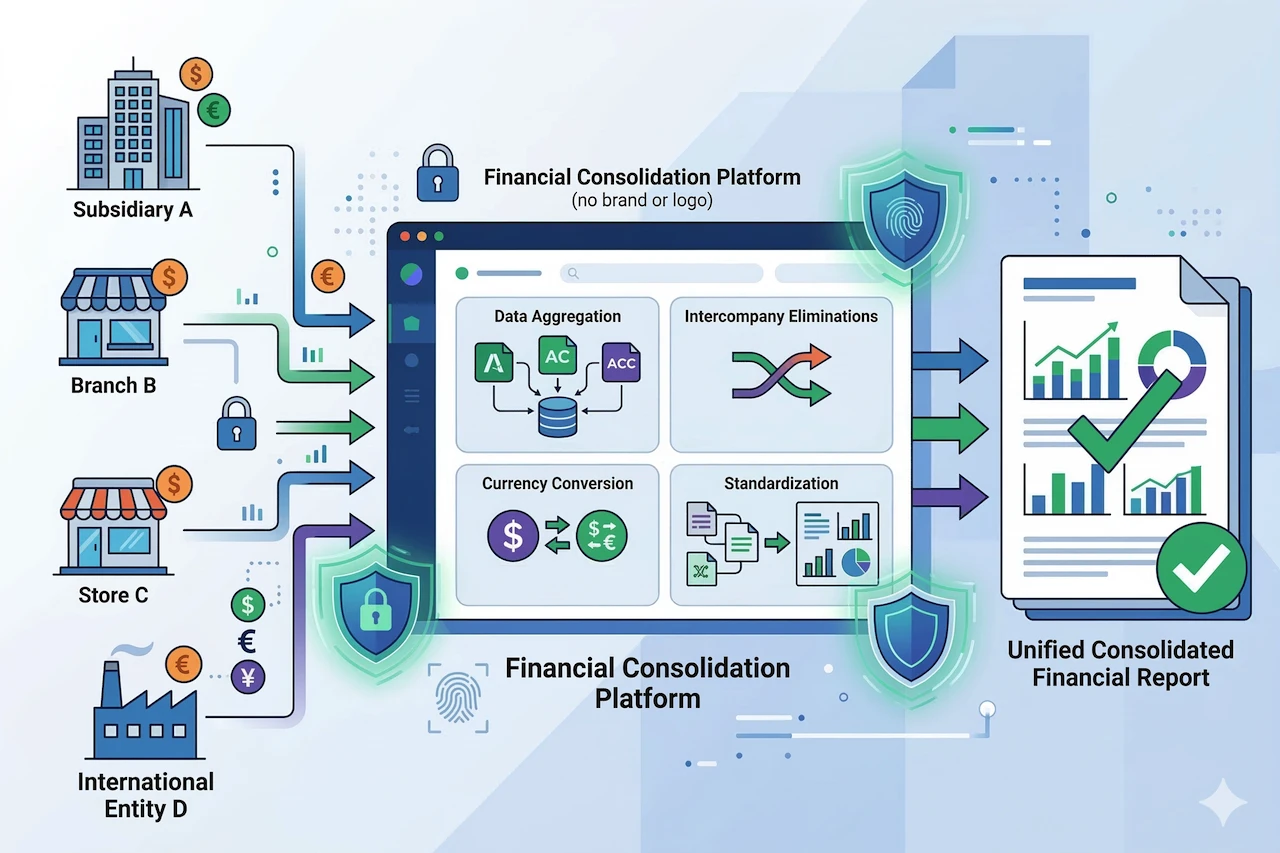
One of the most daunting tasks for this corporate team is the accurate execution of intercompany eliminations. When different properties within the same portfolio share administrative services or purchase goods internally, those specific transactions must be neutralized. Failing to eliminate these internal purchases would artificially inflate the consolidated revenue and distort the chain’s true financial performance. Handling these complex journal entries manually is incredibly slow and highly prone to calculation errors.
Corporate consolidation teams also manage the overarching tax compliance strategy for the entire portfolio. They must ensure that every individual location strictly adheres to its hyper-localized tax codes, which can vary wildly across state and county lines. By utilizing centralized dashboards and standardized reporting protocols, these teams provide ownership with the clear visibility needed to scale the business safely.
Basic Hotel Accounting Procedures Driving Daily Health
Consistent daily procedures form the bedrock of accurate financial reporting and rigorous regulatory compliance. Consider the following routines that safeguard a property’s cash flow and revenue integrity.
Executing The Flawless Night Audit
The step-by-step execution of the night audit is the most critical daily procedure in Hotel Accounting. The process begins with pre-close checks, where the auditor reviews all arrivals, departures, and the current in-house guest list. They must confirm that all daily reservations were correctly entered and that the physical room statuses match the digital system. This initial verification prevents phantom charges and ensures accurate occupancy reporting.
The second phase involves the manual or automated posting of all lingering room charges, daily taxes, and specialized packages. The auditor must ensure that these charges are applied strictly to eligible, occupied rooms. Following this, they must carefully validate high-value folios and review any manual rate adjustments made by the daytime front desk staff. This step is vital for catching unauthorized discounts or accidental billing errors before the guest receives their final invoice.
Table 1.3. The Night Audit Workflow
| Night Audit Phase | Primary Actions Required | Purpose |
| Pre-Close Preparations | Review arrivals, departures, and room status mismatches. | Ensure physical occupancy matches system records. |
| Financial Reconciliation | Post room charges, taxes, and resolve folio discrepancies. | Balance guest ledgers and correct billing errors. |
| System Rollover | Backup data, run daily reports, roll the business date forward. | Finalize the day and prepare for the morning shift. |
The final phase centers on system reporting and the official handover. The auditor generates comprehensive daily revenue breakdowns, cashier balancing reports, and occupancy statistics. They must compile a detailed handover log that documents any unresolved discrepancies, guest complaints, or system anomalies encountered during the shift. This thorough documentation drives strict accountability across all operational departments.
Implementing Strict Segregation Of Duties
To protect physical assets and digital capital, properties must enforce the fundamental accounting principle of segregation of duties. This concept dictates that no single employee should have complete, unchecked control over any financial transaction from start to finish. An effective control environment prohibits the person who authorizes a payment from being the same person who physically processes the transaction. It also separates the custody of an asset from the responsibility of maintaining the financial records for that asset.

For example, the human resources manager should never have the unilateral ability to modify employee bank routing numbers while also approving the final weekly payroll. Similarly, a front desk clerk who processes cash refunds should not be the individual responsible for auditing the daily cash drawer drops. When duties are properly segregated, it requires collusion between multiple employees to successfully execute a financial fraud, drastically reducing the overall risk profile.
In smaller boutique properties with limited administrative staff, achieving this optimal separation can be challenging. In these scenarios, owners must rely heavily on compensating controls, such as implementing mandatory dual signatures on all external wire transfers. Management should also conduct routine unannounced internal audits to ensure that the existing staff strictly adheres to all protective Hotel Accounting protocols.
Internal Controls For Cash And Inventory Management
Precise tracking of physical assets and liquid capital ensures properties maintain their operating liquidity and deter occupational theft. Securing cash assets requires heavily regulated and highly automated disbursement protocols. Properties must utilize modern point-of-sale systems that connect directly to secured cash registers to track every physical dollar collected. Furthermore, maintaining a comprehensive, thoroughly vetted list of approved vendors helps mitigate the risk of paying fraudulent or duplicate invoices.
To streamline cash flow, operators should establish automated electronic payments for recurring utility and subscription expenses. Management must actively avoid antiquated cash handling practices that severely compromise financial security. Maintaining a vulnerable petty cash box or routinely paying out credit card tips from the physical cash drawer should be strictly prohibited. Tips must be disbursed exclusively through the standardized payroll cycle to ensure accurate tax reporting and preserve physical cash reserves.
Inventory management, particularly within the food and beverage department, requires equally rigorous oversight. Properties must implement automated cycle counts, selecting a small subset of high-value items to count on a continuous, rotating basis. This frequent auditing deters internal theft and immediately identifies costly spoilage trends long before the month-end close. Maintaining effective transparent communication with suppliers also ensures that bulk purchasing aligns perfectly with current demand forecasts.
Mitigating The Risks Of Occupational Fraud
The sheer volume of daily transactions in hospitality creates an environment that is exceptionally vulnerable to sophisticated fraudulent schemes. According to industry reports, businesses in this sector experience a median financial loss of $55,000 before a fraud is even detected. Without rigorous surveillance, external criminals and dishonest employees can siphon revenue entirely unnoticed for months. Protecting the property requires a deep understanding of the most common threat vectors.

Externally, properties face constant threats from chargeback abuse and fictitious booking scams. Chargeback fraud, often termed “friendly fraud”, occurs when a guest disputes a legitimate room charge after their stay, claiming unauthorized payment. The property frequently loses both the collected revenue and the physical room inventory if they lack the precise documentation to fight the bank dispute. Fraudsters also utilize stolen credit cards or exploit virtual card vulnerabilities to book massive blocks of rooms maliciously.
Internally, employee theft presents an equally devastating threat to property profitability. Common schemes include the direct appropriation of physical inventory, inflating supplier invoices, or accepting illegal kickbacks from external vendors. Front desk staff might also manipulate internal service charges or abuse guest loyalty program points for personal financial gain. To detect these threats, Hotel Accounting managers must watch for red flags such as multiple failed payment attempts, refusal to provide identification, or requests for partial refunds before arrival.
Essential Hotel Accounting Reports And Compliance Frameworks
Generating accurate financial reports enables stakeholders to make informed, data-driven decisions regarding asset valuation. Take note of the following reporting mechanisms and impending industry standards that will reshape operations.
Mastering The Month-End Close Process
The month-end close is a pivotal financial process that ensures absolute accuracy and compliance in a property’s financial statements. This cross-functional effort requires meticulous preparation before the actual accounting work even begins. The very first step requires finance teams to verify that all integrated systems, including payroll and property management software, are fully synchronized. Following this, the team must distribute a clear schedule to department heads, demanding the submission of all pending expense reports.
Once the preliminary data is gathered, the core execution phase focuses heavily on bank reconciliations. Accountants must match the general ledger data against external bank records to identify missing deposits, unexpected bank fees, or timing variances. Simultaneously, the team must record all necessary month-end journal entries. This includes booking strict adjustments for prepaid expenses, calculating monthly depreciation on fixed assets, and accruing outstanding payroll liabilities.
Table 1.4. The Month-End Close Framework
| Month-End Close Phase | Essential Tasks | Expected Outcome |
| Preparation and Syncing | Verify ERP connections, collect unbilled expenses. | Ensure all raw financial data is present and accurate. |
| Execution and Journaling | Reconcile bank statements, post accruals and depreciation. | Balance the general ledger against external bank accounts. |
| Review and Reporting | Perform variance analysis, generate financial statements. | Produce actionable insights for property ownership. |
After all entries are posted, the controller must perform a rigorous variance analysis. Comparing the actual monthly results against the forecasted budget highlights operational inefficiencies and unexpected market shifts. Finally, comprehensive financial statements, including the trial balance, cash flow statement, and balance sheet, are generated for ownership review. Relying on outdated or rushed data during this process leads directly to poor, misguided management decisions.
Understanding The USALI 12th Revised Edition
The Uniform System of Accounts for the Lodging Industry (USALI) provides critical guidance for standardized financial reporting and benchmarking globally. The newly published 12th Revised Edition was meticulously updated by the Global Finance Committee to improve transparency and align with contemporary operating practices. This standard becomes officially effective and mandatory on January 1, 2026, forcing properties to update their Hotel Accounting practices immediately.

A primary focus of this massive revision involves tracking the rapidly rising costs associated with guest loyalty programs. New expense categories have been added across multiple departmental schedules to isolate the costs of providing member benefits and service recovery points. Furthermore, the new edition alters the departmental categorization of several prominent everyday expenses. The cost of providing in-room entertainment systems has officially moved from the Rooms Department to the Information and Telecommunications Systems Department.
Environmental sustainability has also transitioned from a niche marketing initiative to a core component of this financial reporting standard. To reflect this reality, the 12th edition has completely reimagined the former Utility Department, officially renaming it the Energy, Water, and Waste Department. This department now tracks historical utilities alongside new, progressive metrics such as composted waste and renewable energy generation.
Schedule 15 And Full-Time Equivalent Tracking
One of the most consequential and challenging additions to the 12th edition is the introduction of Schedule 15. This mandatory new schedule requires properties to present the number of Full-Time Equivalent (FTE) employees working within each specific operating department. Historically, the industry only reported aggregate salaries and wages, without mandating the disclosure of actual labor hours worked. This historical lack of standardization made accurate labor benchmarking across different brands and regions nearly impossible.
Schedule 15 provides a standardized mathematical formula to ensure the consistent calculation of these full-time equivalents globally. It records hours broken out distinctly by management and non-management positions, providing granular visibility into supervisory overhead. The schedule also requires the presentation of data for both current and prior year periods to facilitate accurate year-over-year operational tracking. Because the definition of a standard workweek varies wildly by country, this regional baseline must be disclosed at the very top of the schedule.
By mandating this granular labor tracking, owners and asset managers can finally calculate precise, actionable labor efficiency ratios. Metrics such as full-time equivalents per occupied room, or hours worked per restaurant cover, will become standard key performance indicators. However, compiling this data requires the payroll system to reconcile perfectly with time clocks and external contract labor invoices. Properties must begin configuring their human resources software immediately to ensure seamless compliance by the 2026 deadline.
Navigating Complex Occupancy And Sales Taxes
The taxation framework governing the hospitality industry is notoriously intricate and hyper-localized. Hotel operators must distinctly understand the difference between standard retail sales taxes and specific lodging or occupancy taxes. A lodging tax is a specialized levy imposed by state, county, or municipal governments specifically on the rental of sleeping accommodations. This tax generally applies to any short-term stay lasting fewer than 30 consecutive days.
While the room itself is subject to this occupancy tax, the ancillary services provided by the hotel fall under entirely different regulations. If a property operates a restaurant that is open to the public, the food and beverage sales are typically subject to standard state sales taxes. Conversely, if complimentary breakfast is provided exclusively to overnight guests, the property may incur a use tax liability on the wholesale cost of that food. Confusing general sales tax rates with localized lodging taxes often results in severe under-collection or over-collection from guests.
Table 1.5. Hospitality Tax Frameworks
| Hotel Operation Area | Potential Tax Types Applied | Notes |
| Rooms and Lodging | Occupancy Tax, Tourism Tax, E911 Fees. | Varies heavily by city and county. |
| Food and Beverage | Sales Tax, Meals Tax, Alcohol Tax. | Applies to restaurants open to the public. |
| Valet and Parking | Sales Tax, Parking Tax, Tire Fees. | Specific environmental fees may apply locally. |
The complexity deepens significantly for large resorts that offer a vast array of guest amenities. Because the modern hotel serves as a nexus for lodging, dining, retail, and entertainment, operators may be responsible for remitting 20 to 30 different tax types simultaneously. Failure to accurately collect and remit these myriad taxes can result in catastrophic operational consequences, including massive financial penalties and suspended operating licenses. Integrating automated tax compliance software ensures that the exact right rate is applied to every unique transaction.
Exploring The Mechanics And Value Of Modern Accounting Software
Technological advancement is rapidly transforming how hospitality organizations process transactions and consolidate data globally. Examine these upcoming developments that will define the next decade of back-office financial operations.
Global Market Growth And Cloud Adoption
The global market for hospitality accounting software is experiencing exponential expansion, driven by the absolute necessity for precise financial control. In 2024, the market size was valued at approximately $850.75 million. Industry analysts project this figure to surge to $1,425.30 million by 2032, expanding at a robust compound annual growth rate of 6.8%. This massive capital investment reflects a fundamental shift toward digital transformation across all scales of lodging operations.

The industry is witnessing a massive, irreversible migration away from vulnerable, on-premises legacy servers toward secure, cloud-based architectures. Cloud computing allows decentralized finance teams to access critical financial data securely from any location globally. This remote capability is essential for managing international portfolios and ensuring business continuity during localized operational disruptions. It also facilitates seamless software updates, ensuring properties remain compliant with changing tax codes instantly.
As guest expectations evolve toward contactless check-ins and mobile-driven amenities, the back-office Hotel Accounting technology must adapt concurrently. The financial infrastructure must be capable of processing diverse digital payment methods and managing dynamic pricing algorithms flawlessly. Properties relying on outdated spreadsheets will quickly find themselves outpaced by competitors leveraging these advanced digital ecosystems.
Overcoming Multi-Property Consolidation Hurdles
Managing the finances of a multi-property hotel portfolio using fragmented legacy systems is a recipe for operational disaster. As hospitality groups expand across regions, they encounter severe challenges related to decentralized payables, varying tax jurisdictions, and global currency fluctuations. Relying on isolated software solutions forces corporate accounting teams to spend weeks merely compiling and normalizing basic financial data. This disjointed approach creates massive visibility gaps, preventing executives from grasping the true financial health of their organization.
The definitive solution to multi-location complexity is the widespread adoption of centralized Hotel Accounting platforms. These advanced software suites eliminate data silos by providing a single, unified dashboard that aggregates financial metrics across every entity instantly. Corporate controllers can view real-time cash flow, consolidated profit and loss statements, and brand-wide operational budgets without waiting for month-end reports.
Modern consolidation software also heavily automates the most tedious administrative tasks associated with portfolio management. It executes complex intercompany eliminations automatically and handles real-time currency translations for international holding companies. By removing the burden of manual reconciliation, finance teams can dedicate their hours to strategic forecasting and yield management.
Artificial Intelligence And Automated Reconciliation
A primary catalyst for future technological growth is the rapid integration of artificial intelligence into daily workflows. AI-powered accounting systems can now automatically ingest thousands of banking transactions, match them against internal ledgers, and execute complex reconciliations in seconds. This incredible technology effectively eliminates the necessity for manual data entry, drastically reducing the margin for human error.

Furthermore, these intelligent systems utilize historical data to generate highly accurate predictive financial models. Rather than merely reporting on past performance, modern software actively alerts operators to impending cash flow shortages or upcoming budgetary overruns. This monumental shift from reactive bookkeeping to proactive, real-time financial analytics empowers asset managers to make highly aggressive, data-backed investment decisions.
The ultimate goal of modern financial technology is the creation of a completely frictionless operational data ecosystem. Moving forward, the most successful software solutions will feature seamless, bi-directional integration directly with the hotel’s property management system. This connectivity ensures that every room charge, restaurant tab, and spa booking flows instantly into the general ledger without any manual intervention.
Conclusion
Securing the long-term profitability of a hospitality asset requires a mastery of complex macroeconomic forces, intense labor dynamics, and strict regulatory frameworks like the USALI 12th Revised Edition. From executing a flawless night audit to managing multi-property consolidation and combating operational fraud, leveraging modern Hotel Accounting software and protocols is no longer optional. Properties that integrate AI-driven reconciliation and prioritize strict internal controls will consistently outpace competitors burdened by manual administrative errors and margin compression.
This blog provides a comprehensive guide to mastering your financial foundation. To navigate this demanding financial landscape and truly optimize your property’s performance, you need a specialized partner. Discover how the digital strategy and hospitality marketing experts at ROI300 can revolutionize your operational visibility. Contact ROI300 today to implement impenetrable fiscal frameworks and drive unprecedented asset valuation for your hotel.