

Recent surveys show that the majority of hotels have begun embracing IoT, driven by the need to stay competitive and satisfy tech-savvy guests. In fact, a 2024 survey of hundreds of hotel organizations found 76% of hotels had already integrated IoT to improve guest engagement and operations. This trend is worldwide – from large luxury chains in the United States and Europe to boutique hotels and resorts in Asia-Pacific, hospitality businesses are investing in IoT solutions to elevate service quality. Hotel owners are drawn by IoT’s potential to create more personalized guest experiences, boost operational efficiency, and even reduce costs through automation and smarter resource management. As we’ll explore in this guide, IoT matters in hospitality not only because it wows guests, but also because it offers tangible business benefits like energy savings, streamlined maintenance, and data-driven decision-making. In an era when hotels must balance innovation with high-quality service, IoT provides a toolkit to do both.
However, adopting IoT comes with its own set of challenges and considerations – from integration with legacy systems to security concerns. Striking the right balance between high-tech and high-touch is essential. This comprehensive guide will walk you through how IoT is transforming the hospitality industry and what it means for hotel owners and managers. We’ll delve into practical examples of IoT in action, covering everything from smart guest rooms and predictive maintenance to security systems and sustainability initiatives. By the end, you should have a clear understanding of how IoT can be leveraged for competitive advantage, operational efficiency, and enhanced guest satisfaction in your hotel.
What Is IoT in Hospitality Industry and Why It Matters
IoT, or the “Internet of Things,” refers to the network of everyday physical devices that are embedded with sensors, software, and connectivity, enabling them to collect and exchange data. In simpler terms, IoT devices can communicate with each other and with central systems over the Internet without human intervention. IoT in the hospitality industry creates an ecosystem of interconnected devices and systems throughout a hotel. Think of smart thermostats, app-controlled door locks, voice-activated assistants, lighting sensors, minibars that notify staff when they need restocking – all these “things” are part of the IoT. By sharing data and reacting automatically, they bring intelligence and automation to hotel operations.
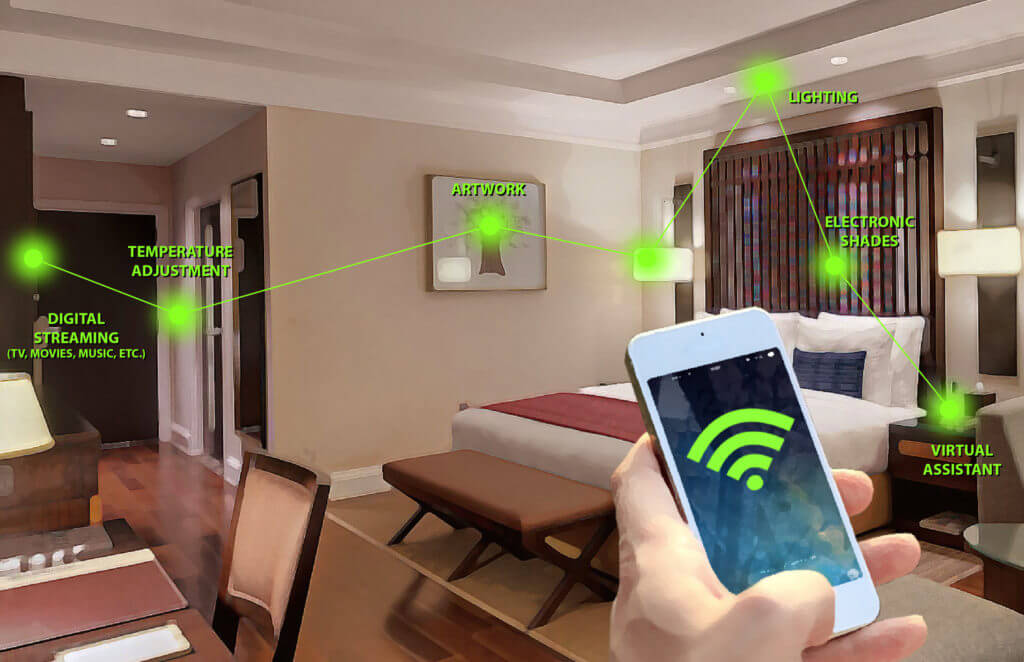
IoT matters in hospitality because it bridges traditional hotel services with modern digital capabilities. Hotels have always been about comfort and service, but IoT allows these to be delivered in new, efficient ways. Guests increasingly expect personalized, seamless experiences akin to what they enjoy in smart homes – and their hotel stay should be no different. As Marriott’s Global Chief Commercial Officer noted, today’s travelers want to personalize almost everything in their lives, including their hotel rooms. IoT is the key to enabling that personalization at scale. For instance, Marriott International has experimented with an IoT-powered “smart room” concept that lets guests use a mobile app or voice commands to tailor the room’s environment – from adjusting the shower temperature to changing the mood lighting – creating a highly individualized stay. This level of customization was difficult to achieve with legacy hotel systems, but IoT makes it possible in a consistent, automated way.

Beyond meeting guest expectations, IoT is valuable for operational and financial reasons. Smart devices can significantly improve a hotel’s efficiency and bottom line. They continuously monitor conditions and usage patterns, which means hotel staff can optimize operations and preempt problems. For example, IoT sensors can detect when a room is unoccupied and automatically turn off lights or HVAC systems to conserve energy – reducing wastage without any manual input. On a larger scale, hotels using IoT-based energy management have reported cutting energy consumption by as much as 25–30%. This translates directly into cost savings. According to one hospitality sustainability alliance, hotels that prioritize smart technologies and sustainability can reduce operating costs by up to 30%. In an industry with tight margins, such savings are significant.
Moreover, IoT helps hotels become more resilient and innovative in the face of industry disruptions. The past few years have shown how important it is for hotels to be agile – whether to accommodate health and safety needs or to adjust staffing efficiently. IoT solutions (like contactless check-in, digital keys, or remote-monitoring of systems) allowed many properties to operate safely during the COVID-19 pandemic and appeal to guests who demand hygiene and minimal contact. Hotels equipped with IoT were quicker to implement features like mobile keys or voice-controlled assistance, which not only improved the guest experience but also addressed new health guidelines.
Finally, IoT generates valuable data and insights. Every smart device in a hotel is constantly collecting data – about energy usage, guest preferences, equipment performance, foot traffic patterns, and more. When aggregated and analyzed (often with AI tools), this data becomes a goldmine for managers. It can reveal trends that help with decision-making: for instance, identifying peak usage times for elevators and adjusting staffing accordingly, or tracking which guest services are most popular and tailoring offerings to match demand. Data-driven insights from IoT can lead to new revenue opportunities and more informed strategic planning. In a competitive hospitality market, using real-time data to enhance service and efficiency is a major advantage.
Enhancing Guest Experiences with Smart Rooms and Personalized Services
One of the most visible impacts of IoT in hotels is the rise of the “smart room” – a guest room outfitted with connected devices that respond to the guest’s needs and preferences. For hotel guests, a smart room can transform the stay into a highly convenient and personalized experience. For hoteliers, these enhancements lead to happier customers, better reviews, and increased loyalty. Let’s explore how IoT is elevating guest experiences, from check-in to check-out.
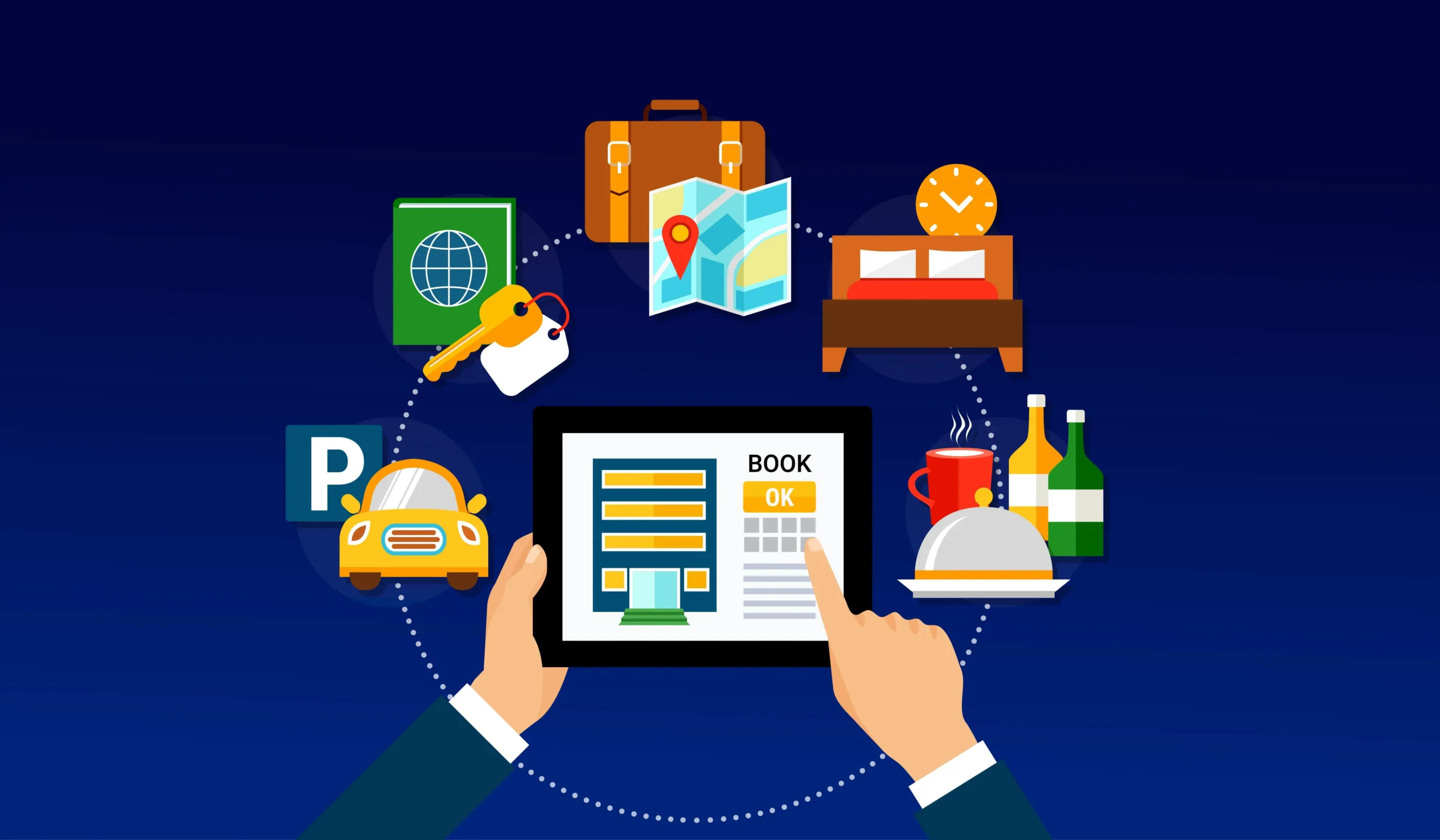
Upon arrival, IoT often enables a frictionless check-in process. Many hotels now offer mobile check-in via smartphone apps, where guests can skip the front desk altogether. With IoT-connected door locks, a guest’s phone can double as their room key. For example, Hilton’s Connected Room platform integrates digital check-in and a mobile room key through the Hilton Honors app, letting guests choose their room, unlock the door with their phone, and even access elevators and parking – all without a physical key card. This not only caters to guests’ desire for speed and convenience but also reduces front desk congestion. Marriott, which deployed mobile key technology across 1,800 properties, reported a 73% reduction in traditional key card usage and a 40% decrease in front desk traffic after implementing IoT-powered mobile keys. These kinds of statistics show how a simple IoT solution can streamline arrivals and free up staff to focus on personal welcomes or problem-solving rather than routine check-in tasks.
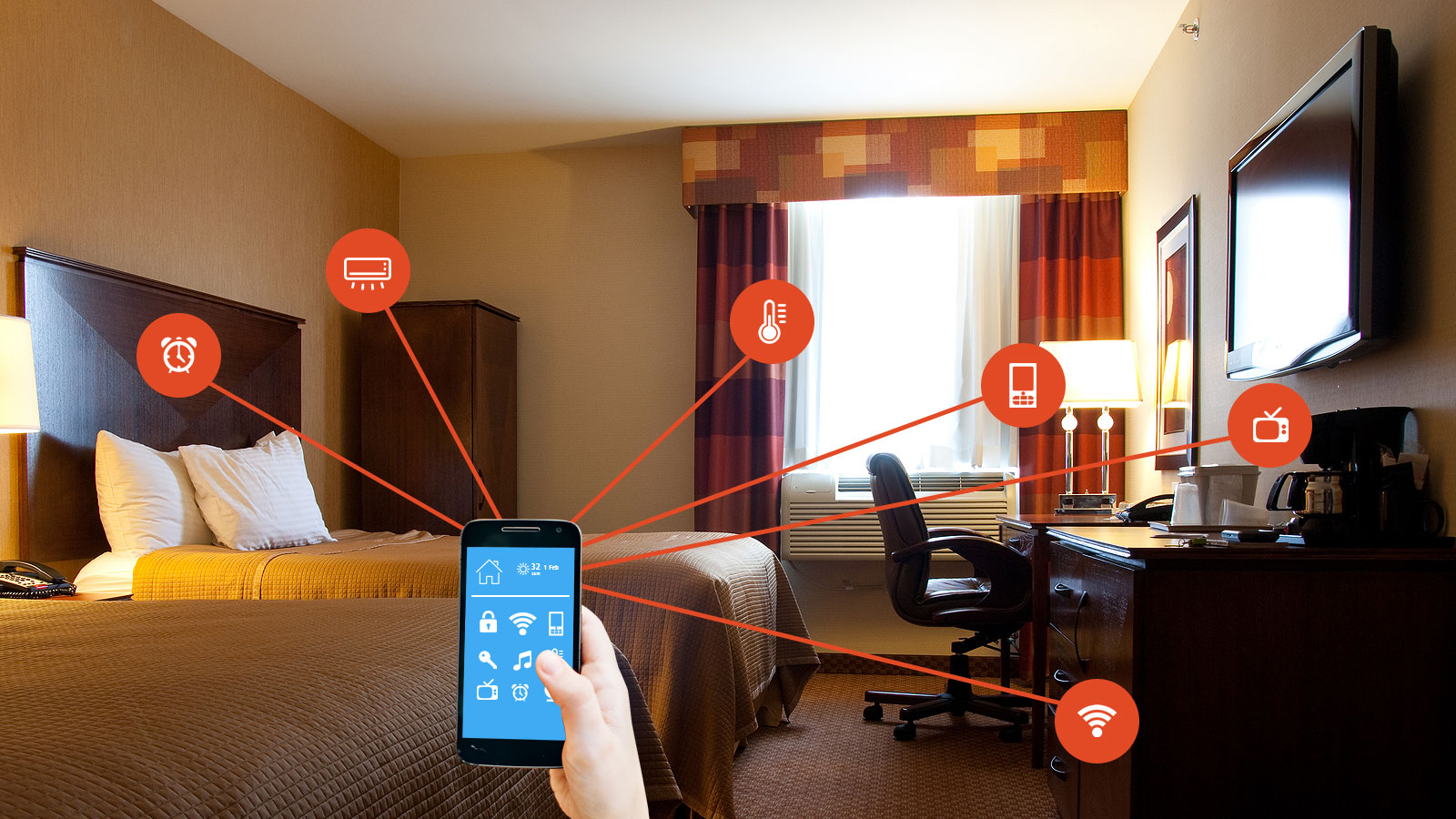
In-room experience is where IoT truly shines. The moment a guest enters their room, IoT devices start working to make them comfortable. Smart thermostats adjust the temperature based on either preset guest preferences or occupancy sensors – so if a room knows you just walked in on a hot day, it might cool itself down automatically. Lights can also respond to occupancy or schedules; some systems slowly raise the lights in the morning like a sunrise alarm, or turn everything off when sensors detect the room is empty. Voice-activated assistants have become popular in hotel rooms as well. At the Wynn Las Vegas, for instance, every room is equipped with an Amazon Echo smart speaker, enabling guests to control lights, drapes, and the thermostat simply by speaking requests out loud. A guest can say, “Alexa, turn off the lights,” from the comfort of bed, or ask the voice assistant to play music or give the weather forecast. Initially, Wynn introduced Alexa to manage lighting – for example, automatically turning off lamps when enough natural light was detected – and later expanded it to temperature control and other concierge functions. This kind of voice interface not only adds a “wow” factor but also replaces calls to the front desk for simple queries. As one report noted, having voice assistants take on informational tasks (like providing restaurant hours or taxi numbers) means guests get immediate answers while staff have more time to handle complex requests. It’s a win-win for service quality.
IoT also enables deep personalization of the room environment. Many smart hotels let guests save their preferred room settings in a profile. Imagine a repeat visitor who likes soft lighting at 2700K color temperature, wants the AC at 22°C, and loves jazz music. With IoT, the hotel can have those settings applied as soon as that guest checks in, either automatically or at a voice command. Marriott’s IoT Guestroom Lab demonstrated such possibilities: a guest could ask the virtual assistant for a 6:30 AM wake-up alarm that slowly brightens the room lights and even starts the shower at exactly 39°C – all orchestrated by interconnected devices responding to the guest’s profile. Marriott found that letting guests customize over a dozen room parameters via a mobile app led to a 34% increase in guest satisfaction scores in pilot tests. When guests feel in control of their space (just as they might with smart devices at home), they tend to be more comfortable and satisfied.
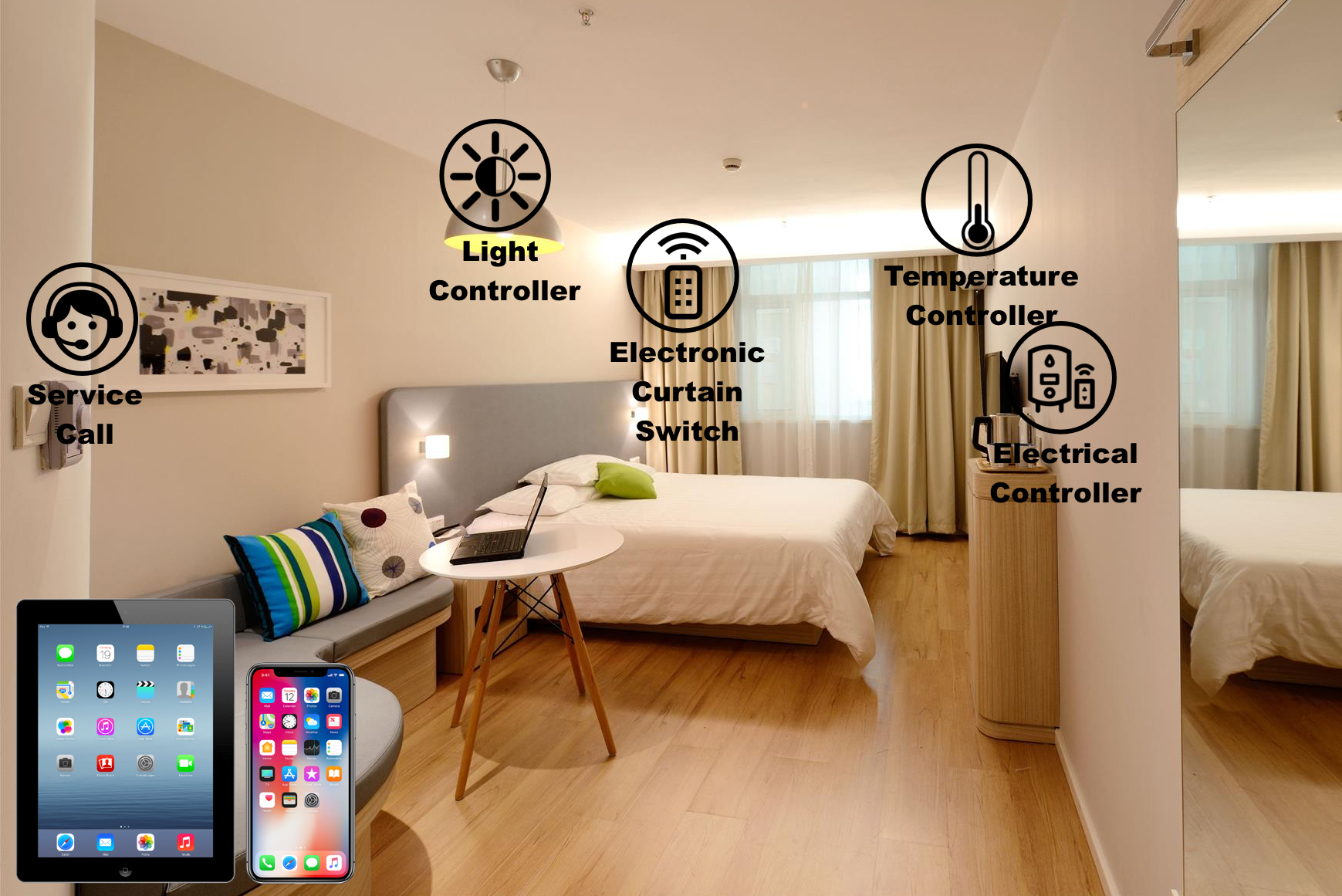
Smart room features aren’t limited to climate and lighting. Entertainment and convenience are also enhanced through IoT. Many hotels now use smart TVs or in-room tablets that connect to hotel services. A tablet on the bedside might allow guests to order room service, request extra towels, or book a spa appointment – all through an intuitive menu that sends requests directly to the relevant department. The Eccleston Square Hotel in London, one of Europe’s most high-tech boutique hotels, provides tablets in each room for guests to order services or browse digital newspapers. Those tablets double as control hubs for room settings, ensuring guests have everything at their fingertips. Some hotel chains enable guests to stream their own content to the in-room smart TV (for instance, linking your Netflix account) seamlessly. Hilton’s Connected Rooms are equipped so that guests can personalize media as well – in 2019 Hilton even added Netflix integration so people could easily pick up a show where they left off. All of this contributes to a more personalized, “just like home” vibe that today’s travelers, especially younger ones, appreciate.
Let’s not forget luxury and novelty experiences that IoT makes possible. In some cutting-edge hotels, you might find IoT-powered extras like smart beds or interactive amenities. At the Henn-na Hotel in Japan (famous for its robot staff) and other forward-looking properties, IoT sensors can adjust the firmness of a smart mattress or allow guests to change the color of their room’s accent lighting to suit their mood. Meanwhile, augmented reality (AR) and virtual reality are starting to creep in via IoT connectivity – one Premier Inn in the UK lets guests point their smartphone at an AR-enabled map on the wall to get information about local attractions, blending the physical and digital worlds for a richer experience. These are glimpses of how IoT might bring an extra layer of entertainment and engagement to hotel stays.
Perhaps the most dramatic IoT-enabled guest experience to date is Alibaba’s futuristic FlyZoo Hotel in Hangzhou, China, which operates largely through automation. In this 290-room hotel – a pilot “hotel of the future” – guests use a mobile app for nearly everything, and facial recognition systems serve as their identity and room key. Upon arrival at FlyZoo, a guest can walk up to a kiosk for check-in, have their face scanned (no need for an ID card or credit card swipe), and then use facial recognition instead of a key to access the elevator and their room. Inside the room, IoT devices and an AI assistant (in Mandarin) cater to requests. Even the hotel’s restaurant is high-tech: after ordering from their phone, robot butlers deliver the meals to your table, and a giant robotic arm mixes cocktails at the bar. While FlyZoo is an extreme example designed to showcase Alibaba’s tech, it illustrates where hospitality could be headed – a highly automated yet personalized journey. Guests can plan and manage their entire stay through one digital platform, enjoying instant, contactless services at every step. It’s no surprise that FlyZoo’s concept appeals especially to tech-savvy travelers in China, who have a high expectation for digital convenience and contactless service.
Of course, not every hotel will go as far as replacing staff with robots or using facial recognition for everything. But many of the underlying IoT technologies from these examples are becoming mainstream. Mobile apps that double as a concierge and control center, voice-controlled amenities, smart room controls, and on-demand services via IoT are quickly becoming standard offerings at modern hotels. Major brands like Marriott, Hilton, IHG, and Accor are rolling out aspects of the smart room across their portfolios. Even mid-sized and boutique hotels can deploy stand-alone IoT solutions – for instance, a small property might start with just app-based door locks and a smart thermostat system, then later add voice assistants or IoT minibars as ROI is proven.
Operational Benefits: Efficiency, Predictive Maintenance, and Smart Energy Management
While the guest-facing side of IoT often grabs headlines, hotel owners and managers are equally excited about how IoT can revolutionize back-of-house operations. Smart devices and sensors work behind the scenes to make hotel management more efficient and proactive. The result is cost savings, smoother operations, and fewer unpleasant surprises (like sudden equipment failures or running out of supplies). Let’s dive into the key operational benefits IoT brings to hotels: predictive maintenance, energy efficiency, inventory management, and beyond.
Predictive Maintenance of Hotel Equipment and Infrastructure
One major advantage is predictive maintenance of hotel equipment and infrastructure. Traditional hotel maintenance is often reactive – something breaks and then you fix it – or based on routine schedules that don’t always prevent issues. IoT changes that by enabling continuous monitoring of equipment health. Sensors attached to critical systems (HVAC units, boilers, elevators, kitchen appliances, etc.) can track metrics like temperature, vibration, or power draw, and then use algorithms to predict when a component is wearing out or about to fail. This means maintenance can be scheduled before a breakdown occurs.
For example, an IoT sensor on an elevator motor might detect abnormal vibrations and alert the engineering team to service it, preventing a costly shutdown during peak guest hours. In practice, hotels using IoT-based predictive maintenance have seen impressive results – studies indicate these systems can extend equipment lifespans by around 40% and cut unexpected breakdowns in half. Fewer breakdowns not only save money on emergency repairs but also avoid the guest dissatisfaction that comes with things like air-conditioning outages or out-of-service elevators. Additionally, maintenance staff can be more productive; rather than doing rounds to manually check equipment or performing unnecessary preventive replacements, they can let the sensors guide them to where attention is needed most. Some hotels reported 35% faster response times to maintenance issues after implementing IoT monitoring, because the system flags issues immediately and sometimes even opens a work ticket automatically. Overall, this shifts the engineering department from firefighting mode to a more efficient, data-driven operation.
Energy Management and Sustainability
Another area where IoT excels is energy management and sustainability. Hotels are notorious energy consumers – think of all the rooms to heat or cool, the 24/7 lighting in hallways, the pumps for pools, and so on. IoT provides granular control over these systems to eliminate waste. Smart HVAC systems are a prime example. By using motion detectors and occupancy sensors, a smart thermostat can learn when a room is occupied or not. If a guest leaves for the day (or if a conference room is empty between meetings), the system can automatically adjust temperatures to an energy-saving mode and turn off unnecessary lights. When the guest returns or a meeting is about to start, it brings conditions back to comfort settings.
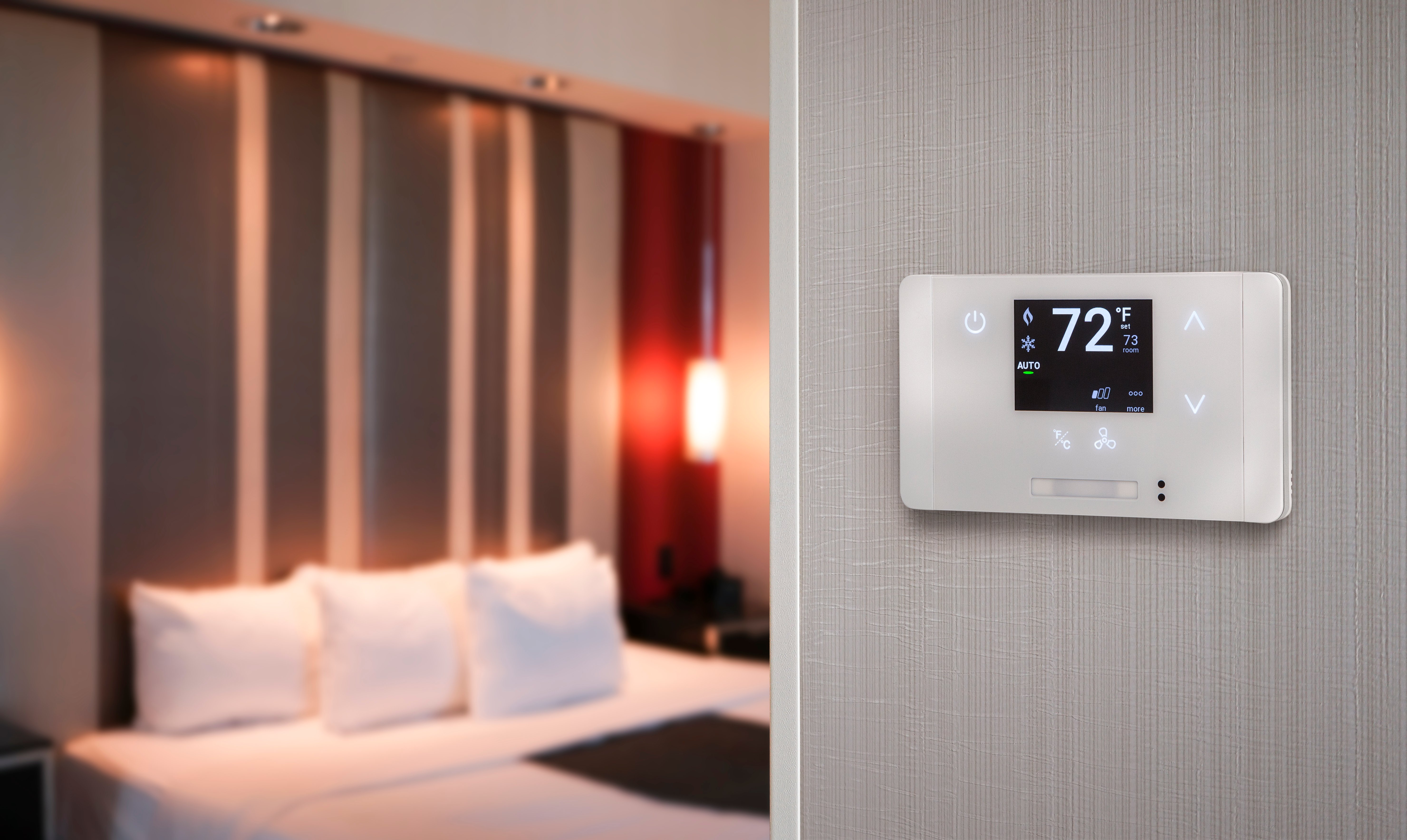
This kind of dynamic adjustment can save a lot of energy. In fact, Hilton Worldwide, after implementing automated HVAC controls across many of its hotels, found it was saving on the order of $400,000 in energy costs annually for large properties – achieving ROI on the IoT investment in under two years. Similarly, occupancy-based lighting systems prevent that scenario we’ve all seen (an empty hotel ballroom or corridor with all lights blazing). Some hotels that switched to IoT-driven smart lighting combined with LEDs have slashed lighting energy usage by 80% or more. For instance, a Radisson Blu in Dubai cut energy use by 81% by replacing most lights with LED systems, and the Grosvenor House Hotel saved ~80% on lighting after a smart retrofit – recouping the investment in just 18 months. Even in the U.S., a boutique property like The Chatwal in New York achieved a stunning 90% reduction in lighting energy after installing smart LEDs and sensors, saving over $120,000 in the first year. These are real, bankable benefits. Besides HVAC and lighting, IoT helps optimize other resource consumption: smart irrigation systems water the hotel grounds only when needed (using weather data to adjust schedules), and water usage monitors can detect leaks or excessive use in real time. For example, IoT water sensors in guest rooms can alert maintenance the moment they detect a pipe leak or a faucet left running, which both avoids waste and prevents water damage. Some major hotel chains have leveraged IoT for water management and saw substantial improvements – Hilton reports it has reduced water use by 43% since 2008 partly by using smart monitoring systems to pinpoint and curb waste.
Inventory and Supply Management
IoT also streamlines inventory and supply management in a hotel. Consider how many inventory categories a hotel manages: from housekeeping supplies (linens, toiletries) to food and beverage stock, to gift shop merchandise. Keeping track of it all manually or with periodic counts is labor-intensive and prone to error. IoT can help by using sensors and RFID (radio-frequency identification) tags to automatically monitor inventory levels. For instance, there are IoT-enabled storage shelves that can tell how many bottles of shampoo are left or how many towels have been taken for laundry, then trigger re-order requests or alerts when stock runs low. In the kitchen, smart refrigerators and freezers monitor temperature and can send alerts if a unit is failing (preventing spoilage of expensive ingredients). They can also keep a log of stock levels; IoT sensors can note when you’re down to the last 5 gallons of milk and add that to a procurement list.
Food waste reduction is another benefit – sensors can track expiration dates of perishables and send notifications to use certain items before they spoil. Some hotels are implementing automated food inventory systems that analyze consumption patterns, so they order only what they need, cutting down on over-ordering and waste. In the UK, hospitality sector research found a huge portion of food waste is avoidable, and smart tech can chip away at that by tightening inventory control. Hotels that have tried these solutions saw significant sustainability gains; by using IoT to optimize purchasing and storage, they reduce waste disposal costs and can even donate surplus more effectively. An IoT-based waste management system might even track how full various bins are and schedule pickups only when needed, improving efficiency and recycling rates. Indeed, one analysis noted that smart waste systems improved recycling rates by about 30% in hotels that adopted them.
Staff Workflow And Service Delivery
Another operational aspect enhanced by IoT is staff workflow and service delivery. With IoT connectivity, different parts of the hotel’s operations can “talk” to each other. For example, if a guest uses the hotel app to request more pillows, an alert can immediately pop up on a housekeeper’s mobile device or smartwatch, showing the room number and request. This eliminates the need for calls and paperwork, speeding up response time.

IoT occupancy sensors can inform housekeeping which rooms are currently vacant and ready to be cleaned – and which ones have guests inside or do-not-disturb active – so that staff can plan their rounds more efficiently. One report explained that wireless IoT occupancy sensors allowed hotels to optimize housekeeping schedules with real-time room status updates, improving staff productivity and ensuring guests aren’t disturbed unnecessarily. Similarly, IoT can help manage banquet operations: sensors in conference rooms or ballrooms might track usage or environmental conditions, informing staff when to adjust climate control or refresh coffee stations. Some hotels even use asset-tracking IoT devices to keep tabs on equipment like luggage carts, housekeeping trolleys, or wheelchairs for guest use – so employees can quickly locate them when needed. A long-range tracking tag on a luggage cart can show its last known location on a digital map of the property, saving time hunting around.
Robotics and Automated Services
Robotics and automated services, powered in part by IoT, are another operational boon. Several hotels have introduced service robots – for delivering items, cleaning floors, or even greeting guests. These robots are essentially IoT devices on wheels, navigating using sensors and staying connected to the hotel’s network. A brand well-known for this is YOTEL. At some YOTEL properties, guests might encounter “YO2D2,” a robot butler that can deliver room service orders or extra amenities to rooms. YOTEL’s New York hotel also features a robotic arm named Yobot that automates luggage storage, efficiently handling up to 300 bags a day in a locker wall.
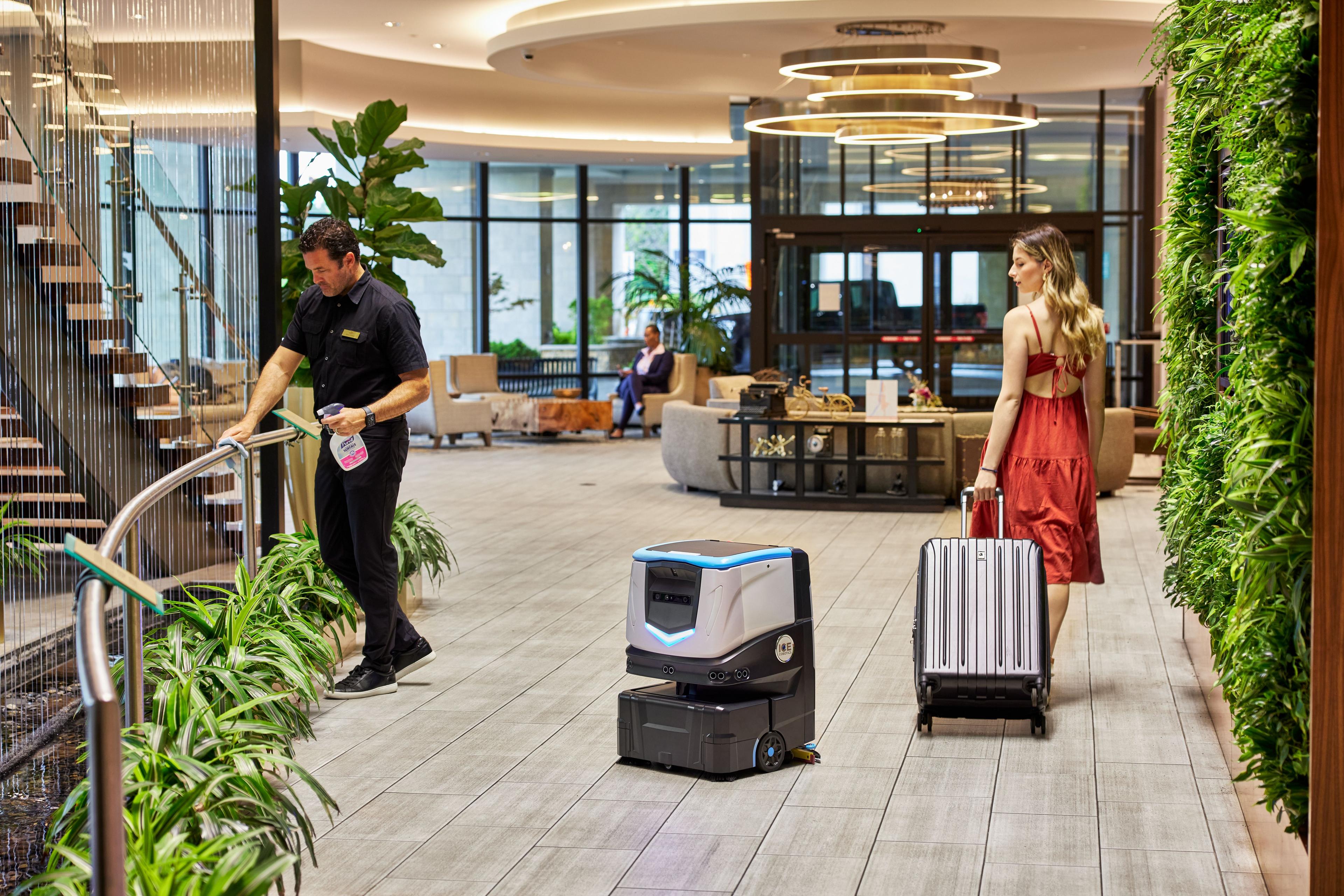
Because these robots are integrated with the hotel systems, a guest request made through the app can directly dispatch a robot with the item. For the hotel, this means 24/7 service capability without needing to keep staff on standby for late-night toothpaste deliveries. Robots don’t replace human staff for complex interactions, but they handle simple, repetitive tasks and thus free up employees to focus on higher-value services (like engaging with guests or handling exceptions). Additionally, robots can work continuously and are a bit of a marketing novelty that can attract tech-curious travelers.
Security, Safety, and Sustainability Implications of IoT in Hotels
Every new technology comes with new considerations, and IoT is no exception. In the hospitality environment, security, safety, and sustainability are three critical domains that IoT impacts – each with positive opportunities as well as challenges to manage. Hotel owners and managers must understand how IoT changes the game in these areas, to leverage its benefits while mitigating risks. Let’s examine each in turn.
Securing the Connected Hotel: Cybersecurity and Physical Security
With IoT devices spread throughout a hotel – from smart door locks to sensors in HVAC systems – there’s an expanded digital attack surface that hoteliers need to protect. Cybersecurity is a major concern because IoT devices, if not properly secured, can be entry points for hackers. A startling statistic from recent industry research found that hotels face an average of 1,000 cyber attacks per month on IoT devices, and the frequency of sophisticated attacks targeting guest data has jumped 300% in recent years. In practice, many hotel IT departments have already encountered issues: 83% of hotels in one survey reported at least one IoT-related security breach in the past three years. These breaches could range from malware infecting a networked device to an outsider gaining unauthorized access to systems. The consequences can be severe – data theft (imagine hackers accessing guests’ personal or payment information via a compromised device), loss of control of a critical system, or even damage to brand reputation if guests feel their privacy isn’t respected.

Securing a hotel’s IoT ecosystem requires a multi-layered approach. Modern IoT hospitality solutions thus emphasize encryption, network segmentation, and vigilant monitoring. Data traveling between devices (say, from a door lock to the central system) should be encrypted – guidelines suggest using at least 256-bit encryption for data in transit and at rest. Networks need to be segmented so that if one device is compromised, it doesn’t provide a pathway to the entire hotel database. Many hotels set up a separate VLAN (virtual network) for IoT gadgets separate from the one handling, e.g., credit card transactions. Regular software and firmware updates are essential too; IoT devices are essentially small computers and need patching against the latest vulnerabilities. Strong authentication protocols are a must – for example, ensuring that only authorized staff devices can communicate with certain IoT systems, perhaps using multi-factor authentication. Leading implementations even deploy AI-powered security systems that watch network traffic for anomalies 24/7 and can respond to threats in milliseconds. The end goal is to make guests’ interaction with IoT safe and seamless – they should enjoy the convenience without worrying that connecting their phone to the room’s smart TV might expose their data, for instance.
IoT also enhances physical security and safety in hotels when used properly. Consider smart door locks and digital keys: these not only offer convenience but can be safer than traditional locks if managed correctly. Mobile keys, for example, cannot be lost or cloned in the same way a magnetic stripe keycard can. Many systems generate a unique encryption for each guest’s phone key and automatically disable it at check-out time. Hotels like Hyatt that implemented mobile key technology found it significantly sped up check-in (by 70%) and improved security by reducing the reliance on physical key cards (which Hyatt noted cut their key card replacement costs by 85% as well). Smart locks can also provide an audit trail – every entry to a room is logged, so in the event of a security incident there’s data on who accessed where and when. According to security studies, hotels that rolled out IoT-enabled smart locks saw a 60% reduction in security incidents like unauthorized room access. That’s a testament to how technology can tighten controls; for instance, no more master keys floating around to be potentially misused.
IoT-driven surveillance and alert systems also bolster security. Many hotels use connected cameras in lobbies and hallways that feed into AI analytics – these can detect unusual behaviors (say, someone loitering in a restricted area or an unattended bag) and immediately alert security staff, often with smartphone notifications. Modern IoT security platforms are sophisticated: one report mentioned they process over 10,000 security events daily in a large hotel and achieve 99.99% accuracy in identifying true security concerns. They filter out normal activity and bring real threats to attention within seconds, enabling a faster response to incidents. Furthermore, IoT can integrate with emergency systems. If a fire sensor goes off in one part of the hotel, IoT can automatically unlock emergency exits, send evacuation alerts to guests’ phones, and direct CCTV cameras to record the area – all simultaneously. It’s a level of coordinated response that older standalone systems couldn’t match.
Staff safety is another critical aspect of security in hospitality. Here, IoT has provided a crucial solution: wearable panic buttons for hotel employees. Housekeepers and other staff often work alone on guest floors, and unfortunately there have been incidents of harassment or assault. In response, many hotels – sometimes spurred by city or state legislation – have equipped employees with small IoT panic button devices that they can press if they feel threatened or need urgent help. These devices use a combination of wireless technologies (like Wi-Fi, Bluetooth, or cellular) to instantly transmit the staff member’s location to hotel security or management when activated. In 2018, Marriott and several major hotel companies pledged to provide safety alert devices to all on-property staff as part of a broader industry commitment. Today, tens of thousands of hotel employees carry such panic buttons. If a housekeeper presses the button, supervisors can see exactly which room they are in and send assistance immediately. Vendors like Relay and others have refined these devices to ensure they work across large properties by dynamically switching between communication networks for the strongest signal. The upshot is a safer working environment and peace of mind for staff – an IoT solution directly addressing a human safety need. It also helps hotels comply with regulations in places like New York, Chicago, or Seattle, where worker safety laws mandate panic buttons in hotels.
A hotel staff member wearing a wireless panic button device. IoT-enabled employee safety buttons can instantly transmit the staff’s location and call for help when pressed, reflecting the hospitality industry’s commitment to worker security.
Despite these benefits, managers must remain vigilant. Privacy concerns go hand in hand with security. Guests might wonder: is the smart speaker listening to me when it shouldn’t? What data is the hotel collecting from my room sensors or TV? It’s essential to communicate transparently what technologies are in use and how guest data is protected. For example, voice assistants in hotel rooms are usually configured to not retain recordings, or to anonymize them – and guests should be informed of this. Likewise, cameras should never be placed in private areas, and data from in-room sensors (temperature, motion, etc.) should be handled with care. A misstep on privacy can erode trust quickly. One study pointed out that while many customers enjoy the convenience of AI and IoT, a significant segment still highly values human contact and may be uneasy if technology feels too intrusive. Striking the right balance – offering high-tech options without making them feel forced, and always giving guests control (like an option to opt out of certain features) – is key to success.
Sustainability and Environmental Responsibility
Sustainability isn’t just a buzzword; it’s a core concern for the hotel industry and an area where IoT can make an enormous positive impact. Hotels are working to reduce their environmental footprint – cutting energy use, conserving water, minimizing waste – both to reduce costs and to meet the expectations of eco-conscious guests. IoT is becoming an indispensable tool in this endeavor by enabling smarter, more precise control of resources and providing data to measure improvements.

Energy efficiency, as discussed earlier, is greatly improved by IoT through automated systems that ensure nothing is running unnecessarily. Beyond just saving money, this is about carbon footprint. Heating, cooling, and lighting adjustments translate into real emissions reductions. For instance, by using IoT to power an AI-driven energy management system, Marriott was able to reduce natural gas consumption by 24.5% within five months at a test location. That’s a significant cut in fuel usage and greenhouse gas emissions in a short time. Multiply similar efforts across hundreds of hotels and the cumulative effect on sustainability is huge. IoT also helps with reporting and showcasing sustainability efforts. Many corporate travelers and event organizers now ask hotels for their environmental metrics. With IoT, a hotel can readily report how much energy and water it saved, or how it optimizes power usage during peak times, which can be a differentiator in winning business from sustainability-minded clients.
Water conservation is another vital area. Hotels consume vast amounts of water – not just in guest bathrooms, but in laundries, pools, kitchens, and landscaping. IoT water sensors and smart meters allow hotels to track usage in real time and detect waste. As mentioned, they can catch leaks immediately (which if undetected could waste thousands of gallons). Some smart showers and faucets might even alert guests or automatically turn off if left running too long. An average hotel room can use on the order of 1,500 liters of water per day; imagine cutting that by 10–20% through efficient fixtures and IoT monitoring – the savings are enormous, especially in water-scarce regions. Hilton’s rollout of smart irrigation and other water-saving tech contributed to its big reductions in water use over the past decade.
IoT also contributes to sustainability via smart waste management and reduced food waste, as touched on previously. By ensuring that food is used efficiently and not thrown out unused, hotels save on both the cost of the food and the disposal burden. And when waste like compost or recycling is handled via sensor-enabled bins that signal when they’re full, pickups can be optimized, reducing unnecessary trips (less fuel burned by garbage trucks, etc.). Some hotels are even exploring IoT for air quality monitoring – making sure ventilation is only on when needed and that indoor air quality remains healthy without excessive energy use.
A broader concept emerging is the “smart, green hotel” where IoT is integrated with renewable energy and efficient building design. IoT controllers can dynamically manage solar panels, battery storage, and grid usage to maximize renewable energy consumption. Modern IoT-based building management systems allow monitoring and controlling virtually every building system on one platform – solar power generation, water recycling systems, HVAC, lighting, etc., all optimized together. For example, IoT can coordinate automated blinds that reduce cooling load by blocking afternoon sun, while also using sensors to dim indoor lighting when there’s plenty of daylight. A comprehensive IoT setup could potentially achieve near net-zero energy status for a hotel by finely tuning all these factors. In fact, forward-looking analyses suggest that the future convergence of IoT with sustainable tech is aiming for intelligent hotels that maintain comfort while achieving net-zero energy consumption.
Travelers are taking notice of such efforts. A large proportion of guests, especially younger generations and high-end travelers, prefer hotels that demonstrate environmental responsibility, and many are willing to pay a premium for it. By using IoT to become greener, hotels can attract this growing market segment. They can also earn certifications (like LEED or Green Globe) more easily by documenting their efficient systems. We saw an example: the Excelsior Hotel Ernst in Germany implemented an advanced IoT-driven building management system and switched to green energy sources, which helped it significantly reduce consumption and get recognized for its sustainability initiatives.
Implementing IoT in Your Hotel: Strategies and Integration with Legacy Systems
By now, the benefits of IoT in hospitality – from guest experience perks to operational efficiencies – should be clear. The next question for any hotel owner or manager is: How do we actually implement IoT solutions in our property? Rolling out IoT in a hotel can be a complex project. It involves choosing the right technologies, integrating them with what you already have, training your staff, and doing it all while the hotel is running and guests are coming through the door. In this section, we’ll outline a strategic approach to IoT implementation and discuss how to handle the practical challenges, including integration with legacy systems.
Start with a clear vision and goals. Before installing anything, it’s crucial to define what you want to achieve with IoT. Is your primary goal to save energy costs by 20%? To enable a fully keyless, mobile check-in experience? To reduce maintenance downtime or to offer “wow factor” smart rooms that differentiate your hotel? The answer will guide where to focus and how to prioritize investments. It might be helpful to sketch out the guest journey and the hotel operations workflow and mark points where IoT could make a difference. For example, you may identify that digital keys and smart thermostats would solve current pain points (long check-in lines or high utility bills). Knowing your targets helps avoid the trap of adopting tech for tech’s sake. As IoT consultants often advise: “Define your goals before launching your IoT project”.

Choose the right tools and partners. The IoT marketplace is vast, with countless vendors offering smart hospitality gadgets and platforms. From smart lock providers to IoT platform integrators, selecting the right solutions can be daunting. It’s often beneficial to consult with experts or IoT developers who have experience in hospitality. They can help evaluate options and ensure you pick technologies that align with your goals and budget. Some hotels opt for an all-in-one platform that covers many functions (like a unified building management system that handles HVAC, lighting, door locks, etc. under one software umbrella). Others take a modular approach, adding capabilities step by step (perhaps starting with just an energy management system this year, and adding a guest-facing mobile app integration next year). There’s no one-size-fits-all answer. Key considerations should include: compatibility (will this IoT system play nicely with my property management system, or my existing Wi-Fi infrastructure?), scalability (can it expand to more rooms or new features later?), and security features (does the vendor prioritize data security and provide encryption?). Established hotel tech providers or those that adhere to industry standards may offer more peace of mind.
Integrate with legacy systems. Most hotels are not built from scratch with IoT in mind – they have legacy systems like older PMS (Property Management Systems), PBX phone systems, or building control systems. The good news is, modern IoT solutions often provide APIs and middleware to connect with these. For example, your IoT guestroom tablets should ideally connect with your PMS so that when a guest orders room service on the tablet, it knows which room and posts the charge automatically. Integration is one of the trickiest parts; approximately 60% of hotels are running systems over five years old, which can pose compatibility hurdles. The way forward is usually through a middleware platform or IoT gateway that can translate between new IoT protocols and older systems. These gateways handle multiple protocols (Wi-Fi, Bluetooth, Zigbee, etc.) and data formats, ensuring devices can talk to each other and to the central software. For instance, a LoRaWAN gateway might be used if you have battery-powered sensors spread around (LoRa is long-range, low-power radio), yet the data still needs to feed into your cloud dashboard. It’s a technical dance, but vendors often offer integration services as part of their package. When done right, integration means your IoT devices become an extension of your current operations rather than isolated gadgets. As a simple example, a smart thermostat system can be linked to your PMS so it knows when a room is sold or unsold; it can then switch to an energy-saving mode for vacant rooms automatically, and resume comfort settings before the guest arrives.
From a project management perspective, phasing the implementation can reduce headaches. Many hotels pilot IoT solutions in a limited area first – say, retrofit one floor with smart room technology – to test performance and staff processes before scaling up. This approach was used by Marriott in their IoT Guestroom Lab prototypes and subsequent live hotel pilots in select locations. A phased rollout allows for learning and adjustment. You might discover, for example, that the smart door locks need a stronger Wi-Fi signal than initially thought, prompting you to install more access points on each floor before deploying property-wide.
Training your staff is an often underestimated but absolutely vital part of IoT integration. The best IoT system in the world is pointless if your employees don’t know how to use it or don’t trust it. Make sure to involve department heads early on, get their input, and then thoroughly train the frontline staff who will interact with these new tools. Housekeepers need to know how to interpret a new “room ready” dashboard showing sensor data, maintenance techs should learn how to respond to IoT alerts from the equipment, and front desk agents should be comfortable explaining the new app features to guests. The implementation plan should include training sessions and perhaps a period of dual operation (old way and new way) until everyone is up to speed. Crucially, emphasize how IoT helps them rather than threatens their jobs. When staff see that the smart system lightens their workload (like automating mundane tasks or preventing annoying incidents), they become champions of the technology.

Another aspect is ensuring data security and privacy from the get-go. We touched on cybersecurity in the previous section; during implementation you must work with IT to build those protections in. Choose devices and platforms that have strong security track records and features. For example, prefer a smart TV system that isolates each room’s Chromecast or streaming session so one guest can’t accidentally (or intentionally) stream content to another room’s TV. Work with vendors who can commit to compliance with data protection regulations (GDPR if you have international guests, for example) and who clearly document what data is collected and stored. The time to address these concerns is during installation, not after an incident occurs.
A key decision will be whether to opt for fully integrated solutions from one vendor or mix-and-match components. There are pros and cons: a single-vendor solution (for example, one company providing the app, room controls, back-end platform, etc.) can mean everything works smoothly together with one point of contact. However, it might lock you into that vendor for future expansions (a risk of vendor lock-in where your system is only compatible with their products). On the other hand, a more open, modular approach might allow you to pick best-of-breed devices (maybe you love Vendor A’s thermostat but prefer Vendor B’s voice assistant), but then you shoulder more of the integration effort. There’s also the consideration of custom-built vs off-the-shelf solutions. For many hotels, off-the-shelf is fine and cost-effective (e.g., using a known brand’s IoT thermostat system). But if you have very specific needs or want a unique guest experience, a custom-developed solution might pay off. Custom IoT setups, designed by a development firm to your specs, give you flexibility and scalability – you can incorporate new features down the line more easily and aren’t tied to one manufacturer. The trade-off is higher upfront cost and needing more IT involvement on your side.
Budgeting and ROI analysis will naturally be a part of the planning. IoT implementations can range widely in cost depending on the scope. A typical 200-room hotel might invest somewhere between $300,000 to $500,000 for a comprehensive IoT upgrade, covering hardware, software licenses, integration services, and training. This figure could be lower if focusing on a narrower set of features, or higher if going for a top-to-bottom smart hotel transformation. It’s an investment, but as highlighted earlier, the ROI can often be realized in 1.5 to 2 years through combined energy savings, operational efficiency, and even new revenue streams. Many case studies have shown that with IoT in place, hotels see energy cost reductions of 20–30%, operational efficiency gains of 25–35%, increased ancillary revenue (due to personalized upsells) by 15–20%, and maintenance cost drops of 30–40%. Using these benchmarks, you can model payback periods and make a business case to owners or investors. Also, remember that larger hotels often get better economies of scale – a 500-room hotel might not need 2.5 times the budget of a 200-room, because infrastructure like servers or software licenses can cover more rooms with only marginal extra cost. Indeed, bigger properties often see lower per-room costs (possibly 25–30% less per room) in IoT deployments, though they also face the heavier burden of integrating a more complex operation.
Real-World Examples: How Leading Hotels and Brands are Using IoT
To truly understand how IoT can transform hospitality, it helps to see what early adopters and innovators have done. Over the past few years, numerous hotels – from global chains to independent boutiques – have launched IoT initiatives, pilot programs, or full deployments. Their experiences provide valuable insights and proof points. In this section, we’ll spotlight a few notable examples across different regions and hotel segments, illustrating the diversity of IoT applications in the real world.
Marriott International – “IoT Guestroom Lab” and Beyond
Marriott, the world’s largest hotel chain, has been at the forefront of experimenting with IoT to re-imagine the hotel room. Back in 2017, Marriott teamed up with tech giants Samsung and Legrand to create the IoT Guestroom Lab, a prototype smart hotel room of the future. This lab showcased what’s possible when multiple IoT devices work in harmony to serve the guest. Features included voice-activated room controls, app-driven personalization, and smart art that adjusted based on time of day. A guest could ask a virtual assistant for a wake-up alarm that would automatically open the blinds and cue up a yoga routine on a full-length smart mirror – blending service and wellness in one go. The purpose was to explore how IoT might elevate both guest experience and operational efficiency (for instance, devices that communicate to optimize energy use).

After refining the concept, Marriott took these ideas into real hotels. They piloted IoT room technology in select Marriott hotels in Charlotte, NC and Los Angeles, installing responsive systems that remembered guest preferences and automatically powered down when rooms were empty. Guest feedback was positive, particularly on being able to easily customize the environment. Marriott’s design lab continues to innovate; in 2022 they even announced a partnership with Carrier (the HVAC company) to develop new IoT advancements for in-room climate control and building efficiency. On the operations side, Marriott deployed mobile key and mobile check-in across 1,800+ hotels, as noted earlier, which is one of the largest implementations of that IoT-based service in the industry. Today, many Marriott brands offer app-based interactions as a standard – from Courtyard hotels using IoT thermostats linked to occupancy sensors, to luxury St. Regis properties experimenting with voice-controlled butler services.
Hilton Worldwide – Connected Room Platform
Hilton has taken a slightly different approach by focusing on a holistic in-room platform branded as Connected Room. This initiative allows Hilton Honors app users to not only choose their room and unlock it digitally, but also to control numerous aspects of it from their phone. Once in the room, guests can use the app or the TV remote to adjust temperature, lighting, and TV streaming services. By 2020, Hilton was rolling this out at scale, aiming for thousands of hotels. Hilton’s Connected Room integrates over 20 different IoT systems behind the scenes (lighting, HVAC, entertainment, window coverings, etc.) into a unified architecture. The system processes more than 1 million in-room IoT interactions daily and has been engineered to handle heavy loads (tested up to 200,000 concurrent users) with 99.9% uptime.

This reliability is crucial for guest trust. Hilton reports that user feedback on the digital experience has been very favorable – about 85% satisfaction rate – especially with how seamlessly room controls and service requests are integrated. What’s also interesting is Hilton’s observation that Connected Room can drive revenue: they saw a 25% reduction in the time to resolve guest issues (since guests can report them faster through the app) and a 30% increase in ancillary revenue like movie rentals or purchase of amenities through the platform. Moreover, Hilton hasn’t ignored energy benefits; by centrally managing all these IoT devices, they can optimize energy use across properties and have cited energy cost savings in the hundreds of thousands of dollars annually for large hotels, with quick ROI. This example underscores that IoT at scale is not just a gadget gimmick for Hilton, but a core part of their brand strategy to be seen as an innovator in convenience and personalization.
InterContinental Hotels Group (IHG) – Energy Management Focus
IHG (which includes brands like InterContinental, Holiday Inn, and Crowne Plaza) has leveraged IoT primarily to push sustainability and operational efficiency across their diverse portfolio. IHG partnered with technology firms to implement IoT-based energy management systems in many of their hotels. Reportedly, IHG’s system monitors and controls over 50,000 IoT sensors per property on average – a staggering number indicating just how much is being connected (from room sensors to equipment monitors). The results have been impressive: hotels with these systems have achieved 25% to 35% reductions in energy consumption annually. One IHG case study highlighted that properties using IoT energy management cut their carbon footprint by around 40% on average, showing how automation and continuous optimization make a significant environmental difference.

The cost savings are tangible too – about $250,000 per year in energy costs for a typical 300-room hotel, plus another $75,000 saved in maintenance and operational costs thanks to predictive maintenance features. IHG’s example is powerful for owners because it speaks directly to ROI and sustainability. Their approach often involved retrofitting existing buildings with smart thermostats, occupancy sensors, and IoT controllers that tie into the building management system. It shows that even without flashy guest-facing tech, IoT can quietly deliver huge benefits in the background. IHG has also explored IoT for guest experience (some Holiday Inn Express hotels have tested voice assistants for concierge info, etc.), but their flagship success has been making large strides in efficient operations.
Wynn Las Vegas – Alexa in Every Room
We touched on Wynn earlier, but it deserves mention as a pioneering single-property example. The Wynn Las Vegas, a large luxury resort, in the late 2010s outfitted all 4,748 of its rooms with Amazon Echo devices, becoming one of the first hotels to go all-in on voice-controlled rooms. The implementation started with letting guests use Alexa voice commands for basic functions: controlling lights and drapes. The system was smartly calibrated – for example, if natural light was streaming in, Alexa might automatically turn off some lights to keep lighting consistent.
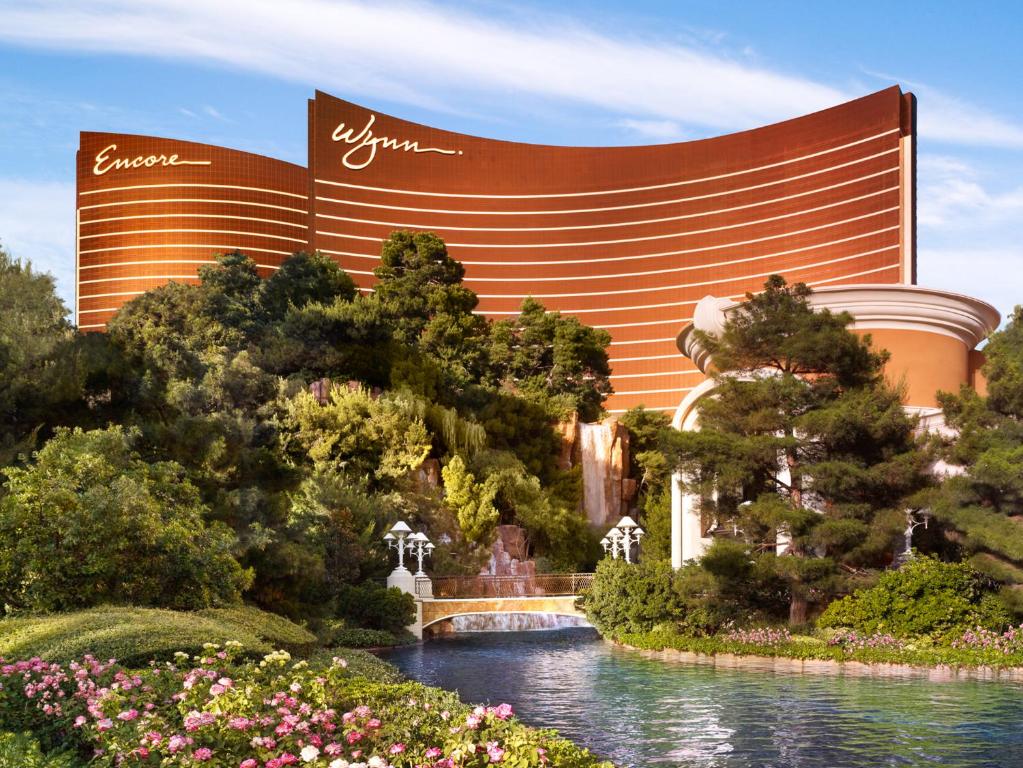
Over time, Wynn expanded Alexa’s skills to include thermostat control and providing information. Guests could ask things like “Alexa, what time does the fitness center open?” or request the virtual assistant to contact housekeeping. The feedback from many guests was that it added convenience, especially for those already using Alexa or similar at home – it felt familiar. For Wynn, it was a brand differentiator marking the resort as tech-forward. They also noted that some routine questions to staff were offloaded to Alexa, which could be seen as easing the load on concierge and allowing them to focus on more personalized guest needs. Wynn’s bold move arguably paved the way (or at least gave confidence) for others to use voice tech in rooms.
YOTEL – Automation and Robotics
YOTEL is a smaller hotel chain known for its compact rooms and high-tech atmosphere (inspired by first-class air travel cabins). They have embraced IoT and automation as central to their concept. For instance, YOTEL New York’s “Yobot” is a robotic arm that stores luggage – guests place their bag in a drawer and Yobot stows it in a wall of lockers, a fun and efficient alternative to a traditional bell desk. YOTEL in other cities have experimented with robot butlers (like the one in YOTEL Boston delivering items). Additionally, all YOTELs feature self check-in kiosks that are essentially IoT devices connected to the property management system, enabling quick check-in/out with credit card and keycard dispensing.

Guests can often complete arrival formalities in under a minute at these kiosks. This appeals to independent travelers who prefer less formal interaction or late-night arrivals when staff might be limited. YOTEL rooms also come with smart TVs, mood lighting controls via a control panel, and sometimes smartphone integration for controls. The chain reports that these technologies allow them to operate with leaner staffing without compromising service – for example, one crew member can oversee multiple kiosks and assist as needed, rather than having several people on a front desk, which helps reduce overhead while maintaining guest satisfaction. YOTEL’s use of IoT and robotics illustrates how a hospitality brand can build an identity around tech for a modern, efficiency-seeking clientele.
Eccleston Square Hotel (London) – Boutique High-Tech
On the boutique end, Eccleston Square Hotel shows IoT isn’t just for big chains. This 5-star 22-room hotel installed an array of smart features, earning it a reputation as one of Europe’s most high-tech hotels. Every room has an iPad for guest use that controls the room settings (lighting, curtains, temperature) and lets guests request services. The bathrooms have smart glass walls that can turn opaque or transparent at the touch of a button – a novel privacy feature for design-conscious travelers. They even have smart beds with customizable firmness settings and massage features, showing IoT can extend to furniture for added luxury.

On the efficiency side, they use sensors to adjust AC when windows are opened, and have energy monitoring systems in place. Eccleston’s owner has spoken about how these investments in tech have helped them stand out in a competitive market like London; they attract a segment of guests specifically because of the gadget factor (and of course deliver a quality stay beyond just that). For operations, being small, the integration of systems means the limited staff can see everything happening via centralized devices – it exemplifies how IoT can particularly benefit small properties by amplifying what a small team can manage.
Alibaba’s FlyZoo Hotel – Fully Automated Experiment
We covered FlyZoo in the guest experience section, but it’s worth reiterating as a case study. FlyZoo (opened in 2019 in Hangzhou) is perhaps the most IoT-infused hotel in the world as of now. It uses facial recognition for check-in, elevators, and room access, robots for deliveries, and AI for virtually all interactions. Guests can literally go through a stay without encountering a human staff member if they choose – everything can be done via the app or automated systems. This hotel is a kind of live lab for Alibaba to showcase technology, including IoT, AI, and robotics working together.
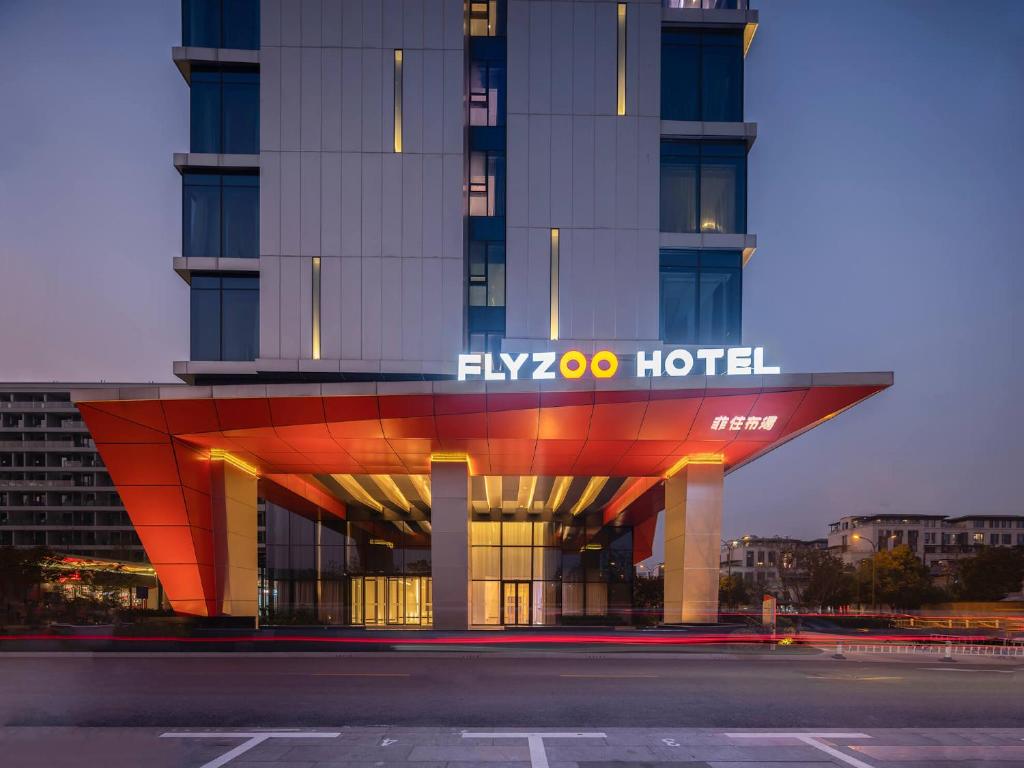
One could consider it an extreme example, not necessarily a model every hotel will or should follow in entirety. But it has proven that the technology exists to automate almost the whole hotel experience. FlyZoo faced its own learning curves (for example, they had to balance the novelty with some guests’ desire for human help at times, and ensure privacy measures for using biometrics). The success it claims is a very efficient operation and lots of buzz – it certainly generated press and curiosity among travelers. Traditional hotels can learn smaller lessons from FlyZoo, such as the convenience of mobile integration for all services and the appeal of contactless options for a new generation of travelers who are comfortable with that.
The Future Outlook: How IoT Will Shape Hospitality in the Coming Years
As we look ahead, it’s clear that IoT’s role in hospitality will continue to grow, and likely in synergy with other emerging technologies. The hotel of the future will be even more connected, intelligent, and responsive. For hotel owners and managers, keeping an eye on these trends is important for long-term strategy. Here are some key ways IoT is expected to evolve and further transform hospitality in the next few years:
Deeper Integration of AI and Machine Learning
The combination of IoT with artificial intelligence (AI) will unlock powerful capabilities. We’re already seeing early signs – AI algorithms crunching the data from IoT sensors to provide insights or automation. In the future, expect hotel IoT systems to not just react, but anticipate. For example, using historical and real-time data, an AI could predict guest needs or operational issues hours or days in advance. One industry research finding is that hotels implementing AI-enhanced IoT solutions have seen around a 40% improvement in operational efficiency beyond IoT alone.

Machine learning models can analyze vast amounts of guest data (within privacy limits) with high accuracy – one reference suggested systems could predict guest preferences and behaviors with about 85% accuracy, by analyzing patterns from hundreds of thousands of interactions. This could mean the hotel learns that a particular guest tends to order room service if the weather is bad and proactively offers a promotion on a rainy evening, or that business travelers on certain flights often need late check-outs and automatically extends offers to them. Predictive analytics might also foresee occupancy dips or spikes and adjust pricing and staffing in advance. On the maintenance side, AI will forecast equipment failures much further ahead – systems could predict an AC unit failing months in advance with high confidence, enabling extremely smooth maintenance scheduling.
Greater Automation (Robotics and Service Automation)
The role of robots and automated service agents is poised to expand. As labor challenges persist in hospitality (e.g., staff shortages or wage pressures), robots can supplement the workforce in more areas. We might see cleaning robots more widely used in hallways and lobbies (some hotels already use Roomba-like devices for corridors overnight). Delivery robots like the ones tested by Aloft and Hilton could become common for room service of items like towels, especially in large hotels or those with limited staff.

Importantly, the AI controlling these will get better – so instead of pre-scripted tasks, robots will handle more complex interactions. Natural language processing improvements mean guests might chat with an AI-driven concierge via their in-room device as fluidly as with a human, even in multiple languages with contextual understanding (already, companies are claiming over 90% accuracy in multi-language queries for hotel chatbots). There is talk of AI managing a substantial portion of routine guest requests – one stat says over 70% of such requests could be automated with AI-driven systems, from room service orders to maintenance requests, using voice or text interfaces. This doesn’t mean humans vanish; rather, employees could be focused on high-touch interactions and oversight of the AI/robots.
Personalization 2.0 – Moving Towards “Intuitive” Hospitality
With IoT and data, hotels will aim to create a home-away-from-home that “knows” the guest. In the future, if a guest permits, their preference profile might travel with them across brands or properties. Consider a scenario where you check into a hotel in Tokyo and the room settings, favorite wine in the mini-bar, and even the art on the smart display are set to your tastes because last year you allowed the hotel’s loyalty program to store your IoT profile from a stay in New York. Some of this is already technically possible, but widespread implementation will grow.

Hotels are cautious with data-sharing, but loyalty programs could make this a perk. Personalization may extend beyond the room: IoT might enable recognizing guests as they approach various outlets. For instance, facial recognition (controversial to some, but likely to be more common in parts of the world) or a guest’s smartphone beacon could alert a restaurant host that “Guest X” has arrived, along with notes like “prefers vegan menu” so that service can be tailor-made without the guest repeating themselves. We saw a hint of this with Jumeirah using facial recognition to provide staff with contextual guest info, like allergies and preferences, in real time. That might become mainstream, handled carefully with privacy – possibly opt-in via loyalty apps.
Enhanced Connectivity with 5G and Beyond
The rollout of 5G networks can bolster hotel IoT. 5G promises higher bandwidth and lower latency, which could allow even more devices to be reliably connected, including in places Wi-Fi doesn’t reach well (like outdoor resort areas or sprawling properties).

With 5G, hotels might use more IoT sensors in remote parts of their property or ensure that devices like AR guides or guest wearable devices work instantaneously. This network boost also paves the way for heavy data applications like augmented reality tours or virtual reality experiences on demand, since streaming that content becomes smoother. Looking beyond, IoT communication protocols might evolve (for example, newer versions of Bluetooth or Zigbee with better range and security) making it easier to deploy devices without intensive infrastructure.
Sustainability and Net-Zero Goals
The pressure on hospitality to be sustainable will only intensify. IoT will be indispensable in achieving ambitious targets like net-zero emissions hotels. Expect to see more IoT integration with renewable energy sources – hotels using IoT to dynamically switch between solar, battery storage, and grid power in the most efficient way. Also, more granular tracking of carbon footprint per guest might emerge, with IoT feeding data into calculators that tell a meeting planner exactly how much CO2 their event’s energy usage produced, for example. There’s also likely to be growth in smart building certifications. Just as hotels pursued Wi-Fi as a selling point years ago, soon advertising a sophisticated IoT-driven sustainable environment could be a marketing angle, backed by numbers: “Stay with us – our smart hotel uses 40% less energy and 30% less water than the city average.” With climate change concerns, guests might actively seek out such hotels.
IoT and Health/Wellness
The pandemic accelerated interest in health-oriented features. IoT can monitor and improve indoor air quality, as mentioned, which might become a standard expectation (sensors that ensure optimal airflow and maybe display an air quality score in the room). Touchless technology is likely to remain popular for hygiene – more hotels will invest in IoT for automatic doors, voice- or motion-controlled elevators, and app-based controls so guests touch fewer surfaces. Furthermore, IoT could tie into guest wellness offerings: imagine a room’s IoT system integrating with a guest’s wearable fitness tracker. If the guest allows, the room could automatically adjust lighting to help with jet lag based on their sleep patterns, or the TV might suggest a stretch routine in the morning if the guest’s activity was low the previous day. It’s speculative but certainly feasible as APIs between health tech and hotel IoT develop.
Smart Hotels as Platforms
Some experts predict that as hotels become more digital, they could function like platforms. For example, a hotel might allow third-party service providers to plug into their IoT ecosystem to offer on-demand services. Perhaps a local spa or personal trainer can directly interact with the guest through the room’s technology (scheduling a session via the hotel app, appearing on the room’s calendar mirror). Or smart vending – if the minibar is IoT-connected, perhaps external vendors restock it dynamically based on usage data and local trends, almost like an Amazon-style fulfillment in each room. The boundaries of hotel services could expand via IoT connectivity.
Design and Architecture Changes
As IoT becomes assumed, new hotel builds may change physically. We may see fewer intrusive devices (more invisible embedded sensors), flexible room layouts that adapt via tech (walls that can display different themes or movable partitions that change a room’s function with IoT tracking occupancy zones). Digital twins of hotels – full virtual replicas fed by IoT data – might be used in design and operations to simulate changes without touching the real building. In operations, digital twins help with everything from testing new layouts for crowd flow (using sensor data to model it) to training new staff in a virtual model of the hotel. Intellias, for instance, has been working on digital twin solutions specifically to help hotels manage facilities and security by recreating their spaces in a digital environment for planning and monitoring. This is likely to become more common as part of large-hotel operations.
Conclusion
In conclusion, IoT is transforming hospitality by bridging the gap between the timeless principles of good service and the innovative potential of modern technology. Hotel owners and managers who leverage IoT effectively can create safer, greener, and more personalized hotel experiences – and do so efficiently. As you consider investing in IoT, remember that the goal isn’t to have the flashiest gadgets; it’s to solve problems and elevate the guest experience in meaningful ways. Whether it’s a guest marveling at how the room “just knew” their favorite settings, or an engineer catching an issue before it becomes a crisis thanks to a sensor alert, those moments are where IoT makes its impact felt.
The hospitality industry has always been about welcoming and caring for people. IoT is simply a powerful new set of tools to help us do that better. By staying informed and being strategic, hotel owners and managers can ride the IoT wave to deliver exceptional hospitality in this connected age. The smart hotel revolution is well underway – and it’s an exciting journey for those ready to embrace it.