


Domestic and regional travel is surging, presenting an unprecedented opportunity for independent properties to capture high-intent travelers. However, competing against massive international chains for broad search terms like “best hotels in America” is financially exhausting and often ineffective. This blog will provide a comprehensive guide to Local SEO for Hotels, detailing how to optimize your digital footprint, dominate Google Maps, and secure lucrative, commission-free direct bookings in your specific geographic market.
The Fundamentals Of Local Search Discoverability
Understanding the mechanisms of modern search algorithms is essential for sustained visibility. Let us explore the primary factors redefining regional market discoverability for hospitality brands today.
The Shift Toward Proximity And The Local Pack
Local SEO differs fundamentally from traditional search engine optimization. While traditional SEO aims for broad national or global visibility, local SEO targets travelers actively searching for accommodations within a specific geographic area. When a user searches for a “hotel near downtown” or a “resort in Miami,” Google prioritizes proximity, relevance, and brand prominence to deliver the best possible results.
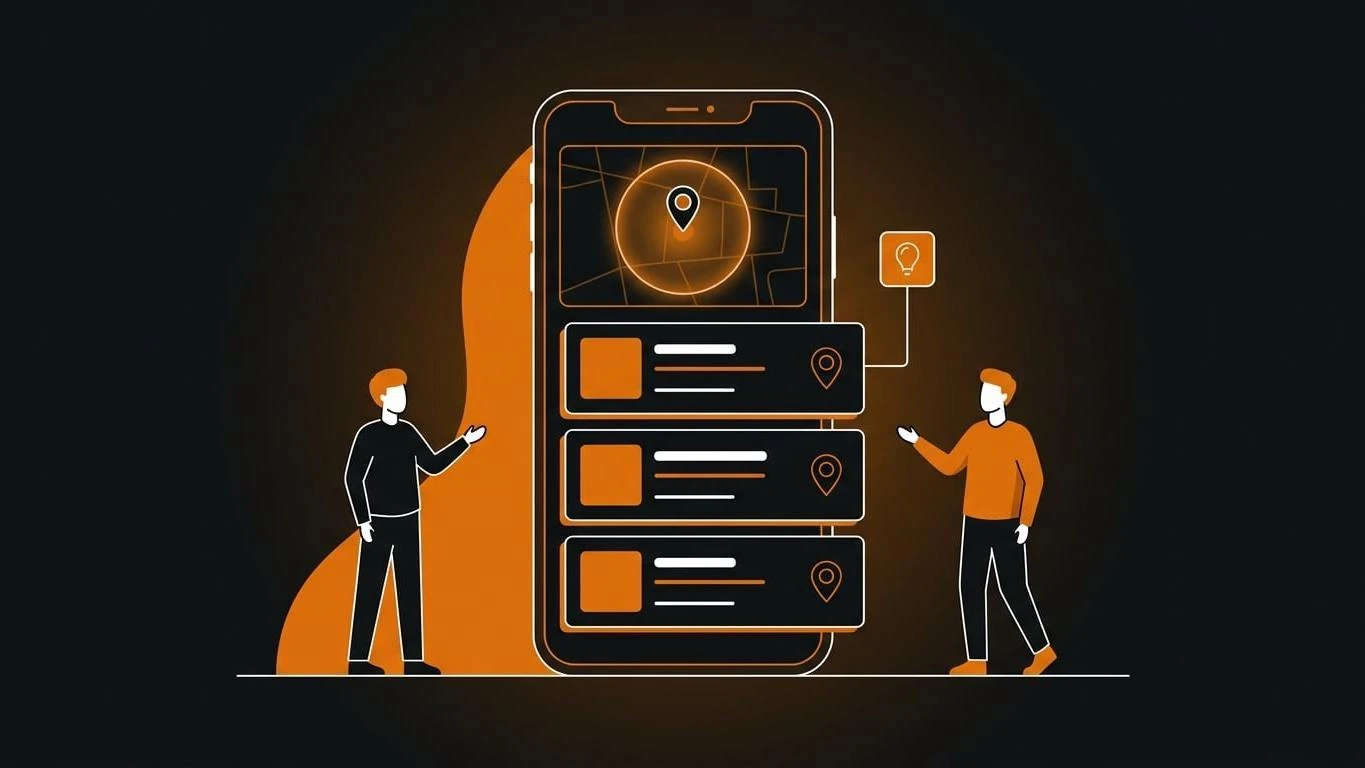
The ultimate goal of a local search strategy is to secure a position within the Google “Local Pack” (also known as the Snack Pack). This highly coveted digital real estate features a map and three business listings that appear above all standard organic search results. Securing one of these top three spots is critical, as the Local Pack captures approximately 33% of all clicks for location-based queries.
If your property fails to appear in the Local Pack, you are effectively invisible to a significant portion of guests who are ready to book. Earning this placement requires a strategic combination of profile optimization, reputation management, and technical website enhancements.
The Rise Of Zero-Click Searches And AI Overviews
Traditional website traffic metrics are rapidly losing their relevance as search engines evolve to deliver answers directly on the results page. Currently, approximately 65% of searches result in zero clicks, meaning the user finds their desired information without ever visiting the actual hotel website. This paradigm shift forces marketers to reevaluate how they measure digital success, moving away from simple website sessions toward tracking brand impressions and offline conversions.

When users can view operating hours, read reviews, and check room availability directly from the search interface, website traffic naturally declines. However, overall business engagement often increases when a brand successfully optimizes for these zero-click environments. Organizations must focus on optimizing the specific informational snippets that search algorithms extract and display, such as concise answers, bulleted amenity lists, and clear heading structures.
Furthermore, Google’s AI Overviews are increasingly answering travel queries with hotel recommendations pulled directly from business descriptions and review content. To capture citations from these generative engines, hotel marketers must structure their content for machine readability.
Freshness As A Dominant Ranking Signal
In previous years, establishing search relevance relied heavily on static keywords and historical domain authority. Today, the concept of freshness has emerged as a dominant ranking signal, particularly for systems driven by artificial intelligence. Search algorithms now exhibit a strong recency bias, aggressively prioritizing business profiles that demonstrate ongoing activity and recent updates. A stagnant website or an abandoned online profile quickly loses algorithmic trust.
Maintaining this required level of freshness demands continuous operational effort across multiple digital touchpoints. Hotels must regularly publish localized content, update operational hours during holidays, upload recent property photographs, and actively engage with guest feedback. Search engines actively reward this continuous engagement by elevating the business above competitors who treat their online presence as a static billboard.
Foundational Elements Of Geographic Search Dominance
Establishing a robust regional footprint requires mastering the interplay between physical proximity and digital prominence. Here are the core components that dictate visibility within modern search algorithms.
Optimizing The Google Business Profile (GBP)
Your Google Business Profile (GBP) is the most powerful local SEO asset a hotel controls, carrying more weight for regional visibility than your proprietary website or any OTA listing. A complete and highly active profile makes potential guests significantly more likely to click through to your direct booking engine.

Optimization begins with selecting the correct primary category. “Hotel” is the correct primary category for most properties. However, boutique properties must add “Boutique Hotel,” and resorts must specify “Resort Hotel.” The specificity of your category determines exactly which search queries your profile is eligible to appear for.
The “Attributes” section is absolutely critical for hotel GBPs and is almost always left incomplete by inexperienced managers. You must add every relevant attribute: Free Wi-Fi, free parking, breakfast included, pet-friendly, wheelchair accessible, pool, and fitness center. Each attribute functions as a hard filter in Google’s hotel search results; missing attributes mean you are entirely excluded from filtered searches.
The Importance Of Consistent NAP Data
Hotel Name, Address, and Phone number (NAP) inconsistency is more common and more damaging in hospitality than in almost any other industry. Hotels are listed on dozens of platforms, including OTAs, metasearch sites, travel directories, and review platforms. Inconsistency across these directories creates a trust conflict that actively suppresses your local ranking.
Google cross-references your NAP data across the entire web to verify the legitimacy and physical location of your business. If your hotel utilizes a central reservations phone number on Expedia but lists a local direct line on TripAdvisor, search algorithms become confused. You must verify that your NAP data is perfectly identical—down to the punctuation—across your GBP, website, and every top travel directory.
Common mistakes occur when hotels allow OTA partners to auto-populate their GBP listing information. OTAs regularly update listings with their own phone numbers, routing calls to their commissionable booking systems rather than your direct line. Hoteliers must take total ownership of their GBP and audit their NAP data quarterly.
Leveraging High-Quality Rich Media
Visual content has become a dominant factor in consumer decision-making and algorithmic evaluation. Profiles featuring an abundance of high-quality, authentic photographs consistently generate significantly higher engagement rates than those relying on generic stock imagery. Google utilizes advanced image recognition technology to analyze uploaded photos, verifying that they match the business category and geographic location.

Hotels must upload photos across every category: guest rooms, the lobby, on-site restaurants, the pool, exterior architecture, and nearby attractions. Profiles with over 100 photos get significantly more views than those with fewer images. Because hotel guests make highly visual decisions before they book, adding new photos monthly signals an active, well-maintained profile to both consumers and search engines.
It is also crucial to optimize images before uploading by utilizing descriptive file names and incorporating SEO-optimized alt text. For a hotel pool photo, use an alt text description like “ocean view rooftop pool at [Hotel Name].” This provides context to search engines, improving the chances of your property appearing in localized image search results.
The Psychology And Mathematics Of Customer Reviews
Consumer purchasing behavior is heavily dictated by the social proof provided through online review platforms. Acquiring a steady stream of highly positive, detailed reviews is an absolute commercial imperative for regional success.
Generating Review Volume And Velocity
Review volume, recency, and response rate are all primary ranking factors for local search. They are also your most powerful booking conversion tool, as guests read reviews before they commit financial capital to a reservation.
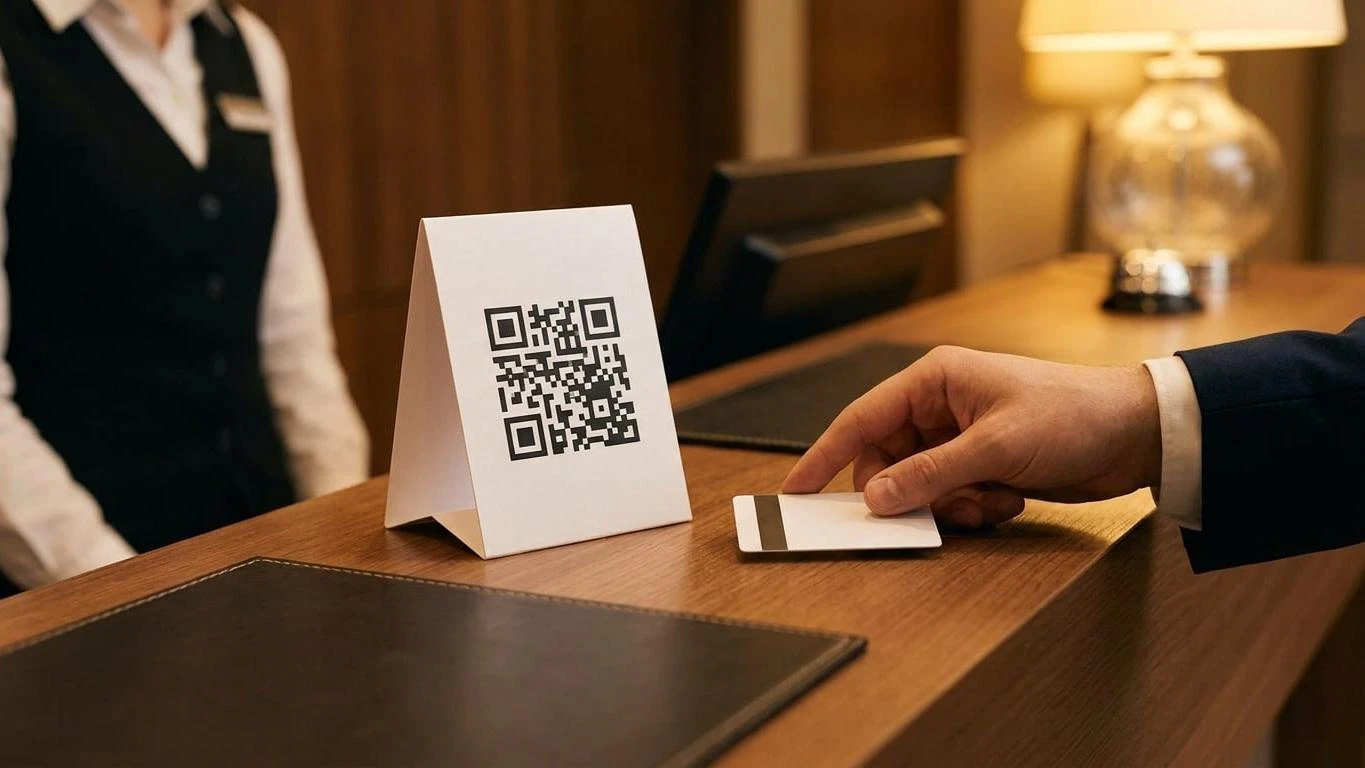
The most effective system for generating reviews relies on capturing feedback at the exact moment of highest satisfaction: physical checkout. A front desk card featuring a QR code linked directly to your Google review page converts significantly better than any automated email follow-up. Front desk staff should be trained to verbally prompt satisfied guests to leave a review detailing their favorite part of the stay.
If a guest leaves without reviewing the property, a follow-up email or text should be sent within 24 hours. The prompt should encourage specificity: “If you enjoyed your stay, mentioning what you liked most about the room or our service helps future guests know what to expect.” Reviews that mention specific amenities, neighborhoods, or staff members provide massive contextual boosts to your local relevance.
Crucially, search algorithms weight review recency heavily. A steady, consistent stream of four to six new reviews per month fundamentally outperforms a burst of forty reviews followed by months of silence.
Responding To Feedback With Empathy And AI Assistance
Accumulating positive reviews is only half of the reputation management equation; actively responding to all feedback is equally critical. Consumer surveys indicate that 89% of potential customers expect business owners to respond to reviews. Furthermore, 88% explicitly state they are more likely to use a business that replies to all feedback.

For hotels specifically, how you handle negative reviews is as visible as the review itself. A professional, empathetic response to a complaint shows prospective guests that your team is attentive and service-oriented. According to Google’s review management guidelines, responding to reviews improves your local ranking and builds immense trust with future guests.
Managing responses across dozens of platforms can be time-consuming, but utilizing sophisticated artificial intelligence tools can draft professional, personalized responses at scale. However, it remains vital to avoid entirely generic, templated responses. Artificial intelligence tools must be properly prompted to reference the reviewer’s name, acknowledge specific amenities mentioned, and reflect the unique, hospitable voice of the brand.
Targeting Local Keywords That Drive Direct Bookings
Local keywords for hotels fall into predictable semantic patterns, and the most valuable terms are often the least competitive. Many hotels fight fiercely over generic terms like “hotel in [city]” while entirely ignoring high-intent proximity and amenity searches where competition is significantly lower and conversion is much higher.
Proximity And Landmark Searches
Travelers search for hotels in relation to where they are going, not just where they are staying. A search query for “hotel near the Nashville Grand Ole Opry” carries completely different commercial intent than a broad search for “hotels Nashville.” Proximity searches (e.g., “hotel near O’Hare Airport” or “hotels walking distance to French Quarter”) indicate the guest already knows exactly where they need to be, resulting in highly convertible traffic.

To capture this traffic, hotels must build a dedicated proximity landing page for every major nearby landmark, event venue, or corporate district. Each page should feature specific, useful information detailing exactly how guests can navigate from the hotel to the landmark. A hotel that builds separate pages targeting specific convention centers or stadiums will see massive increases in organic clicks from those high-intent search clusters.
Amenity-Specific And Event Keywords
Amenity and feature searches (e.g., “pet-friendly hotels Chicago” or “hotels with pool Nashville”) are lower in raw search volume but yield exceptionally high conversion rates. The searching guest is already filtering for a specific need, bypassing the broad discovery phase entirely. Hotels must ensure these specific amenities are heavily emphasized in both their GBP attributes and their website’s header tags.

Event and seasonal keywords are another highly lucrative target. Searching for “hotels during [local event]” or “[city] hotel New Year’s Eve” captures prospective guests who are finalizing specific trip logistics. Utilizing GBP posts to highlight availability during local festival weekends or concert dates captures these guests before they ever navigate to an OTA platform.
Technical Architecture For Regional Market Penetration
Scaling visibility requires a highly structured website architecture that search engines can easily crawl, interpret, and rank. Below is a detailed breakdown of the critical structural mandates necessary for enterprise domains.
Constructing Dedicated Landing Pages
When an organization operates across multiple distinct geographic territories or targets several distinct traveler profiles, maintaining a single generalized services page is a structural error. Search engines require explicit, highly targeted content to justify ranking a website for queries originating in specific neighborhoods. To fulfill this algorithmic requirement, properties must construct dedicated landing pages for specific landmarks and local experiences.
The content on these location pages must be genuinely valuable and highly tailored to the specific demographics and geography of that market. Mentioning prominent local landmarks, detailing driving directions from major highways, and addressing regional cultural factors adds crucial layers of semantic relevance. These pages should also include an embedded Google Map to further strengthen the geographic validation signal for search crawlers.
Implementing Semantic Markup And Structured Data
To eliminate any ambiguity regarding a business’s operations and locations, enterprises must deploy advanced structured data using schema markup. This highly specific code is injected into the backend of the website, translating human-readable content into a standardized format that search engine crawlers process instantaneously.

For the hospitality industry, implementing “Hotel” or “Lodging” schema is absolutely essential. This structured data tells Google your property type, exact geographic coordinates, specific room amenities, price ranges, and check-in/check-out times in a format it reads automatically. By explicitly defining the organization type and physical location, businesses provide algorithms with absolute mathematical certainty regarding their entity details.
Most independent hotels completely lack this advanced technical implementation, which is exactly why adding it provides a massive competitive advantage. When algorithms encounter flawlessly structured data, they reward the site with enhanced visibility and rich snippets in the organic search results.
Optimizing For Mobile Speed And Core Web Vitals
A mobile-optimized website not only improves algorithmic rankings but also creates a seamless booking experience, which directly drives up conversions. Hotel guests research heavily on mobile devices while in transit; a hotel website that loads slowly on mobile loses bookings immediately. A slow site also signals poor technical quality to Google’s ranking system, resulting in severe algorithmic suppression.

Core Web Vitals—which measure loading speed, interactivity, and visual stability—are direct ranking factors for hotel pages. To optimize your site for smartphones and tablets:
- Utilize a responsive design that automatically scales text and images to fit any screen size seamlessly.
- Compress all high-resolution photography using formats like WebP for significantly faster loading times.
- Ensure primary navigation menus and “Book Now” Call-To-Action (CTA) buttons are highly visible and easy to tap with a thumb.
- Eliminate intrusive pop-ups that obscure the screen and frustrate mobile users attempting to view room rates.
Sector-Specific Methodologies For Direct Revenue Capture
Translating online visibility into tangible financial returns requires highly tailored optimization models. Keep the following industry adaptations in mind when designing a regional acquisition strategy.
Mitigating Third Party Platform Reliance
Independent hotels and regional hospitality groups currently suffer from a massive overreliance on Online Travel Agencies for customer acquisition. Recent industry data reveals that these third-party platforms control approximately 63.4% of independent hotel bookings, subjecting property owners to exorbitant commission structures. While overall hotel revenue has increased, the costs associated with customer acquisition have outpaced this growth by 25%, severely compressing operational profit margins.

Establishing local search dominance is the primary mechanism for shifting market share away from aggregation platforms and back to the hotel’s proprietary booking engine. Every direct booking you earn through Google Maps search eliminates the 15% to 25% OTA commission on that room. A hotel generating $500,000 in annual revenue that shifts 30% of its bookings from OTAs to direct channels saves tens of thousands of dollars per year without needing to increase total occupancy.
Leveraging Social Media For Local Discovery
Social media marketing is vital for independent hotels, helping to create brand awareness and boost customer engagement that ultimately drives bookings. While social media does not impact local SEO directly through backlinks, it significantly increases brand searches and traffic for your hotel website. This surge in direct traffic signals value and credibility to search engines, which can subsequently improve your organic rankings.

Different platforms serve different local marketing purposes:
- Instagram: Excellent for local SEO thanks to geotags and localized hashtags. High-quality images of amenities paired with location tags help expand visibility far beyond your immediate followers.
- Facebook: Often a first stop for people researching local businesses. A complete Facebook Business Page sharing guest reviews and local area visuals reinforces your brand’s presence in the community.
- TikTok: Great for broad brand awareness and increasing direct brand searches. Short-form video tours of rooms and local attractions capture younger, highly mobile demographics.
Utilizing OTAs As Discovery Engines
While the ultimate goal is driving direct bookings, OTAs and local platforms support your Local SEO for Hotels strategy by acting as powerful discovery engines. Travelers frequently utilize OTAs for initial destination research and broad price comparison. This behavior often triggers the “Billboard Effect,” where a traveler discovers a property on an OTA but navigates to Google to search for the official hotel website to book directly.
To leverage this effect, hotels must ensure their OTA listings are perfectly consistent with their GBP and official website. Tailoring your listings depending on the platform provides more opportunities to show up for travel searches. For example, optimizing for budget-conscious travelers on Priceline requires different keyword focuses than optimizing for luxury leisure travelers on Expedia.
Quantifying Campaign Success And Financial Returns
Advanced reporting goes far beyond rudimentary keyword ranking improvements to measure true business impact. Review the primary metrics that define true commercial success in geographic campaigns.
Establishing Accurate Tracking Mechanisms
To accurately measure the financial return on a search marketing investment, organizations must implement sophisticated tracking architectures. This includes deploying dynamic number insertion technology to track phone calls originating directly from localized landing pages and external business profiles. By assigning unique parameters to different digital assets, marketing teams can definitively prove which specific search queries are generating the most lucrative customer inquiries.
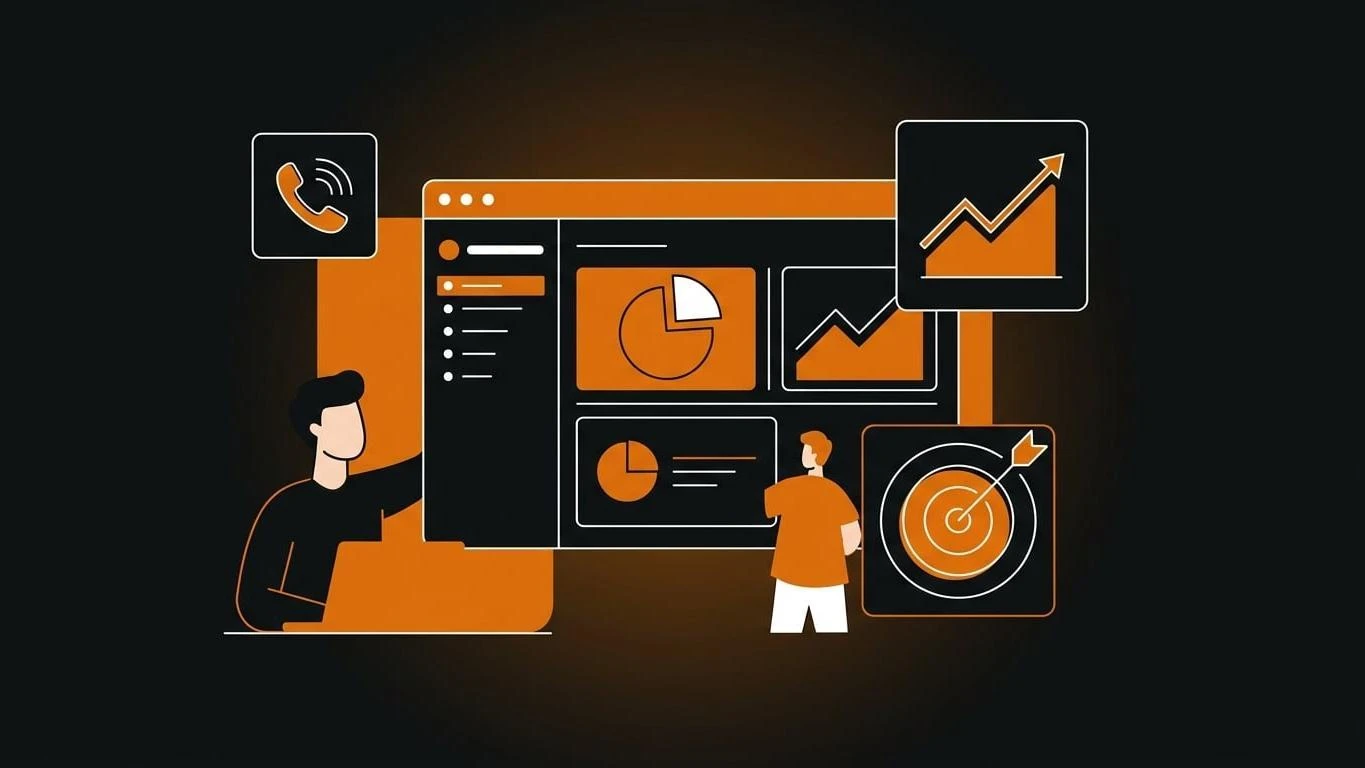
Furthermore, utilizing advanced analytics platforms allows businesses to monitor requests for driving directions generated through mapping applications. This metric serves as a highly reliable proxy for actual physical foot traffic, demonstrating the direct physical impact of digital visibility. Setting up specific conversion goals within these analytics platforms ensures that every digital interaction, from form submissions to newsletter signups, is meticulously cataloged.
Moving Beyond Static Ranking Reports
Historically, agencies relied on static ranking reports detailing a website’s position for a handful of target keywords to prove campaign success. However, modern search results are highly personalized based on the user’s exact micro-location, search history, and device type, making static ranking reports inherently inaccurate. A website may rank first for a user searching downtown, but drop to the fifth position for a user searching just three miles away.

Instead of focusing on arbitrary ranking numbers, elite digital strategists evaluate the aggregate increase in qualified organic traffic and the total volume of generated bookings. A highly successful campaign may result in slightly fluctuating rankings but consistently deliver a massive increase in direct localized inquiries. Marketing dashboards must evolve to prioritize revenue tracking, impression share within the map pack, and overall commercial growth.
Conclusion
Local SEO for Hotels is no longer an optional marketing tactic; it is a foundational revenue strategy designed to eliminate exorbitant OTA commissions. By meticulously optimizing your Google Business Profile, maintaining absolute NAP consistency, generating high-velocity reviews, and creating proximity-based landing pages, your property can dominate the Local Pack. Focusing on high-intent, hyper-local keywords ensures you capture guests at the exact moment they are ready to book.
Ready to stop paying OTA commissions and own your local market? Engineering a highly visible digital footprint requires technical precision and continuous algorithmic adaptation. Partner with the performance marketing experts at ROI300 to leverage the best local SEO services available in the hospitality industry. Contact ROI300 today to transform your digital strategy, dominate Google Maps, and turn local searches into lifelong, high-value guests.