

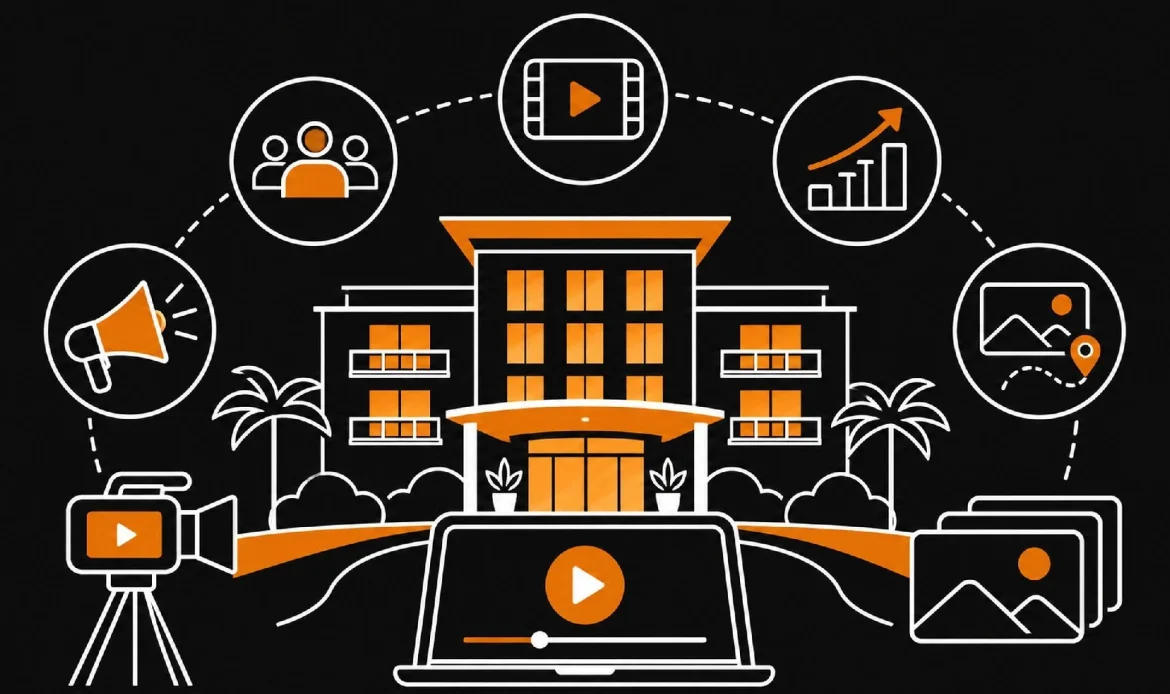
Consumers now process information through dynamic visual mediums, making static photography insufficient for capturing modern travel demand. The digital landscape has evolved into a video-first ecosystem where travelers expect immersive previews before committing to a reservation. Properties that fail to adapt their digital footprint to include rich, narrative-driven media will struggle to intercept potential guests during the discovery phase. This blog will provide a comprehensive guide to hotel video marketing, detailing production strategies, algorithmic optimization, and the exact frameworks needed to maximize your revenue.
The Fundamental Shift Toward Video In Hospitality
Understanding the transition from static images to dynamic video content is the first step in overhauling your digital distribution strategy. Examine the underlying reasons why visual storytelling dominates modern consumer behavior.
Why Modern Travelers Demand Visual Storytelling
The modern traveler conducts extensive research before finalizing any travel itinerary or booking an accommodation. While professional photography provides a baseline understanding of a room, it lacks the spatial context and emotional resonance that travelers crave. Video content bridges this gap by allowing viewers to experience the atmosphere, scale, and layout of a property in real time. It provides a transparent, unfiltered look at the guest experience, which builds immediate trust with the consumer.
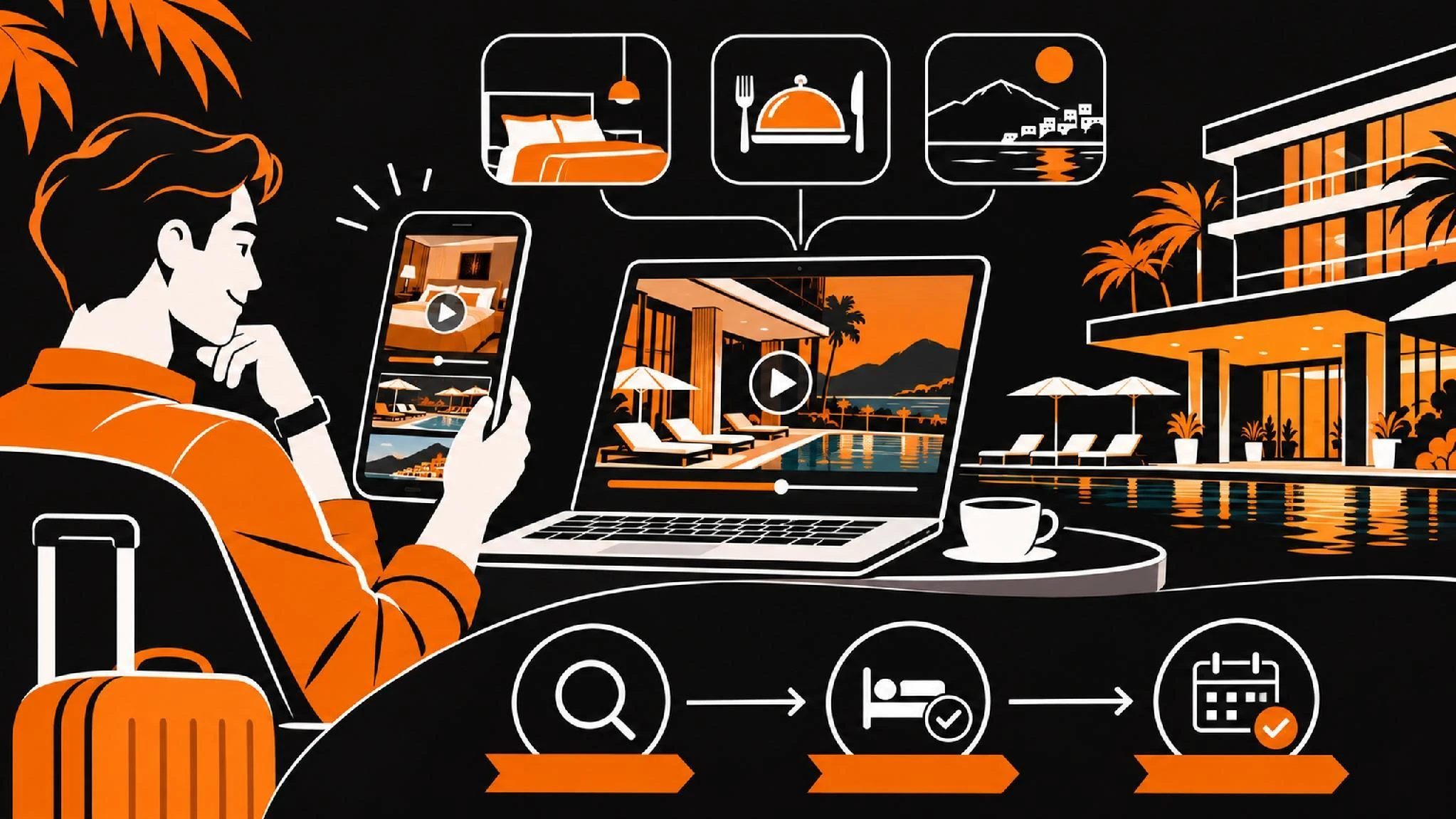
Visual storytelling appeals directly to the emotional drivers that motivate travel purchases. A well-produced video captures the ambient sound of a bustling lobby bar, the movement of ocean waves outside a resort suite, or the meticulous preparation of a signature culinary dish. These sensory details transport the viewer, elevating the property from a simple accommodation into a desirable travel destination. Properties utilizing this medium effectively establish an emotional connection long before the guest ever arrives.
The Statistical Case For Video Investment
The return on investment for video marketing is supported by definitive industry data and consumer behavior metrics. Research indicates that online videos will account for over 82% of all consumer internet traffic by the end of this year. Furthermore, 65% of people watch videos when planning a trip and choosing a specific destination. When searching for accommodation specifically, 54% of travelers opt for video content over traditional text reviews.
The conversion metrics are even more compelling for revenue managers focused on direct bookings. At the property level, guests are 67% more likely to book a room when a video tour is available on the direct website. Additionally, landing pages that feature an embedded promotional video routinely see conversion rate increases of over 80%. These statistics prove that video is not just a brand awareness tool; it is a direct catalyst for financial transactions.
Overcoming The Static Image Limitation
For decades, hoteliers relied on curated, edited photography to sell their most expensive suites and event spaces. However, modern consumers are increasingly skeptical of static images, knowing they can be easily manipulated with wide-angle lenses and digital editing software. This skepticism creates friction in the booking process, as guests fear the reality of the property will not match the promotional brochures. Video content serves as the ultimate antidote to this consumer hesitation.
Video provides an authentic representation of the physical space, leaving no room for spatial misinterpretation. A continuous walking tour from the elevator down the hallway and into a guest room proves the exact proximity and layout of the facilities. By removing the fear of the unknown, video content accelerates the consumer decision-making process. Properties that embrace this transparency consistently capture market share from competitors hiding behind outdated static photography.
Strategic Pillars Of Hotel Video Marketing
Executing a successful campaign requires more than just recording random footage of your property. Marketing teams must build a strategic foundation that dictates the tone, target audience, and distribution channels for every video asset.
Defining Your Core Brand Narrative
Every piece of video content must reinforce the overarching brand narrative and unique value proposition of your hotel. Before pressing record, management teams must define exactly what makes their property distinct from the local competition. A historic boutique hotel requires a completely different visual narrative than a sleek, modern airport transit property. The historic hotel should focus on architectural details and heritage, while the airport property should emphasize speed, convenience, and technological efficiency.
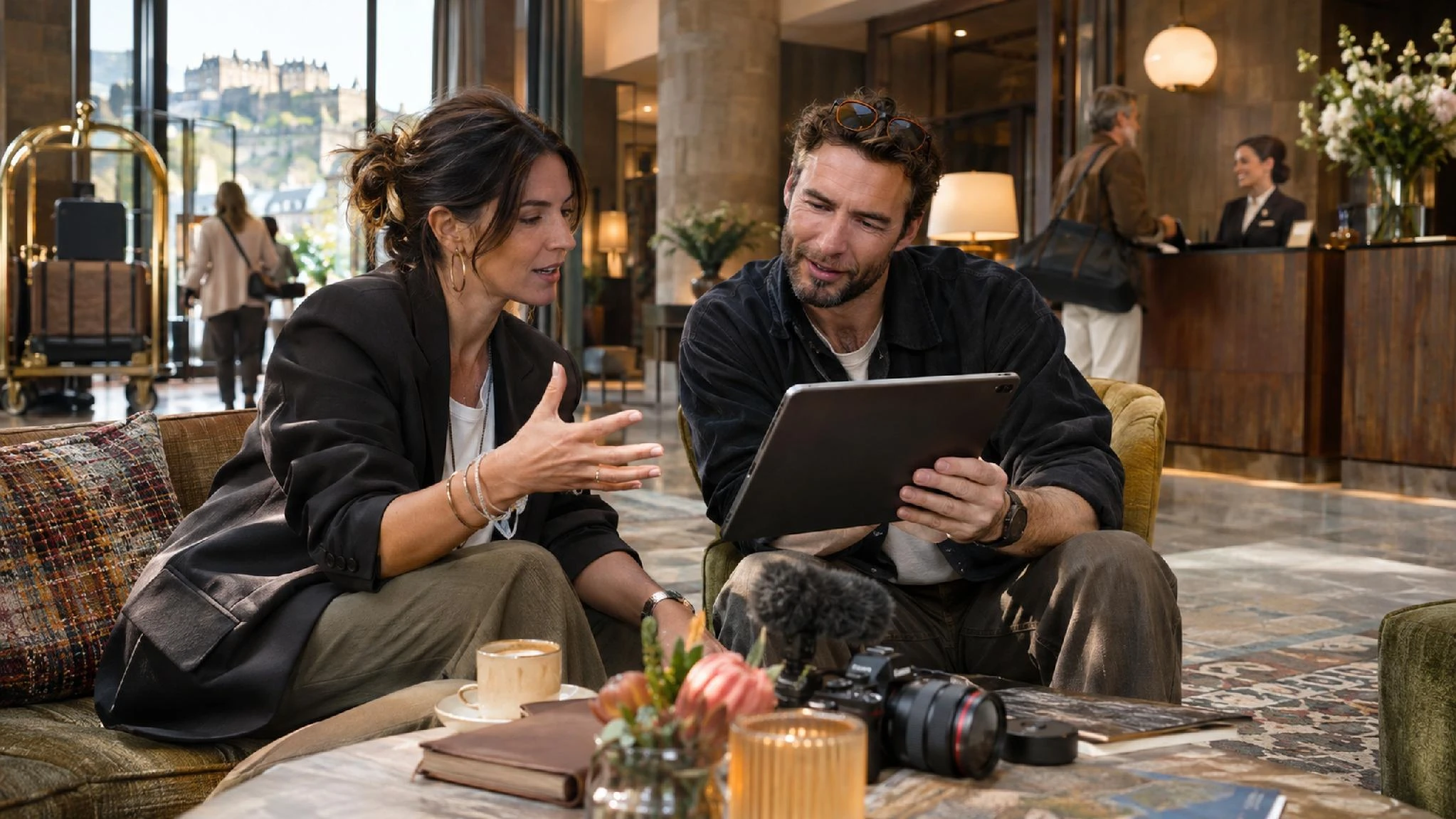
This core narrative must remain consistent across all video formats, from brief social media clips to long-form YouTube documentaries. The color grading, background music selection, and on-screen text typography should align with your established corporate identity guidelines. When consumers encounter your videos across various digital platforms, they should instantly recognize the brand based on the aesthetic and tonal presentation.
Audience Segmentation For Video Content
A single, generic promotional video will fail to resonate with the diverse demographic segments that book your hotel. Effective hotel video marketing requires producing specific assets tailored to the unique pain points and desires of different traveler personas. Corporate event planners require different visual information than families planning a summer vacation or couples seeking a romantic weekend getaway.
Table 1.1. Audience Segmentation For Video Production
| Target Audience | Core Consumer Desire | Ideal Video Content Focus |
|---|---|---|
| Corporate Event Planners | Reliability and capacity | Walkthroughs of AV-equipped meeting spaces, catering setups, and large banquet halls. |
| Leisure Families | Entertainment and safety | Footage of kid-friendly pools, adjoining room layouts, and nearby family attractions. |
| Romantic Couples | Privacy and luxury | Scenic views from private balconies, couples spa treatments, and fine dining atmospheres. |
| Solo Business Travelers | Efficiency and connectivity | High-speed Wi-Fi demonstrations, executive lounge access, and proximity to transit hubs. |
Marketing teams must allocate their production budgets to ensure each primary revenue segment receives dedicated video collateral. When a corporate planner visits the “Meetings and Events” section of your website, they should immediately find a video designed explicitly for their needs. This segmented approach ensures that every viewer receives the most relevant and persuasive visual information possible.
Mapping Video To The Customer Journey
The type of video a consumer needs changes depending on where they are in the digital booking funnel. During the initial “Awareness” stage, travelers are seeking broad destination inspiration. Videos targeting this stage should focus heavily on the surrounding city, local landmarks, and the general lifestyle experience of the region. These top-of-funnel videos perform exceptionally well on discovery platforms like TikTok and Instagram Explore.
As the consumer moves into the “Consideration” phase, they begin comparing specific hotel properties within their chosen destination. Video content here must shift toward detailed property overviews, room category comparisons, and comprehensive amenity showcases. These mid-funnel assets should live prominently on your YouTube channel and across your official website landing pages.
Finally, during the “Decision” phase, the consumer is ready to finalize their transaction. Videos at this stage should build ultimate trust and urgency. Client testimonial videos, pristine 360-degree suite tours, and brief clips explaining direct booking perks are perfect for this bottom-of-the-funnel conversion push. Mapping your video strategy to these distinct phases prevents marketing waste and maximizes return on investment.
Essential Types Of Hotel Marketing Videos
A robust digital strategy requires a diverse library of visual assets to cover all operational departments and consumer interests. Review the following essential video formats that every ambitious property should produce.
360-Degree Virtual Tours And Walkthroughs
Virtual reality and 360-degree video tours represent the pinnacle of transparent hospitality marketing. These immersive assets allow potential guests to control their own viewing experience, panning the camera in any direction to explore the physical space. Using specialized omnidirectional cameras, hoteliers can capture entire lobbies, sprawling resort grounds, and intricate suite layouts in stunning detail.
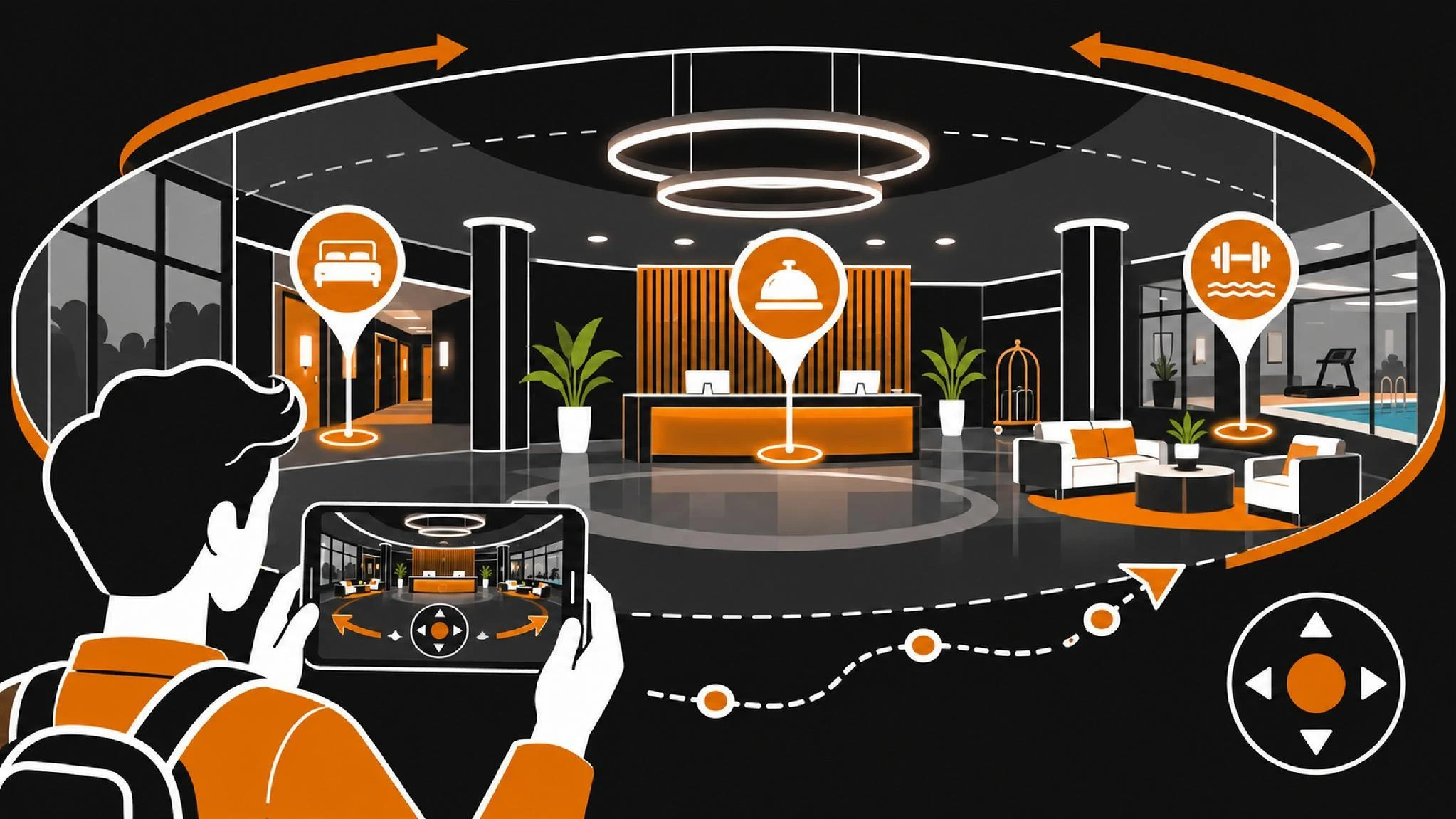
These interactive tours are particularly vital for securing high-value bookings, such as presidential suites or extended-stay villas, where the financial commitment is significant. Event planners also rely heavily on 360-degree walkthroughs to evaluate ballroom dimensions and breakout room proximity without requiring expensive, time-consuming physical site visits. Embedding these tours directly into your proprietary booking engine provides a seamless, frictionless path from virtual exploration to confirmed reservation.
Highlighting Property Amenities And Services
Amenities are often the deciding factor when consumers choose between two similarly priced hotels in the same neighborhood. Dedicated videos showcasing your on-site facilities separate your brand from competitors who only offer basic lodging. A visual montage of your heated infinity pool, state-of-the-art fitness center, or tranquil luxury spa provides concrete proof of the value your property delivers.
These amenity spotlight videos should be short, engaging, and focused on the sensory experience of the service. Instead of just showing an empty restaurant, film the executive chef plating a signature dish while the dining room buzzes with energetic patrons in the background. Bringing these spaces to life with human interaction helps prospective guests visualize themselves enjoying those exact same experiences.
Behind The Scenes And Staff Spotlights
Modern consumers crave authenticity and human connection from the brands they support. Behind-the-scenes videos offer a rare glimpse into the meticulous operations that make a flawless hotel stay possible. Filming the pastry team preparing morning croissants, the housekeeping staff arranging fresh linens, or the concierge securing exclusive theater tickets humanizes your corporate entity.
Staff spotlight videos are equally powerful for building brand trust and highlighting exceptional customer service. Interviewing your head bartender about their favorite local cocktail recipe or featuring a long-tenured bellhop sharing neighborhood travel tips adds immense personality to your marketing. These videos prove that your property is operated by passionate, dedicated professionals who genuinely care about the guest experience.
Destination Guides And Local Attractions
Travelers rarely book a hotel simply to stay inside their room for the entire duration of their trip. They choose your property because it provides convenient access to a specific destination. Creating comprehensive video guides about the local neighborhood positions your hotel as a trusted cultural authority and travel advisor.
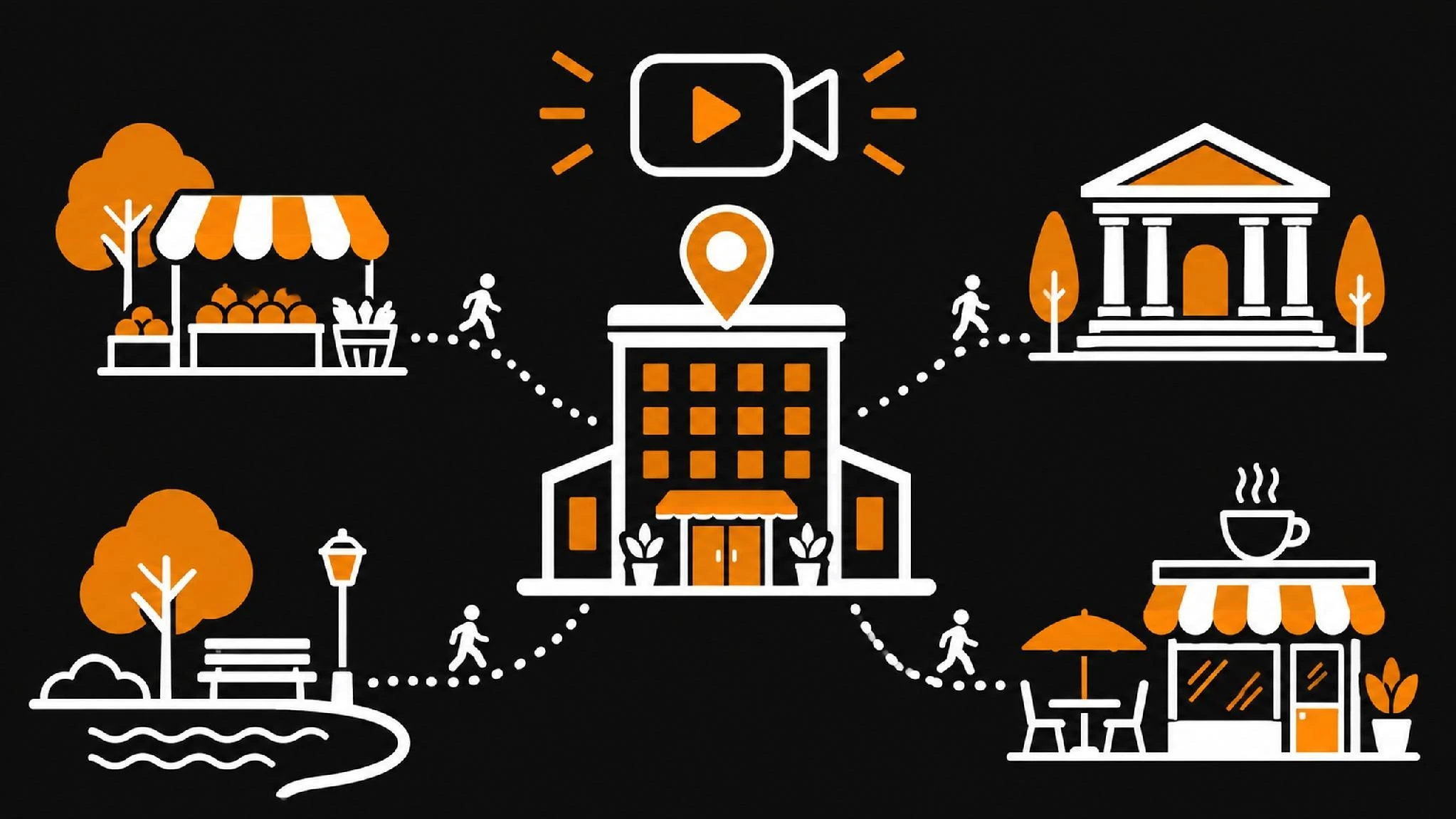
These destination videos should highlight nearby historical landmarks, popular shopping districts, and hidden culinary gems favored by locals. Incorporating footage of these attractions alongside clear directions from your hotel lobby demonstrates supreme geographic convenience. When you provide valuable travel advice free of charge, consumers reciprocate that generosity by booking their stay directly through your official website.
User Generated Content And Authentic Testimonials
Traditional corporate advertising can sometimes feel sterile or overly manufactured to modern, skeptical audiences. User-generated content involves sourcing and promoting videos created by actual paying guests during their stay. When prospective travelers see authentic, unscripted footage of real people enjoying your property, the social proof is undeniable.
Hotels can encourage this content creation by designing visually striking, photogenic spaces throughout the property and promoting specific branded hashtags. You can also produce professional testimonial videos by interviewing willing guests or corporate clients about their positive experiences. Ensure these testimonials focus on specific operational successes, such as flawless event execution or exceptional accessibility features, to provide concrete value to future viewers.
Event, Corporate, And Wedding Showcases
For properties featuring extensive meeting and banquet facilities, event showcase videos are critical for driving B2B revenue. Event planners need visual proof that your staff can handle complex logistical turnarounds and execute elaborate thematic designs. A rapid time-lapse video showing a ballroom transforming from a corporate seminar setup into an elegant evening gala is a powerful sales tool.
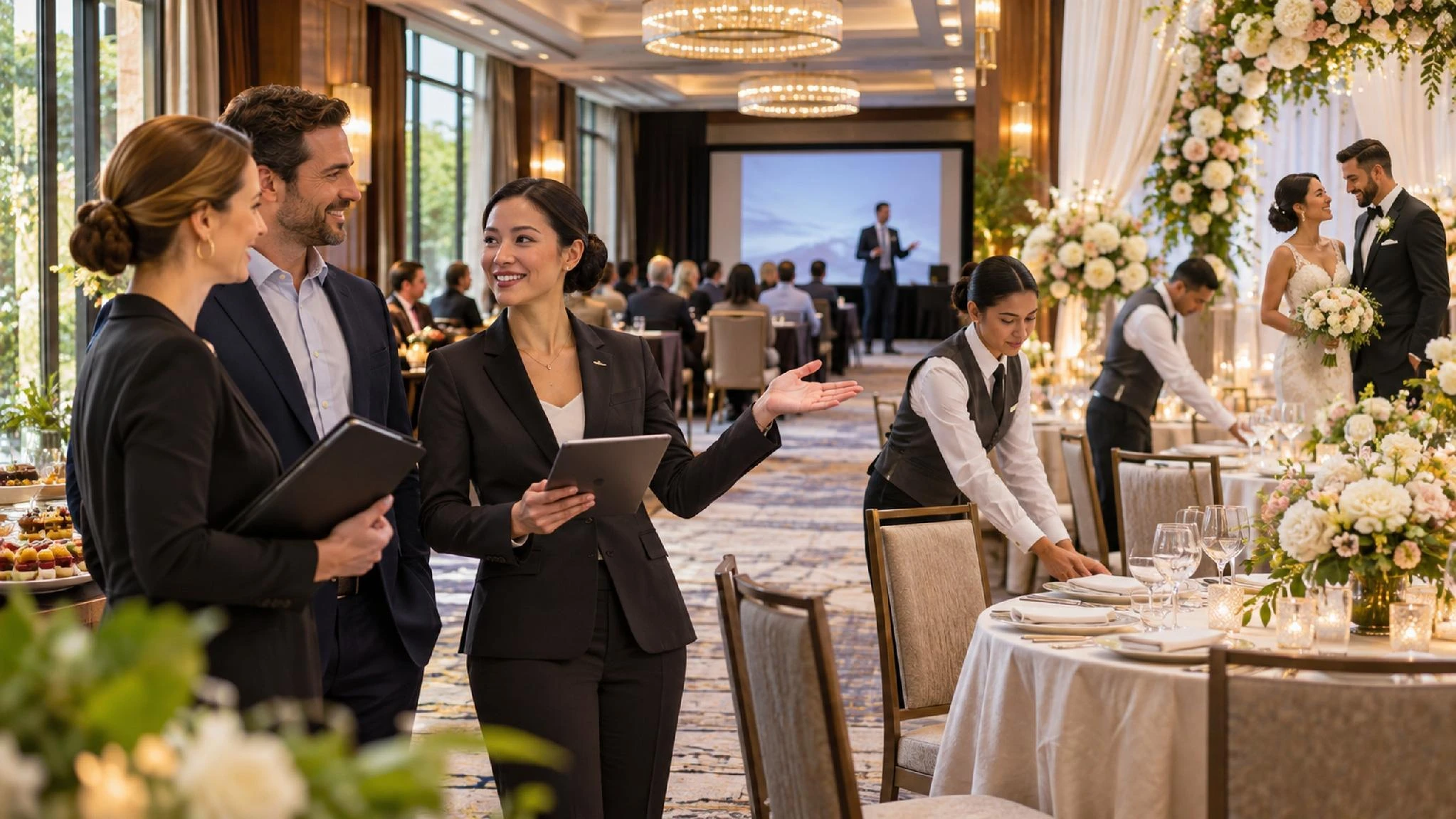
Wedding showcase videos require a more cinematic and emotional approach. Highlighting the bridal suite preparation areas, the scenic outdoor ceremony locations, and the energetic reception atmosphere helps engaged couples envision their perfect day. Distributing these specific assets directly to local event planners and wedding coordinators keeps your venue top of mind for their upcoming client recommendations.
Dominating Social Media Video Algorithms in 2026
Producing exceptional video content is only half the battle; distributing it effectively across algorithmic social media platforms is where the real revenue is generated. Each major platform requires a distinct tactical approach to achieve maximum visibility.
Capitalizing On TikTok For Hospitality Brands
TikTok has revolutionized content consumption, transitioning from a niche entertainment app into a powerful discovery engine for travel. The platform boasts an impressive average engagement rate of 3.70%, which is significantly higher than legacy social networks. The algorithm governing TikTok is designed to drive massive, unconnected reach, pushing compelling content to users who do not follow your account based entirely on their demonstrated travel interests.
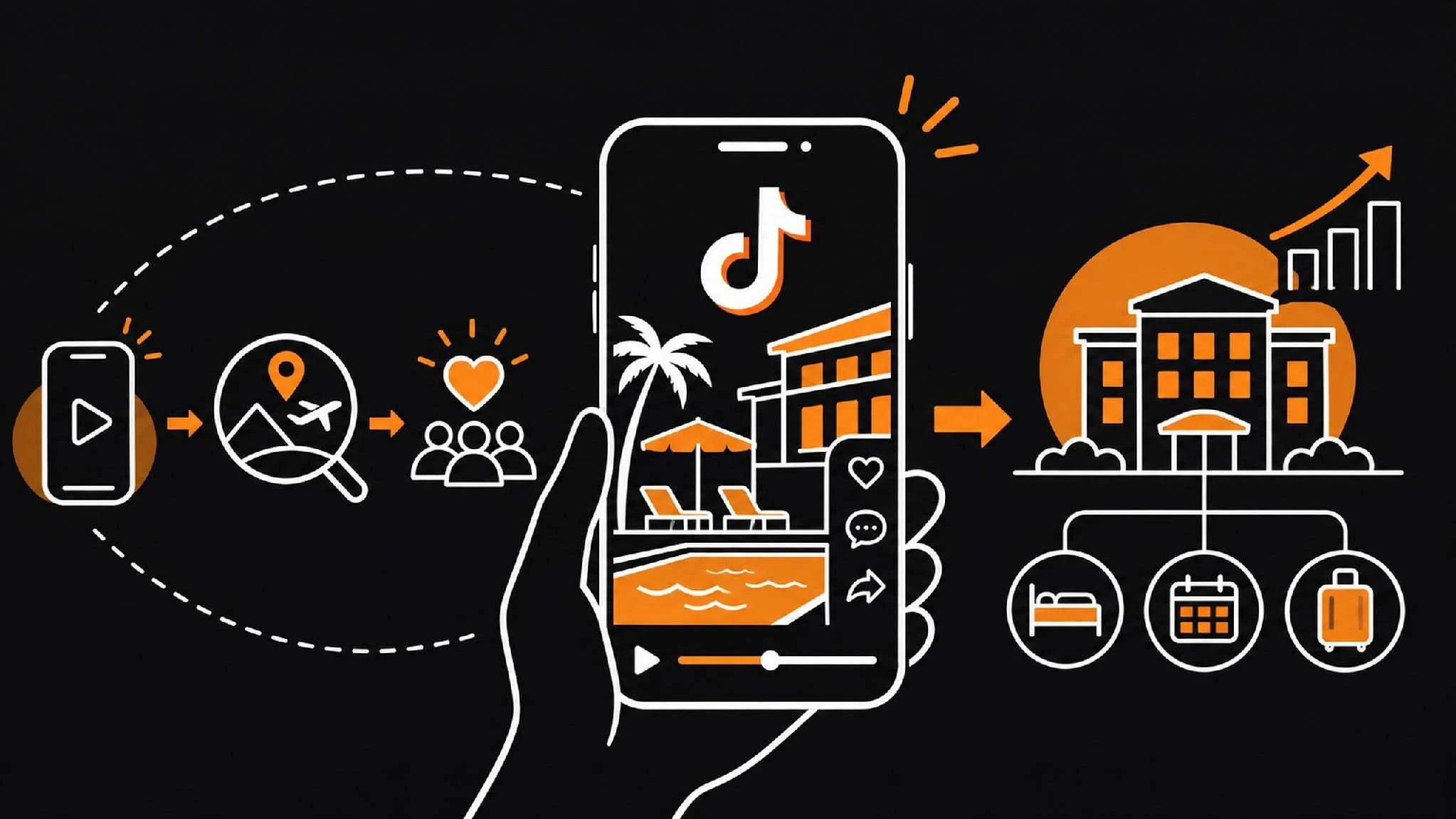
Succeeding on TikTok requires abandoning polished, traditional commercial aesthetics in favor of raw, authentic, and sensory-driven storytelling. Hotel videos must utilize trending audio tracks, rapid visual cuts, and engaging on-screen text to hook the viewer within the first three seconds. Short property tours, engaging staff interactions, and rapid-fire local travel tips perform exceptionally well in this fast-paced digital ecosystem.
Table 1.2. Social Media Video Formatting Guidelines
| Platform | Optimal Video Length | Content Style | Primary Algorithmic Goal |
|---|---|---|---|
| TikTok | 15 to 45 seconds | Authentic, trend-driven, raw | Maximizing unconnected reach and viral discovery |
| Instagram Reels | 15 to 60 seconds | Aesthetic, inspiring, curated | Driving saves, shares, and profile exploration |
| YouTube Shorts | Under 60 seconds | Informative, punchy, repurposed | Building channel subscribers and search visibility |
| Facebook Video | 1 to 3 minutes | Narrative, community-focused | Engaging older demographics and local followers |
Mastering Instagram Reels And Carousel Integration
Instagram remains a vital ecosystem for luxury and lifestyle hospitality marketing, requiring a nuanced blend of content formats. Instagram Reels operate similarly to TikTok, utilizing short-form, vertical video to attract new affluent travelers via the Explore page. The primary ranking signals for Reels include total watch time, audio track popularity, and the ratio of user saves and shares to total reach.
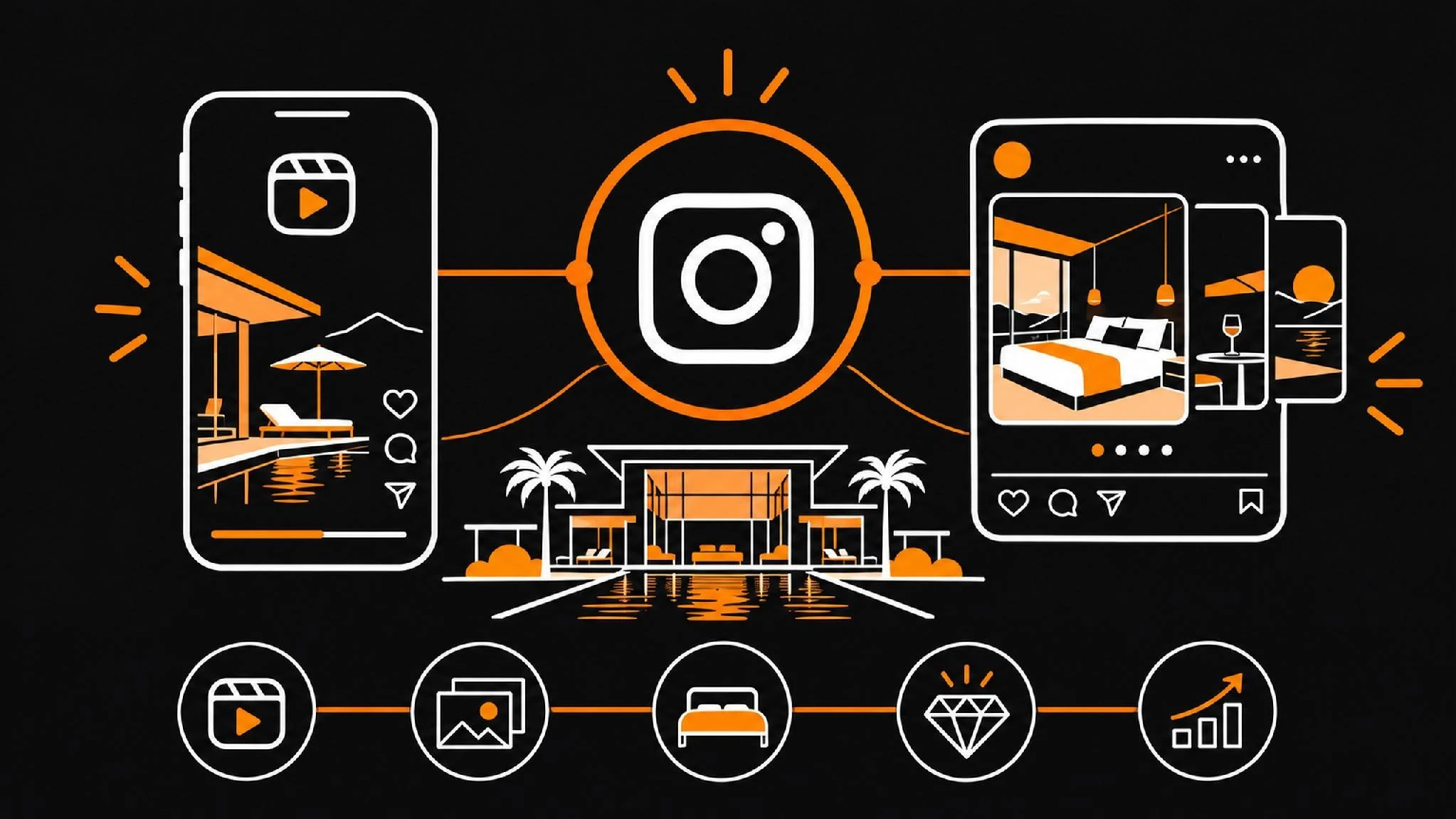
However, relying exclusively on short-form video ignores the core preferences of a brand’s established community. Thoughtfully designed photo carousels integrated with short video clips often command the highest engagement rates from existing followers. Reels act as the wide-reaching net to attract new prospective guests, while detailed mixed-media carousels nurture that audience until they are ready to book.
YouTube Shorts And Long-Form Ecosystems
YouTube operates as the second largest search engine in the world, providing unmatched opportunities for hotels to reach global audiences actively searching for travel information. The introduction of YouTube Shorts allows brands to participate in the vertical, short-form video trend while building a permanent, searchable content library. Shorts are excellent tools for driving rapid subscriber growth and increasing overall channel visibility.
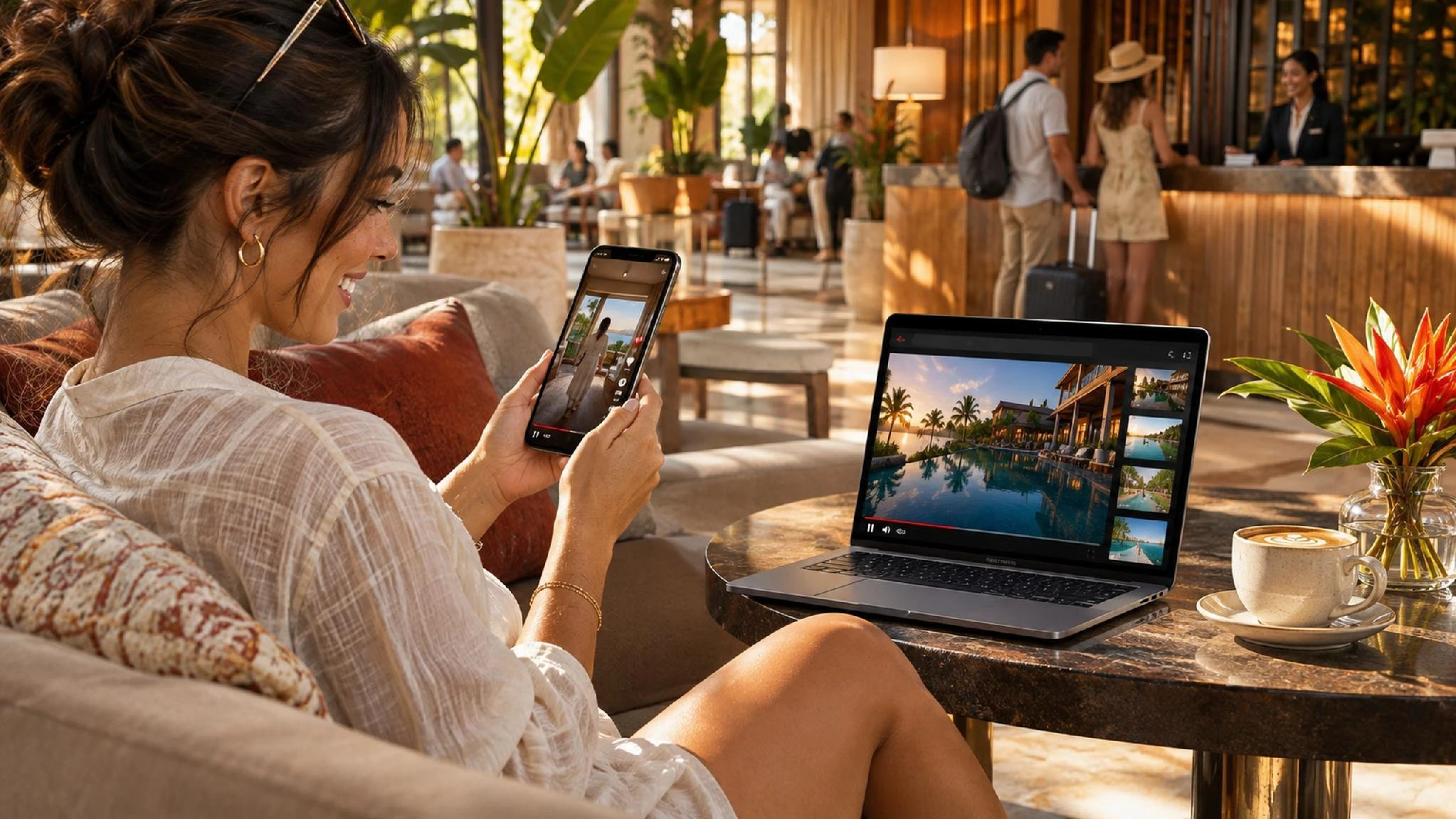
The true power of YouTube lies in its support for long-form, evergreen content. Detailed five-minute property walkthroughs, comprehensive twenty-minute neighborhood travel guides, and in-depth chef interviews perform exceptionally well here. Unlike social media feeds where content disappears within 24 hours, well-optimized YouTube videos continue generating organic views and direct website traffic for years after their initial publication.
Leveraging Facebook Video For Older Demographics
While younger generations flock to newer platforms, Facebook remains an undeniable powerhouse for reaching established professionals and older, affluent demographics. Over 100 million hours of video are watched on Facebook every single day. This platform is ideal for distributing longer narrative videos, detailed event space tours, and comprehensive sustainability reports.
Facebook’s algorithm rewards content that generates meaningful conversations and community interaction within the comments section. Storytelling works exceptionally well here, so focus on taking the audience on an engaging journey rather than executing a hard sales pitch for a room rate. Utilizing Facebook’s robust paid advertising tools allows you to target these videos precisely to users based on their upcoming travel dates and specific household income brackets.
Starting And Scaling A Hotel YouTube Channel
Establishing a dedicated YouTube channel is a foundational step in building a resilient hotel video marketing strategy. Follow these critical steps to launch and scale a professional brand presence.
Defining Channel Goals And Identity
Begin your journey into YouTube by establishing clear, measurable objectives for the channel. Determine whether your primary goal is to drive direct bookings, showcase wedding venues, or establish the property as a regional culinary destination. Understanding these specific goals will shape your entire content calendar, dictating the exact topics, formats, and posting schedules you need to implement.
Your channel identity must remain consistent with your broader corporate branding. This consistency ensures that viewers who discover you on YouTube experience the exact same brand voice when they eventually visit your official booking engine. Establish a recognizable visual style, select a consistent on-camera host from your staff if possible, and maintain a predictable upload schedule to train the algorithm to expect your content.
Technical Channel Optimization And Branding
Proper technical setup is crucial for maximizing your channel’s discoverability. Sign in to your corporate account and navigate to the customization settings to optimize the profile and “About” sections. Fill these areas with compelling, keyword-rich copy that outlines your hotel’s strengths, exact geographic location, and core values. Always include direct tracking links to your official website and other social media profiles to capture outbound traffic.
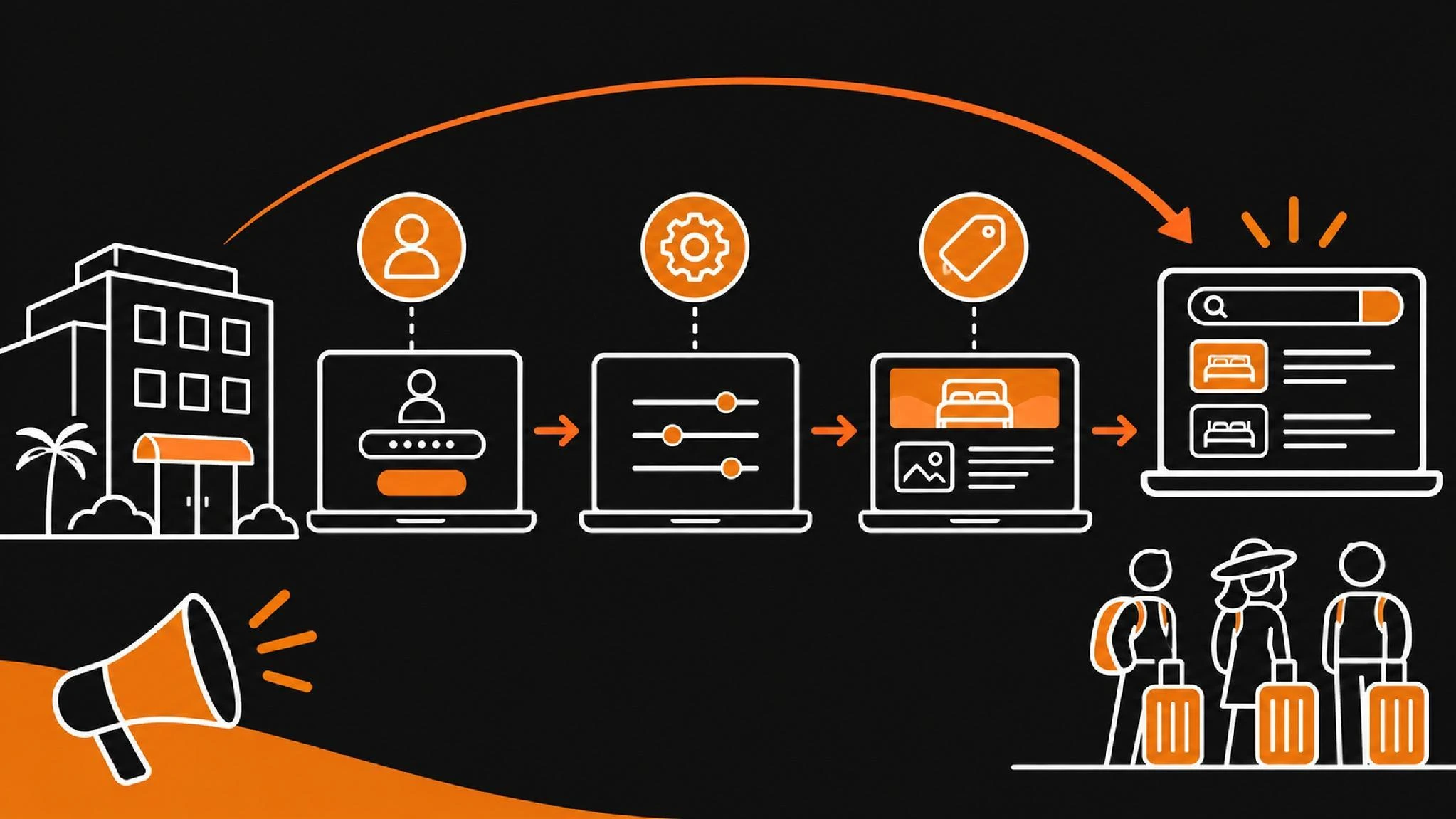
Visual branding is equally important for establishing credibility. Design eye-catching channel art that occupies the prime real estate at the top of your page, ensuring it displays correctly across desktop, mobile, and television screens. Create a concise, high-energy channel trailer that automatically plays for unsubscribed visitors, offering a rapid introduction to your property’s best features. Finally, configure a subtle branding watermark containing your logo to overlay on all videos, protecting your content from unauthorized duplication.
Scripting And Pre-Production Workflows
The heart of your YouTube channel lies in the quality of the videos you produce. While spontaneous recording works for some social platforms, YouTube demands structured, well-planned content. Before shooting, carefully plan the sequence, visual requirements, and core messaging of each video. Drafting a concise script or a detailed shot list ensures you capture all necessary footage efficiently without wasting valuable staff time.
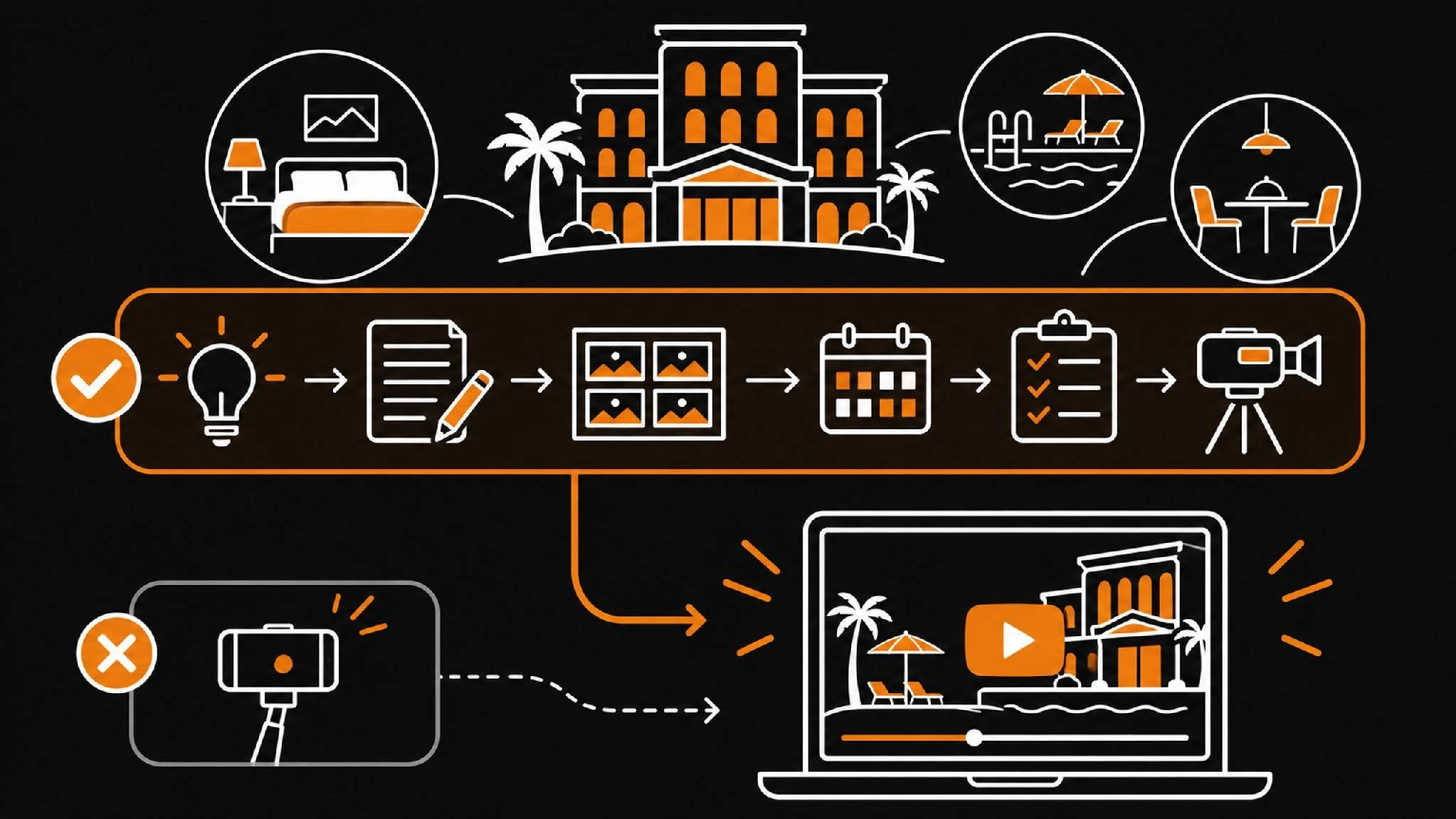
Pre-production also involves securing the appropriate locations within your hotel, ensuring the spaces are immaculately clean and properly staged. If you are filming in public areas like the lobby or restaurant, schedule the shoot during off-peak hours to minimize disruptions to paying guests. Planning these logistical details in advance guarantees a smooth production process and a professional final product.
Community Engagement And Comment Moderation
Building an active, engaged YouTube community is a vital aspect of your channel’s long-term success. The YouTube algorithm actively monitors user engagement, including likes, shares, and comments, to determine the overall quality and relevance of your videos. After publishing a new video, your marketing team must actively interact with the audience in the comments section during the first 24 hours to boost initial algorithmic momentum.
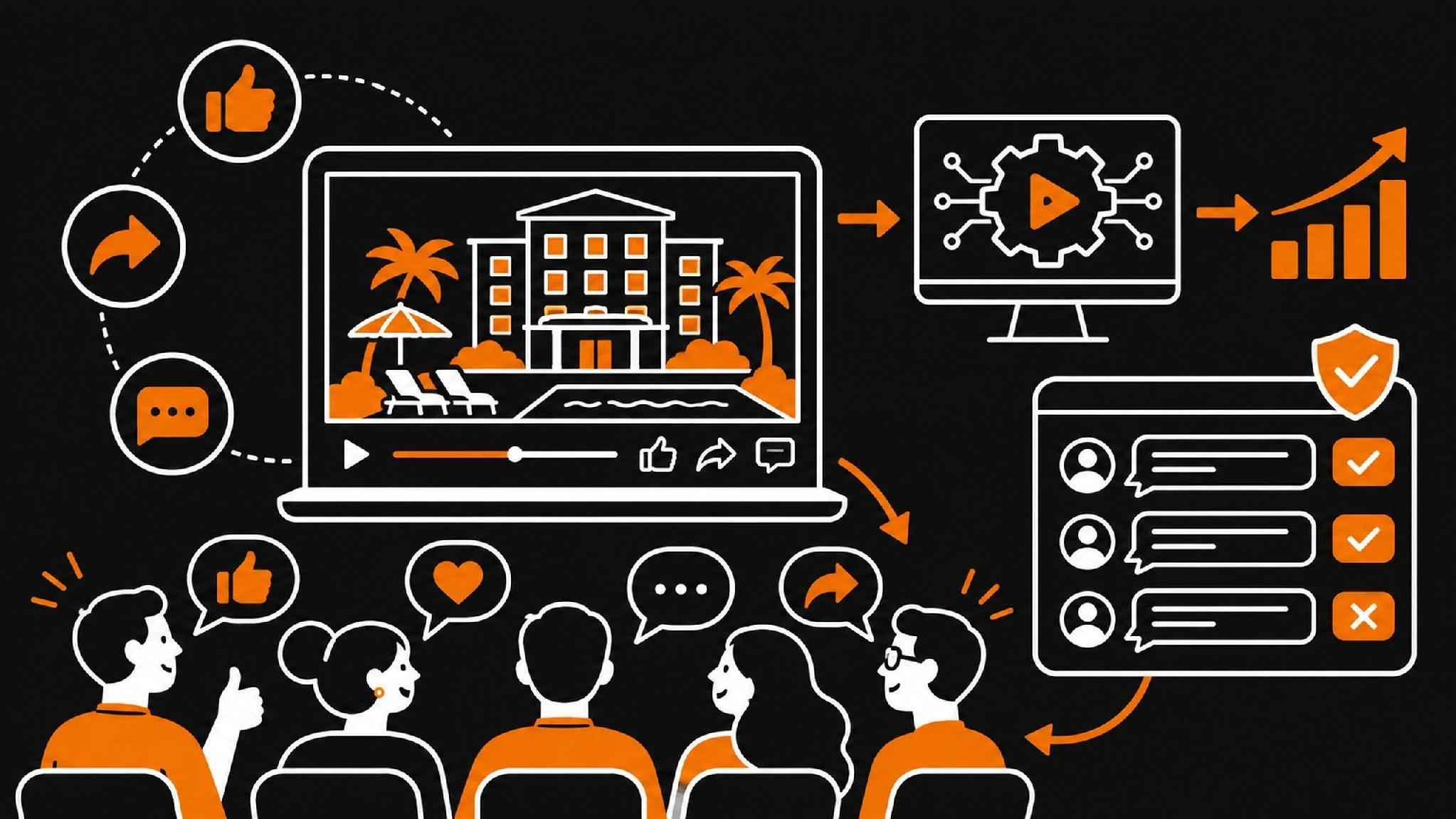
Be attentive to viewer questions regarding room rates, local travel advice, or specific amenity details. Respond promptly and professionally, providing helpful information and directing them to the appropriate landing pages on your website. Over time, these thoughtful interactions transform casual viewers into loyal brand advocates and confirmed hotel guests. Establishing clear community guidelines also helps your team moderate spam or inappropriate comments efficiently.
Technical SEO For Hotel Video Marketing
A beautiful video provides zero financial return if search engines cannot find, index, and display it to consumers. Technical Search Engine Optimization (SEO) ensures your visual assets are readable by web crawlers and favored by ranking algorithms.
Optimizing Video Metadata And Titles
Search engine algorithms cannot watch a video to understand its content; they rely entirely on text-based metadata to determine relevance. The video title is the most critical ranking factor and must concisely describe the content while incorporating primary target keywords. Instead of a generic title like “Our Hotel Tour,” utilize a descriptive, keyword-rich title such as “Luxury Oceanfront Suite Tour | [Hotel Name] Miami Beach.”
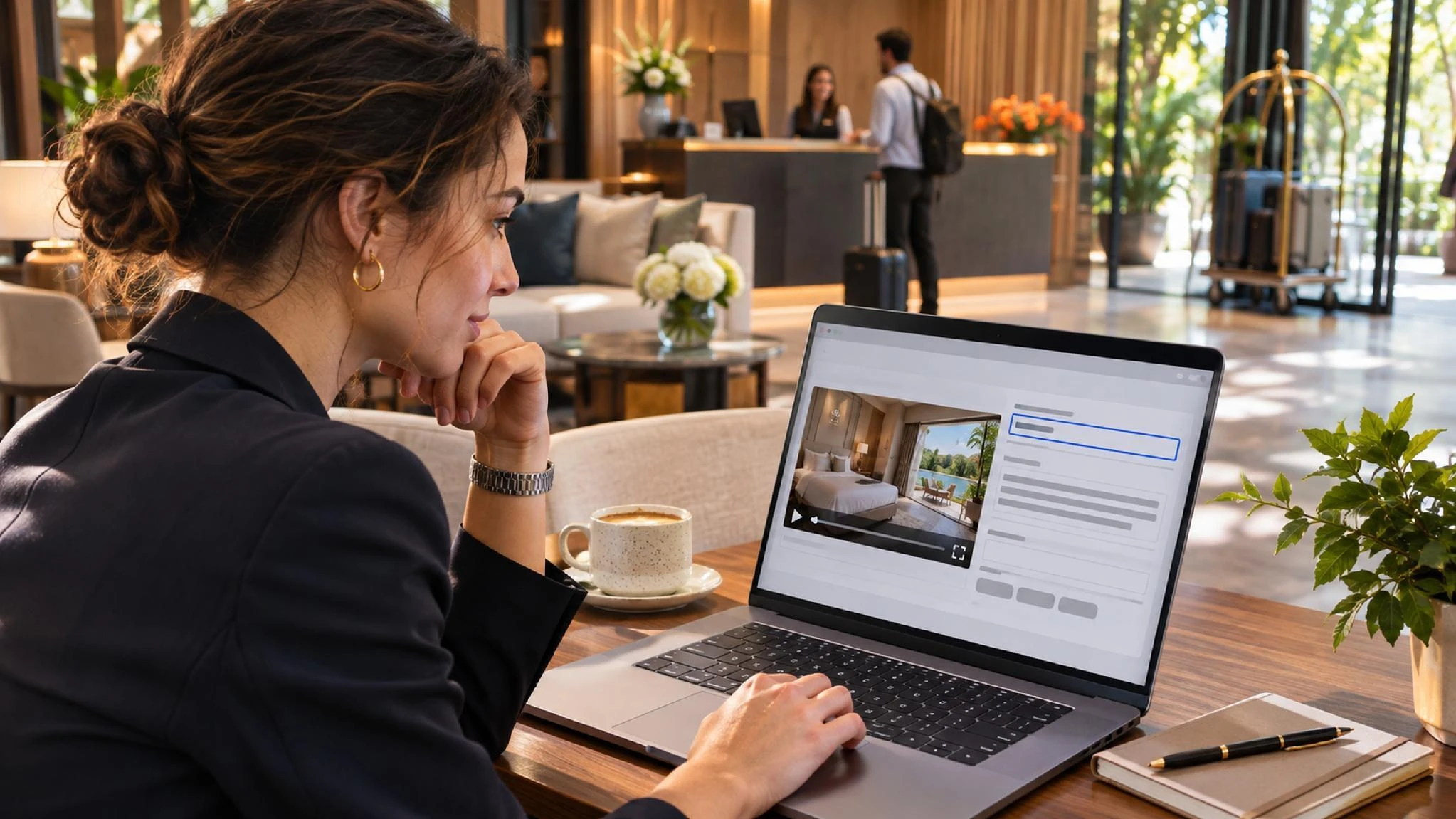
The video description provides an opportunity to offer deep contextual information to both viewers and search engines. Write a comprehensive summary of the video content, incorporating secondary keywords, regional landmarks, and detailed amenity lists. Always include a direct, trackable hyperlink at the very top of the description leading back to the specific room booking page on your official website. Proper tagging and categorization further assist algorithms in surfacing your video for relevant travel queries.
Implementing Video Schema Markup (JSON-LD)
To eliminate any ambiguity regarding your video content, web developers must deploy advanced structured data using schema markup. VideoObject schema is specialized code injected into the backend of your website that translates video details into a standardized format for search crawlers. This code explicitly defines critical data points, including the video name, upload date, duration, thumbnail URL, and actual content URL.
By explicitly providing this data, you give algorithms absolute mathematical certainty regarding your media assets. Proper implementation of VideoObject schema enables Google to display rich video snippets directly in standard search results. These rich snippets feature a clickable thumbnail alongside the search result, which significantly increases organic click-through rates compared to plain text links.
Table 1.3. Essential VideoObject Schema Properties
| Schema Property | Data Required | SEO Benefit |
|---|---|---|
| name | The specific title of the video | Matches user search queries accurately |
| description | A concise summary of the visual content | Provides semantic context to search engines |
| thumbnailUrl | A direct link to a high-resolution image | Enables visual display in rich search results |
| uploadDate | The exact date the video was published | Signals content freshness to the algorithm |
| contentUrl | The direct file link to the video asset | Allows search engines to locate and index the media |
Mobile Optimization And Loading Speeds
Embedding high-quality videos on your proprietary website enhances the user experience, but it can also severely degrade page loading speeds if executed poorly. Search engines actively penalize domains that provide sluggish mobile experiences, utilizing mobile-first indexing to determine primary ranking positions. A slow-loading booking page will frustrate mobile users, driving bounce rates higher and signaling poor technical quality to algorithms.
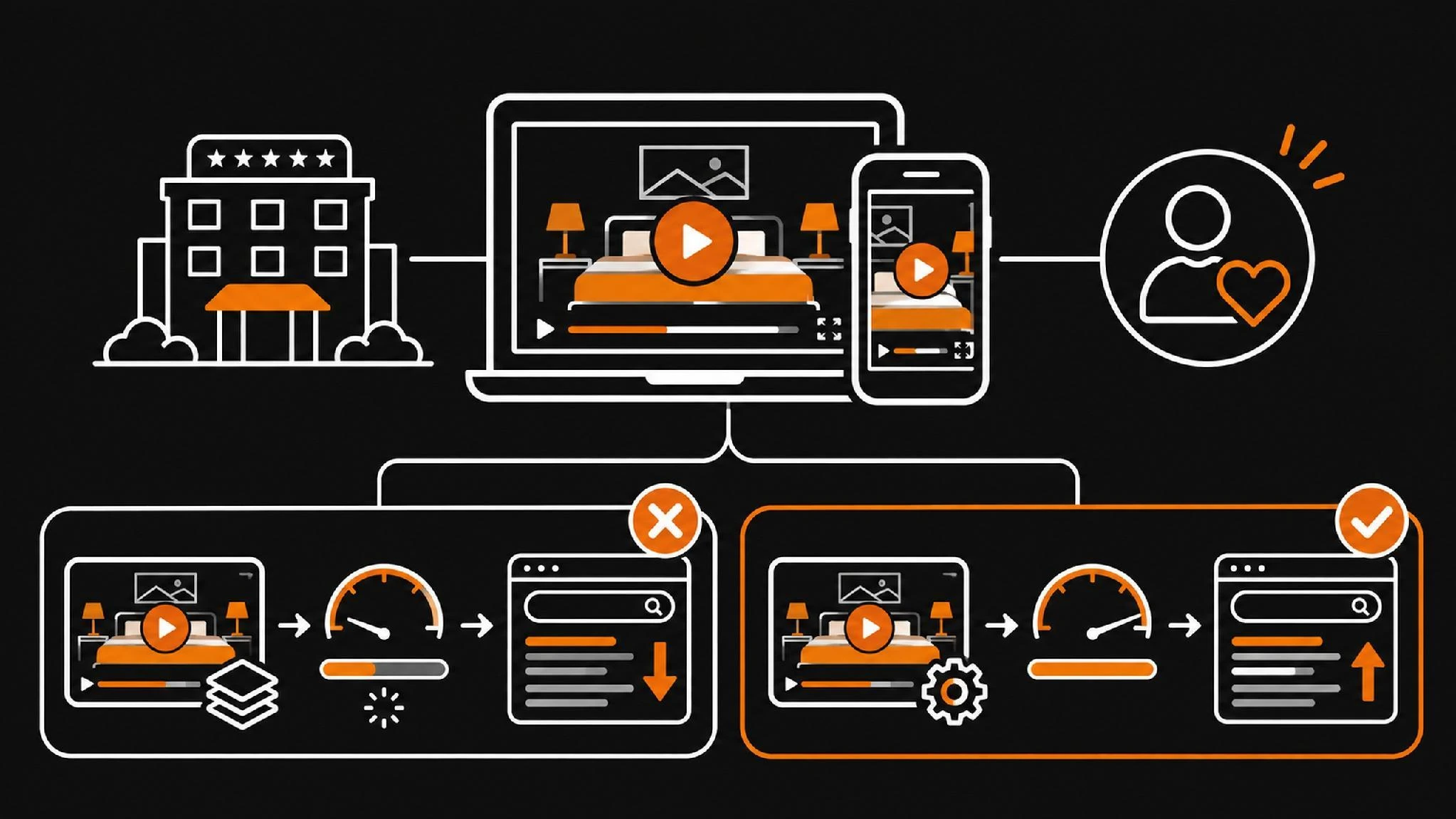
To optimize performance, developers must utilize lazy loading techniques for embedded videos. Lazy loading ensures the heavy video player elements only load when the user actually scrolls down to that specific section of the page. Furthermore, hosting videos on dedicated platforms like YouTube or Vimeo and embedding the lightweight iFrame code is vastly superior to hosting heavy, raw video files directly on your own website servers.
The Impact Of Video On Dwell Time And Bounce Rates
Technical SEO evaluates user behavioral signals to determine the overarching quality and relevance of a webpage. Dwell time, which measures the amount of time a user spends on a page before returning to the search results, is a critical ranking factor. Text-heavy pages often struggle to retain user attention, resulting in short dwell times that harm organic rankings.
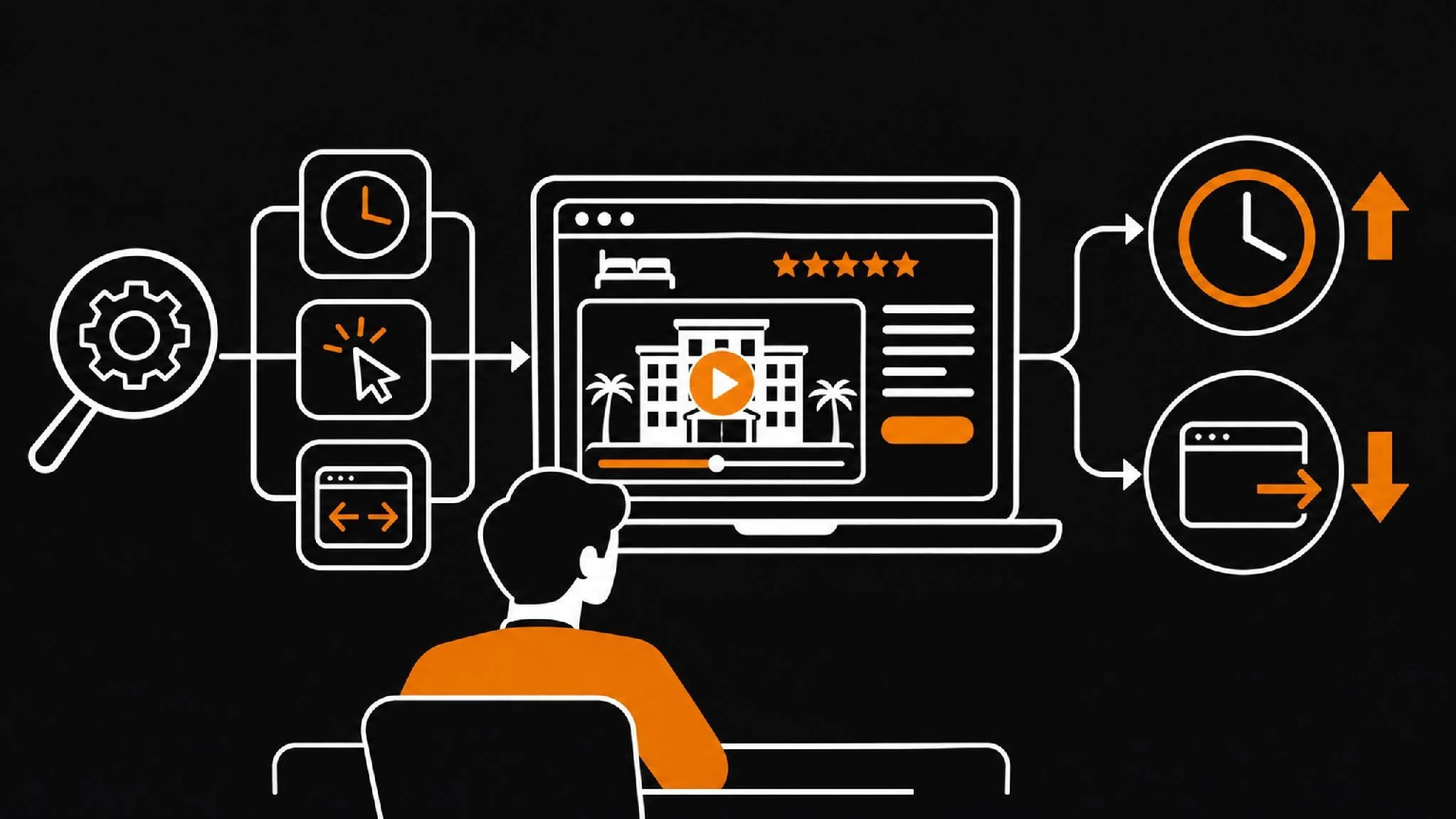
Embedded videos are incredibly effective tools for instantly increasing average session durations. When a prospective guest stops scrolling to watch a two-minute room tour, they dramatically increase their dwell time on that specific URL. This extended engagement sends a strong positive signal to search engines, validating the page’s quality and pushing it higher in organic rankings over time. Therefore, video marketing acts as a direct catalyst for broader website SEO performance.
Production Guidelines For High-Converting Videos
The production quality and formatting of your videos directly influence how consumers perceive your brand. Adhere to these proven production guidelines to ensure your content drives meaningful engagement and revenue.
Optimizing Video Length For Specific Platforms
Consumer attention spans vary wildly depending on the digital platform they are using. Tailoring the length of your videos to match platform expectations is critical for maximizing viewer retention rates. For short-form platforms like TikTok, Instagram Reels, and YouTube Shorts, content must be extremely concise, ideally running between 15 and 60 seconds. These videos must deliver their core value proposition or punchline almost immediately to prevent users from swiping away.
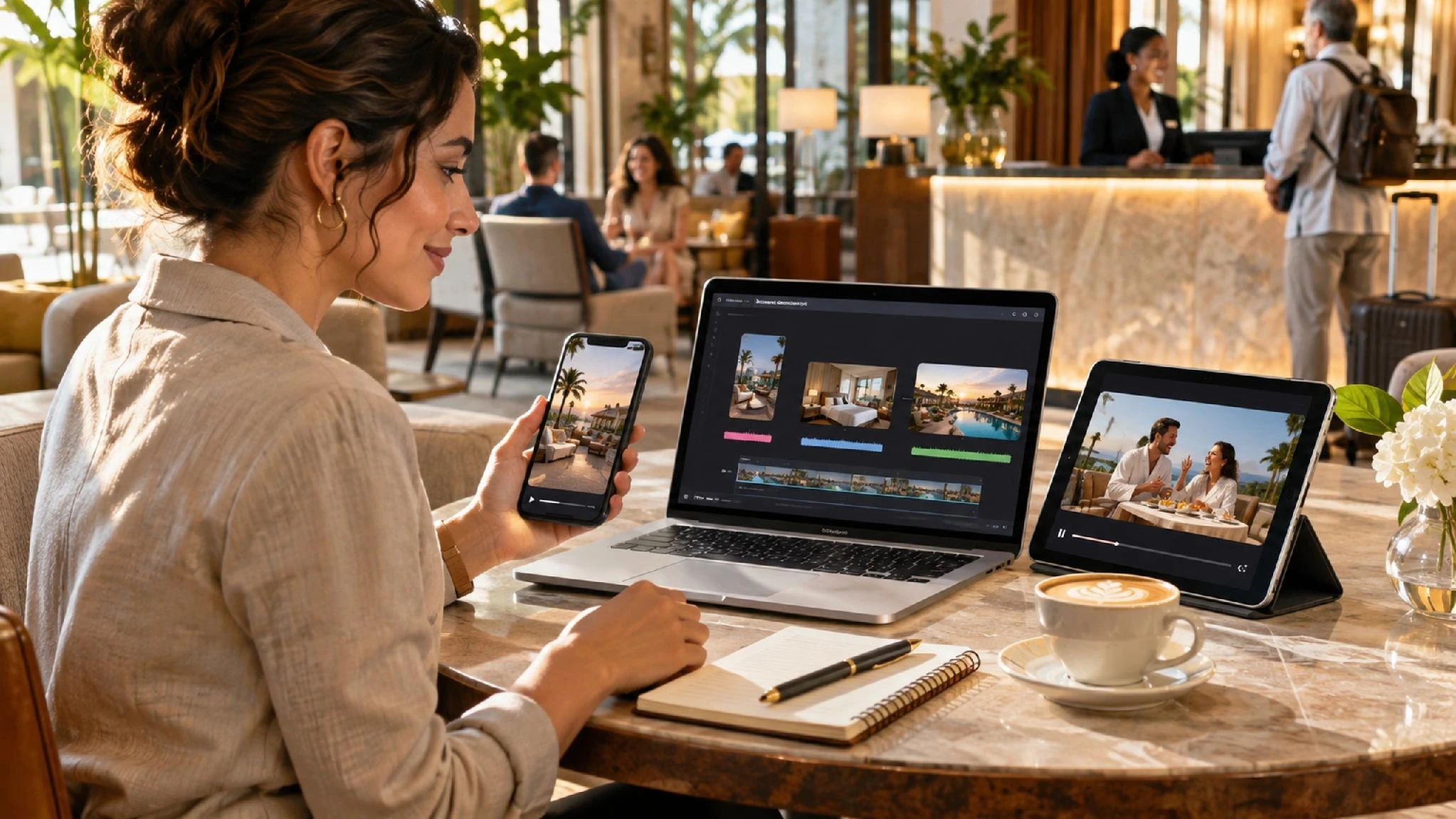
For informational videos hosted on your website or standard YouTube feed, viewers expect deeper detail. A comprehensive property tour or neighborhood travel guide can comfortably run between two and four minutes. Event venue showcases and brand documentaries can extend to five minutes if the narrative remains engaging. As a general rule, promotional videos designed strictly for paid advertising perform best when kept around two minutes or less.
The Importance Of Audio Quality And Music
Many hoteliers obsess over acquiring 4K camera equipment while completely neglecting audio production. Poor audio quality will cause viewers to abandon a video faster than slightly blurry visuals. If your video features an interview with a staff member or a voiceover describing a suite, you must use dedicated, professional microphones to capture crisp, clear dialogue. Echoing, muffled, or wind-blown audio instantly destroys the premium perception of your brand.
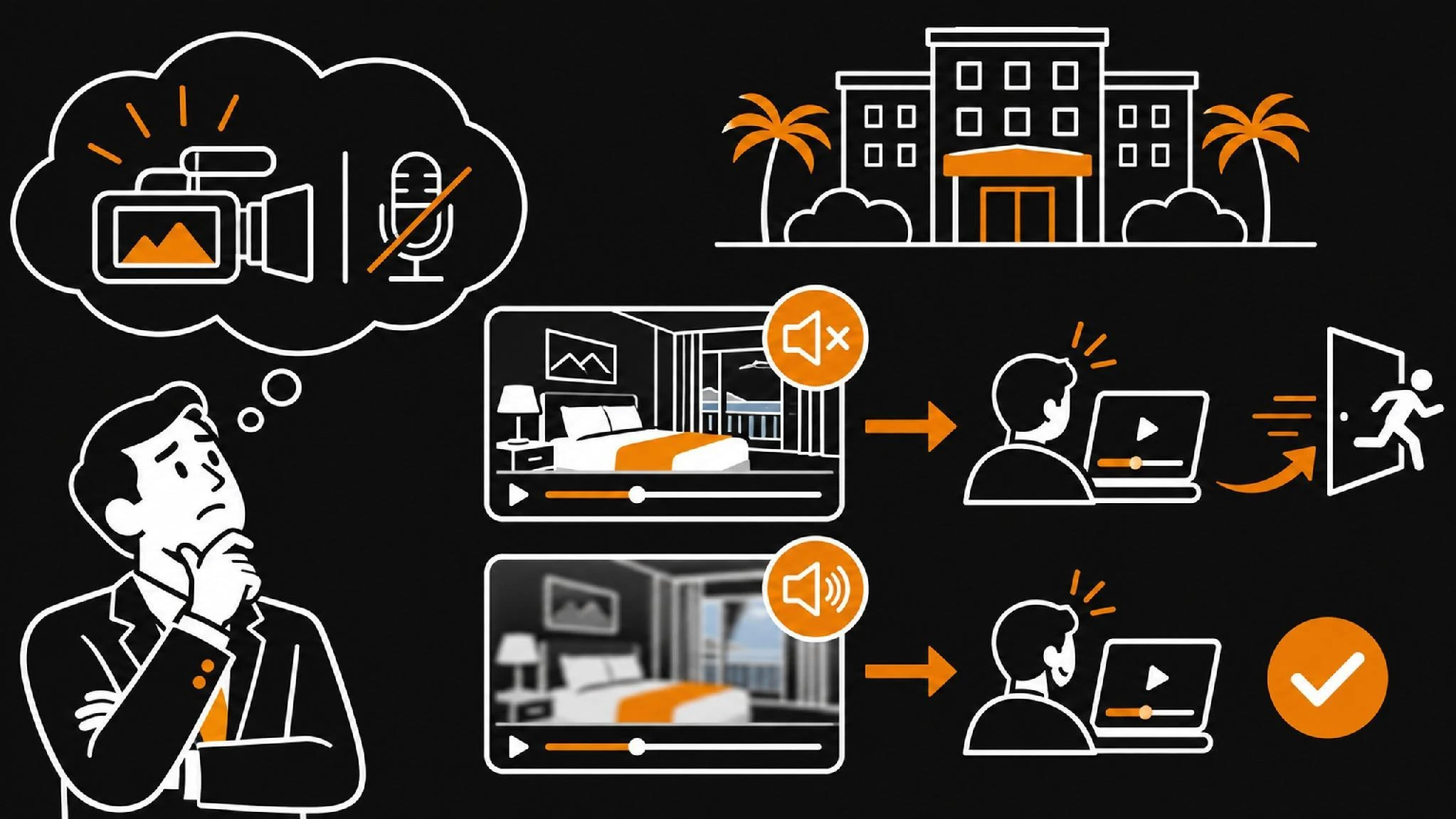
Background music selection is equally vital for establishing the emotional tone of the video. The soundtrack should match the specific atmosphere of the property; an upbeat, electronic track suits a vibrant city hotel, while a slow, acoustic melody perfectly complements a secluded wellness resort. Always ensure you have the proper commercial licensing for any music used in your marketing to avoid severe copyright strikes or platform removals.
Professional Production Versus Authentic Lo-Fi Content
A successful video strategy requires a healthy mix of high-end professional production and authentic, low-fidelity content. Massive brand anthem videos, 360-degree virtual tours, and television commercials require expensive lighting, stabilizing gimbals, and professional editing teams. These polished assets are necessary for your official website homepage and primary digital advertising campaigns where conveying absolute luxury is paramount.
However, social media platforms increasingly reward raw, unpolished content filmed organically on smartphones. This lo-fi approach feels more authentic to modern consumers, resembling the content created by their own peers. Equipping your marketing manager with a high-quality smartphone to capture candid behind-the-scenes moments or rapid daily updates is a highly cost-effective way to maintain a consistent posting schedule without depleting your production budget.
Integrating Strong Calls To Action (CTAs)
A beautifully produced video is a wasted financial opportunity if it does not direct the viewer toward a specific commercial action. Every single marketing video must include a clear, undeniable Call To Action (CTA). Decide exactly what you want the viewer to do after watching: visit a landing page, sign up for a loyalty program, or book a specific room package.
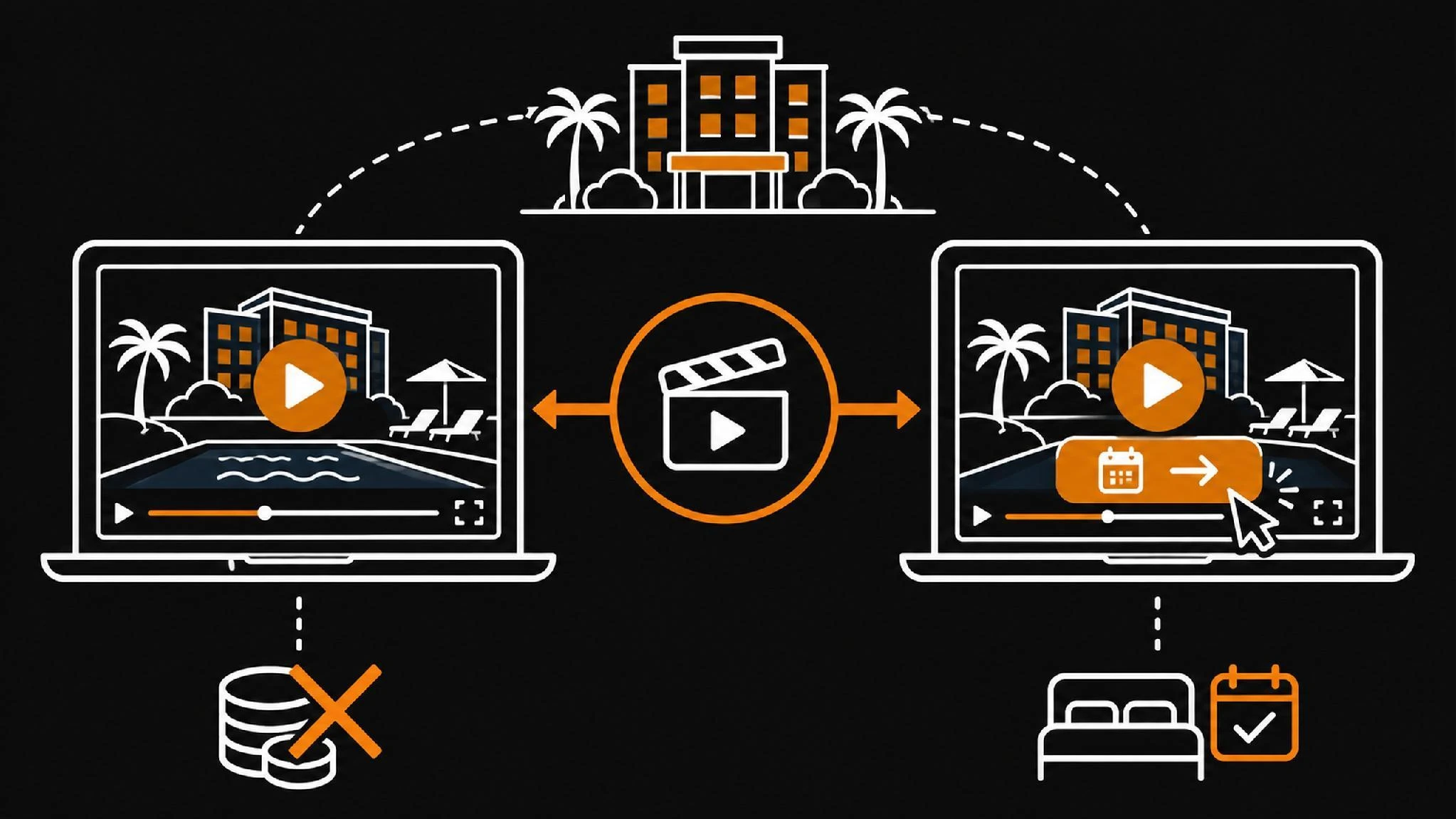
The CTA should be communicated verbally by the on-screen talent, displayed visually via text graphics, and included in the accompanying video description or caption. For paid video advertisements, utilize the platform’s native clickable CTA buttons that overlay the video player. Ensure the language used in the CTA focuses on the benefit to the user, such as “Unlock Your Direct Booking Discount Today,” rather than a generic “Click Here.”
Integrating Video Across Digital Touchpoints
Video assets should not be confined solely to social media feeds; they must be deployed across your entire digital ecosystem to maximize their return on investment.
Enhancing The Proprietary Website And Booking Engine
Your official website is the ultimate destination for your video marketing efforts. Strategic placement of video content throughout the site layout dramatically improves the user experience and drives direct conversions. A silent, high-quality ambient video looping in the background of your homepage immediately immerses visitors in the property’s atmosphere without requiring them to press play.
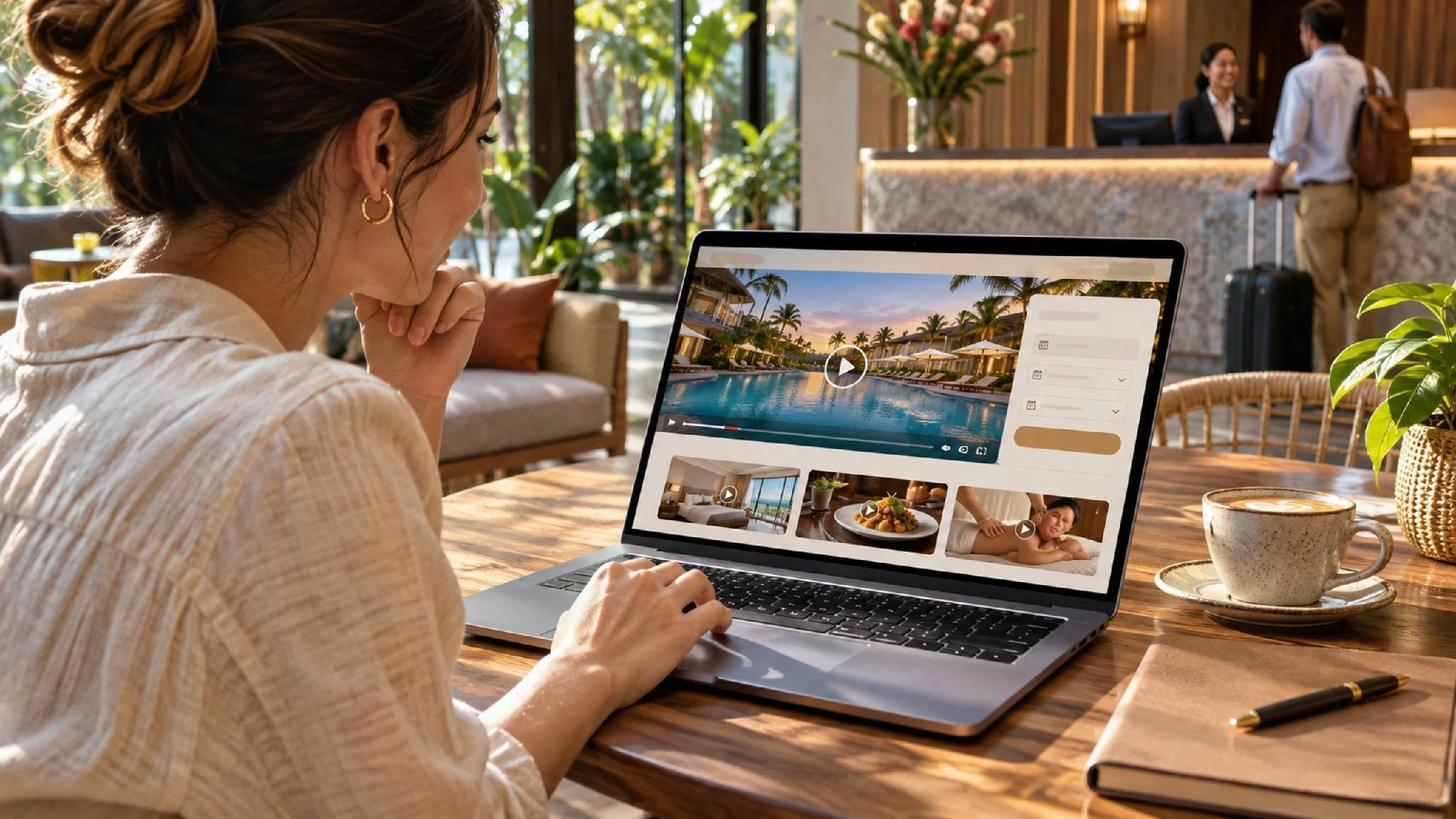
Embed detailed room tour videos directly within your booking engine alongside the standard text descriptions and static photos. When a consumer is debating between a standard room and a premium suite upgrade, a video walkthrough often provides the final visual proof needed to justify the higher price point. Integrating video at the exact point of sale removes friction and increases the average transaction value.
Embedding Videos In Email Marketing Campaigns
Email marketing provides a direct line of communication to your past guests and prospective travelers. Incorporating video into your email campaigns makes your content stand out in crowded inboxes and significantly increases engagement. Data shows that emails featuring the word ‘video’ in the subject line experience higher open rates, and including a video link can increase click-through rates by up to 96%.
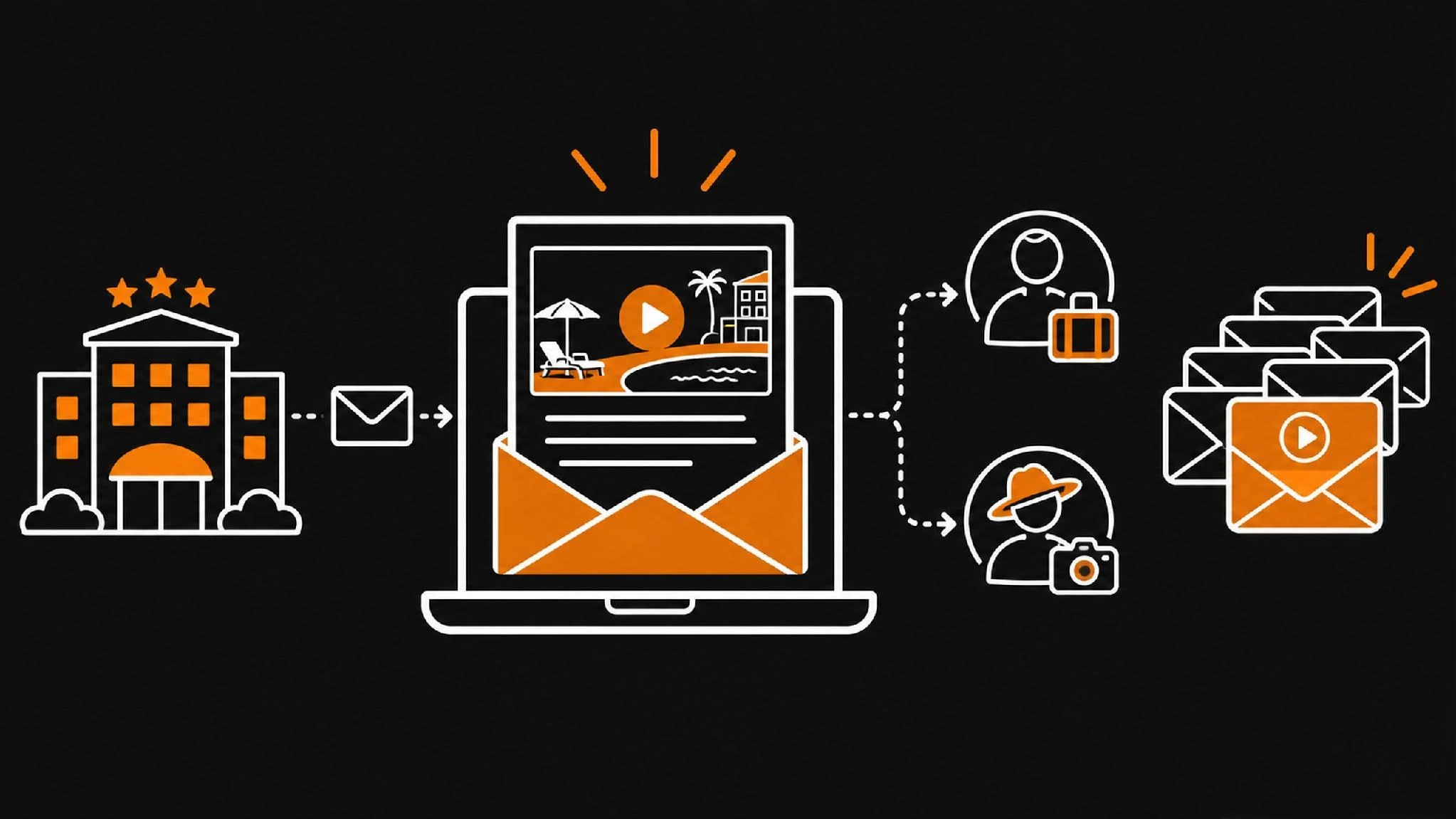
Because most major email clients do not support the direct playback of raw video files within the email body, marketers must use creative workarounds. The most effective method is creating a compelling animated GIF or a static image containing a prominent “Play” button icon. When the user clicks the image, they are redirected to a dedicated landing page on your website where the full video automatically begins playing.
Utilizing Video In Paid Advertising (PPC & Meta Ads)
Video advertisements consistently outperform static image ads across major paid media networks, including Google, Facebook, and Instagram. Video allows you to tell a complex narrative and demonstrate the value of your property within a short timeframe. When running Paid Per Click (PPC) or Meta ad campaigns, utilize custom-tailored video assets designed specifically to capture attention and drive clicks.
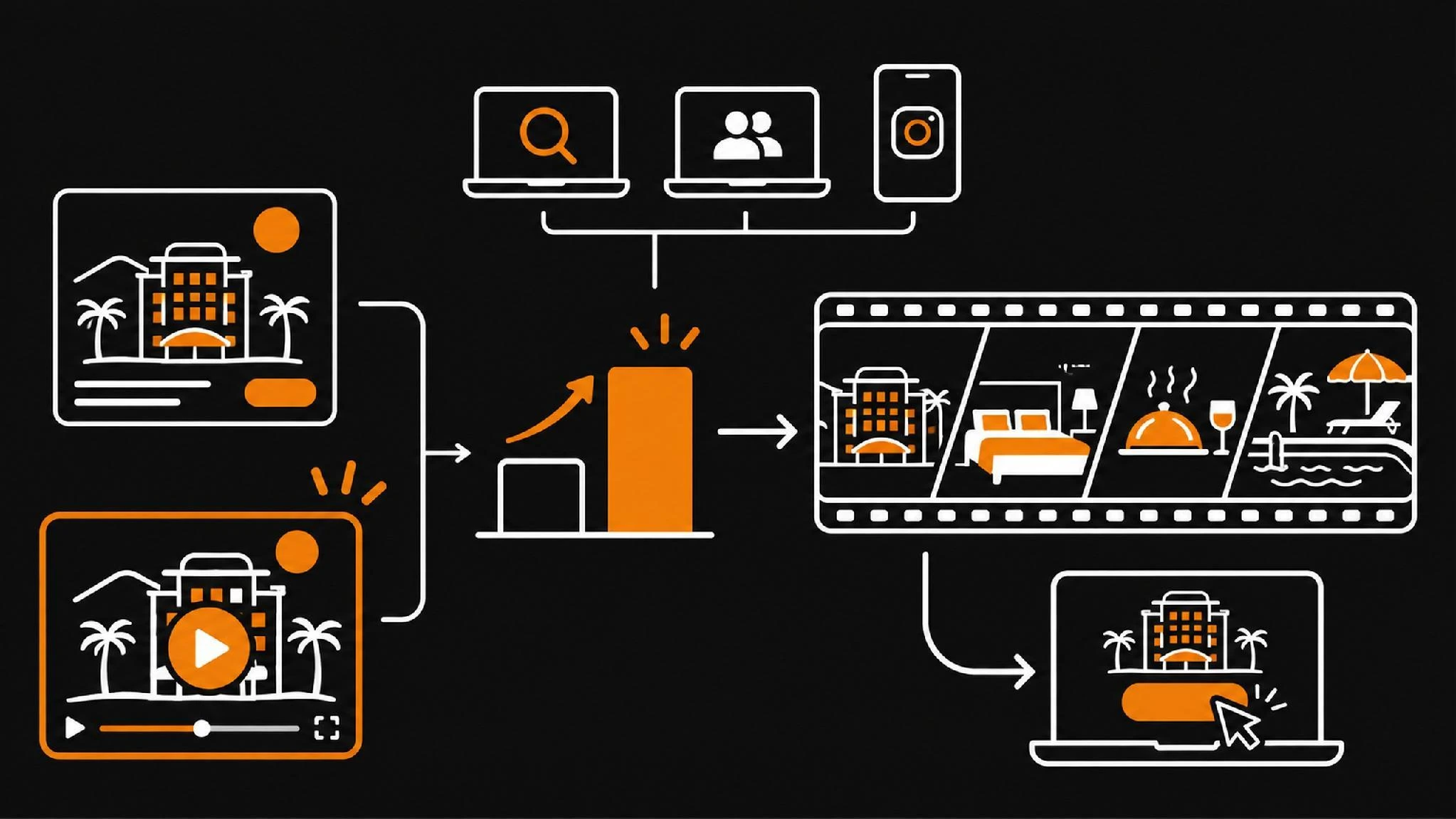
Ensure your paid video ads feature bold captions, as a massive majority of users watch social media ads with the sound turned off. The first few seconds of the ad must feature compelling motion and text to stop the user from scrolling past. By meticulously targeting these video ads to specific demographics, such as users who previously visited your booking page but abandoned their cart, you can achieve exceptional Returns on Ad Spend (ROAS).
Upgrading Google Business Profiles With Rich Media
Your Google Business Profile (GBP) is often the first digital interaction a consumer has with your brand when searching for local accommodations. While uploading high-resolution static photos is mandatory, many hoteliers neglect the ability to upload video content directly to this critical directory.
Uploading short, informative videos to your GBP enhances your local search presence and provides potential guests with an immediate feel for the property. Consider uploading concise tours of the lobby, rapid highlights of the breakfast buffet, or time-lapse videos of the exterior architecture. A dynamic, multimedia-rich profile signals to Google that your business is active and authoritative, which improves your visibility in local map pack rankings.
Measuring ROI And Video Marketing Analytics
Producing continuous video content requires a significant investment of time and capital. Revenue managers and marketing directors must track specific analytical metrics to justify these expenditures and optimize future campaigns.
Moving Beyond Vanity Metrics Like View Counts
Inexperienced marketers often focus entirely on vanity metrics like total view counts or social media likes to gauge campaign success. While a high view count indicates broad brand awareness, it does not necessarily correlate with financial revenue. A viral TikTok video that reaches millions of teenagers who cannot afford your luxury resort provides very little actual commercial value.
Elite digital strategists evaluate deeper metrics that indicate genuine interest and commercial intent. Instead of celebrating views, focus on analyzing how the audience interacts with the content and whether those interactions lead to tangible business actions.
Tracking Engagement Rates And Watch Time
Engagement rate measures the volume of active interactions—such as comments, shares, and saves—relative to the total number of views. High engagement rates indicate that the content resonates deeply with the target audience. For hospitality brands, content that gets shared frequently serves as organic word-of-mouth marketing, exposing the property to new networks of potential guests.
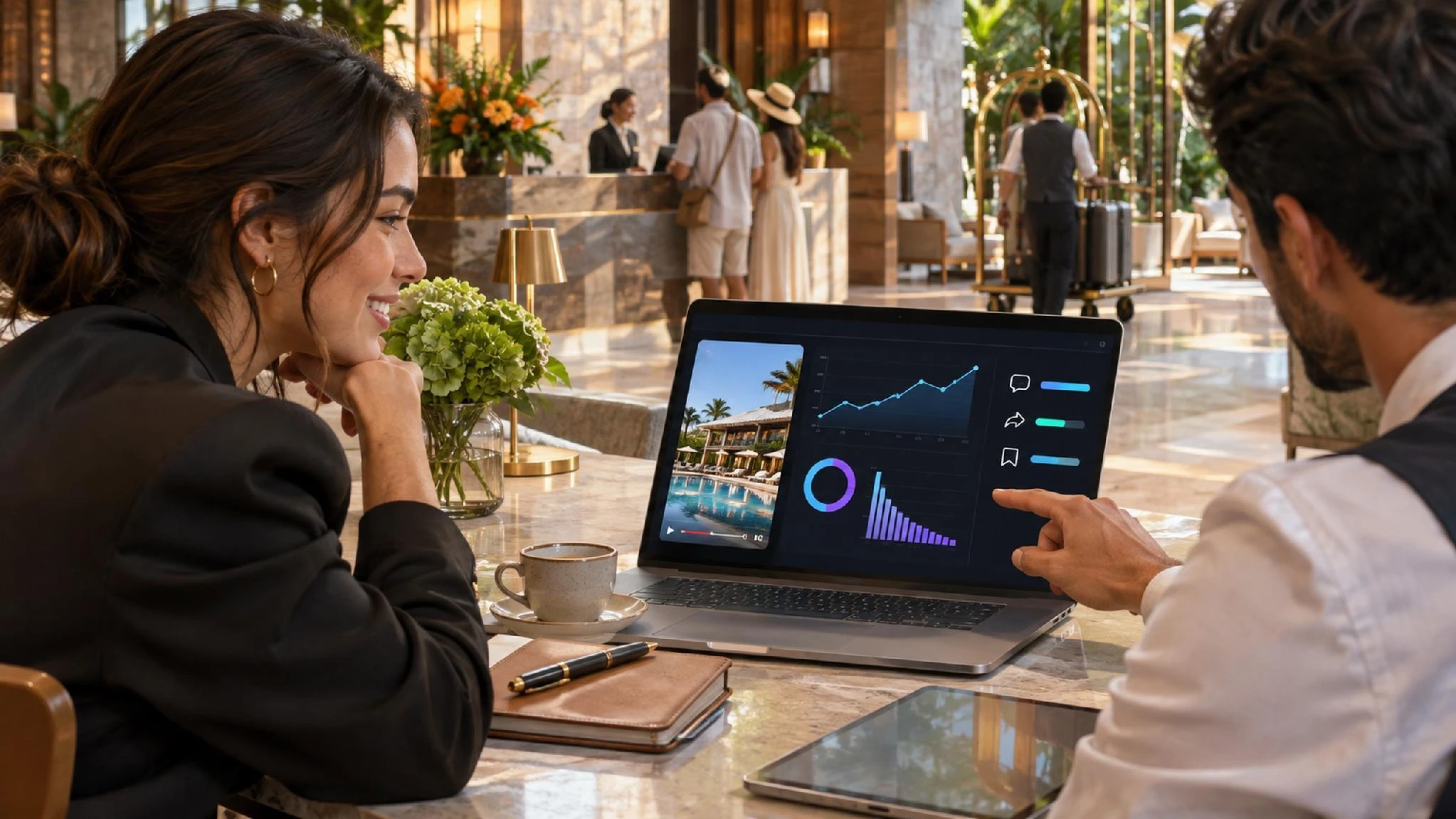
Watch time and average view duration are critical metrics for evaluating content quality. If a three-minute room tour video has an average view duration of only fifteen seconds, the video is failing to retain audience attention. By analyzing audience retention graphs provided by platforms like YouTube, marketers can identify the exact moment viewers lose interest and drop off. This data informs editing decisions for future videos, ensuring a faster pace and more engaging visual hooks.
Table 1.4. Key Video Marketing Analytics And KPIs
| Metric Category | Data Point | Strategic Application |
|---|---|---|
| Visibility | Impressions and Reach | Measures top-of-funnel brand awareness and algorithm distribution |
| Retention | Average View Duration | Identifies editing flaws and evaluates overall content engagement |
| Action | Click-Through Rate (CTR) | Evaluates the effectiveness of the Call-to-Action and thumbnail design |
| Financial | Cost Per Acquisition (CPA) | Determines the actual marketing cost to generate a confirmed room booking |
Monitoring Click Through Rates And Goal Completions
The Click-Through Rate (CTR) measures the percentage of viewers who actively clicked the link or CTA button associated with the video. A high CTR proves that the video was persuasive enough to motivate the user to take the desired next step. Marketers can improve CTR by optimizing video thumbnails, writing compelling accompanying text, and ensuring the CTA is highly visible.
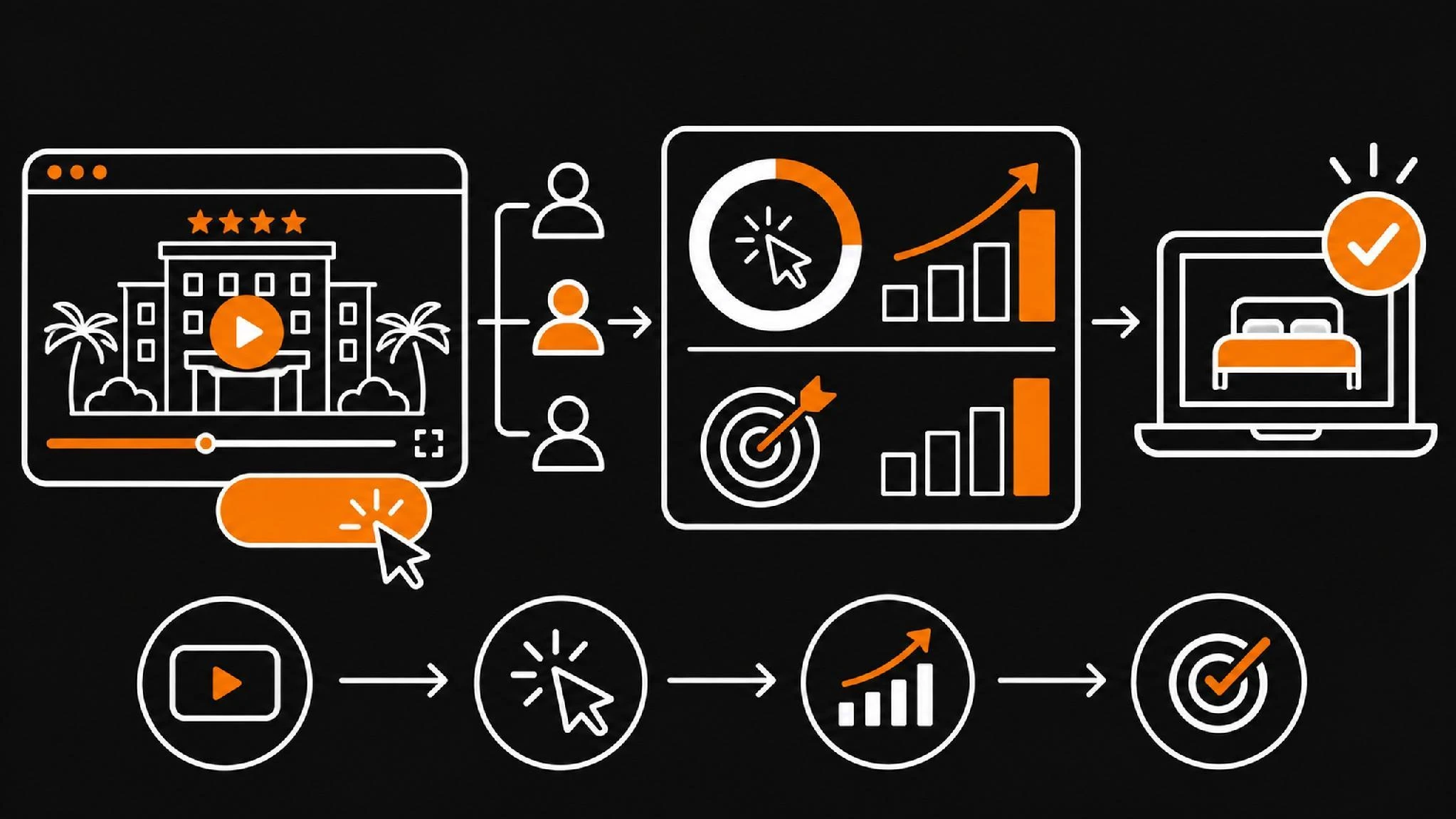
Once the user clicks through to the website, tracking software like Google Analytics 4 (GA4) takes over to monitor goal completions. Marketing teams must configure GA4 to track specific actions originating from video traffic, such as newsletter signups, contact form submissions, or finalized eCommerce room transactions. This end-to-end tracking proves the exact commercial value generated by specific video campaigns.
Calculating The True Financial Return On Ad Spend
When running paid video marketing campaigns, calculating the Return on Ad Spend (ROAS) is the ultimate determinant of commercial success. ROAS is calculated by dividing the total revenue generated by the campaign by the total cost of the advertising spend. If a $1,000 video ad campaign generates $5,000 in direct room bookings, the ROAS is an exceptional 500%.
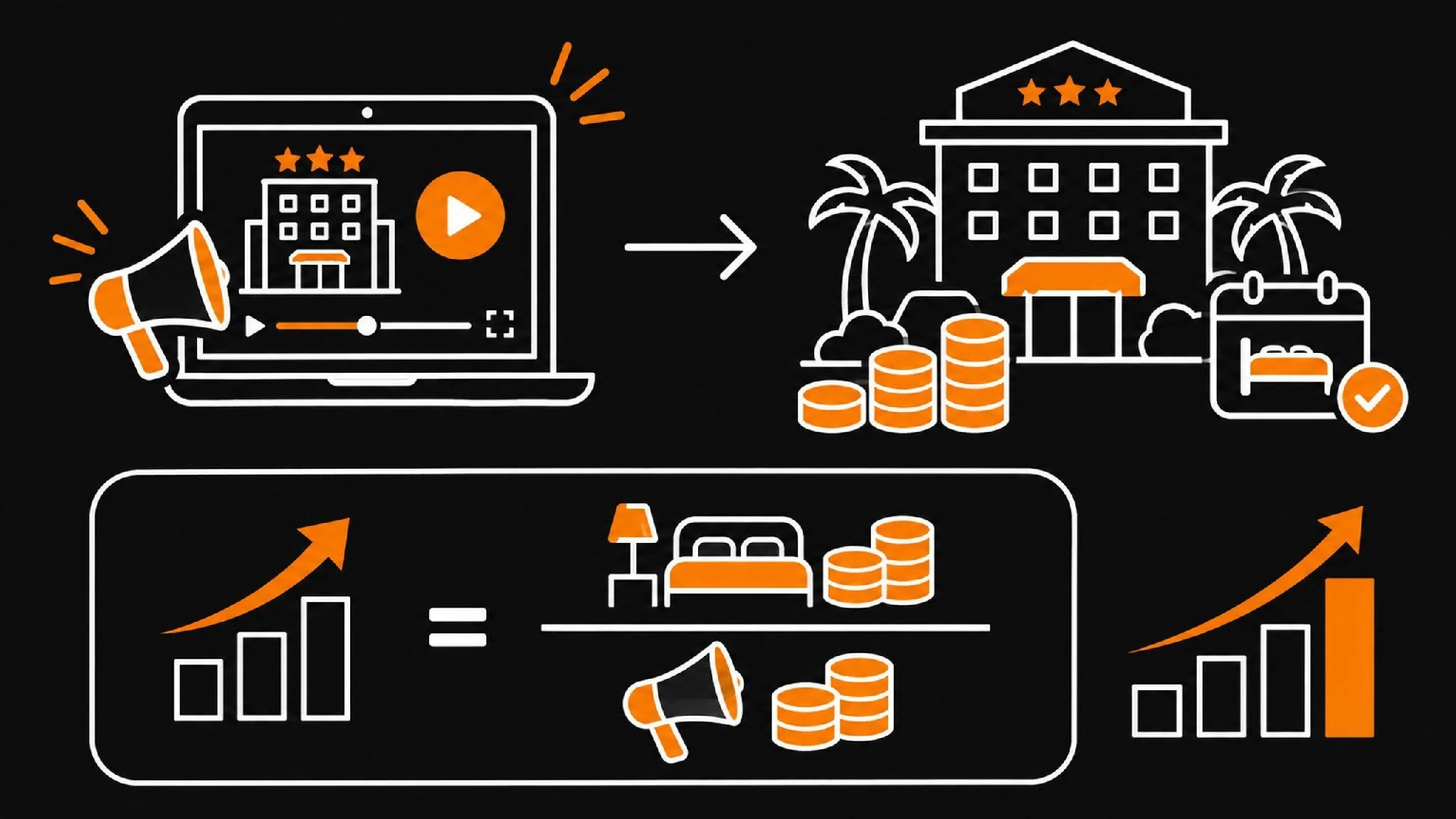
Advanced marketing teams utilize multi-touch attribution models to distribute revenue credit across the entire customer journey accurately. A consumer might watch a YouTube video, click a Facebook retargeting ad days later, and finally book via a direct brand search. Multi-touch attribution ensures the initial video interaction receives appropriate financial credit for initiating the conversion pathway. By obsessively tracking these financial metrics, revenue teams can make precise, data-driven decisions regarding future video production budgets.
Conclusion
Hotel video marketing is an essential strategic discipline that drives direct bookings by providing authentic, transparent, and immersive digital experiences. By producing diverse visual assets—ranging from 360-degree virtual tours to short-form TikTok content—properties can intercept high-intent travelers across every phase of the booking funnel. Mastering technical video SEO, dominating algorithmic social media platforms, and rigorously tracking eCommerce analytics ensures that your visual marketing efforts translate directly into commission-free revenue growth.
Ready to transform your digital strategy and maximize your direct revenue? Engineering a highly visible, high-converting digital footprint requires specialized hospitality expertise and continuous technical optimization. Partner with the performance marketing professionals at ROI300 to build, automate, and scale a comprehensive video SEO and digital advertising ecosystem. Contact ROI300 today to dominate local search results and turn passive video viewers into lifelong, high-value direct guests.