


Operating a modern accommodation property requires balancing the reality of unexpected cancellations against the goal of achieving maximum occupancy. When nearly one in five confirmed reservations results in a cancellation or no-show, empty rooms translate directly into lost operational revenue. This blog will provide a comprehensive guide to hotel overbooking, exploring calculated overselling limits, guest relocation policies, and the technology needed to protect property profitability.
Understanding The Strategy Behind Hotel Overbooking
Hotel overbooking is the calculated commercial practice of confirming more room reservations than a property physically contains for a specific date. While it introduces operational friction, intentional overselling protects business margins against volatile guest cancellations.
Deliberate Strategy Versus Accidental Double Booking
It is vital to distinguish between a deliberate overbooking strategy and an accidental double booking error. An accidental double booking occurs when broken software integrations or manual data entry errors cause the same room to be sold twice across different channels. These technical errors disrupt front desk operations, damage brand reputation, and reflect poor inventory management.
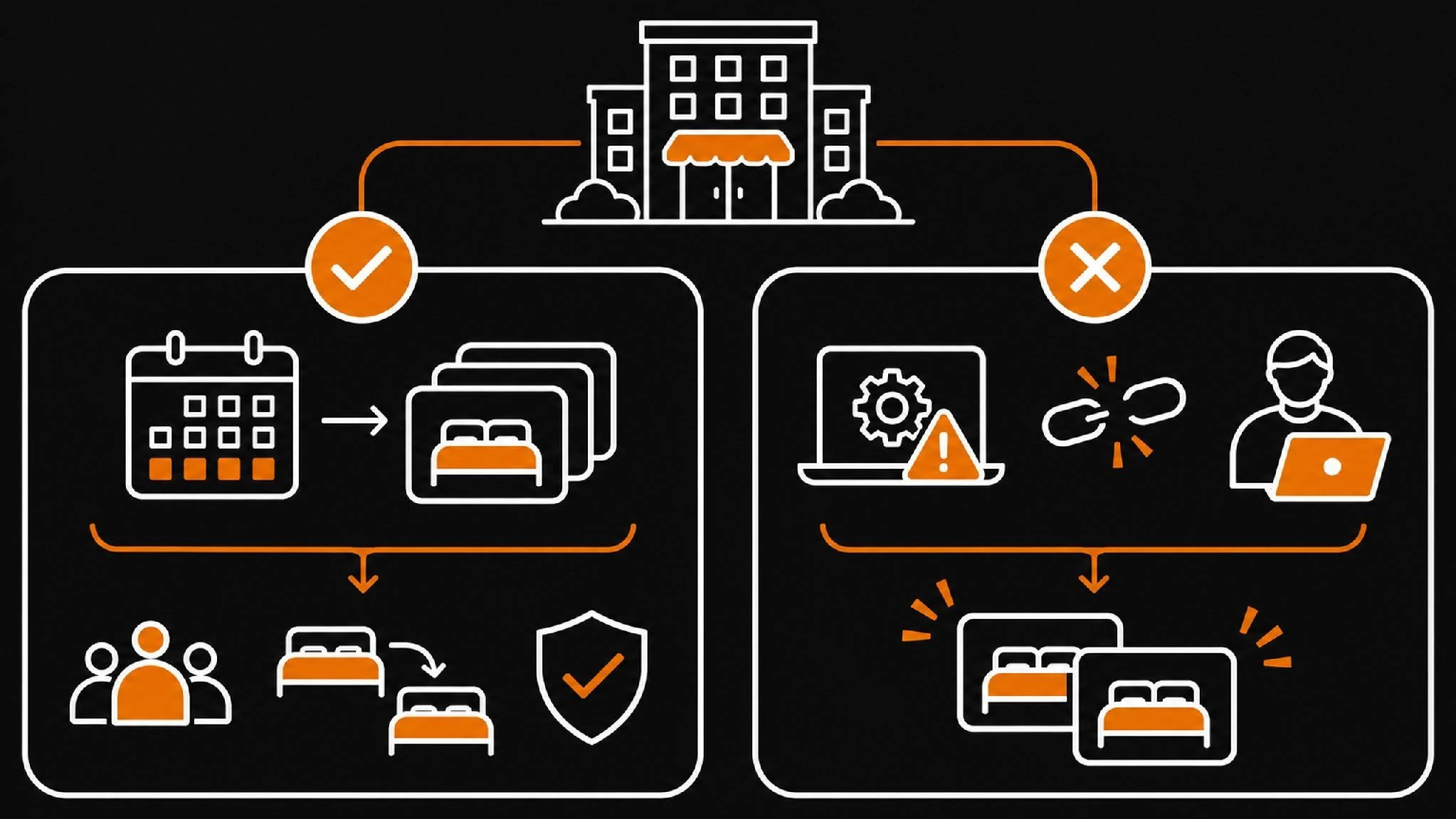
In contrast, strategic overbooking is a calculated revenue management decision practiced by approximately 90% of major hotel chains. Revenue managers analyze historical datasets to forecast what percentage of confirmed travelers will fail to arrive. By accepting reservations beyond 100% physical capacity based on statistical probabilities, hotels protect their baseline income.
When executed properly, intentional overselling ensures that a hotel operates at full physical capacity after cancellations occur. The objective is never to turn away guests, but to ensure that zero rooms sit vacant on dates with peak market demand.
The Financial Rationale And RevPAR Impact
The primary driver behind hotel overselling is the perishable nature of lodging inventory. An unsold room on any given night cannot be stored or resold tomorrow; the revenue opportunity evaporates permanently once the night audit finishes. Because fixed operational overhead remains largely unchanged whether a room is occupied or empty, vacant rooms reduce gross operating profit margins.
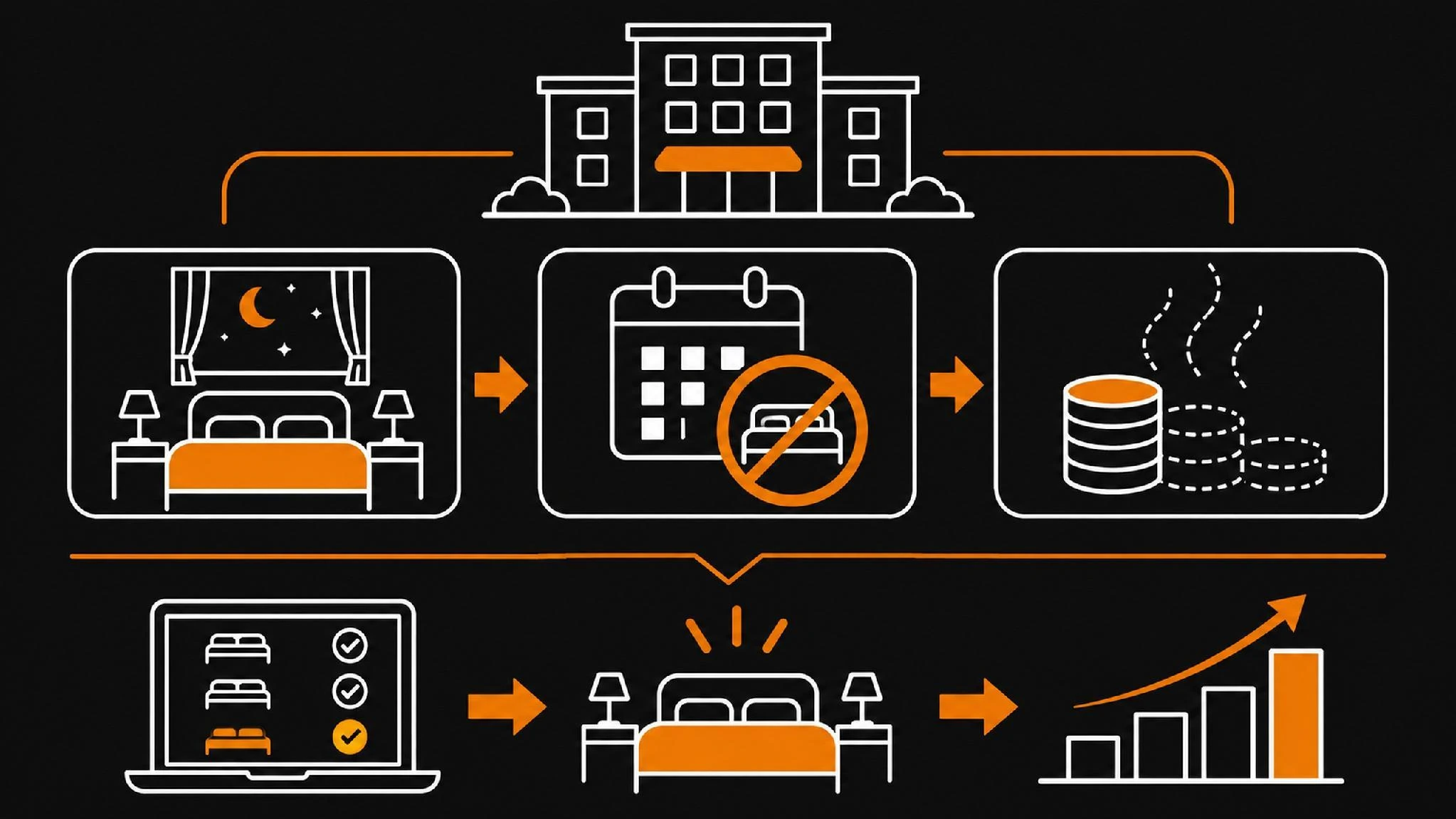
Industry performance metrics reveal that the global average hotel cancellation rate sits at 19.15%. This means roughly one out of every five bookings will cancel before arrival. Furthermore, standard no-show rates range between 5% and 15% depending on location, property type, and season. During peak demand periods, conventions, or severe weather events, last-minute cancellations can climb to 25%.
Without a calculated overbooking buffer, hotels face substantial revenue leakage on dates when they could easily achieve full occupancy. Overselling allows properties to capture advance bookings from committed travelers to replace anticipated cancellations. Financial modeling indicates that executing a disciplined overbooking strategy increases annual hotel revenue by 3% to 5%.
The Mathematics And Data Science Of Overselling
Successful overbooking relies on statistical probability and predictive analytics rather than guesswork. Properties must evaluate historical data across multiple operational variables to determine safe overselling thresholds.
Analyzing Cancellation Curves And No-Show Trends
Setting accurate overbooking thresholds requires analyzing at least 12 to 24 months of verified historical booking data. Revenue managers must examine patterns across specific days of the week, distinct seasons, local event schedules, and booking windows. A Tuesday night corporate pattern will exhibit completely different cancellation dynamics than a Saturday night leisure getaway.

Underwriters of overbooking models must also evaluate performance variations across different distribution channels. Direct bookings made via the hotel website experience significantly lower no-show rates compared to third-party Online Travel Agency (OTA) reservations. Guests who book non-refundable rates or provide advance deposits demonstrate greater arrival commitment than guests holding unverified reservations.
Understanding the unique drop-off rates for each market segment prevents hotels from overselling blindly. By weighting historical cancellation curves against current on-the-books pace, revenue management software forecasts expected arrival volumes with precision.
Setting Safe Overbooking Thresholds
To establish a safe overbooking limit, hoteliers evaluate the cost of an empty room against the anticipated cost of walking a displaced guest. An empty room costs the hotel its net room contribution margin plus all forfeited ancillary spending. Conversely, walking a guest incurs direct expenses, including alternative accommodations, transportation, compensation perks, and potential brand damage.
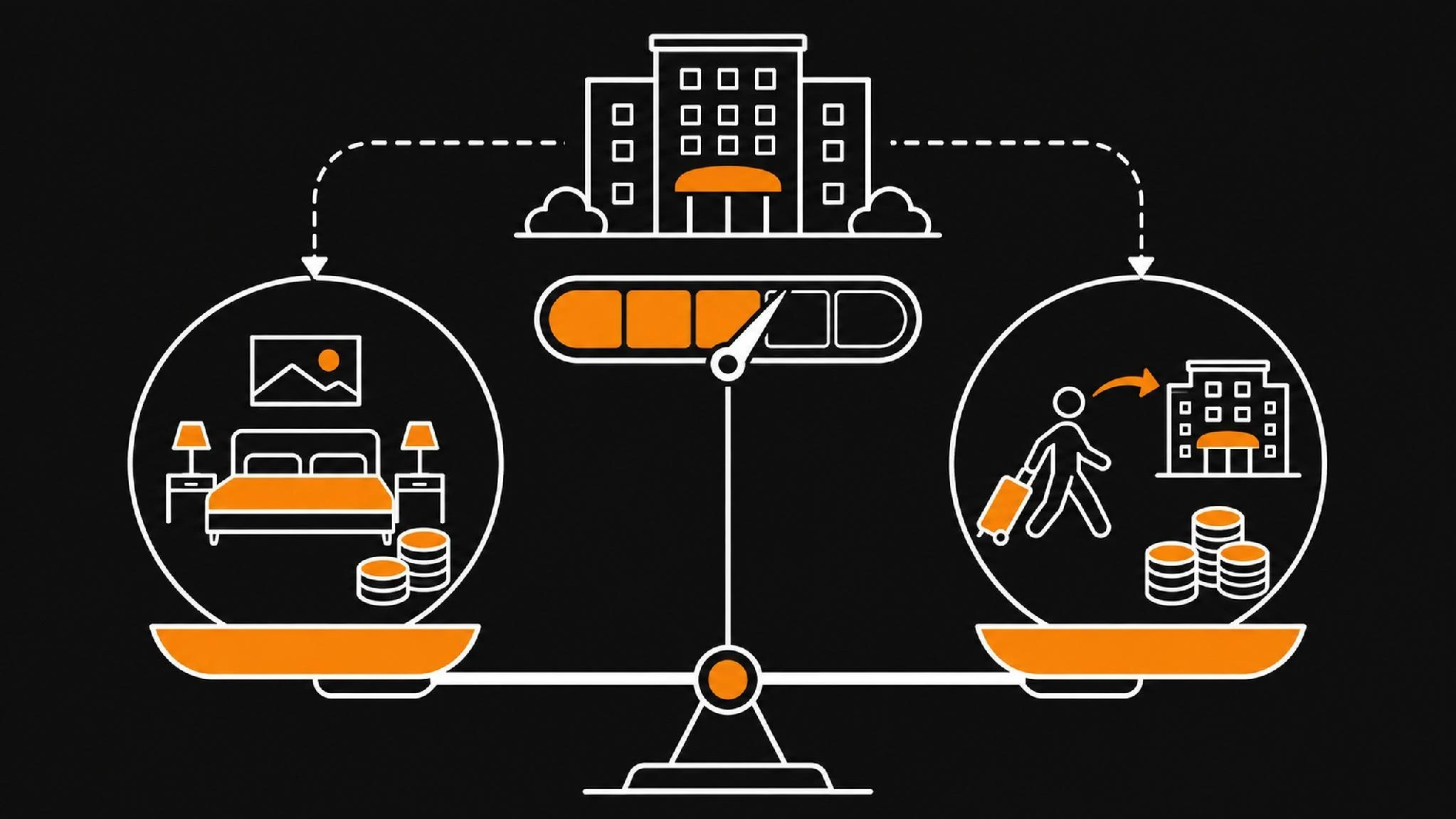
The optimal overbooking level occurs where the marginal revenue of selling an additional room equals the expected marginal cost of walking a guest multiplied by the probability of an overstay. If a property overbooks too conservatively, it leaves valuable rooms empty and forfeits profit. If it overbooks too aggressively, it walks excessive numbers of guests, damaging customer loyalty and incurring steep relocation costs.
Table 1.1. Recommended Overbooking Ranges By Property Type
| Property Classification | Typical Overbooking Range | Primary Operational Rationale | Key Volatility Driver |
|---|---|---|---|
| Commercial Business Hotels | 10% to 15% on weekdays | Corporate travelers change itineraries frequently | Last-minute corporate schedule changes |
| Leisure Resorts | 5% to 10% during peak seasons | Guests plan vacations well in advance | Weather conditions and flight disruptions |
| Airport Properties | 15% to 20% year-round | Heavy transit traffic and missed flight connections | Airline delays and re-routing issues |
| Extended Stay Properties | 3% to 7% monthly | Long lengths of stay reduce turnover volatility | Project timeline extensions |
| Urban Boutique Properties | 6% to 10% on weekends | Strong leisure demand with moderate cancellations | Regional drive-market changes |
Legal Considerations And Distribution Agreements
While hotel overbooking is an established commercial practice worldwide, the legal rights of displaced guests and the obligations of property owners vary by geographic jurisdiction. Hoteliers must understand their regulatory environment to avoid severe legal sanctions.
Consumer Protection Standards Across Jurisdictions
In the United States, there is no single federal statute that governs private hotel overbooking practices or mandates specific compensation formulas. Instead, overbooking disputes fall under state contract laws, regional consumer protection statutes, and common-law principles. A confirmed reservation accompanied by a deposit or credit card guarantee legally constitutes a binding contract between the guest and the lodging establishment.

If a hotel breaches this contract by failing to provide a room, state consumer protection laws require the property to make the guest whole. In practice, regulatory bodies expect the hotel to secure comparable alternative accommodations and cover all reasonable incidental expenses. If a hotel systematically oversells without providing adequate relocation assistance, it risks deceptive trade practice enforcement from state regulators.
Consumer protection laws within the European Union are significantly more protective of traveler rights than those in North America. Under European legal traditions, failing to honor a confirmed reservation is treated as a direct breach of contract. In countries like France, Germany, and Spain, hotels that walk guests are legally responsible for all consequential damages, including paying the full price difference for a higher-tier replacement property.
Contractual Obligations Under OTA Agreements
Beyond statutory legislation, hotels are bound by strict bilateral contracts signed with major distribution intermediaries like Expedia and Booking.com. These platforms enforce rigid anti-walking policies to protect their consumer brand reputation.
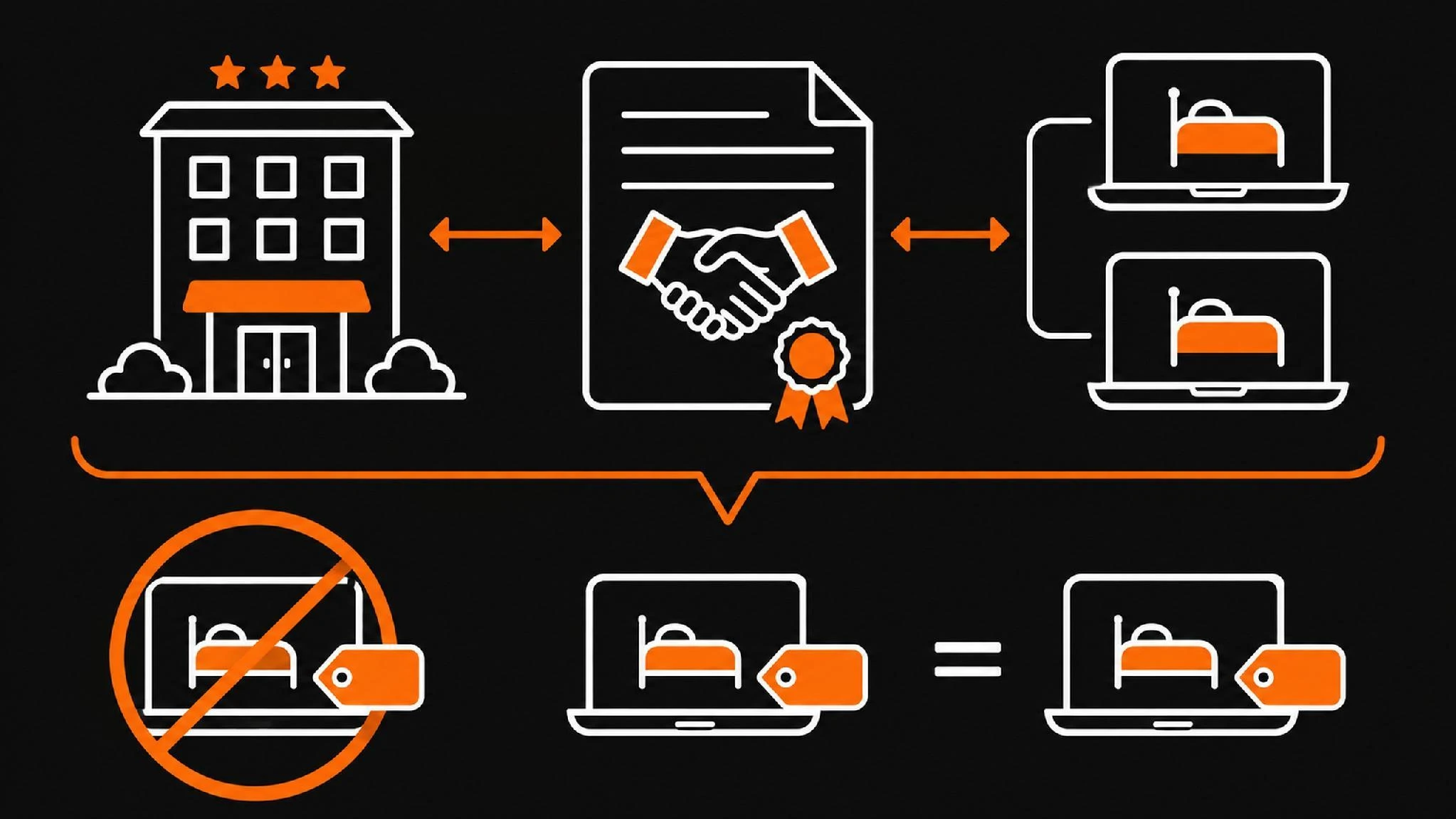
Under standard OTA supplier agreements, if a hotel walks a guest who booked through their platform, the hotel must provide alternative accommodation of equal or higher star rating. The original hotel is contractually obligated to pay the full cost of the alternative room, cover guest transportation, and pay the OTA its standard commission on the original reservation. If the alternative accommodation costs more than the original rate, the walking hotel must absorb the financial variance.
Repeated, uncoordinated guest walks from OTA channels trigger severe administrative penalties. Distribution platforms will drop the property’s algorithmic search ranking, remove preferred partner badges, or delist the hotel entirely from their marketplaces.
Developing An Effective Hotel Overbooking Policy
To prevent front desk panic and brand erosion, hotels must formalize a comprehensive Standard Operating Procedure (SOP) for managing oversold inventory. Clear guidelines remove confusion and empower operational teams to act decisively.
Establishing Clear Guardrails And Standard Operating Procedures
An overbooking policy must define strict percentage guardrails that prevent properties from overselling beyond their operational capacity to recover. These guardrails should be hardcoded into the Property Management System (PMS) and Central Reservation System (CRS) as maximum allowable thresholds.
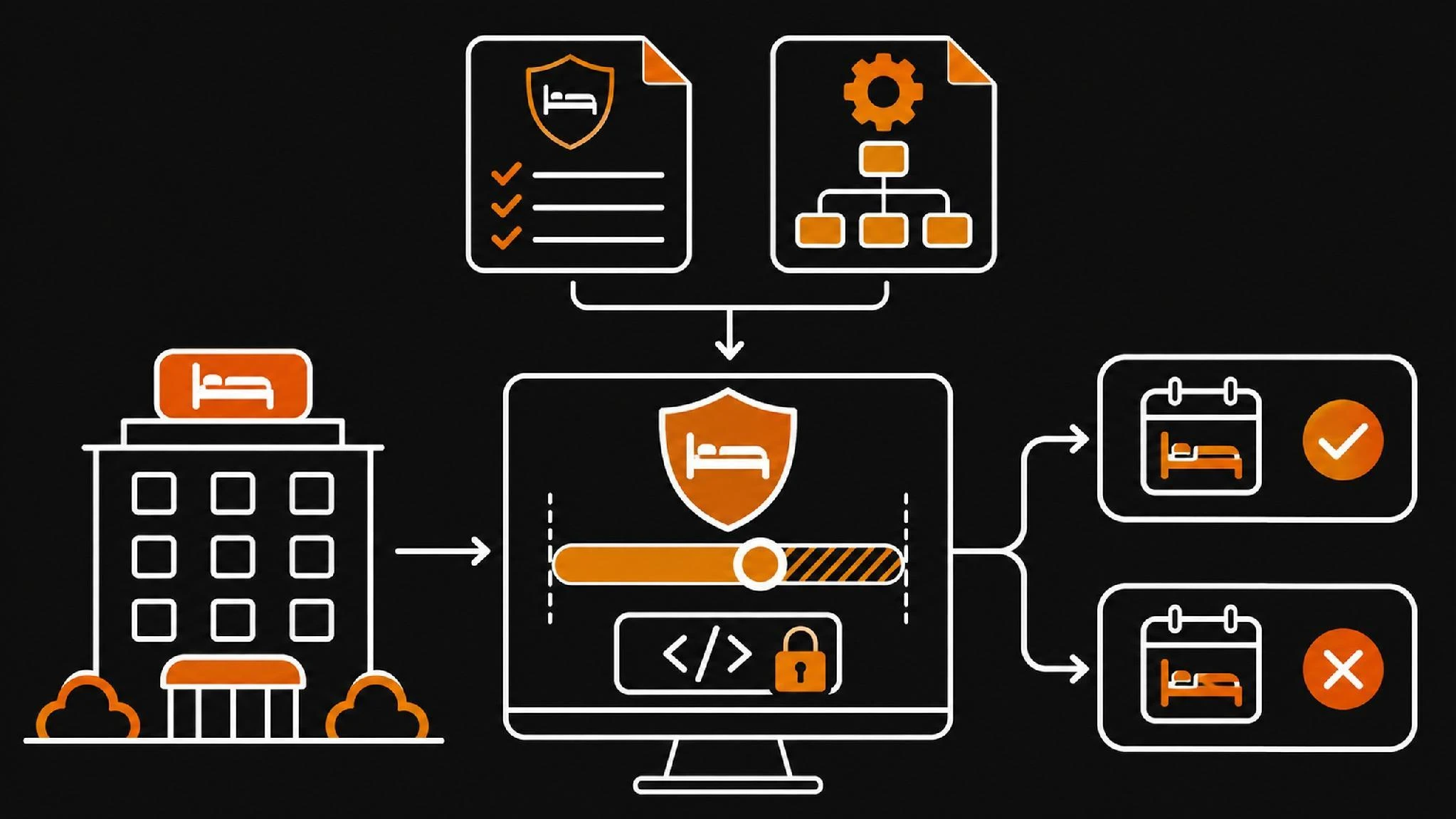
Management should establish tiered overselling limits based on anticipated occupancy intervals. For instance, a property might allow up to 8% overbooking when projected occupancy sits at 90%, but restrict overbooking to 3% once total bookings reach 105% of physical capacity. Capping the total number of allowable book-outs prevents freak market conditions from resulting in unmanageable walkout numbers.
These limits must be reviewed weekly by the revenue manager, general manager, and front office manager. Adjusting caps collaboratively ensures that operational staffing levels can support guest relocation procedures on high-occupancy dates.
Structuring Guest Compensation Packages
A successful overbooking recovery depends on the generosity and transparency of the compensation package offered to the displaced traveler. The objective is to over-compensate the guest to neutralize their immediate frustration and preserve their long-term brand loyalty.

Standard compensation packages should follow a tiered structure based on the severity of the inconvenience and the guest’s loyalty status. Minimally, the hotel must cover the full room rate and applicable taxes for the first night at the comparable property. The hotel should also provide pre-arranged, complimentary private transportation to transfer the guest and their luggage seamlessly.
Properties should provide dining vouchers, complimentary breakfast, and a written letter of apology signed by the general manager. Offering a certificate for a complimentary future stay or a substantial credit of hotel loyalty points turns an operational failure into a positive recovery moment.
Table 1.2. Standard Guest Relocation Compensation Matrix
| Component | Standard Relocation Package | VIP Or High Tier Loyalty Package |
|---|---|---|
| Room Accommodation | 100% paid first night at comparable hotel | 100% paid entire stay at superior luxury partner hotel |
| Ground Transportation | Paid taxi voucher or rideshare credit to partner property | Private executive car transfer with luggage handling |
| Food And Beverage | Breakfast voucher plus $50 dining credit | Complimentary full dining experience at partner venue |
| Future Stay Recovery | 25% discount voucher on next direct reservation | Certificate for two complimentary nights on future stay |
| Loyalty Restitution | Standard points credit for the missed night | 10,000 to 25,000 bonus points deposited immediately |
| Executive Contact | Assistant Front Office Manager greeting and apology | General Manager personal phone call within 24 hours |
Guest Relocation Protocols: Who To Walk And Who To Protect
When an overbooked hotel reaches physical capacity and all remaining arrivals are present, management must decide which specific reservations to honor and which to relocate. This selection process must follow a strict, strategic hierarchy.
The Protected Guest Hierarchy
Certain traveler categories must be placed on a strict do-not-walk list within the property management system. Displacing these guests causes disproportionate financial, legal, and reputational damage to the hotel enterprise.
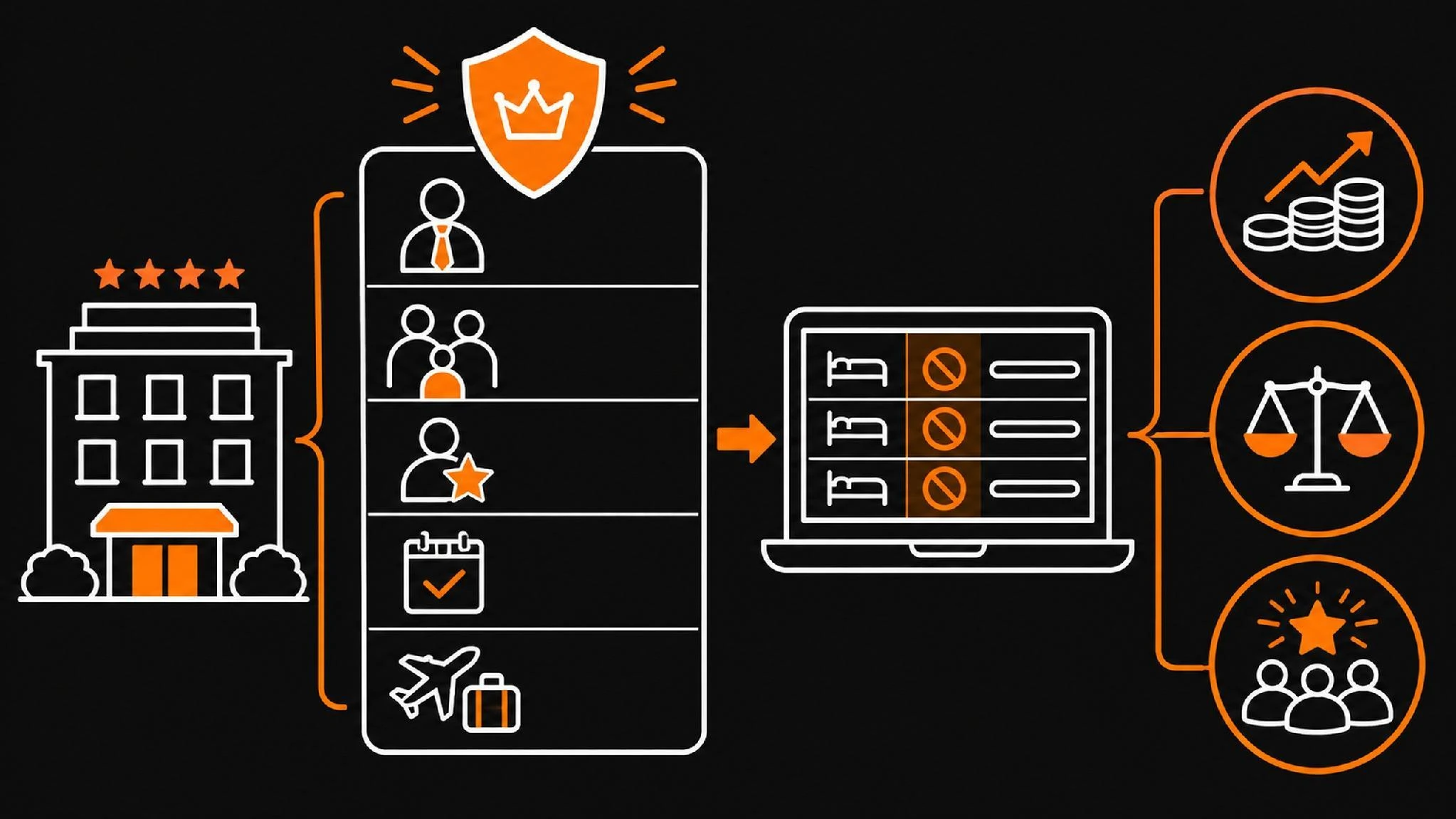
The highest tier of protection belongs to elite loyalty program members and frequent corporate travelers. These guests represent recurring, high-margin lifetime value and possess significant corporate influence. Walking an elite loyalty guest shatters brand trust and can cause corporate travel managers to pull multi-million dollar corporate accounts from the hotel’s portfolio.
Direct website bookers must also receive priority protection over third-party arrivals. Guests who booked directly through your proprietary channel represent the most profitable segment of your business. Walking direct bookers trains them to use OTAs in the future, destroying your direct distribution efforts.
Guests who have reserved premium specialty suites, booked multi-week stays, or arranged specialized on-property experiential packages should remain in-house. These reservations generate superior ancillary revenue margins that the hotel cannot afford to forfeit.
Identifying Potential Book Out Candidates
When identifying which guests to walk, the front office team must evaluate arrivals systematically to locate reservations that present the lowest commercial risk.
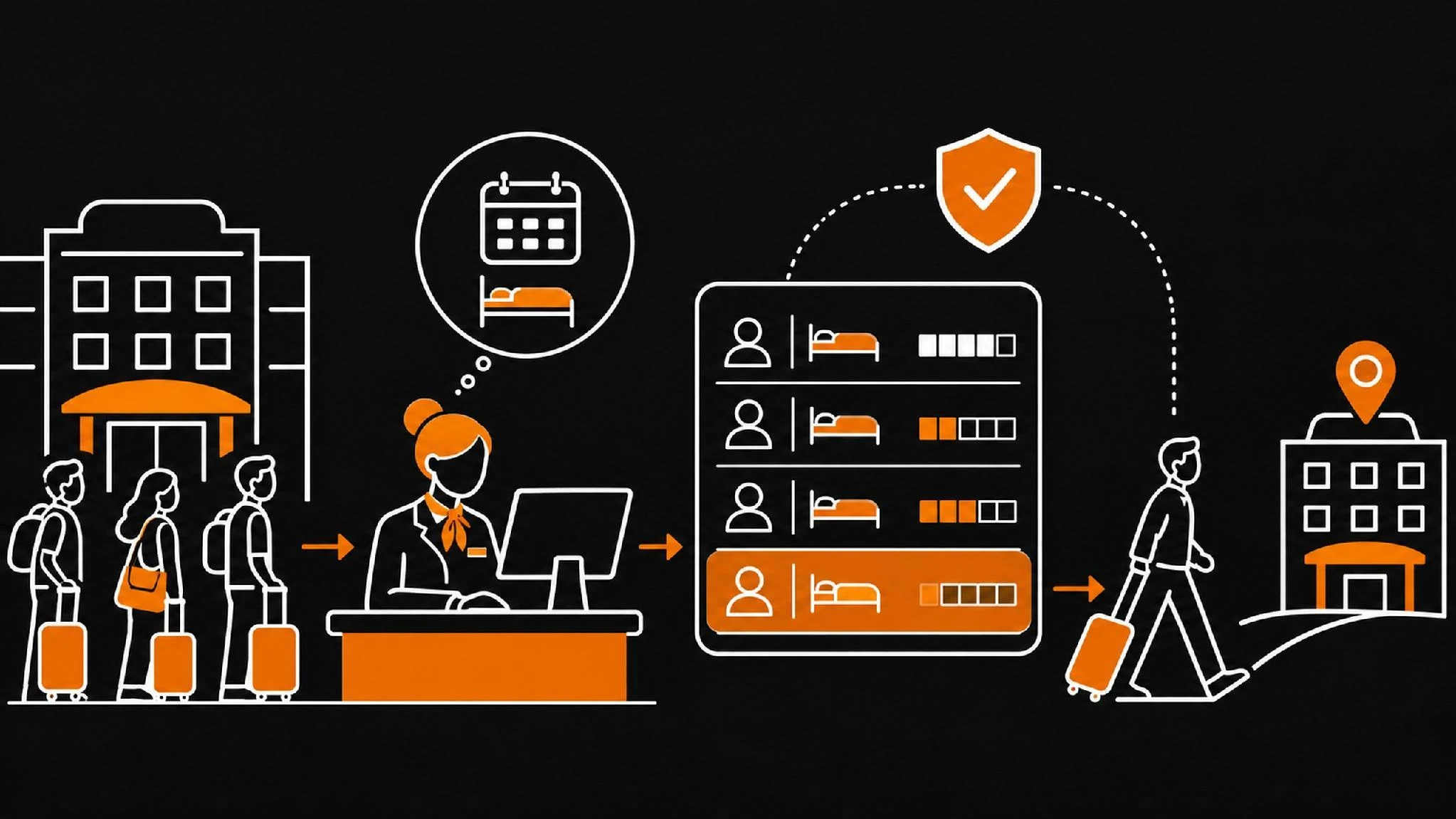
Ideal book-out candidates include:
- Single-night stays arriving late in the evening without complex travel arrangements.
- First-time leisure travelers who booked a baseline room category through a third-party OTA channel.
- Reservations booked without an advance deposit, pre-payment, or verified corporate billing authorization.
- Travelers who have not submitted specific room location requests or special accessibility accommodations.
Selecting single-night bookings reduces the operational headache of managing multi-day split stays or coordinating intermediate return transfers. Relocating a one-night guest requires only a single checkout and settlement cycle, minimizing ongoing friction for both the guest and the front desk team.
Front desk agents must also cross-reference guest notes to screen for sensitive milestones before finalizing a relocation list. Guests celebrating weddings, honeymoons, anniversaries, or birthdays must be protected under all circumstances.
Front Desk Execution And Service Recovery
The success of an overbooking strategy depends on the interpersonal skills of the front office staff. How a relocation is communicated determines whether a guest leaves as an understanding partner or an outraged critic.
Scripting The Relocation Conversation
Front desk staff must be trained with clear, professional talking points that frame the relocation around solutions rather than operational failures. The interaction must take place away from other checking-in guests to prevent secondary panic in the lobby queue.

The front desk agent should greet the guest warmly, confirm their reservation details, and invite them into a private office or quiet lounge area. The agent should state the situation directly without relying on technical jargon or blaming software algorithms. The conversation must lead immediately with the resolution and the premium upgrades secured on their behalf.
A professional conversational framework sounds like: “Mr. Davis, thank you for your patience today. While reviewing our arrivals, we identified an unforeseen maintenance issue affecting your room category. Because we refuse to compromise your comfort, our General Manager has personally arranged an upgraded suite for you at our luxury partner hotel, the Grand Plaza, entirely at our expense. We have arranged private transportation to take you there now, covered your evening dinner, and prepared a complimentary stay certificate for your return visit.”
Transportation Logistics And The Follow Up Call
Once the guest accepts the relocation arrangement, the hotel must execute the physical transfer with precision. The original hotel owns the logistical process until the guest is safely checked into their new room.

The front desk team must contact the receiving hotel’s front office manager directly to confirm that room keys are cut, billing is routed to the master account, and the guest profile reflects VIP status. The bell staff must take custody of the guest’s luggage, load it into a pre-arranged vehicle, and instruct the driver regarding the destination.
The property must execute a systematic post-walk follow-up to solidify the relationship and prevent negative public reviews. The General Manager or Director of Guest Services must place a personal telephone call to the relocated guest the following morning.
During this conversation, the executive should verify that the partner hotel’s accommodations met expectations and ensure the guest encountered zero billing issues at checkout. A thoughtful, personal follow-up call often turns an initially negative experience into an impressive demonstration of customer service excellence.
Technology Solutions For Inventory Management
Modern hotel revenue management relies on integrated technology stacks to execute complex overbooking models. Advanced software automates inventory adjustments, minimizing human error and maximizing net revenue.
Integrating Channel Managers And Property Management Systems
A cloud-based channel manager is the primary defense against accidental double bookings and uncontrolled overselling. The channel manager connects your central property management system directly to every connected distribution platform, including Booking.com, Expedia, global distribution systems, and your direct website engine.
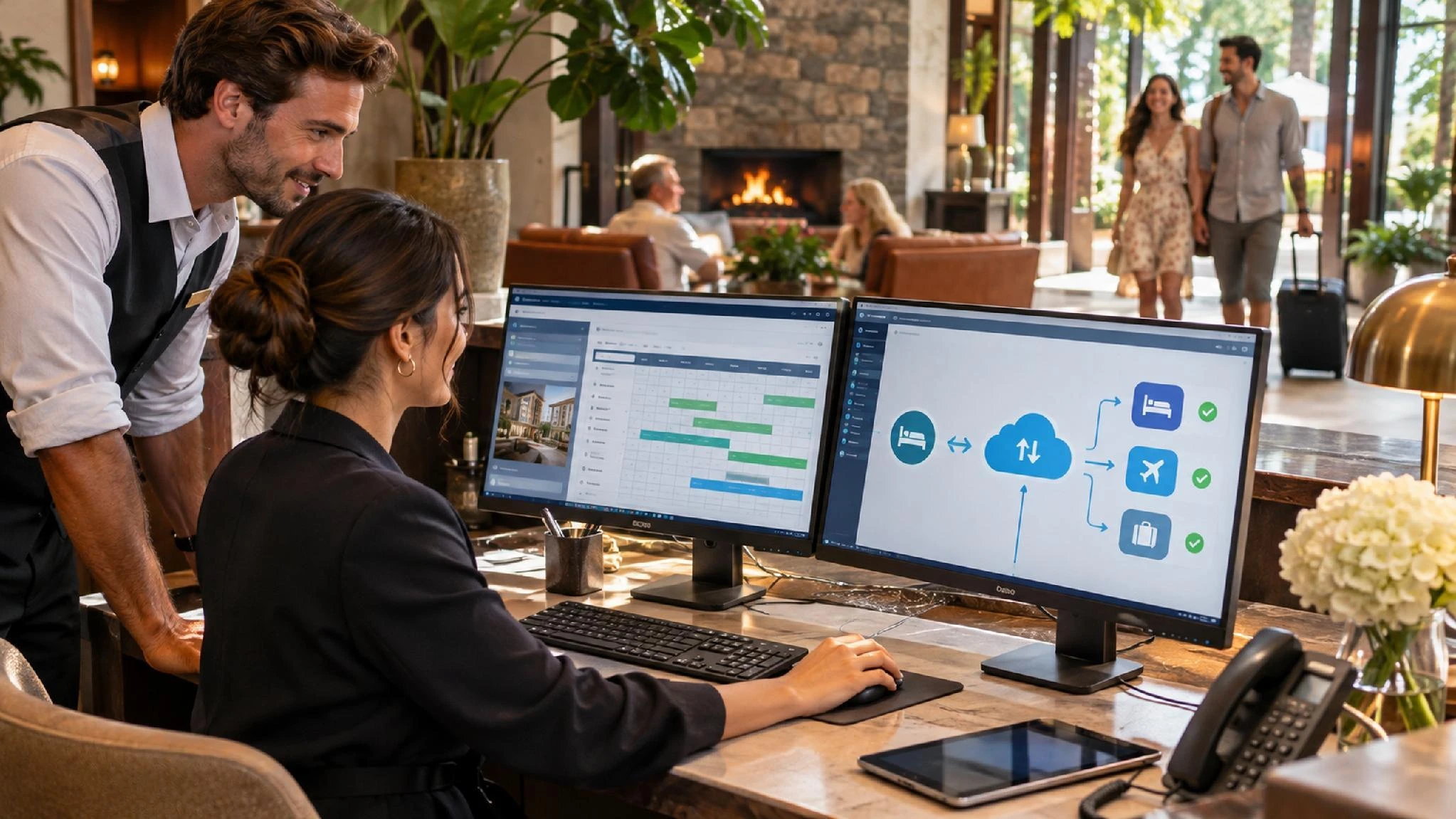
When a reservation is confirmed on one channel, the channel manager decrements available inventory across every other connected channel simultaneously. This real-time bi-directional data flow ensures that your property only sells rooms within your predetermined overbooking parameters.
The central Property Management System serves as the operational execution hub for daily overbooking strategies. Modern hospitality PMS platforms feature dedicated overbooking modules that track inventory levels against physical room capacities in real time. These modules alert staff to execute complimentary operational room upgrades when lower-tier rooms are oversold, keeping guests on property.
Leveraging Revenue Management Systems With Predictive Analytics
Advanced Revenue Management Systems (RMS), such as IDeaS and Duetto, utilize machine learning algorithms to optimize overbooking percentages continuously. These platforms analyze millions of real-time data points, including historical wash rates, flight arrivals, local macroeconomic trends, and competitive price matrices.

Rather than relying on human revenue managers to update spreadsheets manually, the RMS calculates optimal overbooking thresholds for every room class every single hour. The software can detect subtle changes in consumer booking velocity, instantly tightening or loosening overselling caps to capture emerging market demand.
Long-term overbooking success also requires continuous retrospective analysis through specialized business intelligence tools. These platforms aggregate historical reservation data to calculate exact wash factors across specific market segments, identifying shifts in corporate booking patterns before they hurt margins.
Measuring Overbooking Success And Essential KPIs
To maintain strategic balance, hotels must establish performance measurement frameworks that evaluate financial gains against operational fallout. Tracking specific metrics ensures that overbooking strategies support long-term business objectives.
Tracking Financial Lift And Walking Frequency
Evaluating an overbooking strategy begins by calculating the net RevPAR improvement directly attributable to inventory overselling. Revenue managers must isolate the room revenue generated by bookings accepted beyond 100% capacity and compare that figure to baseline performance on non-overbooked dates.
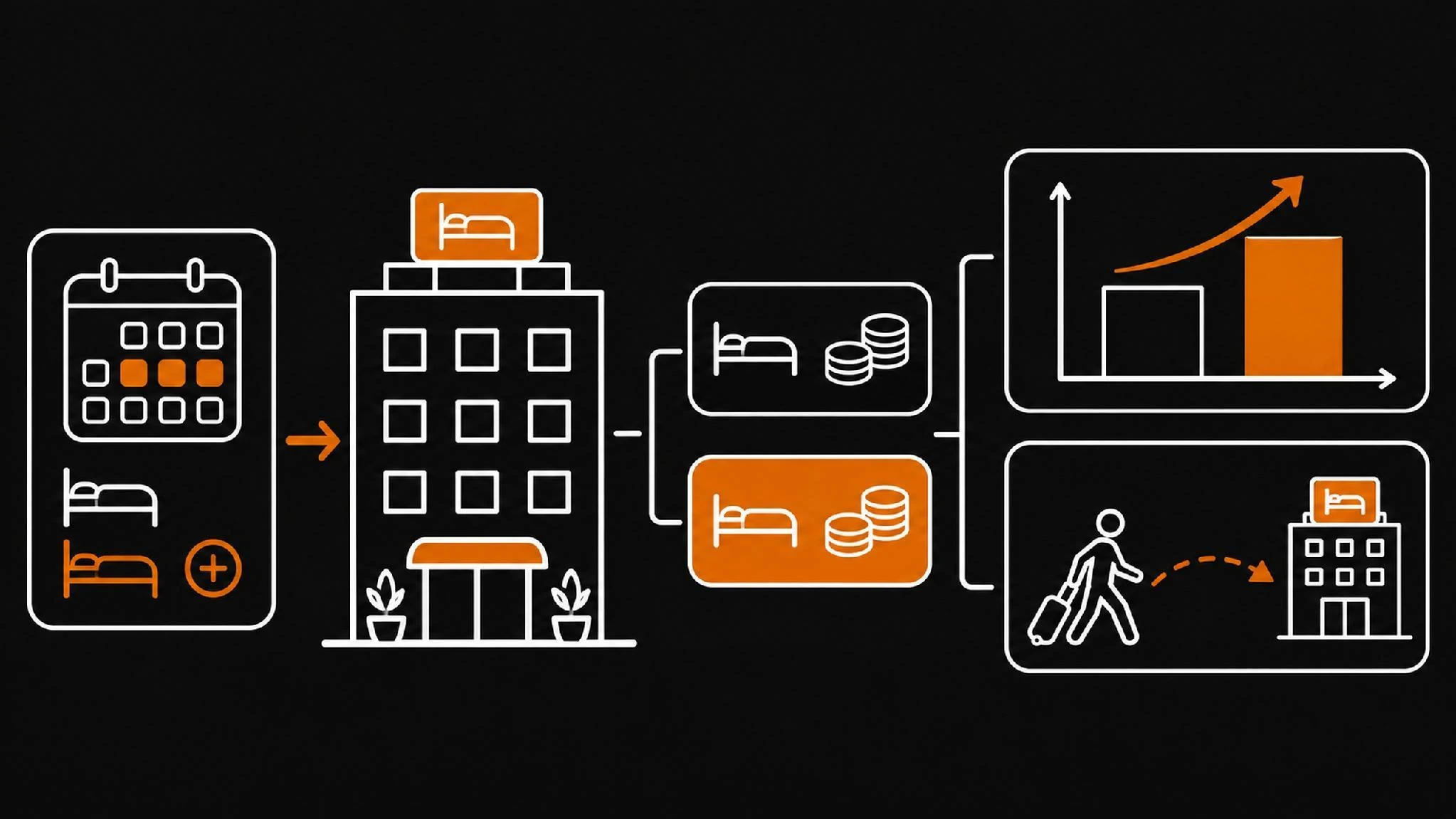
This analysis must factor in net revenue yields, deducting all third-party OTA commissions and transaction processing fees. Calculating net RevPAR ensures that the property evaluates the actual cash flow retained by the business rather than top-line gross numbers that ignore distribution costs.
Management must also track the absolute number and percentage of guests walked on a monthly, quarterly, and annual basis. Industry benchmarks suggest that an efficient overbooking program should maintain a walk ratio below 0.1% to 0.2% of total arrivals.
Table 1.3. Key Performance Indicators For Overbooking Audits
| Performance Metric | Ideal Operational Benchmark | Analytical Calculation Method | Strategic Significance |
|---|---|---|---|
| Occupancy Rate Achievement | 98% to 100% on peak dates | (Total Occupied Rooms / Total Physical Rooms) * 100 | Verifies success in eliminating vacant room spoilage |
| Walk Ratio | Below 0.15% of total arrivals | (Total Relocated Guests / Total Arrived Guests) * 100 | Measures balance between aggression and control |
| Net Revenue Yield | Positive 3% to 5% annual lift | Incremental Overbooked Revenue minus Walk Expenses | Proves financial viability of the overbooking program |
| Displaced Guest Retention | Above 40% over 24 months | (Returning Relocated Guests / Total Relocated Guests) * 100 | Evaluates effectiveness of service recovery protocols |
| Average Cost Per Walk | Under $250 across all tiers | Total Relocation Costs divided by Total Walked Guests | Controls variable expenses associated with book-outs |
Using modern CRM software, marketing teams should tag the digital profiles of all walked guests and track their future reservation activity over a 12 to 24-month window. Research indicates that walked guests demonstrate a 10% to 20% lower likelihood of returning to the displacing property if poorly handled. If relocated guests continue to book the property for future trips, it proves that the communication, alternative accommodation, and compensation package successfully preserved the customer relationship.
Conclusion
Recap: Hotel overbooking remains one of the most effective revenue management strategies available to modern hoteliers when executed with data-driven precision. By analyzing historical cancellation patterns, establishing conservative overselling guardrails, implementing structured guest relocation protocols, and deploying integrated channel management software, properties can eliminate vacant room spoilage and maximize their bottom-line profitability. Success requires maintaining equilibrium between aggressive revenue optimization, regulatory compliance, and guest-centric service recovery that protects long-term brand equity.
Ready to maximize your direct revenue and optimize your distribution strategy? Achieving full occupancy without relying on expensive third-party platforms requires a sophisticated digital marketing framework. Partner with the hospitality performance marketing professionals at ROI300 to build, automate, and scale your direct booking engine, reduce costly OTA commissions, and capture high-intent travelers directly. Contact ROI300 today to audit your commercial digital footprint and elevate your property’s profitability.