


Securing credit in the commercial lodging sector requires navigating a specialized underwriting landscape that combines physical real estate with an operating business. Unlike traditional commercial properties with long-term tenant leases, hotel revenues reset every single night, creating a distinct risk profile for capital providers. This blog will provide a comprehensive guide to securing a hotel loan, exploring credit structures, underwriting benchmarks, and the critical steps needed to achieve favorable financing terms.
Understanding The Core Mechanics Of A Hotel Loan
To successfully obtain commercial capital, borrowers must recognize how financial institutions evaluate lodging assets compared to conventional real estate.
The Hybrid Nature Of Hospitality Credit
A hotel loan represents a hybrid financial product that bridges physical asset valuation with active business operations. When a lender evaluates an office building or warehouse, the underwriting focuses on long-term tenant creditworthiness and lease duration. In hospitality, revenue relies entirely on daily occupancy fluctuations, food and beverage sales, and local market demand.

Consequently, lenders review past income statements alongside future market projections to determine financial viability. Underwriters examine operational efficiency, brand equity, and the competence of the management team. This operational exposure means that poor management can directly destroy the underlying real estate value in a matter of months. Borrowers must present both a viable real estate asset and an efficient business model to pass credit committee reviews.
Why Hotel Financing Differs From Traditional Commercial Real Estate
Because hotel inventory is perishable and rooms cannot be stockpiled for future sale, lenders treat hospitality debt with conservative risk parameters. An empty room on a Tuesday night represents permanently lost revenue that can never be recovered. This operational volatility forces lenders to demand higher risk premiums, wider interest rate spreads, and tighter debt coverage covenants than those applied to multifamily or industrial assets.
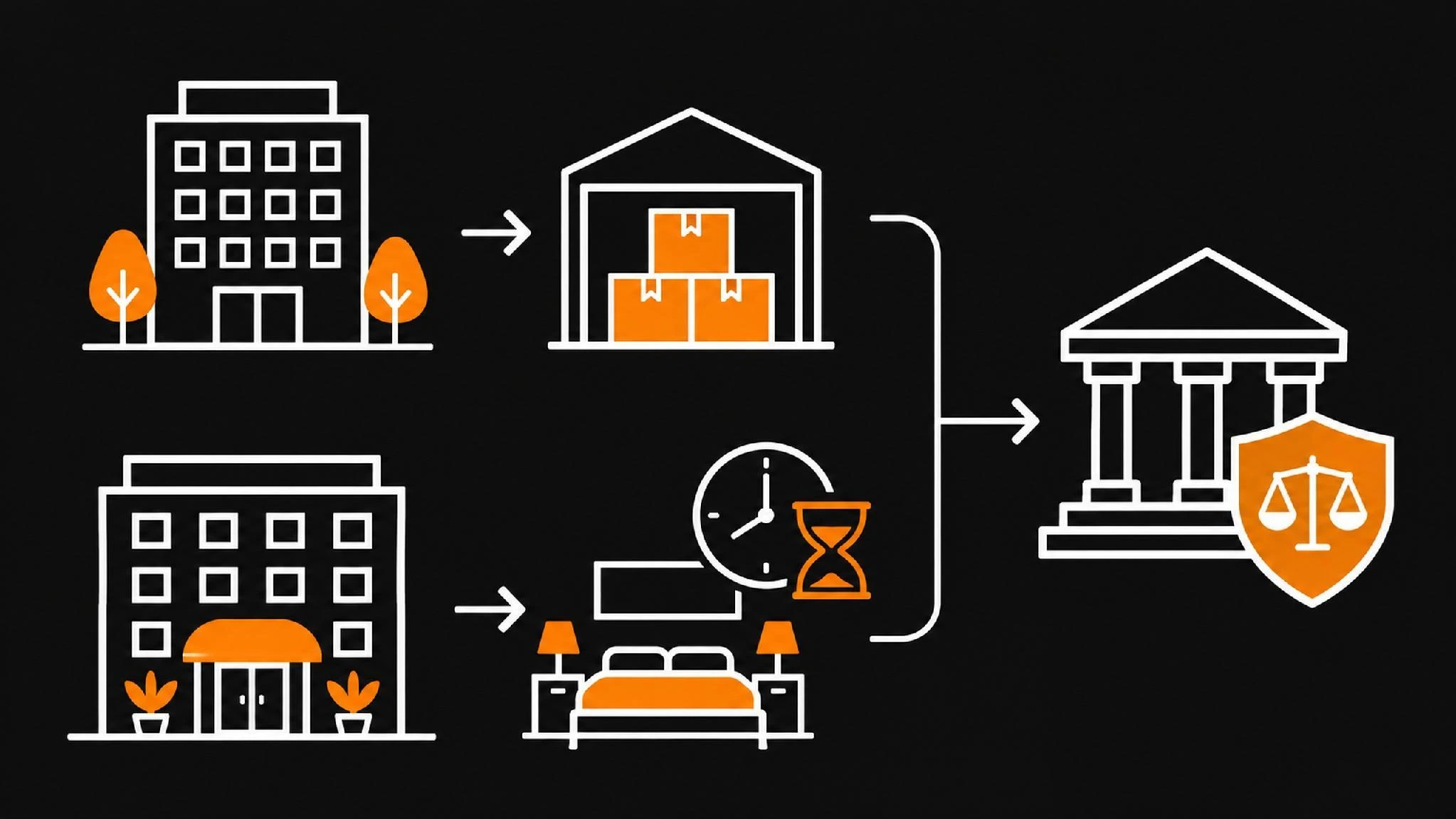
Furthermore, economic downturns impact hotel cash flows faster than any other commercial property type. Corporate travel budgets and discretionary consumer vacations are often the first expenses reduced during periods of macroeconomic uncertainty. Lenders protect their downside exposure by requiring substantial borrower equity and strict cash management reserves. Securing competitive terms demands proving your property can maintain debt service obligations even during severe seasonal or cyclical contractions.
Primary Types Of Hotel Loan Structures Available In 2026
Lenders fund the acquisition, construction, repositioning, and refinancing of hospitality assets through various debt instruments. Understanding the distinctions among these options allows sponsors to build an optimal capital stack tailored to their specific investment lifecycle.
Senior Mortgage Loans And First Lien Debt
Senior mortgages form the foundational baseline of commercial hotel lending, holding the absolute first lien position on the physical real estate. In the event of borrower default or property liquidation, senior lenders possess the legal right to be repaid before any other capital providers receive distributions. Because of this protected legal status, senior loans carry the lowest interest rates and most favorable amortization schedules.

Senior debt is typically extended to stabilized hospitality assets that demonstrate consistent historical cash flows and healthy market penetration. Commercial banks, life insurance companies, and commercial mortgage-backed securities (CMBS) conduits serve as the primary sources for these facilities. Senior loans generally fund between 55% and 65% of the total property value, leaving a capital gap that borrowers must fund through equity or subordinate debt.
Mezzanine Financing And Preferred Equity
When senior lenders enforce conservative leverage caps, sponsors frequently utilize mezzanine debt or preferred equity to complete their capital stack. Mezzanine loans do not place a direct mortgage lien on the physical real estate. Instead, the lender secures their investment by taking a pledge of the ownership equity in the borrowing entity. This structure allows the mezzanine lender to foreclose on company shares rapidly if the borrower defaults on repayment terms.

Preferred equity functions similarly by injecting subordinate capital into the ownership entity in exchange for prioritized cash flow distributions. While preferred equity investors lack traditional foreclosure rights, they frequently retain contractual authority to replace the operating team if financial covenants are breached. Because both mezzanine debt and preferred equity occupy a subordinate position behind the senior mortgage, they carry significantly higher interest rates, often ranging from 10% to 15%.
Construction Loans And Permanent Financing
Developing a hotel from the ground up requires specialized construction loans structured to manage building and lease-up risks. Construction lenders disburse funds in incremental draws based on verified completion milestones rather than providing a lump-sum payment at closing. These loans are almost universally floating-rate facilities requiring personal sponsor guarantees and extensive construction contingency reserves.
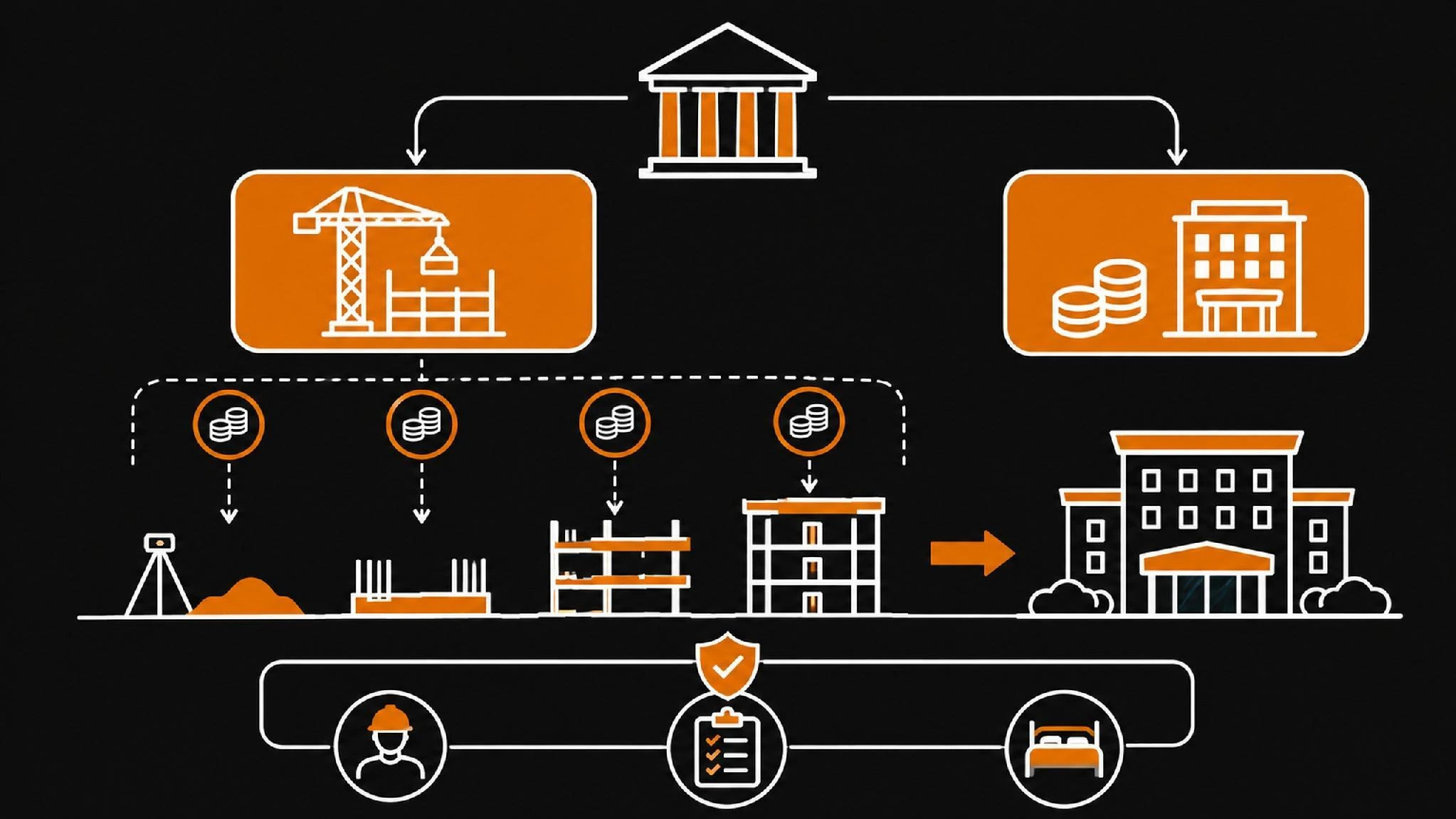
Once the physical construction is complete and the hotel achieves stabilized occupancy, the construction loan is paid off through permanent financing. Some lenders provide combination construction and permanent packages, known as mini-perm loans. These hybrid facilities finance the initial construction phase and automatically convert into a mini-perm mortgage once specific operational benchmarks are satisfied, saving the borrower substantial closing costs.
Commercial Real Estate Bridge Loans
Bridge financing serves as a vital short-term funding mechanism for transitional properties that do not yet qualify for permanent senior debt. Hoteliers utilize bridge loans to acquire underperforming assets, complete property turnarounds, or fund major brand conversions. These loans offer flexible prepayment structures and interest-only payment periods to preserve operating capital during renovations.
Private debt funds and specialized commercial real estate credit firms dominate the bridge lending sector. Because bridge lenders assume higher operational risk on unstabilized assets, they price their capital at wider spreads over reference interest rates. Bridge loans typically feature two to three-year terms with extension options contingent on meeting specific renovation and net operating income milestones.
Government-Backed Small Business Administration Programs
For smaller independent properties and midscale franchise assets, the United States Small Business Administration (SBA) offers accessible financing programs. The SBA 7(a) program provides flexible capital that can be deployed for acquisitions, renovations, or partner buyouts, with loan limits capped at $5 million. This program allows lower down payments, making it popular among individual entrepreneurs and family-owned hotel operators.

The SBA 504 program is tailored specifically for real estate purchases, extensive property modernizations, and ground-up construction projects. This structure pairs a conventional senior lender with a Certified Development Company (CDC) to provide up to 90% financing on eligible project costs. SBA loans offer fixed interest rates and long-term amortization, though they enforce strict borrower eligibility requirements and extensive personal net worth disclosures.
Table 1.1. Comparison Of Hotel Loan Structures And Terms
| Loan Structure | Typical Leverage | Interest Rate Environment | Primary Strategic Use Case |
|---|---|---|---|
| Senior Mortgage | 55% to 65% LTV | Competitive fixed or floating rates | Stabilized property acquisitions and long-term refinancing |
| Mezzanine Debt | 65% to 80% Total Leverage | 10% to 15% floating or fixed | Closing the equity gap on large acquisitions |
| Bridge Loan | 60% to 75% LTC | SOFR plus 350 to 600 basis points | Property repositioning, renovations, and brand transitions |
| SBA 504 Facility | Up to 90% LTC | Below-market fixed rates | Independent owner-operator acquisitions and ground-up builds |
| Construction Debt | 50% to 65% LTC | Prime or SOFR floating spreads | Ground-up developments and major structural expansions |
Critical Financial Metrics Lenders Evaluate
Hospitality underwriters use standardized mathematical formulas to assess credit risk and verify that an asset can support its debt burden. Mastering these financial indicators is essential for structuring a successful loan package.
Net Operating Income And Debt Yield Requirements
Net Operating Income (NOI) serves as the primary cash flow baseline for every hotel loan evaluation. However, underwriters do not simply accept the borrower’s reported accounting profit. Lenders apply standardized operational adjustments, deducting a mandatory management fee (typically 3% of gross revenues) and a capital replacement reserve (typically 4% for Furniture, Fixtures, and Equipment).

Once this adjusted net operating income is established, lenders calculate the debt yield to assess their immediate risk exposure. The debt yield is determined by dividing the property’s adjusted annual net operating income by the total requested loan amount:
Debt Yield=Net Operating IncomeTotal Loan Amount
Debt Yield=
Total Loan Amount
Net Operating Income
Unlike other metrics, the debt yield measures cash-on-cash return independently of the loan’s interest rate or amortization schedule. In the current lending climate, conservative institutions demand a minimum debt yield of 12% on hospitality collateral. A higher debt yield signals greater cash flow security, allowing the lender to offer more competitive interest rate pricing.
Debt Service Coverage Ratio Benchmarks
The Debt Service Coverage Ratio (DSCR) measures a hotel’s ability to cover its annual principal and interest payments from ongoing operations. It is calculated by dividing adjusted net operating income by total annual debt service:
DSCR=Net Operating IncomeAnnual Principal and Interest Payments
DSCR=
Annual Principal and Interest Payments
Net Operating Income
A property generating $1,400,000 in adjusted net operating income with annual mortgage obligations of $1,000,000 achieves a 1.40x DSCR. Most institutional lenders enforce a minimum DSCR covenant between 1.35x and 1.45x for hospitality properties. Maintaining this coverage buffer ensures the property can absorb unexpected occupancy declines without risking loan default.
Loan To Cost And Loan To Value Thresholds
Loan to Value (LTV) and Loan to Cost (LTC) metrics dictate the maximum capital an underwriter can extend against an asset. Loan to value divides the loan balance by the property’s certified appraised market value. Modern commercial banks generally cap hospitality exposure at 55% to 65% LTV to cushion against property devaluations.
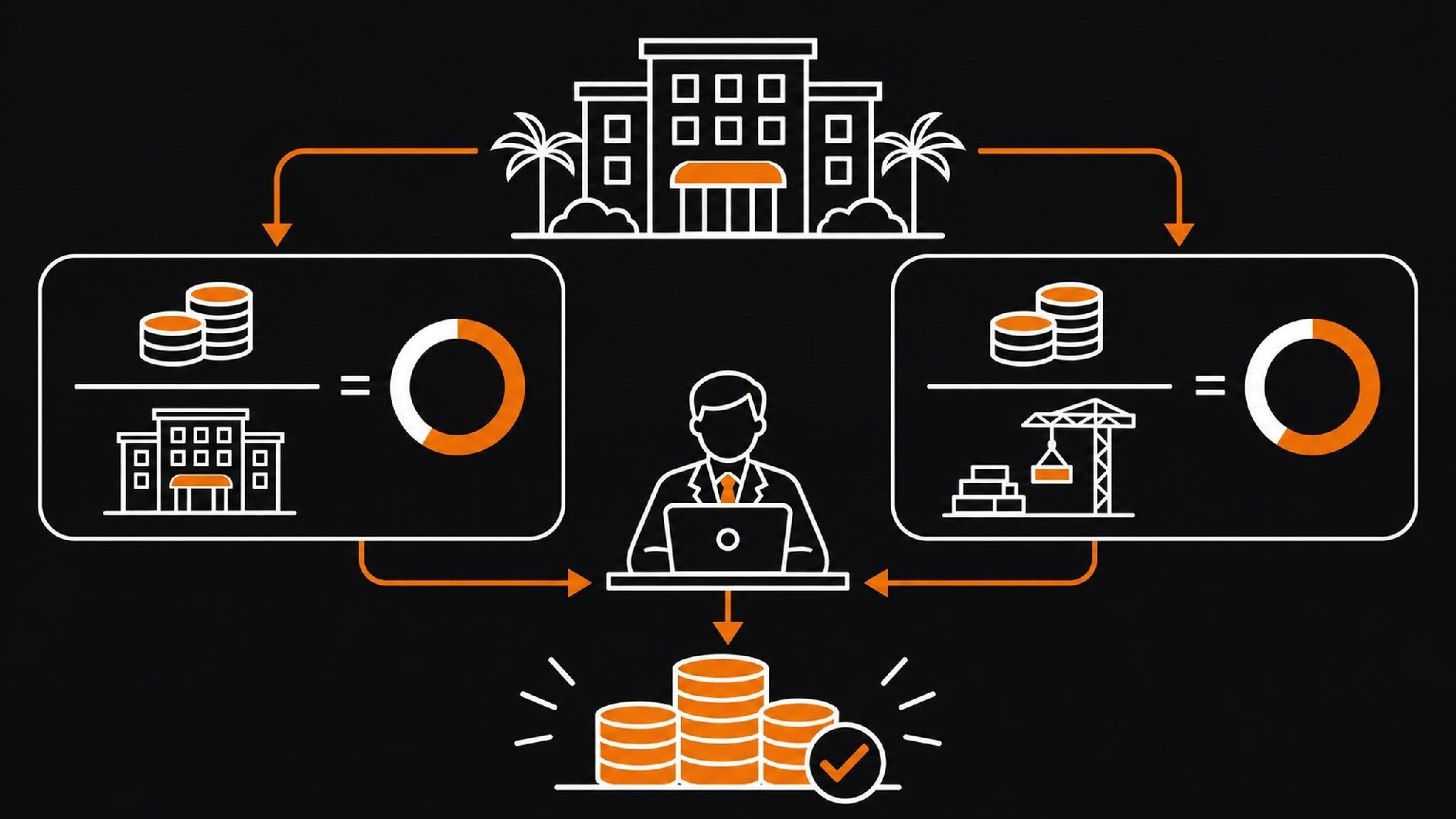
For construction, repositioning, and heavy renovation projects, lenders shift their focus to the loan to cost ratio. LTC divides the total debt facility by the complete project budget, encompassing land acquisition, direct construction costs, and soft professional fees. Underwriters require sponsors to inject significant upfront cash equity, typically capping construction and bridge facilities at 60% to 65% LTC.
RevPAR Trends And Competitive Set Performance
Lenders evaluate market position by analyzing Revenue Per Available Room (RevPAR), which combines occupancy rate and Average Daily Rate (ADR). Underwriters review historical Smith Travel Research (STR) reports to evaluate how the subject hotel performs against its defined competitive set. They look specifically at the Revenue Generation Index (RGI), which measures whether the property captures its fair share of market room revenue.

A hotel with an RGI consistently above 100 indicates superior management, stronger customer demand, and effective pricing power relative to peers. Conversely, declining RevPAR penetration signals competitive vulnerability or deferred capital maintenance, which prompts underwriters to reduce leverage or increase interest rate spreads. Demonstrating sustained market share dominance gives lenders confidence that the hotel will maintain strong cash flows throughout the loan term.
Table 1.2. Key Underwriting Benchmarks For Commercial Hotel Loans
| Financial Benchmark | Minimum Target Threshold | Operational Significance For Lenders |
|---|---|---|
| Debt Service Coverage Ratio | 1.35x to 1.45x | Verifies cash flow buffer over required mortgage payments |
| Debt Yield | 11.5% to 13.0% | Measures lender cash-on-cash return in a default scenario |
| Loan to Value | 55% to 65% Maximum | Protects principal balance against commercial asset devaluations |
| FF&E Reserve Allocation | 4.0% of Gross Revenue | Ensures continuous capital for physical room and amenity upkeep |
| Management Fee Deduction | 3.0% of Gross Revenue | Normalizes operational expenses regardless of self-management |
Qualitative Factors Influencing Loan Approval
While financial ratios drive preliminary underwriting models, lenders also evaluate qualitative characteristics that affect long-term commercial performance.
Property Type And Brand Affiliation Impact
The specific category of your hospitality asset dictates how lenders assess market risk and liquidity. Full-service hotels generate multiple revenue streams through food, beverage, and banquet spaces, but they carry heavy labor costs and complex operations. Limited-service and extended-stay properties have simpler operational profiles and leaner staffing models, making them attractive to conservative regional banks.

Brand affiliation, known in the industry as the hotel’s “flag,” plays a major role in financing approvals. Properties affiliated with leading global franchises such as Marriott, Hilton, Hyatt, or IHG receive preferred loan pricing and higher leverage allowances. Lenders recognize that major franchise systems provide global reservation engines, massive customer loyalty networks, and standardized operational guidelines that reduce investment risk. Independent boutique hotels can secure attractive financing, but borrowers must present extensive hospitality management resumes and proven local market demand drivers.
Franchise Agreement Remaining Terms
When underwriting a franchised hotel loan, lenders examine the franchise license agreement thoroughly. Lenders prefer that the remaining term of the franchise agreement extends well past the maturity date of the proposed loan. If a franchise agreement expires during the mortgage term, the property faces relicensing risks, expensive renovation mandates, or potential brand termination.
If a franchise license is scheduled to expire within the loan period, lenders will require a formal re-licensing approval or extension from the franchisor before closing. A brand transition introduces operational disruption and customer confusion, which can temporarily depress property cash flows. Securing a long-term franchise commitment protects the asset’s competitive market position throughout the debt horizon.
Borrower Track Record And Sponsor Net Worth
Hospitality lending is fundamentally character-driven and relationship-based. Lenders favor sponsors who possess a proven history of acquiring, developing, and successfully operating hotel properties within the same chain scale. An experienced operator knows how to adjust room rates dynamically, manage staffing costs during low seasons, and resolve guest satisfaction issues promptly.

Underwriters also evaluate the personal balance sheet and liquidity of the borrowing principals. Even for non-recourse loans, lenders require warm-body guarantors who meet minimum net worth and liquid cash thresholds. The standard requirement mandates that the guarantor’s net worth equals or exceeds the total loan amount, with unencumbered liquid assets covering at least 10% of the debt. Maintaining adequate liquidity ensures the borrower can fund unexpected operating deficits or emergency capital expenditures.
Local Market Demand Drivers And Seasonality
A hotel’s financial success depends entirely on the economic health of its immediate geographic market. Underwriters examine the diversity and stability of local demand generators that drive business and leisure travel to the area. Properties supported by multiple demand sources—such as major medical centers, corporate headquarters, universities, and convention venues—are viewed favorably by lenders.

Conversely, hotels located in highly seasonal destinations face tighter credit requirements. A coastal resort that generates 80% of its annual profits during a four-month summer window presents significant operational risk during winter months. Lenders mitigate seasonality risks by requiring borrowers to fund seasonal debt service reserves during peak cash flow periods to ensure loan payments remain current year-round.
Navigating Property Improvement Plans And Capital Expenditure Reserves
Maintaining physical brand standards is an unavoidable operational reality of owning a hotel. Understanding how capital expenditures affect your loan terms prevents equity shortfalls during the ownership lifecycle.
The Financial Weight Of Mandatory PIP Requirements
When acquiring an existing franchised hotel or executing a license renewal, the franchisor issues a Property Improvement Plan (PIP). This document details every physical modification, technology upgrade, and architectural adjustment required to bring the property into compliance with current brand standards. A comprehensive PIP can encompass guest room furniture replacement, bathroom modernizations, lobby redesigns, and exterior signage overhauls.

The cost of executing a PIP can range from a few thousand dollars per key for a minor refresh to over $30,000 per room for an extensive full-service renovation. Lenders analyze the PIP document meticulously during underwriting to verify that the borrower’s budget is realistic. Inadequate PIP capital allocations can lead to construction halts, cost overruns, and brand default notices that endanger the loan facility.
Lender Escrows And Renovation Reserves
To guarantee that brand-mandated renovations are completed without interruption, lenders require protective escrow structures at closing. In many acquisition transactions, the senior lender mandates that 100% of the estimated PIP cost be deposited directly into an interest-bearing lender-controlled escrow account. These funds are disbursed incrementally to the borrower as work is completed and verified by third-party inspecting architects.

If a property requires a heavy PIP that will disrupt daily guest operations, lenders will underwrite temporary occupancy drops into their financial models. Extensive construction noise and closed room wings depress guest review scores and reduce immediate cash flow. Borrowers must demonstrate sufficient working capital reserves to service their mortgage obligations while major renovations take place.
Furniture, Fixtures, And Equipment Reserve Management
Hotels experience significant physical wear and tear due to high guest turnover and daily usage. To prevent physical deterioration, both franchisors and lenders require properties to maintain a dedicated Furniture, Fixtures, and Equipment (FF&E) reserve. The industry standard requires setting aside 4% of gross monthly revenue into an escrow account dedicated exclusively to ongoing capital repairs and asset replacements.
This ongoing reserve pays for periodic carpet replacements, soft-good updates, commercial kitchen repairs, and technological upgrades throughout the hold period. Lenders monitor FF&E escrow balances quarterly to ensure the property remains competitive against newer local supply. A properly funded FF&E reserve preserves asset value and simplifies future refinancing efforts when the primary loan matures.
The Step By Step Hotel Loan Application And Underwriting Process
Securing a commercial hotel loan requires careful preparation, clear communication, and extensive operational documentation. Navigating each phase systematically prevents delays and improves your final loan terms.
Pre-Application Packaging And Pro Forma Development
The loan acquisition process begins months before approaching a financial institution. Borrowers must compile a comprehensive loan request package that showcases the strength of the asset, the market, and the sponsorship team. This package serves as the initial introduction to the credit committee and must be prepared with institutional precision.
Your financing submission package should include:
- Three years of historical profit and loss statements and trailing twelve-month (T12) operating figures.
- A comprehensive, defensible five-year financial pro forma projection supported by market data.
- The property’s official STR reports covering the past three to five years of operational history.
- A clear narrative explaining the project’s business plan, value-add strategy, or operational improvements.
- Detailed resumes of the development sponsors and third-party property management company.
- A complete breakdown of the borrower’s personal financial statements, schedule of real estate owned, and liquidity proof.
Term Sheet Negotiation And Loan Covenants
Once an underwriter completes their initial review of your package, the lender issues a preliminary term sheet. While non-binding, the term sheet outlines the core commercial parameters of the proposed loan, including loan amount, interest rate structure, amortization period, and required reserve escrows. Borrowers should use this phase to negotiate key provisions before committing expensive third-party deposit funds.

Pay close attention to prepayment penalties, which can lock you into high interest rates or restrict asset sales. Lenders often utilize yield maintenance or defeasance structures on fixed-rate debt, which can cost millions of dollars to exit early. Negotiate for step-down prepayment options or flexible open windows prior to maturity to maintain capital agility. Ensure you understand all ongoing financial covenants, such as minimum debt yield thresholds, that could trigger technical default provisions during market downturns.
Property Appraisals And Environmental Due Diligence
After the term sheet is formally executed and the expense deposit is funded, the transaction enters third-party due diligence. The lender engages an independent MAI-certified appraiser who specializes in commercial hospitality assets to establish the property’s fair market value. The appraiser evaluates real estate sales comparables, replacement costs, and discounted cash flow models to determine collateral worth.

Simultaneously, the lender commissions a Phase I Environmental Site Assessment (ESA) and a Property Condition Assessment (PCA). The environmental audit verifies the real estate is free from hazardous contamination, while the PCA evaluates the structural integrity of the roof, mechanical systems, and foundation. Any structural deficiencies identified in the PCA must either be repaired prior to closing or funded through an upfront replacement reserve.
Intercreditor Agreements In Multi-Tier Capital Stacks
If your capital structure incorporates subordinate financing, such as mezzanine debt or preferred equity, the senior and junior lenders must negotiate an intercreditor agreement. This formal legal document defines the rights, remedies, and priorities of each lender in the event of borrower distress or loan default. It outlines notice requirements, cure rights, and the specific processes governing how subordinate lenders can step into ownership shoes.
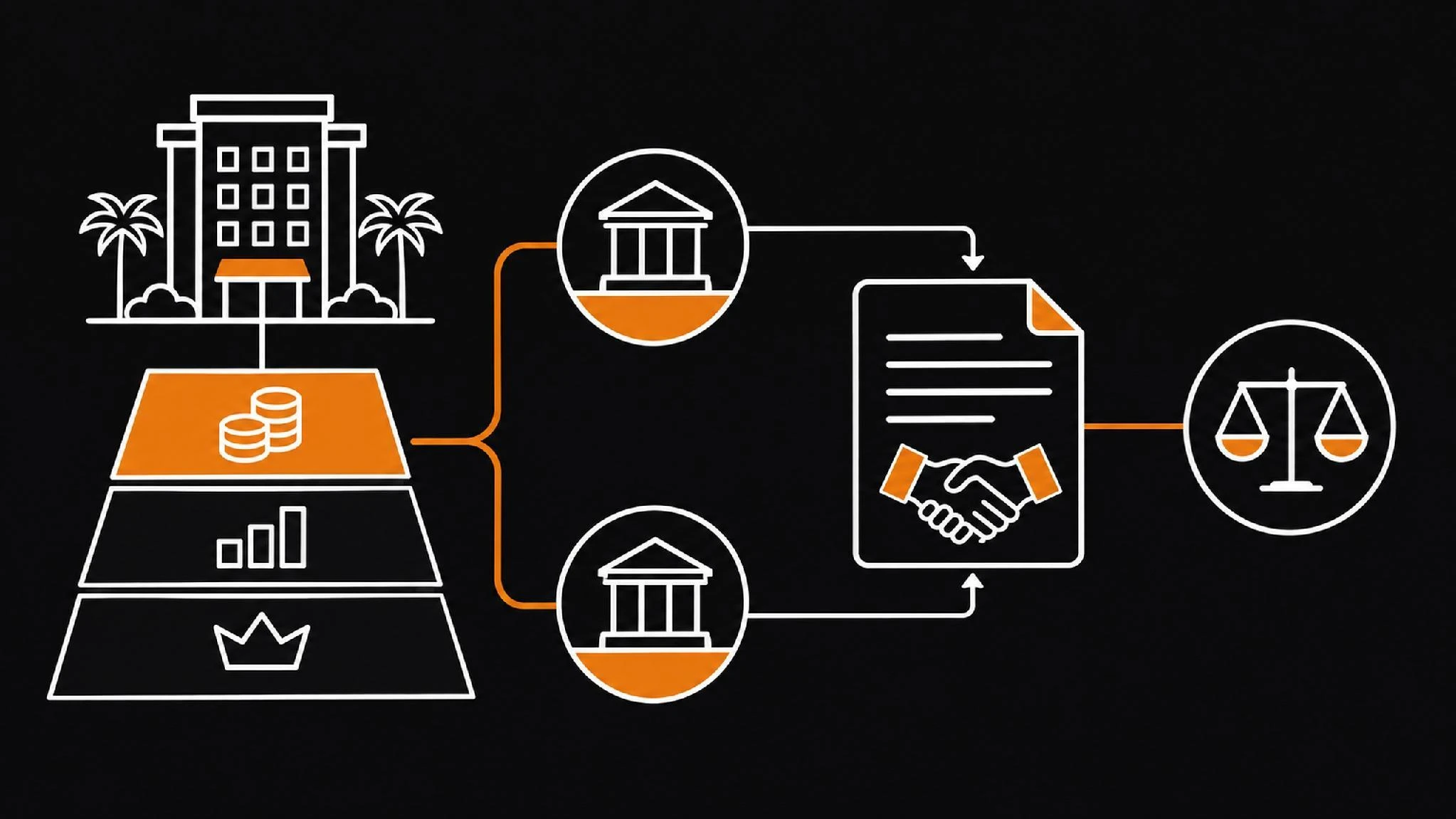
Negotiating an intercreditor agreement can be a complex and time-consuming component of closing multi-layered hospitality transactions. The senior lender will enforce strict limitations on junior debt distributions and restrict the subordinate lender’s ability to foreclose without senior consent. Engaging experienced legal counsel who specializes in commercial real estate capital markets is essential to resolving these intercreditor negotiations efficiently.
Common Pitfalls In Hotel Financing And How To Avoid Them
Many promising hospitality acquisitions encounter severe distress because sponsors overlook structural nuances during underwriting. Identifying and resolving these mistakes early protects your equity and preserves long-term asset value.
The Danger Of Over-Leveraging In Cyclical Markets
The temptation to maximize leverage is strong during periods of expanding travel demand and liquid credit markets. Securing 75% or 80% combined leverage magnifies equity returns on paper during boom years. However, high debt loads leave zero operational margin for error when market demand inevitably contracts.
A minor 5% drop in market RevPAR or a slight increase in local labor costs can quickly cause an over-leveraged hotel to breach its debt service coverage covenants. Once a property enters technical default, lenders can enforce cash management lockboxes, sweeping all operational revenues directly to mortgage service. Maintaining conservative leverage between 55% and 65% LTV provides the necessary equity cushion to survive market cycles safely.
Misaligned Exit Strategies And Balloon Payment Pressures
A common error in commercial hotel borrowing is failing to align the loan’s maturity date with the property’s business plan. Utilizing a three-year floating-rate bridge loan on a complex historic hotel renovation that requires two years of construction leaves only twelve months to stabilize occupancy. If supply chain disruptions delay the opening by six months, the sponsor will face a maturity wall before the asset generates sufficient cash flow to qualify for permanent refinancing.

Always structure extension options into short-term debt facilities, ensuring the extension tests rely on realistic, attainable benchmarks. Maintain a clear vision for your permanent exit strategy, whether that involves long-term agency refinancing, a portfolio sale, or an institutional recapitalization. Planning your refinance path years in advance shields your business from sudden shifts in broader commercial debt market liquidity.
Ignoring Seasonal Cash Flow Variability
Hotels rarely generate uniform monthly revenues throughout the calendar year. Properties in resort destinations or university towns often experience extreme cash flow swings between peak seasons and winter shoulder months. Inexperienced sponsors sometimes underwrite annual debt service using twelve-month average figures without modeling monthly cash flow troughs.
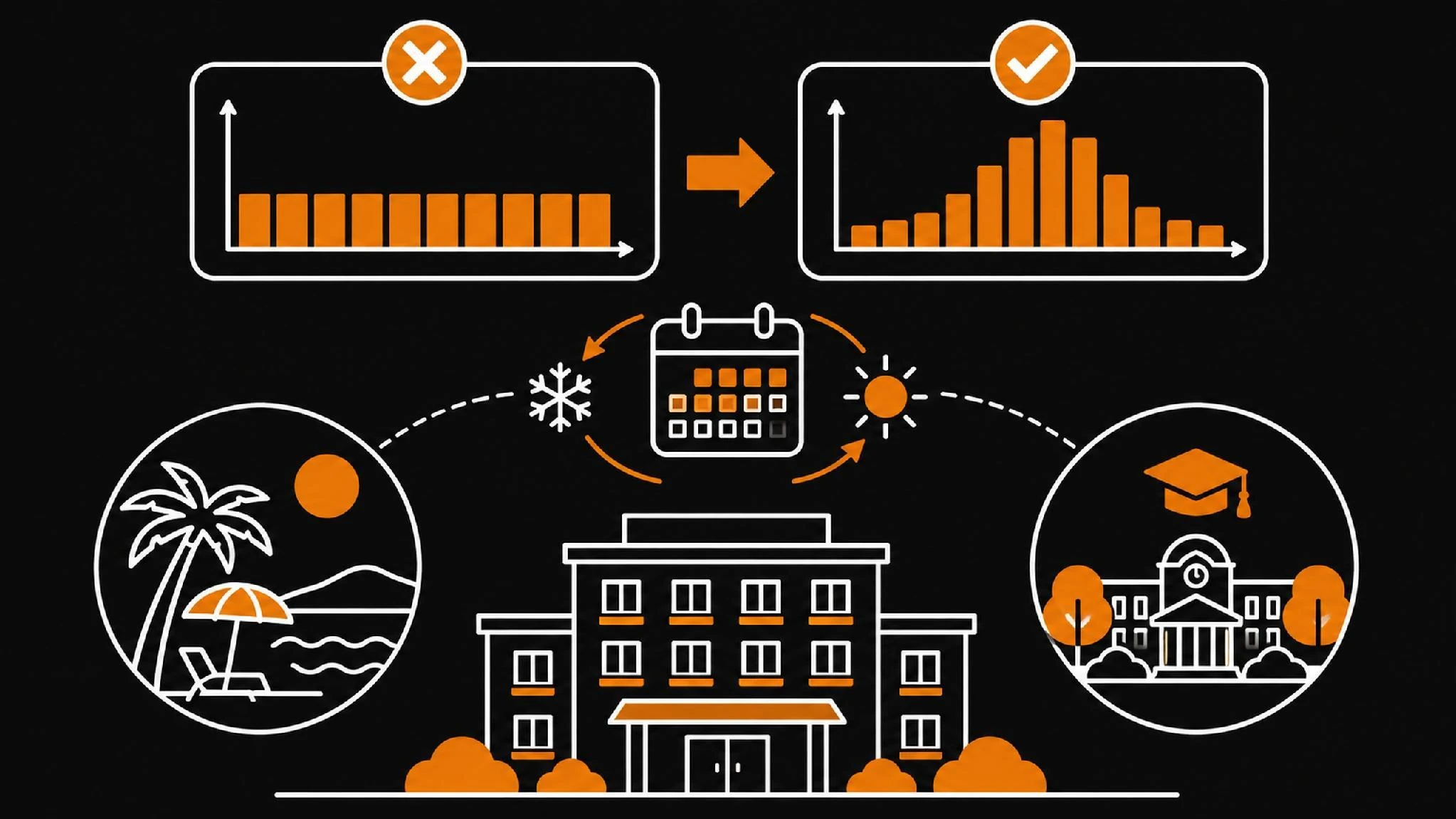
Failing to account for seasonal variations can result in cash shortfalls during slow months, even if the hotel is profitable on an annual basis. Borrowers must build month-by-month cash flow sensitivity models that factor in minimum payroll expenses and fixed utility overhead during off-peak periods. Structuring interest-only periods or funding upfront debt service reserves guarantees that mortgage payments are honored without draining company operating accounts.
Underestimating Soft Costs And Pre-Opening Capital Needs
When assembling a construction or heavy renovation budget, sponsors frequently underestimate soft costs and pre-opening operating expenses. While direct materials and contractor labor are carefully quantified, expenses like architectural revisions, municipal permit delays, and legal fees compound quickly. Furthermore, a new hotel requires substantial working capital to hire staff, purchase opening inventories, and execute marketing campaigns months before the first guest checks in.

Under-capitalizing pre-opening accounts puts immediate financial stress on the hotel during its critical opening ramp-up phase. If marketing funds are cut to cover construction overruns, initial occupancy will lag, delaying financial stabilization and jeopardizing debt yield targets. Always incorporate a realistic 10% to 15% soft cost contingency reserve into your primary project budget to ensure the hotel opens with optimal momentum.
Conclusion
Recap: Securing a hotel loan requires an intricate understanding of both real estate fundamentals and active business operations. Lenders evaluate credit through rigorous financial metrics, demanding healthy debt service coverage ratios, high debt yields, and conservative loan-to-value parameters. By understanding the diverse array of loan products available, anticipating mandatory property improvement plans, and maintaining strict underwriting discipline, hotel developers and owners can structure resilient capital stacks that protect equity and maximize long-term investment yields.
Ready to maximize your hotel’s net operating income and secure optimal lending terms? A property’s borrowing power is intrinsically tied to its profitability and direct channel revenue. Partner with the hospitality digital performance experts at ROI300 to build, automate, and scale your direct booking engine, reducing costly intermediary commissions and driving the net cash flow required to secure favorable hotel financing. Contact ROI300 today to audit your commercial digital footprint and elevate your asset’s financial performance.