

If you are managing a hotel or short-term rental portfolio, you already know the frustrating pattern. Online Travel Agencies (OTAs) fill your empty rooms, but they also extract massive commission margins, control the guest relationship, and make your brand look entirely interchangeable with the property next door. You pay heavily to acquire demand, only to hand over the customer data and forfeit the chance to bring that guest back directly.
That is exactly why Facebook hotel ads still matter. Not as a vanity side project for your social media coordinator, and not as an occasional boosted post, but as a robust direct booking channel you completely control. The strongest hospitality campaigns move travelers seamlessly from inspiration to site visit to booking intent, ultimately recovering the reservation if the guest drops out before checkout. This blog will provide a comprehensive guide to building a profitable Facebook hotel ads ecosystem in 2026.
Why Facebook Ads Are Essential For Hotel Bookings In 2026
A traveler sees your hotel on Instagram during their lunch break, visits your website that night, checks rates on Expedia the next morning, and books three days later after being retargeted with the exact room type they originally viewed. That is how the vast majority of direct bookings happen today. The path is deeply fragmented, and Meta (the parent company of Facebook and Instagram) gives hotels a powerful way to stay visible in that path before the guest defaults to search results or marketplace listings.
Escaping The OTA Stranglehold
Hotels do not need more website visits that never turn into actual revenue; they need paid demand they can actively influence, measure, and convert through their own proprietary booking engines. Facebook and Instagram ads are incredibly useful because they let a property reach future guests early, stay highly visible during the consideration phase, and bring back visitors who dropped out before confirming their reservation.
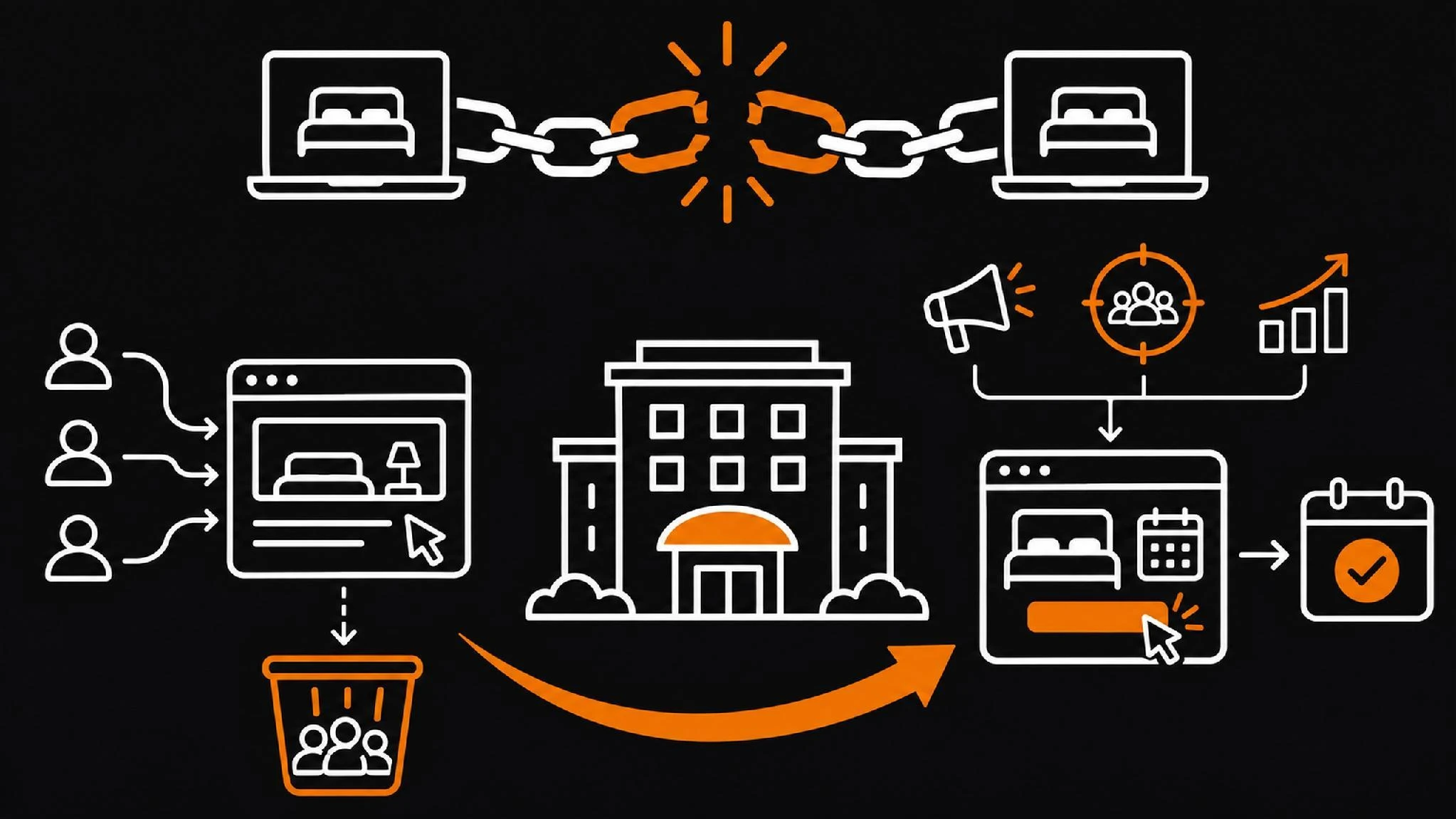
For hotel operators, the primary value of Meta advertising is not broad reach—it is absolute control. Meta lets you promote a weekend romantic package to drive-market couples, push mid-week extended stay offers to remote workers, retarget visitors who checked availability but abandoned their cart, and exclude recent bookers so your ad spend is not wasted.
Why This Channel Fits Hotel Economics
Hotel demand is a highly perishable commodity. An empty room tonight cannot be placed on a shelf and sold tomorrow. This unique economic reality fundamentally changes how paid media should be judged.
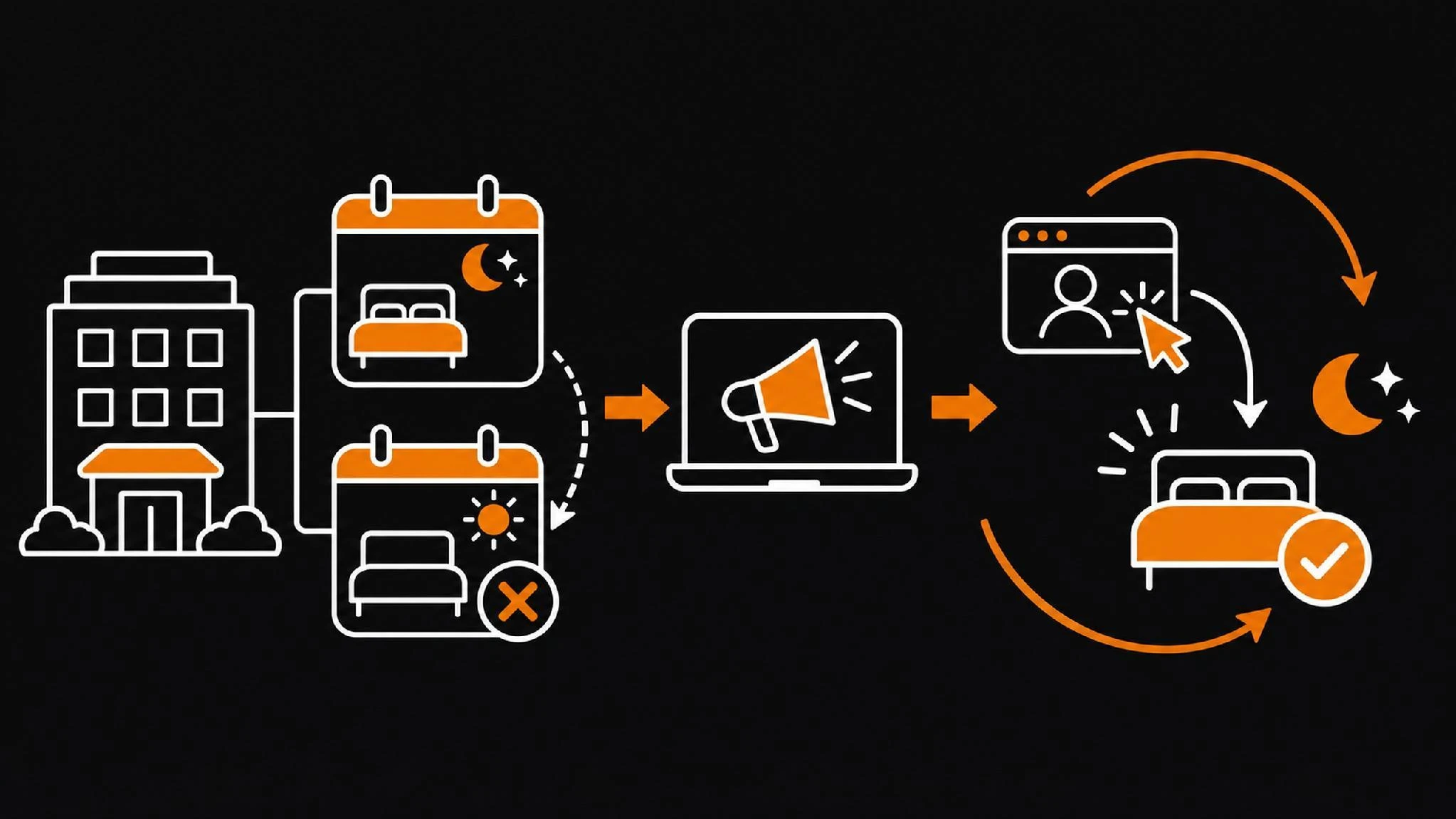
Traditional search ads capture demand that already exists, but they often enter the consumer’s decision process after the guest has started aggressively comparing rates across OTAs and metasearch grids. Meta allows you to reach people much earlier in the funnel, while they are still deciding where to go, what kind of stay they desire, and whether your specific property feels worth booking direct.
This earlier influence matters immensely because independent hotels rarely win on price alone. They win on the promise of experience, trust, convenience, and deep relevance to the trip. A well-structured Meta program gives you the visual canvas to sell those emotional factors with stunning imagery, compelling offers, tailored audience segments, and perfectly timed follow-up.
Building Your Hotel’s Advertising Foundation
A hotel can spend massive amounts of real money on Meta and still learn absolutely nothing if the account is set up poorly. The same pattern appears constantly in property audits: campaigns launch before the booking engine passes useful pixel events back to Facebook, campaign naming is chaotic, exclusions are completely missing, and the marketing team cannot separate actually booked revenue from inflated platform reporting.
Match The Campaign Objective To The Business Problem
The first step in account setup is choosing the campaign objective based on the specific commercial job the campaign needs to do.
- Awareness: Useful for a grand new opening, a massive renovation, a seasonal package launch, or a property that desperately needs more top-of-funnel reach in major feeder markets.
- Traffic: Highly useful for rapidly testing new promotional offers, varying messages, and landing page designs before pushing harder on the conversion objective.
- Leads: Best for securing wedding inquiries, corporate meeting RFPs, group blocks, or longer-consideration stays where direct email follow-up matters.
- Sales (Conversions): Best for driving immediate bookings once pixel tracking is configured correctly and the booking engine sends back highly meaningful, monetary conversion signals.
The trade-off is simple: Sales campaigns will always outperform other objectives, but only if Meta receives signals that accurately reflect actual booking intent. If the algorithm only sees page views or low-quality clicks, it will optimize toward cheap, useless activity instead of generating revenue.
Track True Booking Intent, Not Vanity Activity
Hotels require pixel tracking that flawlessly mirrors the actual booking path. At a bare minimum, you must set up the Search, Initiate Checkout, and Purchase standard events on your direct booking engine.
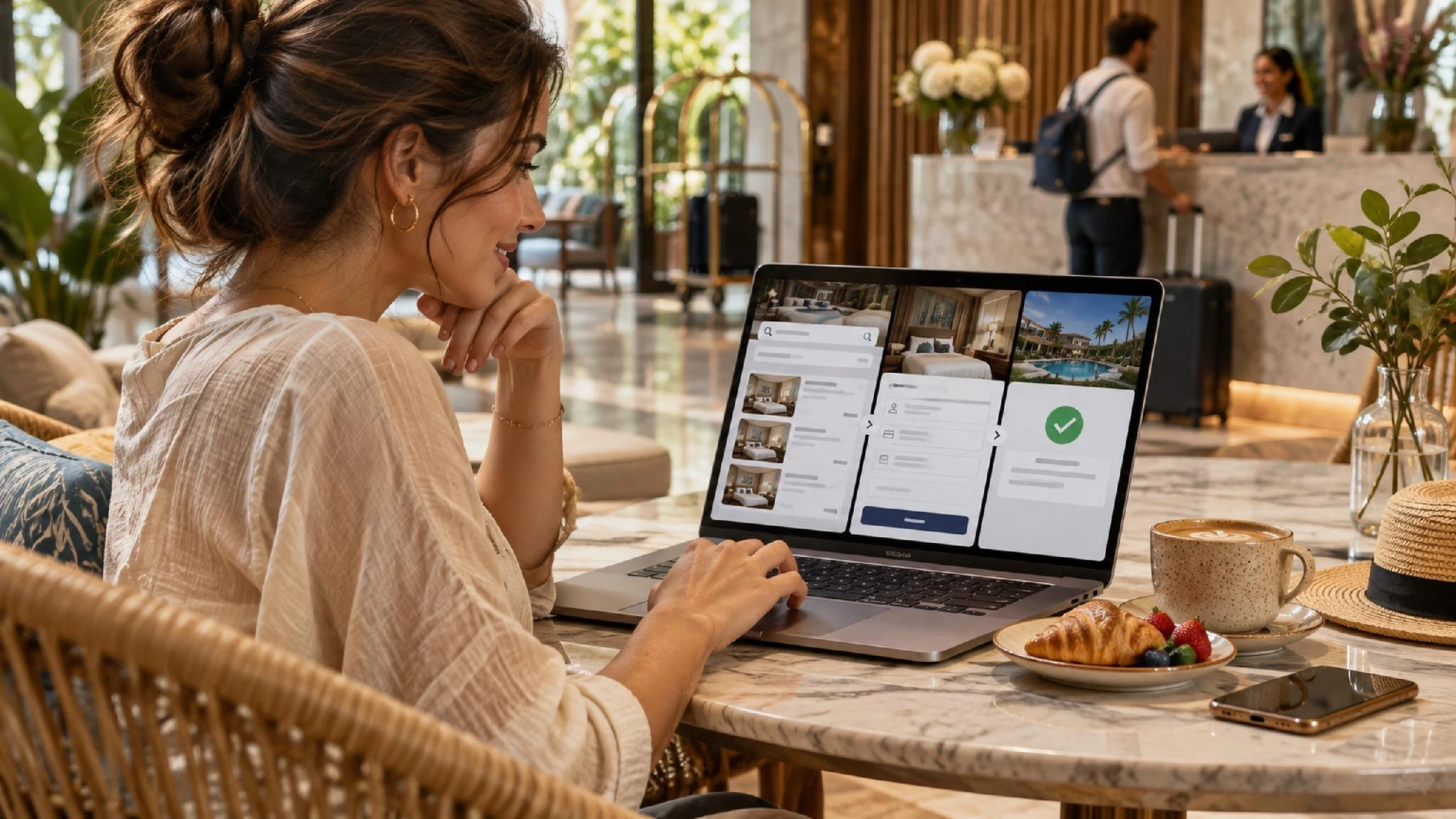
Each event serves a distinctly different algorithmic purpose:
- Search: Shows the visitor actively checked specific travel dates or room availability.
- Initiate Checkout: Shows significantly stronger commercial intent, indicating the user began entering contact or payment details.
- Purchase: Confirms actual booked revenue and passes the monetary value back to the ad account.
That hierarchy matters immensely. A simple page view from a curious browser and a search from someone actively pricing a two-night weekend stay are not equally valuable, and your ad account should not treat them that way.
Structuring The Account Before Scaling Spend
Clean account structure matters far more than is often assumed. Meta setup for hotels should include the correct Facebook Page connection, ad account verification, pixel installation, booking engine event mapping, and any property catalog required for dynamic ad formats.
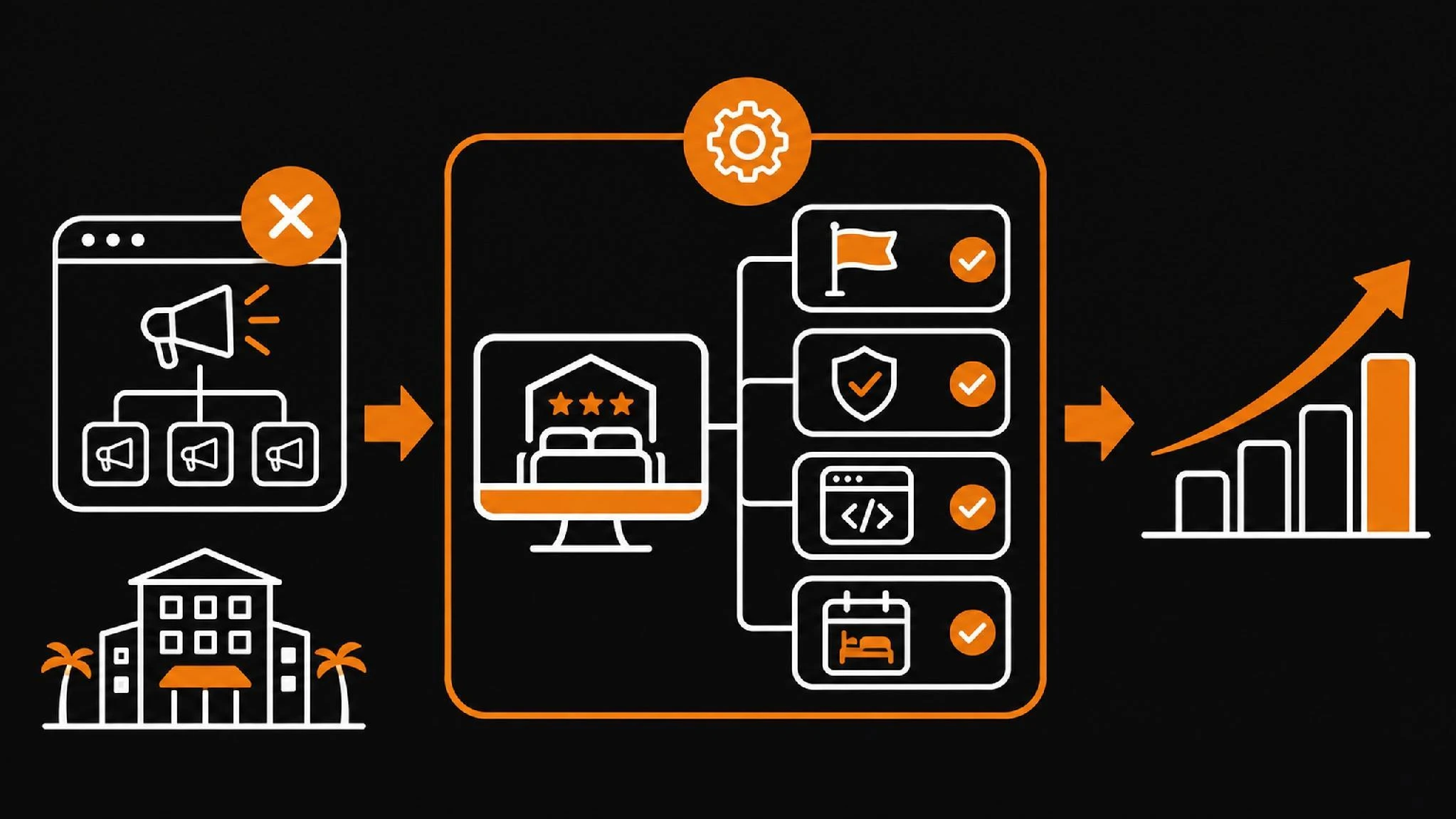
Audience exclusions also need rigorous attention, especially excluding recent bookers and current in-house guests if the campaign goal is acquiring net-new demand. Location targeting must also be precise. Location targeting refers to where people currently are, not where they intend to travel. A luxury resort in Mexico that targets people physically sitting in Mexico City is making a profoundly different decision from a resort that wants to reach affluent travelers in Chicago or Toronto who are planning a winter escape.
Use a systematic naming convention that your team can audit in minutes. Campaign names should instantly identify the property, target market, audience type, objective, offer, and date range. Sloppy account structure makes mid-flight optimization slower and renders historical reporting completely unreliable.
Mastering Audience Targeting For Hotels
The absolute best hotel ad account does not start with hyper-detailed, granular targeting. It starts with sound audience logic: determining exactly who should see the ad, why they should care, and what specific stage of travel planning they are currently in.
Prospecting Audiences That Actually Make Sense
A towering city-center business hotel and a secluded beachfront resort should absolutely not use the same targeting logic.
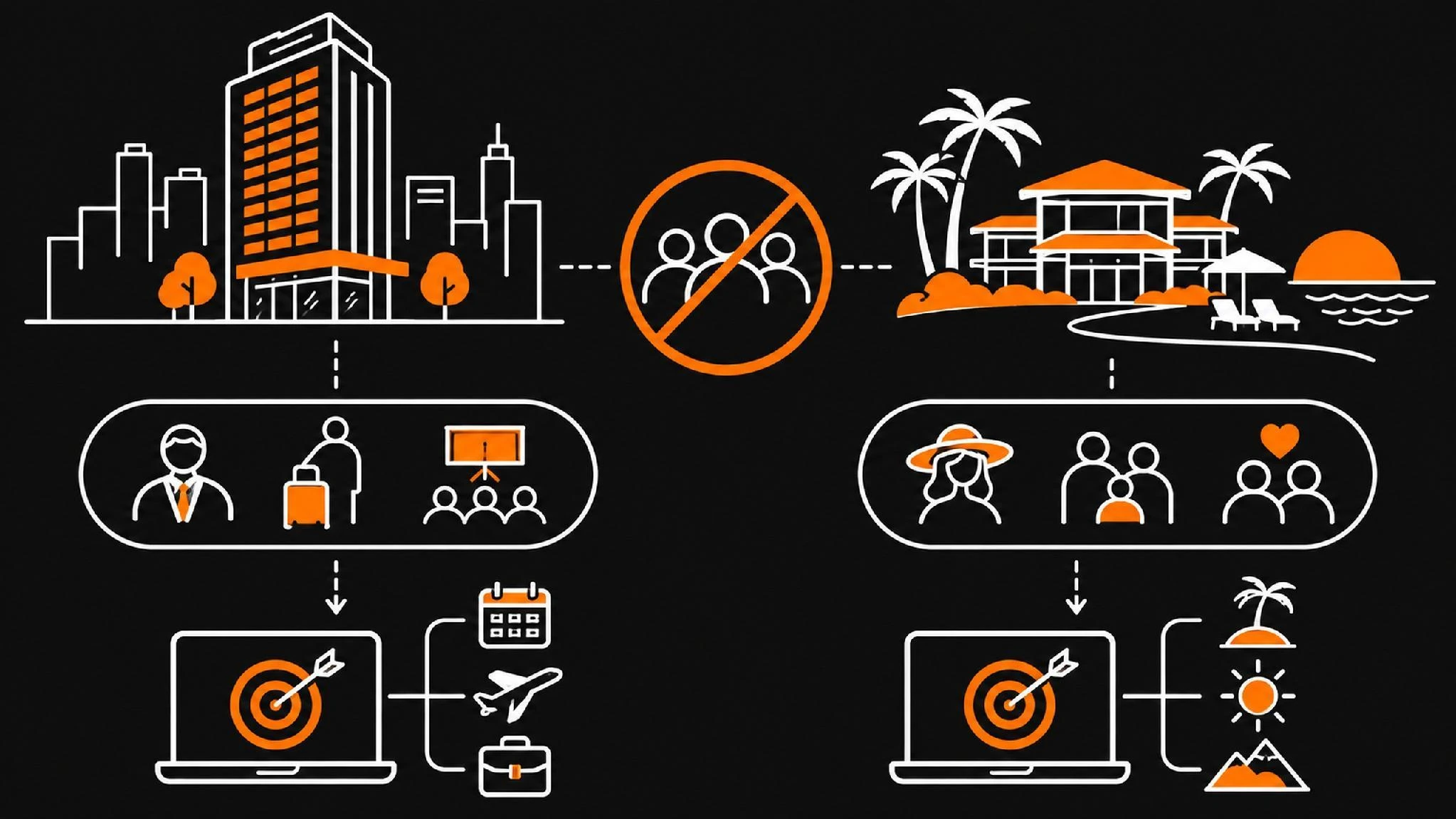
A business hotel usually benefits from messaging built around logistical convenience, geographic location, and trip utility. Think airport access, walkability to major office corridors, expansive meeting space, or weekday reliability. A leisure property needs an entirely different operational frame. It has to sell the stay experience, the special occasion, and the emotional payoff.
That means your prospecting (top-of-funnel) audiences should directly reflect the demand type:
- Business Travel Demand: Target users interested in local business hubs, major conferences, frequent flyer programs, and practical stay reasons.
- Leisure Demand: Target couples, families, anniversary travel, school-break planning, and users expressing interest in nearby tourist attractions.
- Drive-Market Demand: Target guests physically located within reachable source markets (typically a 3 to 5-hour drive) who may respond aggressively to weekend or short-stay promotional offers.
- International or Long-Haul Demand: Target travelers actively researching aspirational destinations and premium luxury stays with much longer booking windows.
Retargeting Is Where Hotels Make Their Money
Prospecting campaigns get attention, but retargeting campaigns recover intent. Facebook’s true hotel marketing value comes from combining direct-response advertising with incredibly powerful retargeting technology.

Industry guidance consistently highlights Dynamic Ads for Travel (DAT), a specialized tool designed specifically to turn website traffic into confirmed reservations. This tool re-engages people who visited a hotel site but did not book, displaying the exact room type or travel dates they were previously considering.
This is exceptionally useful for hotels because the booking path is rarely linear. A traveler may view an oceanfront suite on mobile, compare rates on a laptop two days later, and wait another week before making a final decision. Dynamic retargeting helps bring back the exact stay they were considering instead of forcing them to start the search process over, dramatically reducing friction.
A Practical Retargeting Structure
To execute this flawlessly, you must use separate custom audiences based on specific booking intent, not just raw website traffic volume.
- Room Viewers: Show the exact room category or specific property they explored.
- Searchers: Remind them of the dates they queried, confirm availability, and provide compelling reasons to book direct.
- Checkout Starters: Use subtle urgency, deep reassurance, transparent cancellation messaging, or exclusive direct-booking perks to close the sale.
- Past Guests: Run seasonal win-back or upsell campaigns, but ensure you keep this group completely excluded from your net-new acquisition ad sets.
Creating Hotel Ad Creatives That Convert
A traveler opens Instagram during a lunch break, sees three generic hotel ads in a row, and scrolls past all of them. Then one stops their thumb. It shows the actual arrival experience, the panoramic room view, and a compelling reason to book direct that matches the trip they are already considering. That is the exact standard your creative assets must meet.
Moving Beyond Polished Corporate Imagery
Hotels consistently lose performance on Meta because they post heavily polished, sterile brand assets that say very little to the consumer. On Meta, the winning ad usually makes the physical stay feel concrete and real within the first two seconds. Guests need to see exactly what they get, who the property fits, and why booking direct is the superior path.
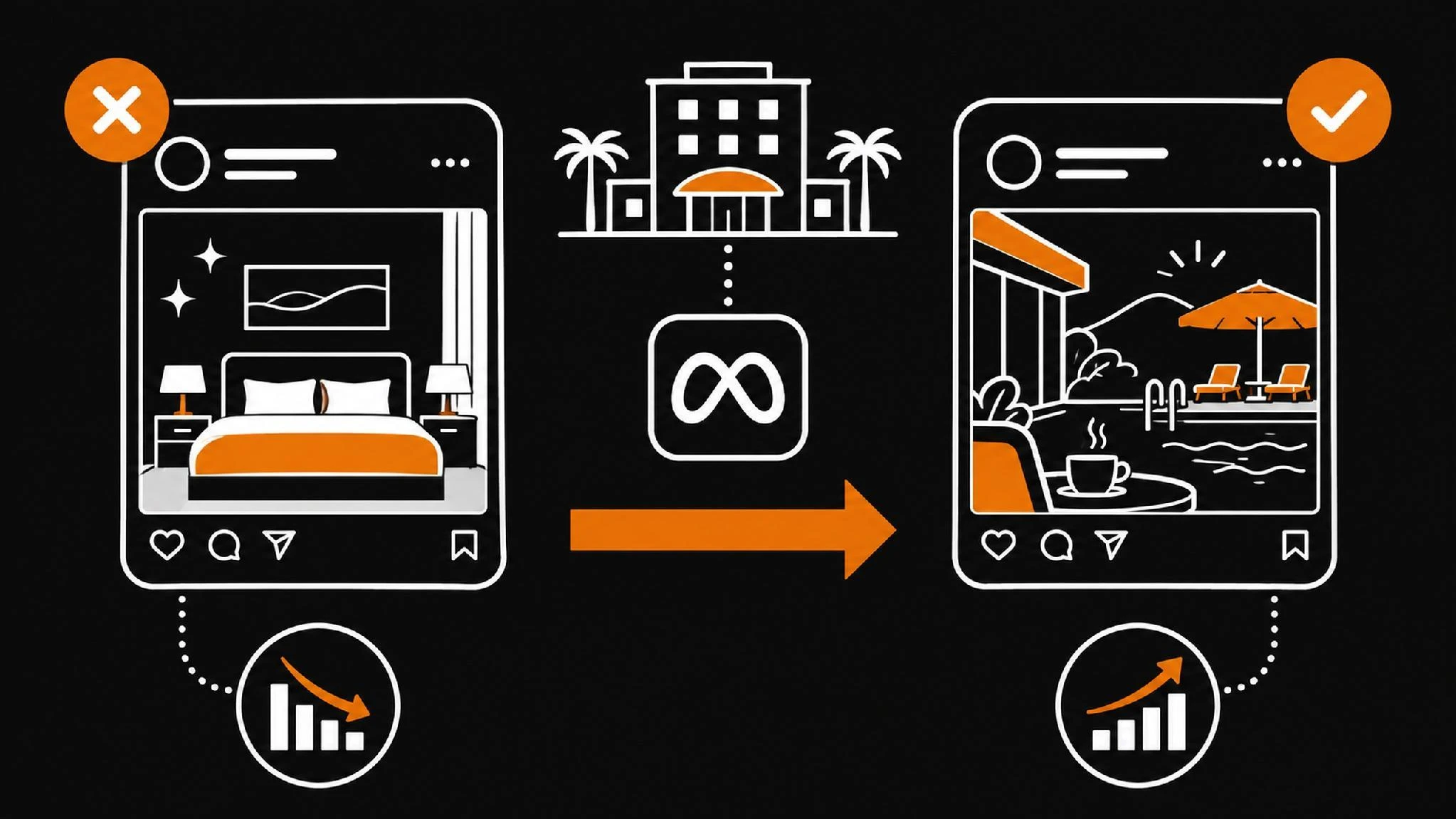
Creative assets must do significantly more than simply attract a click; they must actively pre-qualify the demand. A family promotional offer should look and sound fundamentally different from a secluded couples retreat or a last-minute corporate booking. If every single ad uses the same visual style and headline, Meta will gladly spend your money finding impressions, but your booking engine will receive low-intent, worthless traffic.
What Strong Hotel Creatives Actually Look Like
The absolute best-performing hotel ads usually feel like native, organic travel content rather than forced commercial interruptions. They show the physical property in active use, not just perfectly staged architectural photography.
Start with a small, focused set of formats that cover entirely different buying motivations:
- Vertical Walkthrough Videos: Show the arrival, the main room, the bathroom, the view, and one premium amenity in a tight, fast-paced, mobile-first sequence.
- Guest-Perspective Clips: Casual, user-generated-style footage often beats expensive brand videos because it feels infinitely more believable in the social feed.
- Carousel Ads: Use each individual swipeable card to answer a different critical booking question, such as room quality, pool access, dining options, or parking convenience.
- Local Context Ads: Sell the complete trip, not just the building. Highlight neighborhood walkability, immediate beach access, event venue proximity, or neighborhood energy.
Copy That Gets The Click And Filters The Guest
Good hotel ad copy answers the immediate next question forming in the guest’s head: Is this right for my specific trip? That means the copywriting needs extreme specificity. Generic phrases like “luxury awaits” or “your perfect escape” completely waste valuable digital real estate. Strong copy ties the stay directly to a specific use case, a distinct location advantage, or a powerful direct-booking reason.

Use ad copy that performs one clear job:
- Connects to a Trip Type: Anniversary weekend, family pool stay, conference trip, or last-minute beach break.
- Reduces Transactional Friction: Emphasizes direct booking perks, highly flexible cancellation policies, or easy digital check-in.
- Builds a Vivid Scene: Mentions rooftop breakfasts, ocean-view balconies, quiet interior courtyards, or walkable nightlife.
A simple rule helps here: If the ad could theoretically run for a competitor’s hotel across town without changing a single word, the copy is far too generic.
Match The Creative To The Landing Experience
Digital conversion rates plummet immediately when the ad promises one thing and the booking flow shows another. If the ad leads visually with a penthouse suite view, you must send traffic directly to that specific suite landing page. If the ad sells a family waterpark package, send users directly to that specific package page.
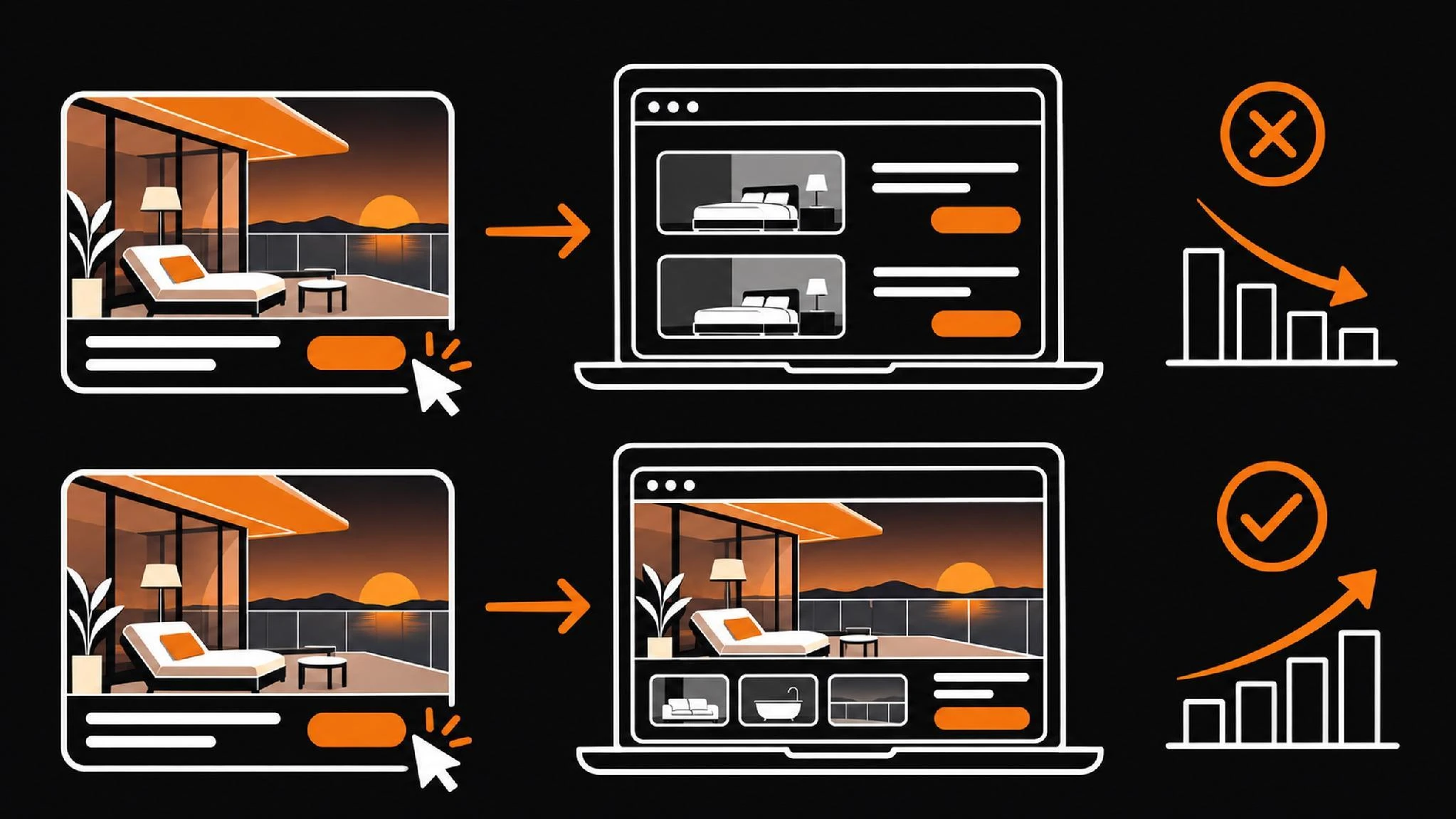
If the goal is maximizing direct bookings, the transition from the social media ad to the proprietary booking engine has to feel perfectly seamless and visually consistent. This is also where measurement gets significantly cleaner, allowing you to track exactly which creative angles drove tangible revenue.
Smart Budgeting And Campaign Optimization
A hotel in the slow shoulder season can easily waste half its Meta budget in two weeks and still report decent top-line numbers inside the Ads Manager dashboard. Clicks come in. Website traffic rises. However, the booking pace barely moves because the account is optimized for cheap, useless activity, rather than profitable, high-intent demand.
Setting Budgets Based On Booking Economics
Budgeting must start with your property’s fundamental booking economics. Set a target Cost Per Acquisition (CPA) or target cost per qualified booking based on your Average Daily Rate (ADR), average length of stay, and direct-booking profit margin.
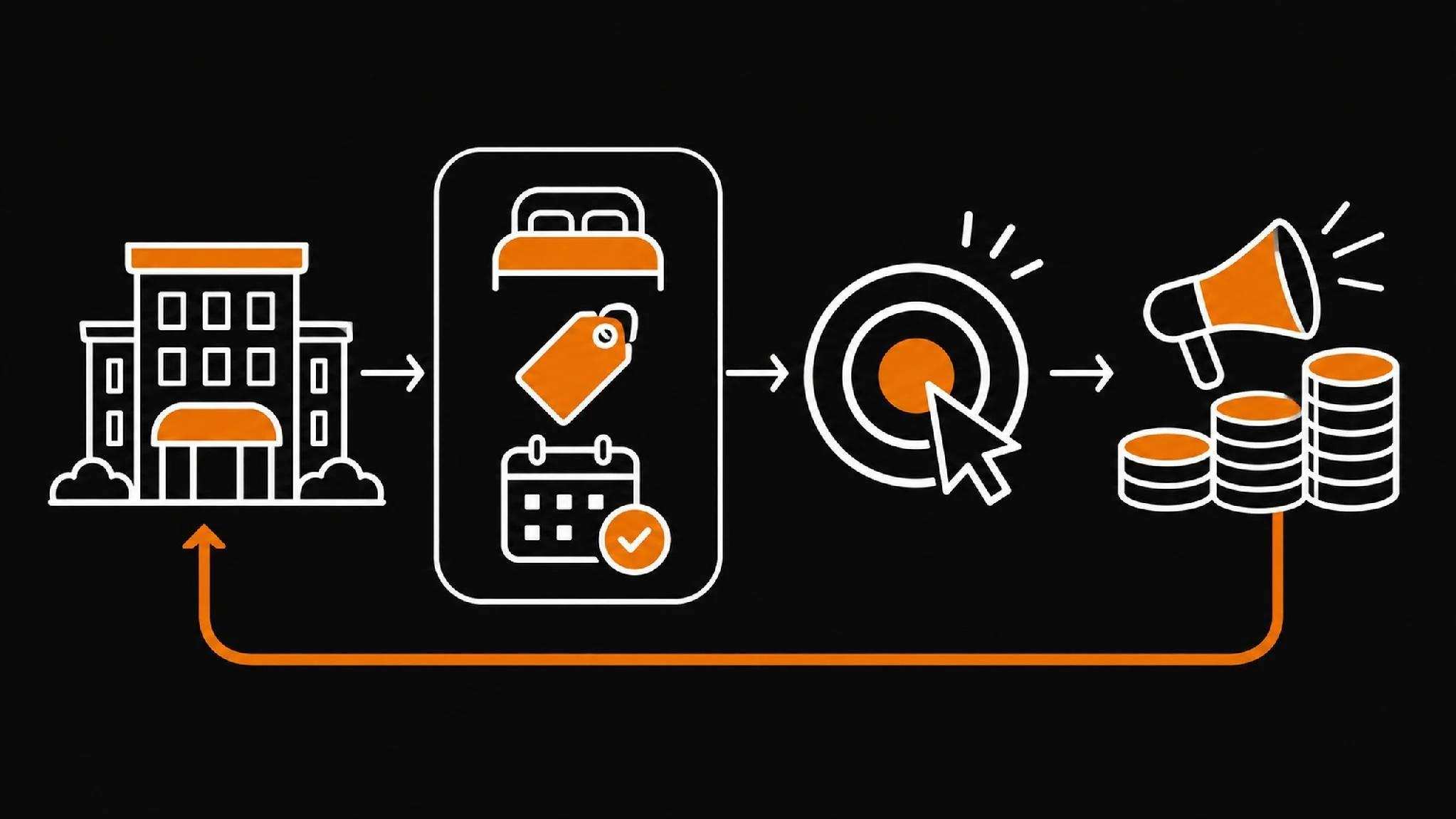
A luxury boutique hotel selling two-night weekend stays at $500 per night can usually tolerate a significantly higher acquisition cost than a budget airport hotel chasing $99 one-night transit demand. The right budget is the exact amount you can spend repeatedly while still keeping direct bookings more mathematically profitable than OTA-heavy demand.
Reading Metrics In The Correct Order
Do not scale a campaign simply because one metric looks good in isolation. You must read the performance metrics in chronological order, starting with the specific question each metric answers:
- Click-Through Rate (CTR): Answers whether the creative offer and the selected audience are getting initial attention.
- Cost Per Click (CPC): Shows exactly how expensive that initial attention is becoming in the competitive bidding auction.
- Landing Page Conversion Rate: Shows whether the generated traffic is finding the right room, the right package, and a frictionless booking path.
- Return On Ad Spend (ROAS): Gives directional feedback on profitability, but only after tracking is configured flawlessly enough to trust it.
This sequence matters deeply. A low CTR usually points to weak creative assets, tired promotional offers, or a poor audience fit. A healthy CTR combined with weak booking volume usually means the problem sits after the click, often indicating friction on the package page, a confusing booking engine, or a clunky mobile checkout flow.
Budget Allocation By Funnel Stage
Hotels achieve significantly better results when their budget matches consumer intent. Prospecting (top-of-funnel) campaigns should usually carry the largest share of the budget because they actively create future demand. However, they should not consume the entire budget.

Retargeting (bottom-of-funnel) campaigns often look incredibly efficient on paper, yielding massive ROAS, yet they possess a hard mathematical ceiling. Once you completely saturate your site visitors and past engagers, pouring extra spend into retargeting rarely creates proportional revenue.
For many properties, a highly practical split is to fund broad prospecting first, reserve a smaller dedicated retargeting budget, and then fluidly shift spend based on actual booking volume and room-night value. A common mistake is starving top-of-funnel campaigns because retargeting reports a lower cost per result. That strategy works for a short stretch, and then the warm audience pool dries up entirely, destroying future booking pace.
Integrating Ads With Your Direct Booking Funnel
A Facebook campaign isn’t the actual booking engine; it is the targeted pressure that feeds the booking engine. That critical distinction matters because many hotel teams judge Meta performance exclusively inside the Ads Manager dashboard alone. They look at platform-reported conversions, blindly decide the campaign worked, and never ask whether those bookings were truly incremental.
Your Funnel Must Survive The Click
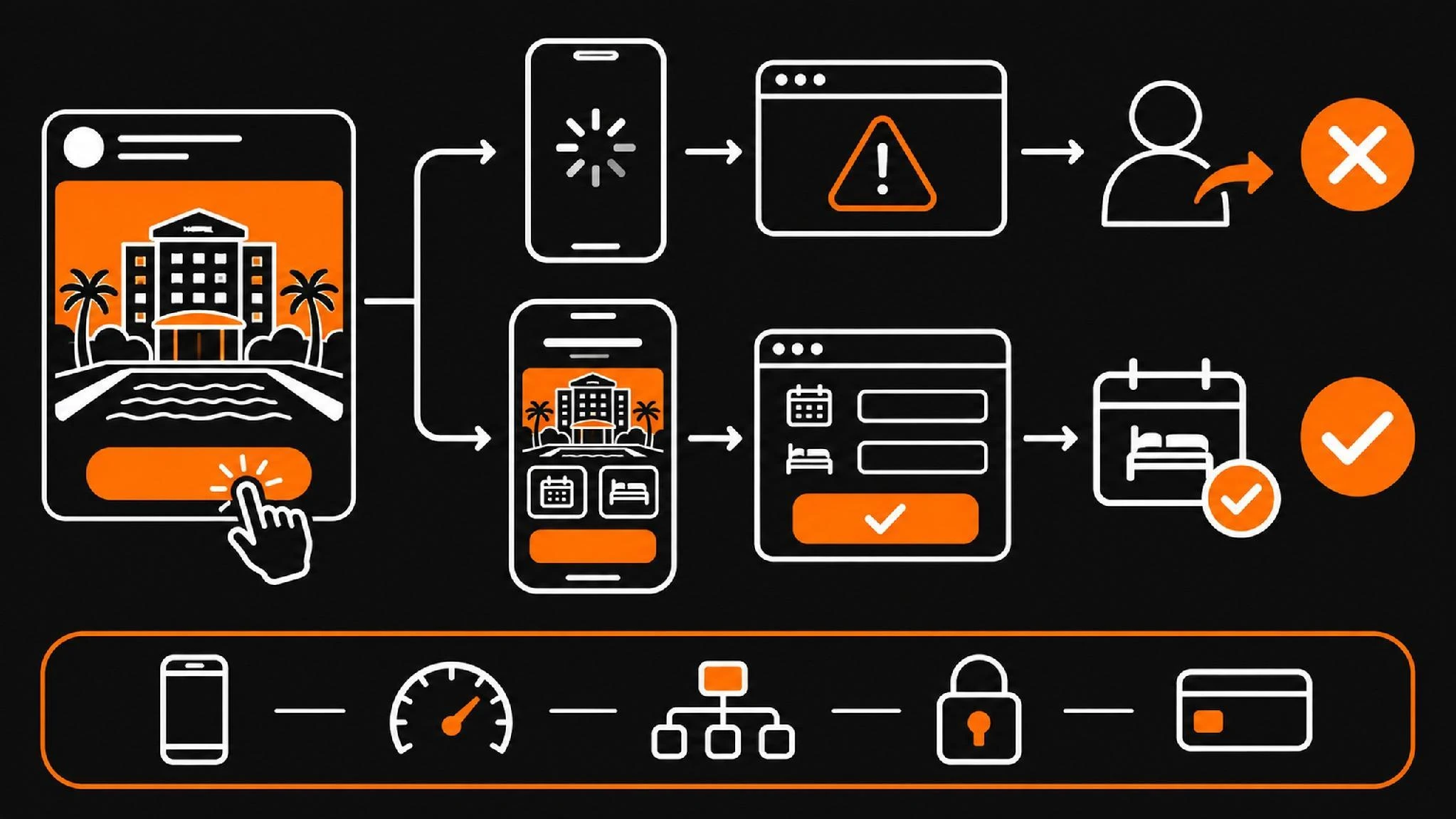
A stunning, perfectly targeted hotel ad will still fail spectacularly if the direct-booking path breaks immediately after the user taps the link. The digital essentials are simple but non-negotiable:
- Message Match: The landing page should flawlessly continue the exact promise made in the social ad.
- Fast Path to Booking: Do not force mobile users through unnecessary, labyrinthian navigation menus just to check dates.
- Reliable Tracking: Use highly structured UTM parameters so you can see exactly where traffic came from and what they did after arrival in your Google Analytics dashboard.
Proving Incrementality Is The Hard Part
A frequently under-answered question in Facebook hotel advertising is true incrementality. Meta campaigns have a notoriously bad habit of over-crediting themselves, claiming conversions that would have happened anyway (e.g., a guest who was already going to book direct simply clicked a retargeting ad on their way to checkout).
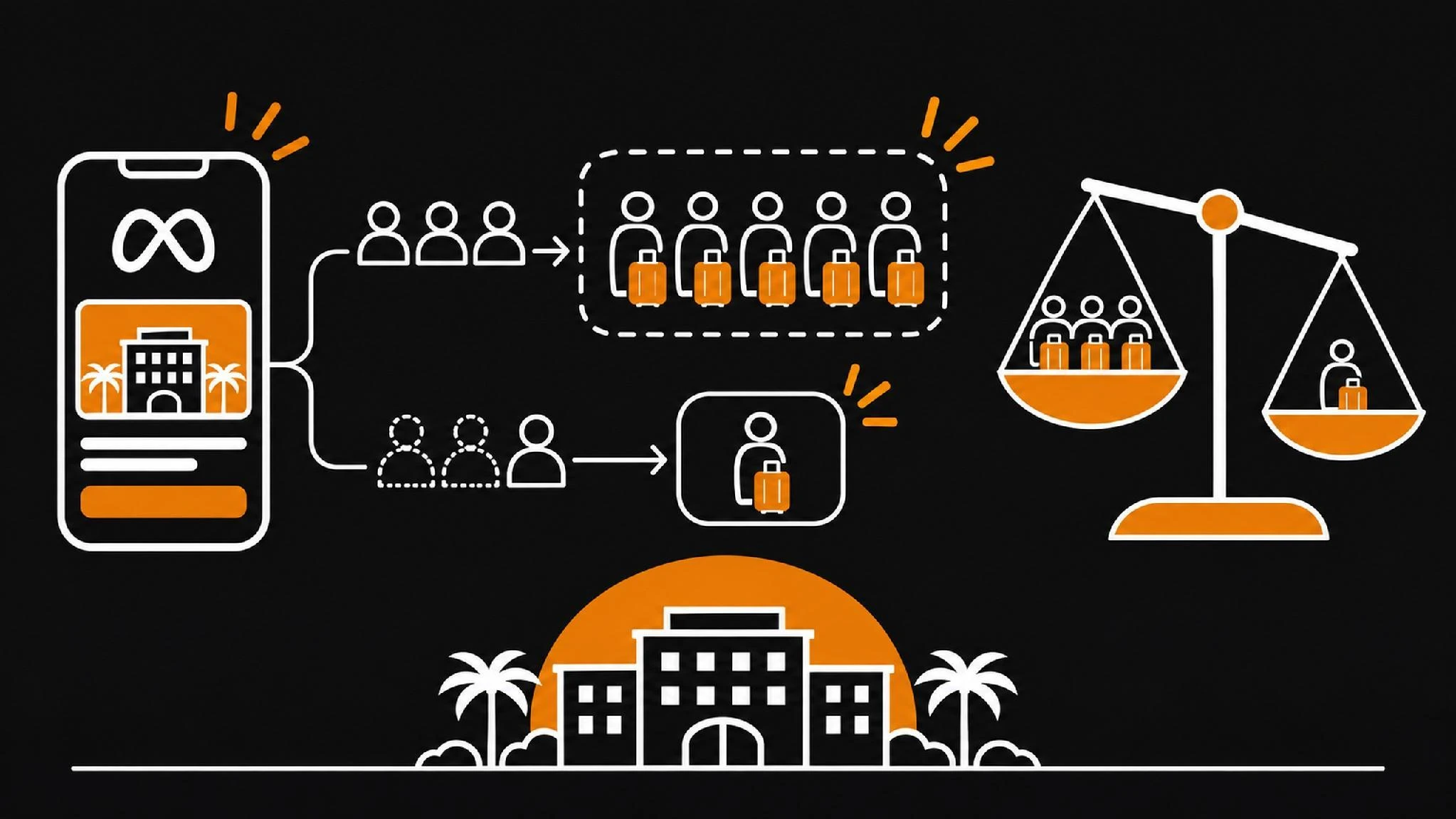
This reality changes how experienced operators evaluate campaign performance. Elite marketers do not stop at in-platform ROAS. They actively compare branded search trends, the overall direct booking channel mix, repeat guest behavior, and what happens to the overall property occupancy when a specific campaign is paused. They pay close attention to attribution windows and actively investigate whether the exact same bookings appear to be claimed by multiple marketing channels simultaneously.
Conclusion
Facebook hotel ads remain an incredibly powerful tool for capturing demand before travelers default to highly commissionable OTAs. By structuring your account to track true booking intent, targeting audiences based on distinct travel behaviors, and deploying highly specific, native-feeling creatives, you can build a highly profitable direct booking funnel. Moving away from vanity metrics and focusing strictly on incremental revenue ensures your advertising budget generates tangible asset value.
Ready to stop renting guests from OTAs and own your distribution? Building a mathematically sound, high-converting Meta advertising ecosystem requires specialized hospitality knowledge and relentless daily optimization. Partner with the digital performance experts at ROI300 to audit your current campaigns, deploy aggressive retargeting structures, and dominate your local market. Contact ROI300 today to transform your social media traffic into a powerful, commission-free direct booking engine.